
If you have ever felt the warm spot near your laptop’s hinge, you have already met a heat pipe. It is one of the quieter pieces of engineering in modern electronics, a sealed copper tube that pulls heat off the processor and dumps it somewhere cooler with no fan, no pump, and nothing moving inside it. The same trick has kept satellites from cooking themselves in orbit for decades.
Westinghouse looked at that humble little tube and decided to build one of the biggest ever made, around 12 feet long, then use a few hundred of them to cool a nuclear reactor.
That reactor is the eVinci, a microreactor Westinghouse has spent years developing, and it is now among the first in line for a fueled experiment at a brand-new test bed in Idaho that the Department of Energy only opened in April. The pitch is a reactor that needs no coolant pumps and no cooling water at all, runs for eight years or more on a single load of fuel, and fits on as little as two acres.
In a year when AI data centers are pulling power off the grid faster than utilities can build it, a reactor you can drop almost anywhere and walk away from for the better part of a decade is the kind of idea that gets a lot of attention. The catch is that the thing still has to prove it works.
A heat pipe moves heat by boiling, not pumping
The mechanism is the whole story here, so it is worth slowing down on. A heat pipe is a sealed metal tube with a small charge of liquid inside. Heat one end and the liquid boils into vapor; the vapor rushes to the cooler end, gives up its heat and condenses back to liquid; the liquid wicks along the wall back to the hot end, and the loop starts over. Nothing pumps any of it. The boiling and condensing do the work, which is why a heat pipe can shift a surprising amount of heat with a parts count somewhere around that of a thermos.
In the eVinci, the liquid doing that job is an alkali metal, sodium, and the pipes themselves are built from a specialized iron, chromium and aluminum alloy chosen to take the heat and shrug off corrosion, according to the Department of Energy. The core is a solid block of graphite drilled full of channels. Some hold the fuel, the rest hold the heat pipes, and the two are threaded through the same block so the heat has almost nowhere to go but into the pipes.
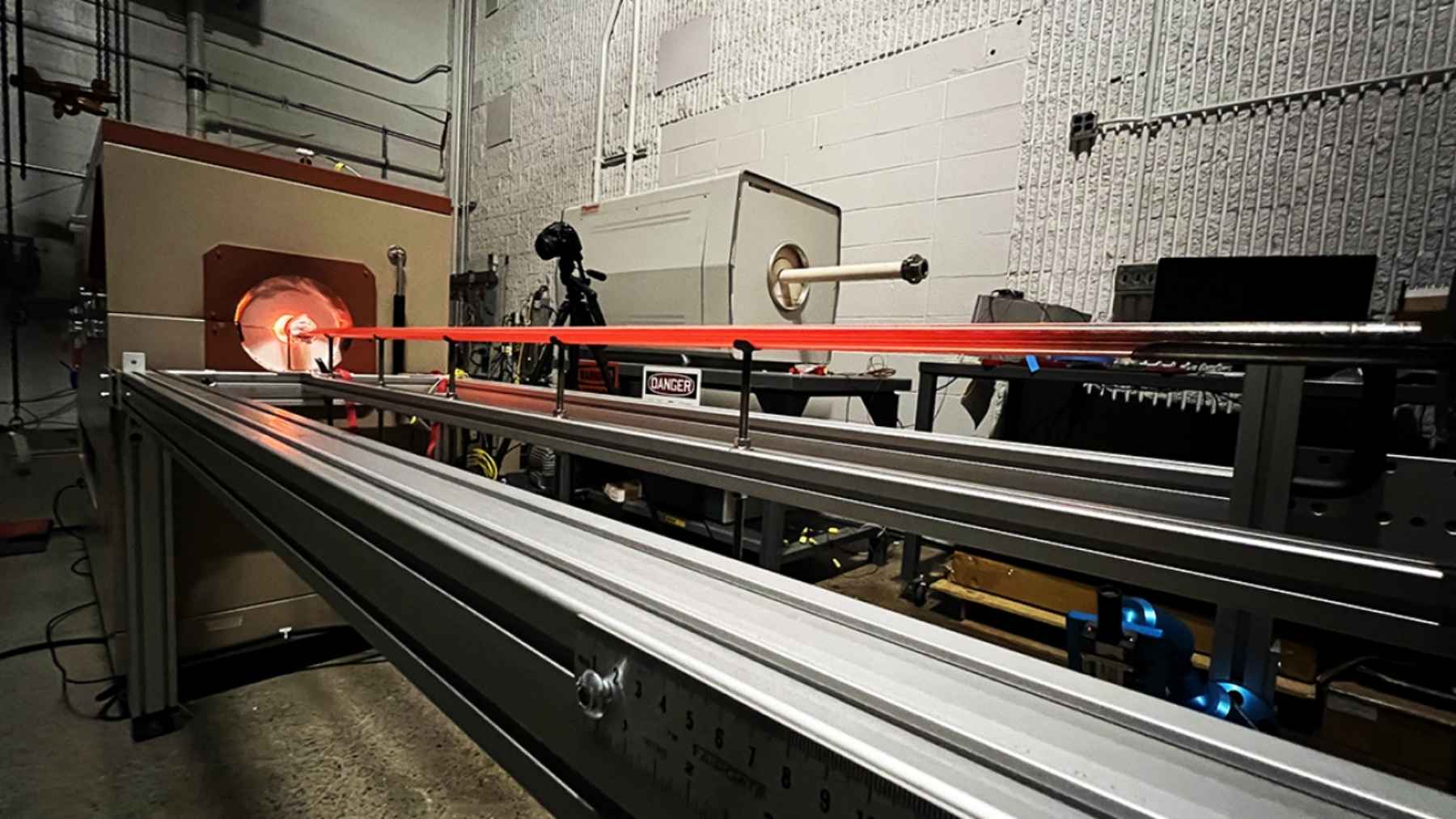
Engineers at Westinghouse have heated test pipes more than 3.6 meters long past 800 degrees Celsius, IEEE Spectrum reported, and the company says it has built the first nuclear-grade heat pipe at the full 12-foot length. The scaled test reactor headed to Idaho will carry roughly 400 of them.
Getting rid of the water is the entire point
Almost every reactor on the grid today runs hot water under enormous pressure, and a large share of what makes a conventional plant heavy, expensive and slow to build is the steel and concrete needed to contain that pressure if something ever goes wrong. eVinci runs at roughly one atmosphere, about the pressure of the air in the room you are sitting in.
Take away the pressurized water and a whole category of failure goes with it: there is no coolant pump to seize, no pressurized loop to spring a leak, and the accident every water-cooled plant is engineered around, the loss of coolant, largely stops being a scenario. To turn the reactor’s heat into electricity, eVinci uses an open-air Brayton cycle, the same basic loop running inside a jet engine or a gas turbine.
The sodium is worth one more note, because it shows up elsewhere in nuclear right now wearing a different hat. The Natrium reactor Bill Gates is building in Wyoming also runs on sodium, but it pumps a whole pool of the molten metal through the plant as a coolant. eVinci seals its sodium inside the pipes and never pumps it anywhere. Same element, opposite plumbing, and the gap between them is the entire design philosophy: take the moving parts out and there is less to break.
What is actually going to Idaho is a smaller version
This is where the brochure and the schedule pull apart a little. The commercial eVinci is the 5-megawatt unit Westinghouse wants to sell. What is going to the Department of Energy’s test bed first is a scaled-down prototype, roughly one-fifth the size and rated at about three thermal megawatts, built to prove the key pieces before the full reactor gets made, World Nuclear News reported.
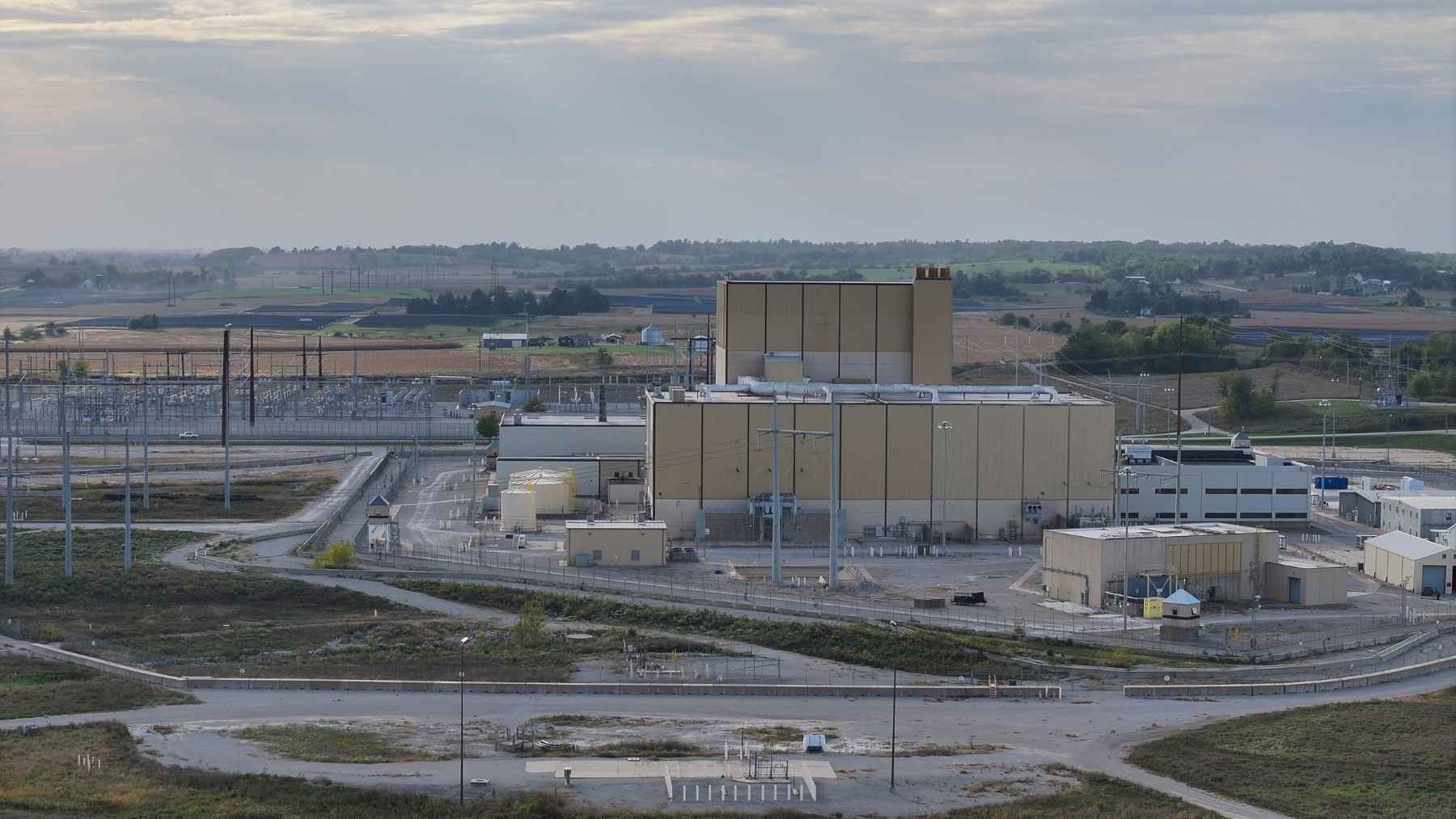
The test bed is called DOME, and it is the old Experimental Breeder Reactor-II containment building at Idaho National Laboratory, an 80-foot concrete-and-steel structure that housed a working reactor from the 1960s into the 1990s and has now been repurposed to take fueled experiments up to 20 thermal megawatts.
The Department of Energy opened DOME in April, selected Westinghouse and Radiant for the first two test campaigns last July, and has said the first fueled experiment could begin as early as spring 2026, with its most recent rundown still putting the opening runs sometime this year. Westinghouse was the first developer to win an approved preliminary safety design for the facility, which is a real milestone and also not the same thing as a running reactor. If you have followed any reactor timeline lately, you know which way these dates tend to move, and full commercialization is still pencilled in for the end of the decade.
Where a reactor with no water actually goes
The no-water part is not a spec-sheet flourish, it is the business plan. A reactor that does not need a river, a lake or a big cooling pond can sit in places a conventional plant simply cannot: remote mines, off-grid towns, military bases, and the data centers that have spent the last year inhaling electricity.
The entry market Westinghouse keeps pointing at is diesel replacement, where trucking fuel out to a remote site can get absurdly expensive. Each unit is built and fueled in a factory, shipped assembled, runs eight years or more before it needs fresh fuel, and sits on as little as two acres. Westinghouse likes to call it a nuclear battery, and one of its vice presidents on the project, Leah Crider, has described it as “essentially a battery” that runs for years without a refuel.
It is chasing the same remote-power itch as the truck-mounted reactor China says it built for data centers, with one large difference: eVinci’s numbers come attached to a US national lab and an approved safety design, not a developer’s own say-so. And it shares its TRISO fuel, tiny uranium kernels wrapped in layers that act as their own containment, with the pebble-bed reactor a Maryland company is sending to a Texas chemical plant. The neat contrast is that X-energy got rid of the fuel rods, while Westinghouse got rid of the pumps.
The heat pipes are built, the safety design is approved, and the physics of moving heat through solid metal is about as settled as engineering gets. The one thing eVinci has not done is the only thing that finally counts, which is run as an actual reactor. That happens when the scaled-down unit goes critical at DOME, assuming the schedule holds, and “assuming the schedule holds” is carrying real weight given how every other date in this business likes to drift.
The bet underneath the whole design is almost contrarian for an industry that loves complexity: pull out the pumps, the pressure and the water, and you pull out most of the things that can fail. In a reactor, boring is the feature you want.
 @donalddolenc ROOKIE3 months ago