
Almost every nuclear reactor on the planet is, underneath all the concrete, a very expensive way to boil water. Uranium gets hot, water carries the heat away, steam spins a turbine. It works because water is cheap and every engineer alive understands it.
Britain has eight reactors that never let water into the core at all.
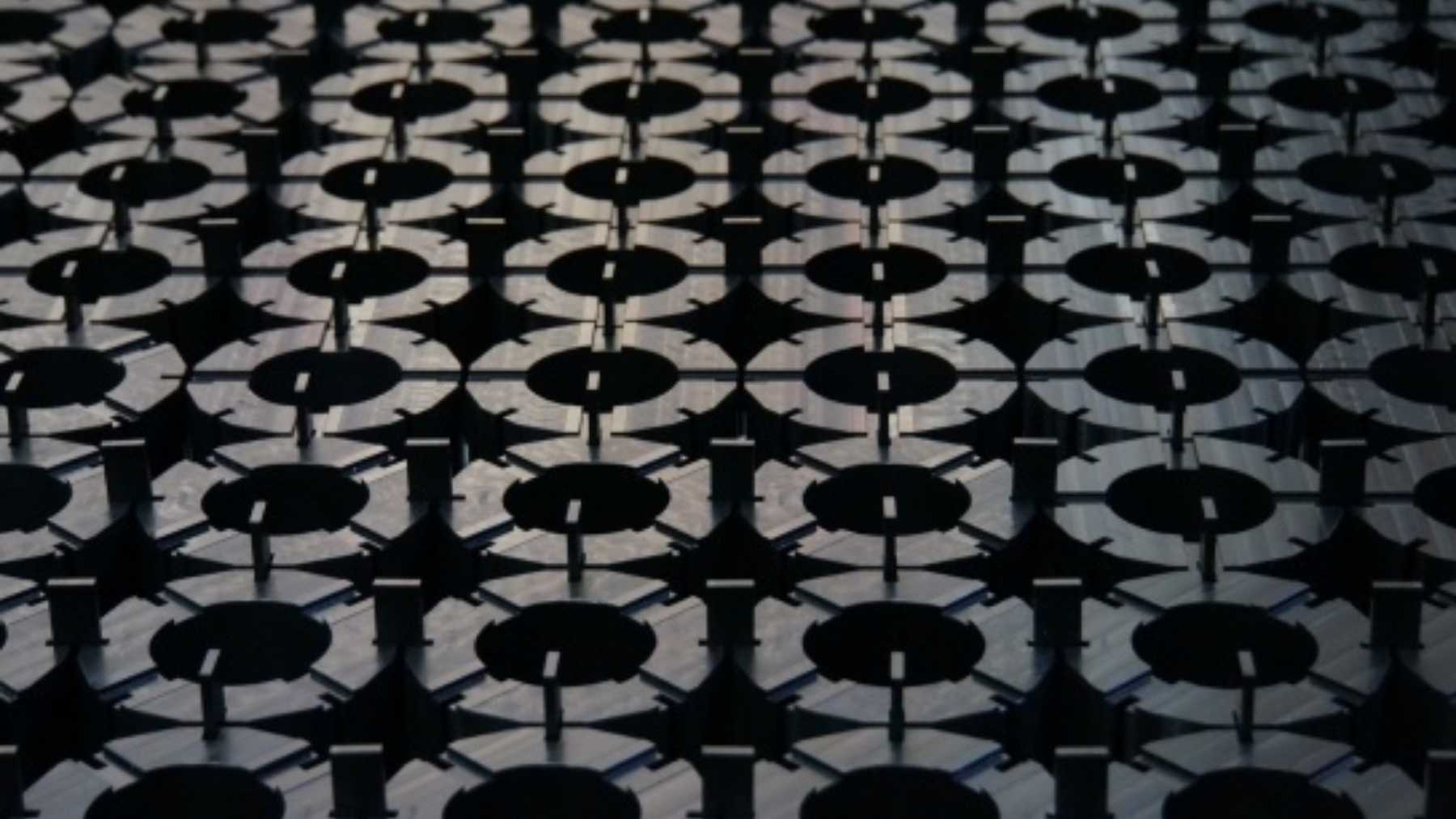
They blow pressurised carbon dioxide through it instead, past thousands of graphite bricks stacked into a cylinder roughly 30 feet across and 27 feet tall. The design is called the Advanced Gas-cooled Reactor, or AGR, and it was only ever built in one country. Fourteen were built, the last coming online in 1988, and they are the final commercial power reactors anywhere that use CO2 as a coolant.
On July 22, EDF decided two of those stations get another two years.
The company’s licensee board signed off that day on moving Hartlepool, on Teesside, and Heysham 1, in Lancashire, from a March 2028 shutdown out to March 2030. Both stations started generating in 1983. Both were designed to run for roughly 25 years.
That is the sixth time since 2010 that somebody has moved the retirement date on these two.
The gas is the simple part. The graphite is the clock
In a water reactor, the water does the cooling and the moderating, and if it gets dirty or degraded you replace it. In an AGR those two jobs are split. The carbon dioxide carries heat out to boilers sitting inside the same concrete pressure vessel. The graphite slows the neutrons down so the chain reaction keeps going.
The graphite also holds the reactor up.
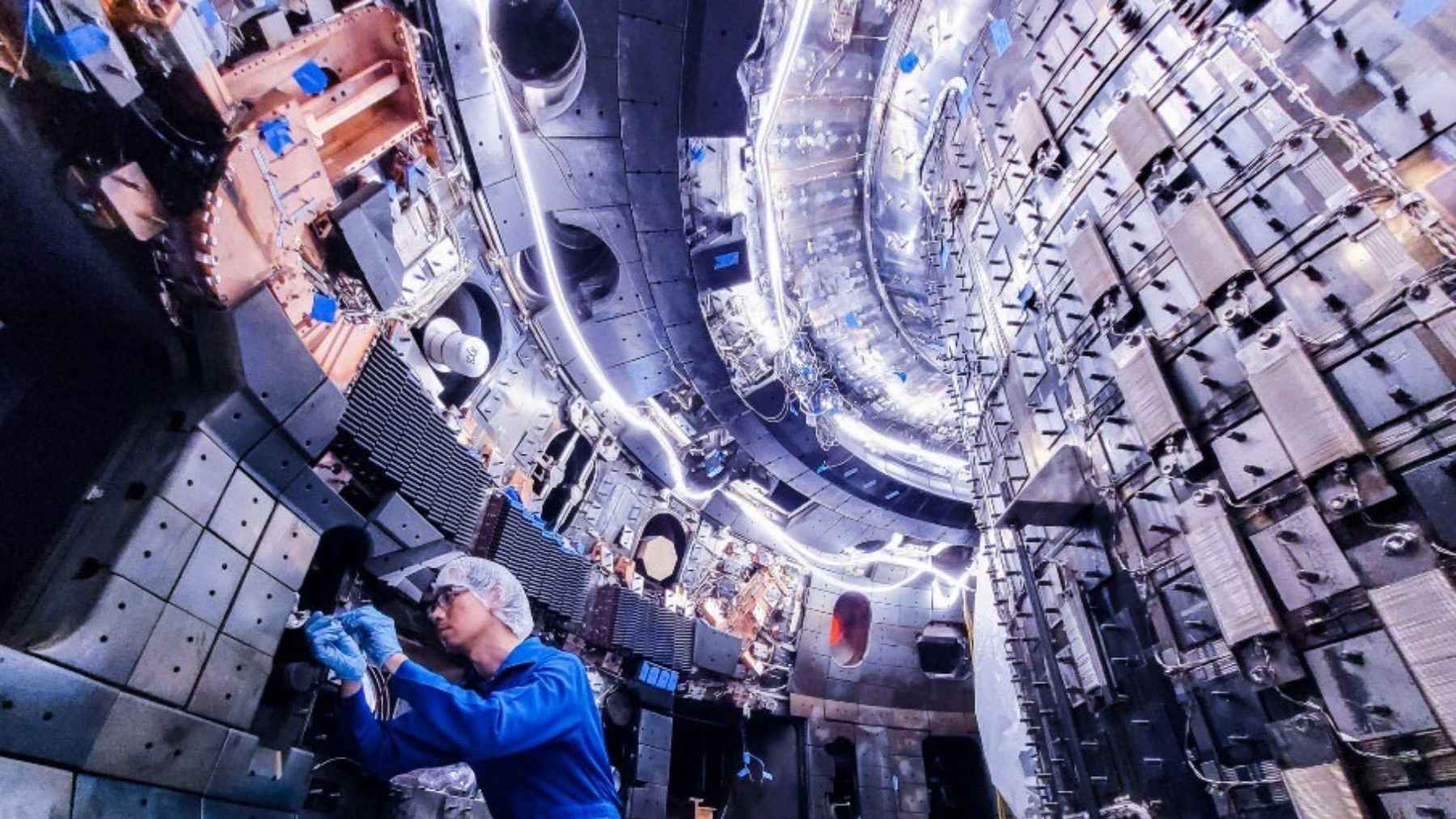
Each core is roughly 6,000 bricks, about half of them bored through the middle to take fuel. At Hartlepool that works out to 324 fuel channels and 81 control rod channels. A fuel brick is around three feet tall and 18 inches across, and the bricks interlock through keys and slots so the whole lattice can breathe as it heats and cools.
Which means the graphite is not just moderating. It is keeping the fuel channels straight, keeping the control rod channels open so the rods can drop, and steering the gas so every part of the core gets cooled. The Office for Nuclear Regulation lists all three as fundamental safety requirements of an AGR core.
Two things happen to graphite over 40 years of that. Neither is a surprise, and both are on a one-way street.
The first is weight loss. Under gamma radiation, the CO2 gnaws carbon atoms off the inside of the brick and carries them away as carbon monoxide, hollowing out the pore structure and taking the mechanical strength with it. EDF fights this by dosing the coolant with methane as an inhibitor, which is the same basic trick as the corrosion inhibitor package in your engine coolant, and about as permanent.
The second is cracking. Neutron bombardment makes the bricks shrink and then swell again, and the stress finds the sharpest corner it can, which is the root of a keyway. Those keyway root cracks turned up for real at Hunterston B in Scotland in 2014, and by 2018 they were appearing faster than EDF’s models said they would. Hunterston B has since been fully defuelled and is passing into government ownership.
The regulator is blunt about which one runs out first. On its graphite ageing page, the ONR says weight loss is potentially life limiting, but that “most of the AGRs will have their life limited by the progression of cracking.”
And there is no fix. You cannot repair a graphite brick and you cannot swap one out. The core was sealed inside a prestressed concrete pressure vessel along with the boilers and the gas circulators before either station made a watt. EDF has told reporters that beyond turning an affected reactor down, there is no known solution.
So every extension comes down to sending cameras down the channels, measuring what the bricks look like now, and arguing about what the models say they will look like in another two years. It is also why that graphite has a second life waiting for it: the carbon-14 locked in old British reactor bricks is the raw material behind the diamond batteries UK scientists have been building out of nuclear waste.
Six extensions since 2010, and the date keeps sliding
When EDF took the British fleet over in 2009, all seven AGR stations were on the books to be shut by 2023. Hartlepool and Heysham 1 were due to stop in 2014.
Then 2010 pushed them to March 2019. 2016 pushed them to March 2024. A board decision in March 2023 got them to March 2026, December 2024 added a year to March 2027, and September 2025 added another to March 2028.
July 22 added two more. March 2030.
Four of the seven stations are still generating. Three are in defuelling or decommissioning.
EDF puts a number on what the latest reprieve buys: 28 terawatt hours over the two years, which the company reckons is enough for 8.4 million homes, plus more than 1,000 jobs across the two sites kept on longer. It also says the two stations will hold about 12% of Britain’s nuclear generation in 2028, and that the gas they displace each year is worth roughly 25 LNG cargoes. John Munro, who runs EDF’s nuclear operations business, framed the decision as generating “for as long as it is safe and commercially viable” to do so, according to World Nuclear News.
Centrica, which owns 20% of both stations to EDF’s 80%, told the London Stock Exchange the same day that its share of the extra output is about 6 TWh.
Britain nearly ran out of the gas that cools them
There is a supply chain problem buried in all this that no other nuclear country has to think about.
The UK’s last major domestic producer of biogenic carbon dioxide is a bioethanol plant at Wilton, on Teesside, run by Ensus. It stopped production in September 2025. Associated British Foods had already closed the other big one, Vivergo in Hull, that August.
On March 26 this year the government directed Ensus to fire back up, with a support package worth around £100m, because the conflict in the Middle East had put imported CO2 supply at risk. The official announcement lists the sectors being protected: healthcare, food supply, and civil nuclear.
Nobody said the reactors were about to stop. It put civil nuclear on the list of things that need carbon dioxide to keep working, alongside hospitals and packaged meat, and paid nine figures to keep a single mothballed plant available.
Hartlepool is running longer while sitting in the regulator’s worst category
The announcement lands in an awkward place, and the wording of it matters.
On March 24 this year, the ONR moved Hartlepool into significantly-enhanced regulatory attention, its most intense level of regulatory attention. The reasons it gave were conventional health and safety, the number of incidents on site, and the delivery of improvements EDF had already agreed to. The site had been under enhanced attention since April 2025.
None of that is about the graphite.
The regulator was equally clear on the other half: “Hartlepool remains safe to operate,” it said, and its own inspections continue to support that. In its annual report published on July 14, the ONR said progress on the improvement plan had been slowed by a long double reactor outage, with reportable events and other indicators worsening while that happened.
Two weeks later, EDF gave the station another two years. Both of those things are true at once, and EDF is entitled to do it, because end-of-generation dates are set by its own licensee board, not by the regulator or the government. What the ONR controls is the safety case underneath the date.
Which is why EDF keeps calling March 2030 a forecast rather than a commitment. The company says the actual date depends on what the graphite inspections find and how EDF and the ONR read them. Getting a look inside these places is its own engineering problem, and the British nuclear estate has been solving it with hardware: Sellafield now has robot dogs on the staff roster doing survey work humans need a sealed suit for.
What replaces it is also gas-cooled, and also American
Hartlepool already has a successor lined up, and the shape of it is odd.
On June 2, the US firm X-energy submitted its Xe-100 reactor into Britain’s Generic Design Assessment, the licensing pathway run jointly by the ONR, the Environment Agency, Natural Resources Wales and the energy department. Under a deal signed with Centrica last September, Hartlepool is the preferred first site: twelve units, 960 megawatts, in the same broad range as the two AGRs running there now.
The Xe-100 is a high-temperature gas-cooled reactor. Graphite moderator, gas coolant, no water in the core. Britain’s oddball design, rebuilt by somebody else.
With two differences that matter. The coolant is helium, which is inert, so it does not eat the graphite the way CO2 does. And the graphite is not a fixed structure at all: it comes in tennis-ball-sized fuel pebbles that trickle down through the core and out the bottom, get inspected, and either go back in the top or get retired. The thing that kills an AGR is, in the successor design, a consumable.
The assessment is expected to run to the end of 2029. Hartlepool’s AGRs are now scheduled to stop three months after that. Whether British industry gets to build any of it is a separate fight, and one it has been arming for: a Sheffield forge recently welded a full small-reactor vessel shut in under 24 hours, a job that normally eats a year.
Nothing about any of this is settled. Torness and Heysham 2, the other two AGR stations, are also down for March 2030, and EDF says all four dates stay under review. Sizewell B, the country’s only pressurised water reactor, got terms agreed this month for a 20-year extension to 2055. Hinkley Point C and Sizewell C are years off.
The bricks are the part that does not negotiate. They cannot be repaired, cannot be swapped, and sit inside a concrete vessel that has not been opened since the stations were built. Every date these two stations have been handed since 2010 has moved outward, which is a good record right up until the inspection that ends it.
And when the last AGR does finally stop, it takes the whole design with it. Nobody has built one since 1988, and there is no proposal anywhere to build another.