
If you have ridden the Northeast Corridor between Washington and New York, you have felt the moment the train gives up. Somewhere around West Baltimore it stops behaving like modern rail and starts crawling. Most people assume congestion, or a signal, or the usual American rail entropy.
It is none of those. It is a brick tunnel that opened in 1873 with curves so tight that Amtrak caps every train through it at 30 mph. The Baltimore and Potomac Tunnel is the oldest tunnel Amtrak owns, it runs 1.4 miles, and it is the worst chokepoint on the railroad between Washington and New Jersey.
The fix is a $6 billion program to bore two new tubes alongside it, called the Frederick Douglass Tunnel. On July 28 Amtrak published a status update on that program, and the plain summary is this: the machines that will dig it are half built in Germany, the pit they launch from is being excavated this summer, and no boring happens until 2028.
Passenger service is scheduled for 2036. Ten years to replace two miles of tunnel, and the reasons have very little to do with rock.
Amtrak’s oldest tunnel wrecks the timetable on 99% of weekdays
Amtrak’s own numbers on the B&P are harsher than press releases usually allow. The company says more than 10% of weekday trains through the tunnel are delayed, and that delays occur on 99% of weekdays.
The tunnel leaks. The floor is sinking. It cannot be retrofitted with modern fire and life safety systems, which is the polite way of saying it was finished before anyone wrote the standards you would retrofit to.
There are two tracks inside and no parallel route, so the roughly nine million Amtrak and MARC passengers Amtrak says rely on it each year have no detour if it ever closes. Freight still runs through, barely. Amtrak’s public FAQ puts current freight traffic at about four trains a week.
The replacement is two single-track tubes, each about two miles long, wired for electrified Amtrak and MARC trains and designed for speeds up to 100 mph. Same neighborhood, different geometry. The new alignment curves north rather than following the 1873 route, and most of the difficulty in this story comes from what sits above that curve.
The machines are half built and the hole they launch from is still being dug
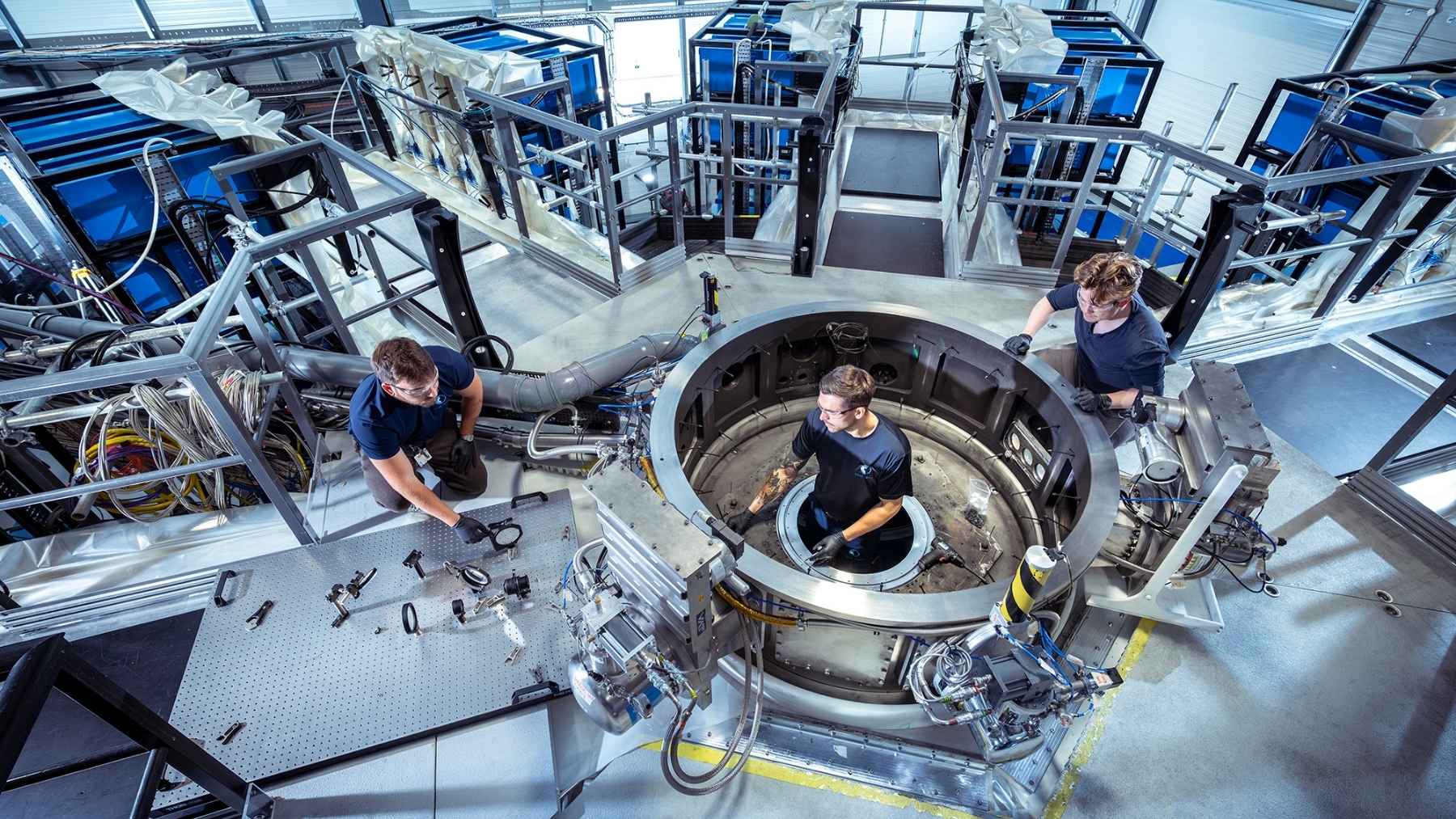
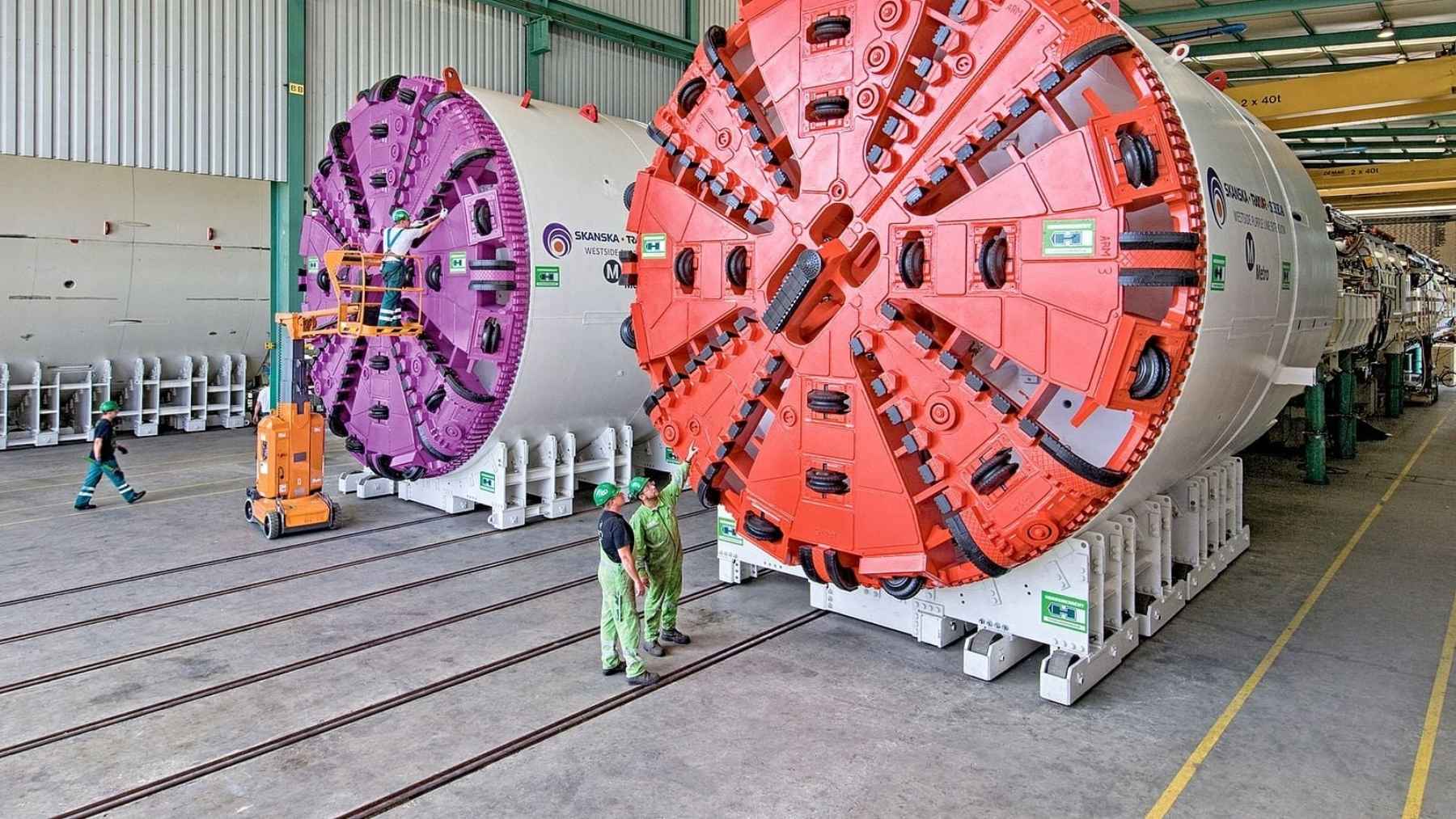
Both tunnels get bored by machines from Herrenknecht, the German manufacturer headquartered in Schwanau that also built the borers for New York’s Hudson River rail tunnel and the Hampton Roads highway tunnel in Virginia. Amtrak says the first of the two is now more than 50% complete.
That is the entire public spec. No diameter, no weight and no delivery date has been released for either machine, so anyone quoting you one is guessing.
What is confirmed is the entry point. Amtrak’s summer program newsletter says excavation of a 60-foot-deep launch pit at the South Portal in West Baltimore begins this summer. The machines themselves do not start cutting until 2028.
Two miles is a short drive by TBM standards. The four machines assigned to the Hudson River rail tunnel are cutting close to five miles between them, and a pair of 1,680-ton borers has been sitting in a New Jersey trench waiting on an entirely separate problem.
Baltimore’s drive is shorter than either. It also runs directly beneath occupied rowhouses, which changes how every stage of it has to be planned.
Amtrak just cut a ventilation building out of the plan
The July announcement was more than a progress report. Amtrak and the Federal Railroad Administration spent more than a year reviewing the design and produced three changes, all presented as cost and constructability work.
The first: the planned Intermediate Ventilation Facility and the smaller tunnel connecting it to the main bores are out. Amtrak says removing them does not affect safety or train operations and reduces construction impact on the neighborhood above.
The second: the track at the tunnel’s deepest point rises by roughly 10 to 22 feet, cutting the volume of rock that has to come out. The tunnel still sits about 150 feet below street level between Penn North Metro Station and the future north ventilation building.
The third is sequencing, running more of the work in parallel where the site allows it.
That ventilation facility has a history. Residents of Reservoir Hill filed a civil rights complaint with the US Department of Transportation in 2024 over the program’s effect on majority-Black neighborhoods, and the intermediate ventilation building was one of their named objections.
Amtrak has attributed the design change to cost and constructability, not to the complaint, which is still pending with the FRA. Both of those statements can sit next to each other, and neither has been ruled on.
Ten years to replace two miles is not a digging problem
The calendar has less to do with geology than with everything sitting on top of it.
Before a boring machine moves, the utilities move first. Construction on a 345-foot utility tunnel started in spring 2025, built to carry water, sewer, power and communications beneath both the existing tracks and the future alignment.
Crews took the east shaft to final depth in August 2025, reached bottom elevation on the west shaft in February 2026, then removed the last rock pillar between them with controlled blasting. That utility tunnel is due to finish in 2027, a year before any boring starts.
Then the bridges. Five railroad structures get rebuilt. The first, at West Mulberry Street, is under construction now and is not expected to reopen until October 2027. The Lafayette Avenue bridge gets replaced in two phases, with street closures, a temporarily relocated park and shuttle service for the people living around it.
Then the property, which is where the schedule actually lives. Amtrak’s FAQ describes roughly 600 acquisitions, more than 500 of them subterranean easements. That is the legal right to bore underneath somebody’s house, negotiated one house at a time.
Amtrak’s own Inspector General has flagged the management side too. An October 2024 audit found the company had not completed the required planning as major construction approached, that it initially handed the largest infrastructure program in its history to a single individual with limited support, and that it took more than a year to onboard the delivery partner it decided to hire in December 2022.
The audit concluded that this “significantly increases the risk of cost overruns and delays.”
The structure has been built out since. ADVANCE, the AECOM and Jacobs joint venture, is the delivery partner. Kiewit and J.F. Shea hold the tunnel construction contract. Clark Construction and Stacy Witbeck have the southern approach.
None of this is the Howard Street Tunnel, the 1895 freight tube under downtown Baltimore that CSX reopened this June with its floor dug two feet deeper. Different tunnel, different railroad, different century of problem, and that one is finished.
Roger Harris, Amtrak’s president, said in the July release that the investment is advancing “with a clear path forward” toward a 2036 opening. In the same announcement, Amtrak said challenges remain that could affect the critical path.
The railroad is saying both of those things on purpose. Given that its own auditor spent 2024 documenting exactly those challenges, the second half is the honest half. The machines were never going to be the hard part.