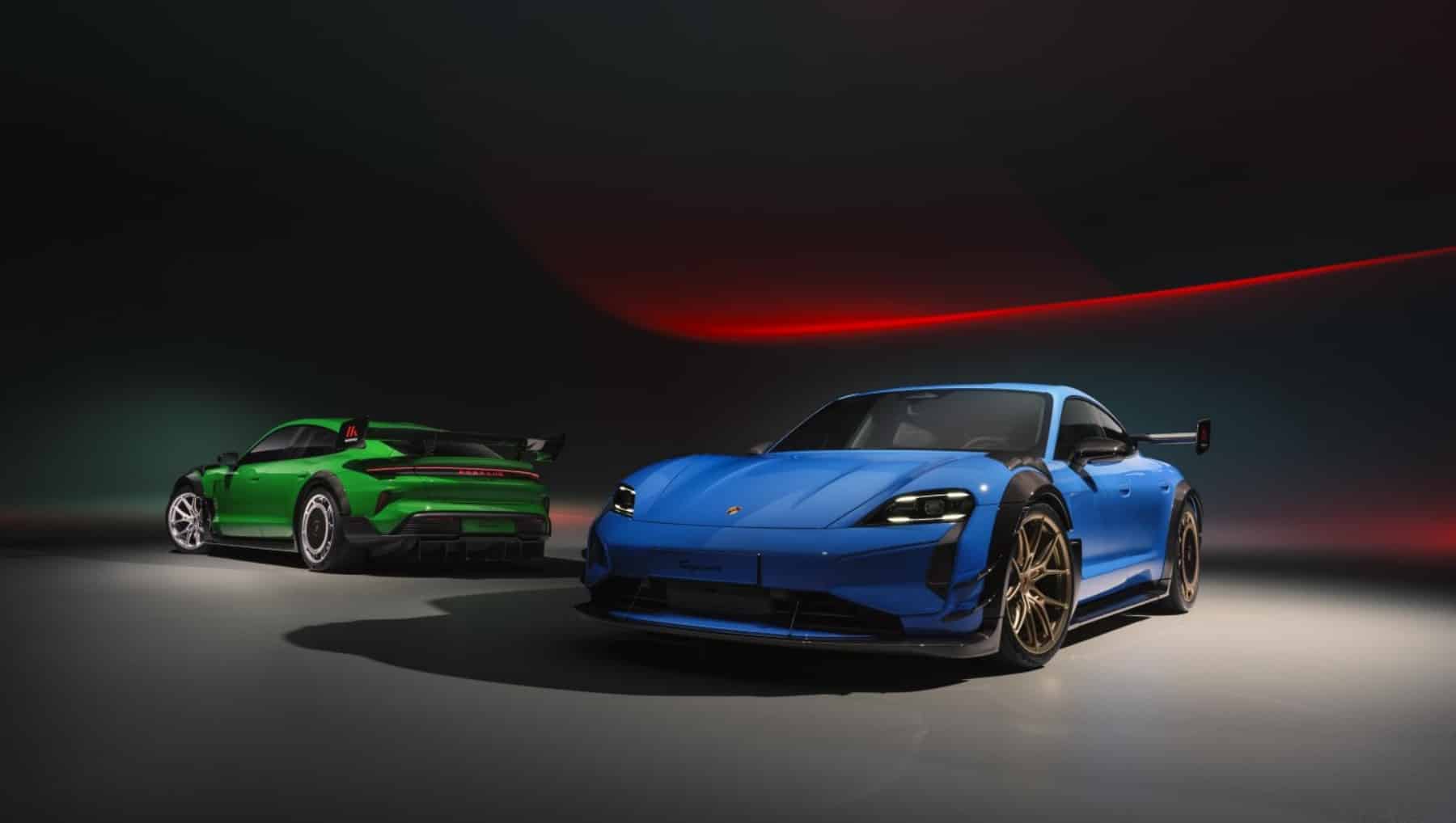

Porsche could be discontinuing the Taycan by 2030.
Originally shared by a German publication, Porsche’s management team and works council have agreed to end the Taycan’s production in just a few years, also deciding to halt plans to relocate the Taycan’s assembly. It will remain in the Stuttgart-Zuffenhausen plant for the remainder of its run.
It seems a bit sudden after Porsche’s 2027 update was revealed, which included a 105-kWh battery and an updated infotainment system. It also added an optional E-Shift, allowing the Taycan to simulate an eight-speed transmission that can be experienced as automatic or manual. Each gear shift would create down torque, making it feel like there is engine braking. Porsche also added 16 new colors like Loretta Purple.
The goal? Make the Taycan more fun, immersive, and valuable to collectors. But it turns out it wasn’t because Porsche truly believed the Taycan had potential. It was out of desperation.
The Taycan could be reaching an early end
As much as reviews like to glaze the Taycan for its exceptional handling and rapid acceleration, car enthusiasts are not as welcoming. The Porsche Taycan had around 41,000 sales in 2023, which ended up being its peak. This fell to 16,000 sales in 2025. In the first half of 2026, Porsche reportedly sold around 6,000.
Porsche is clearly feeling the weight of that incredible decline. Even the Taycan’s launch was a challenge for the iconic luxury brand, with CEO Michael Leiters admitting its launch timing was all wrong. He said in June 2026: “Porsche remains open to all technologies. Porsche was a pioneer in e-mobility; the Taycan was a flagship project and an outstanding product. But the timing wasn’t ideal; we were apparently too fast with e-mobility.”
A few years ago, carmakers seemed to be continuously announcing plans for an all-electric lineup. However, the United States’ automotive market has rapidly switched gears over the years. With the Trump Administration fighting against the expansion of EVs in the country, interest has faded, sales have plummeted, and carmakers have made desperate pivots to avoid financial ruin. Porsche was one of those brands, announcing it was going to double down on sports cars like the 911. The only model saving the company.
Porsche has not actually confirmed that the Porsche Taycan is leaving in 2030. But it does make a lot of sense. If Porsche did discontinue the Taycan, the only electric vehicle left in its lineup would be the Macan.
Why did the Porsche Taycan fail to sell?
Part of the 2024 decline can be explained by the changeover to the substantially updated Taycan, which temporarily affected availability. Porsche has also repeatedly acknowledged a bigger problem: EV adoption has been progressing more slowly than it expected.
The Taycan also occupies a difficult corner of the market. It is an expensive electric sedan (over $105,000 to start) at a time when buyers have increasingly gravitated toward SUVs and crossovers. Porsche’s own sales figures illustrate the gap. In 2025, the company delivered 16,339 Taycans compared with 84,328 Macans and 80,886 Cayennes. Americans are already fighting back against rising car prices; the Taycan is not even on most families’ radars.
China has added another headwind. Porsche says competition there is particularly intense for fully electric vehicles, while demand in the country’s luxury segment has weakened. Porsche’s overall deliveries in China fell 26 percent in 2025.
The Taycan, therefore, ran into several problems at once: a model change, slower-than-expected EV adoption, weakening demand in China, and a body style competing against increasingly popular SUVs.
Is the Porsche Macan EV selling well?
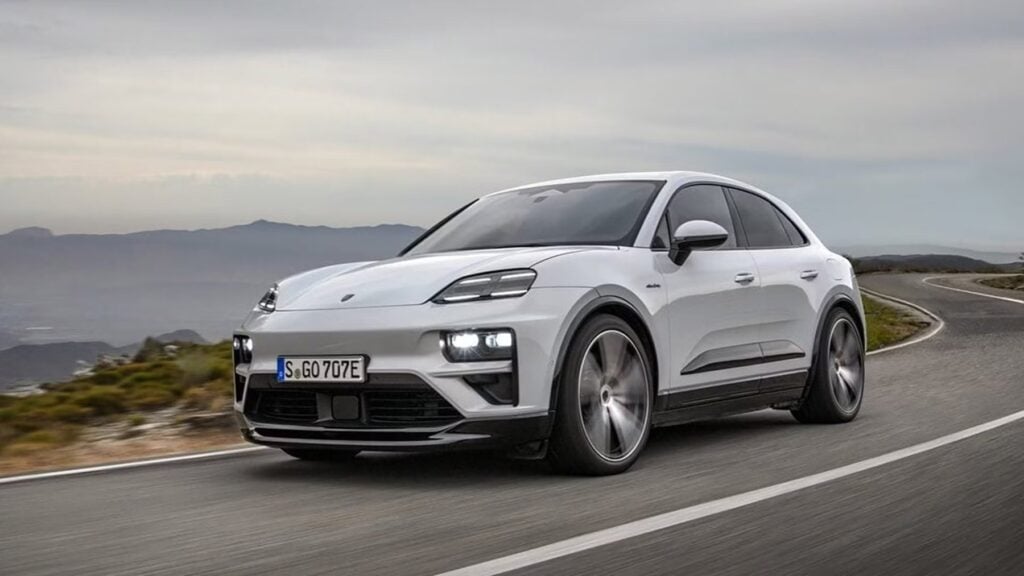
So far, yes.
Porsche delivered 45,367 electric Macans worldwide in 2025. That means the EV accounted for more than half of the 84,328 Macans Porsche delivered that year. The Macan was also Porsche’s best-selling model line overall.
The contrast with the Taycan is substantial. Porsche delivered almost three electric Macans for every Taycan in 2025.
There are several reasons the Macan EV has a broader potential audience. It is a compact luxury SUV rather than a low-slung sports sedan, giving buyers more passenger and cargo practicality. The Macan name was also already established as one of Porsche’s volume sellers before the electric version arrived. When it comes to EVs, electric SUVs are more popular than sports cars. Not much of a surprise there.
There are signs that the initial growth spurt is cooling, however. In the U.S., total Macan sales fell from 7,486 vehicles in the first quarter of 2025 to 6,079 in the first quarter of 2026. Porsche attributed part of its broader 2026 decline to the unusually strong ramp-up of the electric Macan a year earlier and the loss of U.S. EV tax incentives.
Still, the early sales record points to a fairly straightforward conclusion. The Taycan showed Porsche could build an excellent electric performance car. The Macan EV is showing that putting similar technology into the type of vehicle luxury buyers already purchase in large numbers can produce considerably more volume.