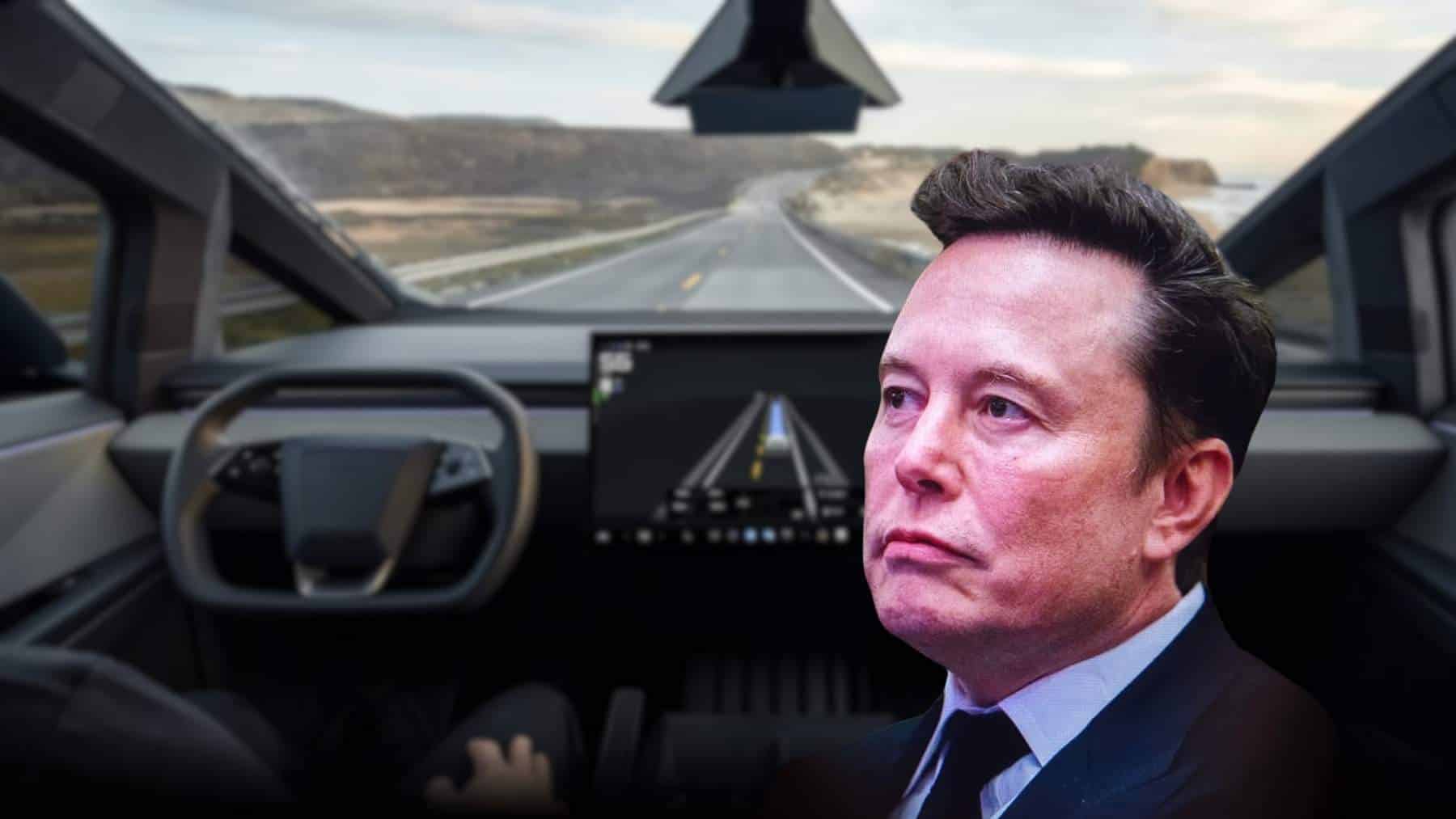

Tesla CEO Elon Musk finally admitted that Full Self-Driving mode is not anywhere near what he claimed it was capable of, but that hasn’t stopped him or the automaker from making dangerous claims about FSD’s abilities and safety.
Tesla has continued to claim that FSD is up to 10 times safer than human drivers, even though the data has been proven to be extremely faulty and presented incorrectly. On social media, Tesla has applauded disabled drivers for relying on FSD, insinuating that it’s able to drive for those who shouldn’t be on the road otherwise. Meanwhile, Reuters has found that Tesla’s own employees don’t trust Full Self-Driving mode at all.
In a recent investigation, Reuters interviewed nine former Tesla data labelers, a former self-driving engineer, and 11 traffic-safety researchers, who told the publication that Tesla’s safety claims were misleading marketing and would never trust FSD. One even said he’d never ride in a Tesla robotaxi “even if you f***ing paid me.” Another said to “not trust Elon on this.”
The data labelers, who review video footage from Tesla vehicles using FSD, saw the system failing at basic tasks firsthand. This included times a Tesla vehicle using FSD didn’t pull over for emergency vehicles, didn’t give other drivers enough space, and braked at dangerous times. Other employees saw clips of FSD-piloted Tesla vehicles almost hitting children and not recognizing pedestrians on crosswalks. Even scarier? Tesla vehicles were often speeding, including one that went 60 miles per hour in a 25 mph zone.
Tesla’s Cybercabs are not to be trusted
The Reuters investigation also went into the extensive mapping that Tesla’s robotaxis had to do before public presentations. This contradicts Musk’s claim that Tesla doesn’t use “laborious local mapping” like Waymo. The report stated that staff tested prototypes every night for hours on end to collect and study videos of the exact routes the robotaxis would use before the Cybercab unveiling in 2024. A year later, employees did the same thing ahead of the Austin robotaxi launch. Six months before the launch, the Utah location doubled its staffing to nearly 300 employees to work on this extensively.
This explains why the Cybercabs are not arriving in cities across the United States, as Elon claimed. The amount of labor it takes to prepare the robotaxis is extreme. After a year in Austin, there are still only 20 unsupervised robotaxis in the city. Still no Cybercabs. Some of those “unsupervised” vehicles have human supervisors in the front seat. And they must drive within a very limited range, a zone that employees have painstakingly mapped.
It’s no shock to me. The entire Tesla robotaxi fiasco has been quite embarrassing for a while now. Journalists have continued to report on how awful it’s been, barely able to catch a ride and experiencing massive delays. Full Self-Driving mode is nowhere near capable of autonomous driving. The Cybercabs are death traps, which explains why the former employees said they’d never get in one and why Tesla bosses abandoned the project before they would be associated with a death or disaster.
Unfortunately, Tesla fans will still believe Musk over these employees. I mean, they even believe Musk’s claims from years ago over Musk’s admissions from earlier this year. It’s very strange and I don’t think any amount of studies will convince them that they’ve been lied to and had their lives put in danger. A few Tesla owners have attempted to sue Musk for lying, sick of paying for an autonomous vehicle when it’s barely a Level 2 system.
It’s concerning how many people are on the road using Full Self-Driving mode like it’s autonomous, especially knowing that Tesla’s own employees don’t trust it at all.














Tesla Robotaxi fleet is now officially rated as SAE Level 4 Autonomy in the whole of Texas as the rollout of the new, dedicated Tesla Cybercab is imminent..