
A Tesla owner just won $10,600 after suing the automaker over a failed promise. He was told his car would drive itself, but Full Self-Driving mode has never delivered on that promise.
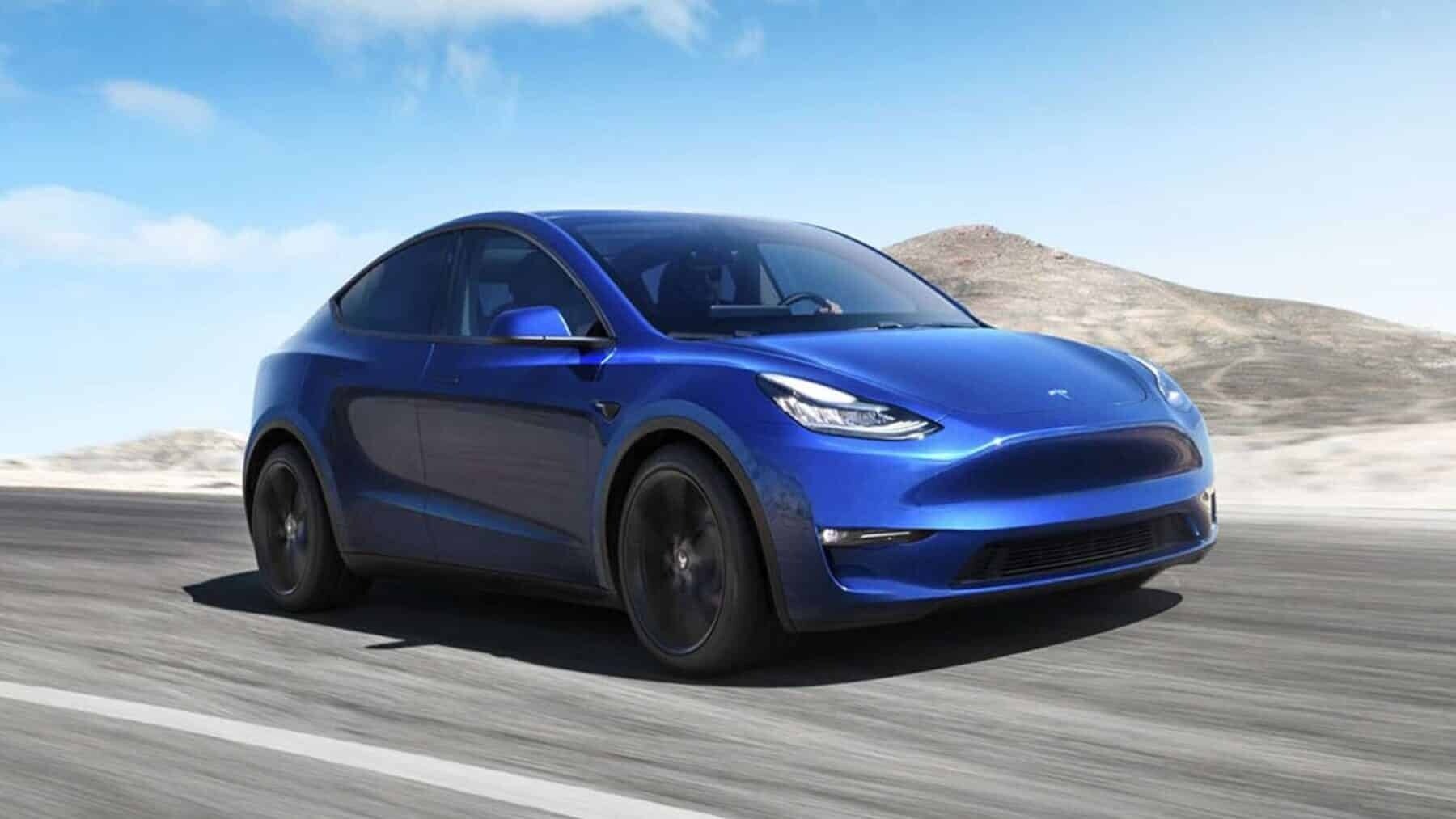
Ben Gawiser purchased a Tesla Model 3 in 2021, paying the $10,000 extra for Full Self-Driving software. Over the last few years, the price of the software has slowly increased as updates have continued to improve its capabilities. This was back when you could pay up-front for FSD, which is now only available as a subscription.
He waited five years. The car never had the ability to drive itself.
If you ask Tesla fanboys on X (formerly Twitter), they’d tell you that Elon Musk never promised a fully autonomous car — he was just saying that a fully autonomous car is possible with Tesla’s technology, but it wouldn’t happen right away. However, this is false. Tesla has been claiming that FSD would enable autonomous driving since 2016. In 2021, Elon Musk promised that “the car will drive itself for the reliability in excess of a human this year.” He later said that you can use your personal Tesla as a robotaxi. This is not a vague discussion of possibilities. This is a blatant statement that FSD would allow autonomous driving.
That is what Gawiser and others paid for. And while some Tesla fans are willing to forgo what they were promised out of brand loyalty, the facts are that drivers are not getting what they were promised.
Earlier this year, Tesla’s official X account shared various stories about blind people and frail elderly women using FSD to regain “freedom” to drive again. It also claimed that FSD can help prevent hydroplaning. A lot of drivers in the EV community grew concerned, sharing stories of FSD malfunctioning, especially in poor weather. Meanwhile, Musk was also being sued after a father and son died, with the case claiming Musk’s false promises about FSD led to their demise. Finally, Musk got on an earnings call and admitted that Full Self-Driving mode was nowhere near autonomous. He promised another update — one that was also not capable of autonomous driving and that will likely not follow through as planned.
Gawiser had enough.
Tesla fights back against Gawiser court case, sort of, not really
Gawiser purchased Full Self-Driving mode for $10,000 after Musk claimed his car would be fully autonomous by then, calling it a Level 5 self-driving car. The software has slowly improved, but nowhere near this claim. Tesla’s robotaxis can’t even drive autonomously, often requiring a human driver in the front seat or following behind it.
By late 2025, Gawiser reached out to Tesla via email. He asked for a refund, telling them that FSD never worked as intended. The email was quite heated, with Gawiser telling Tesla about the times his vehicle stopped in the middle of the road and failed to slow down in school zones. The bottom line? FSD is still at Level 2, which requires human supervision. In January 2026, he emailed again.
Finally, Tesla responded. The company told him to go to a service center to see if his FSD was working as intended. This wouldn’t get him to Level 5.
At this point, he filed a lawsuit in the Travis County, Texas, small claims court. It cost him about $73. Tesla didn’t respond after being served. A court date was set and the hearing happened over a video call. Gawiser showed proof of purchase as well as proof that Full Self-Driving mode did not live up to Musk’s promises. The court ruled in his favor.
According to Electrek, Tesla filed a request for an extension, claiming it never received notice of the hearing. However, Tesla didn’t request another hearing and didn’t submit any evidence to prove Gawiser wrong. Better than reportedly stealing evidence, I guess. By this point, Musk had admitted that FSD was a failure on the earnings call.
Gawiser responded to Tesla: “Tesla, Inc. does not have ‘meritorious defense’ for this action, as their CEO, as recently as April 22nd, 2026, said that Tesla could not deliver a working version of ‘Full Self-Driving’ for the vehicle that the Plaintiff purchased, as required by the contract. Unless their counsel happens to know Tesla’s own products better than their CEO, they have no defense to this cause of action. The requirement for a ‘meritorious defense’ is laid out in Craddock v. Sunshine Bus Lines. Tesla, Inc. has not presented a ‘prima facie meritorious defense,’ nor do they have one.”
There has been no update after this recent back-and-forth, but Gawiser seems pretty confident that he will come out on top. He filed a “writ of execution” for $240 that would allow Texas law enforcement to seize and sell off Tesla’s property until it was enough to pay Gawiser the $10,600.
Right now, only a small handful of Tesla owners have brought the automaker to small claims court over the false claim. Considering how much these drivers have spent (or are spending) on software that is nowhere near the level Musk promised, Tesla is pretty lucky. If more Tesla drivers decided they shouldn’t be paying for a fantasy future and should have been given what they were promised years ago, Tesla could actually be in pretty big trouble. It’s not guaranteed that each courtroom would rule the same way as the one in Texas, but if enough people tried at once, Tesla could finally be held accountable in some way.
In my opinion, you might as well try. If I’m going to get injured in a hydroplaning accident, I’d rather do it with $10,000 more in my pocket.