
The Fukushima meltdowns get remembered as something that happened to one plant. What they actually did was switch off an entire country. All 54 of Japan’s reactors went dark, and a nation that had been pulling roughly 30 percent of its electricity out of fission went shopping for gas from anyone with a cargo to sell.
Fifteen of those reactors are running again. The most recent one back is the one worth paying attention to, and not for the reason the headlines gave.
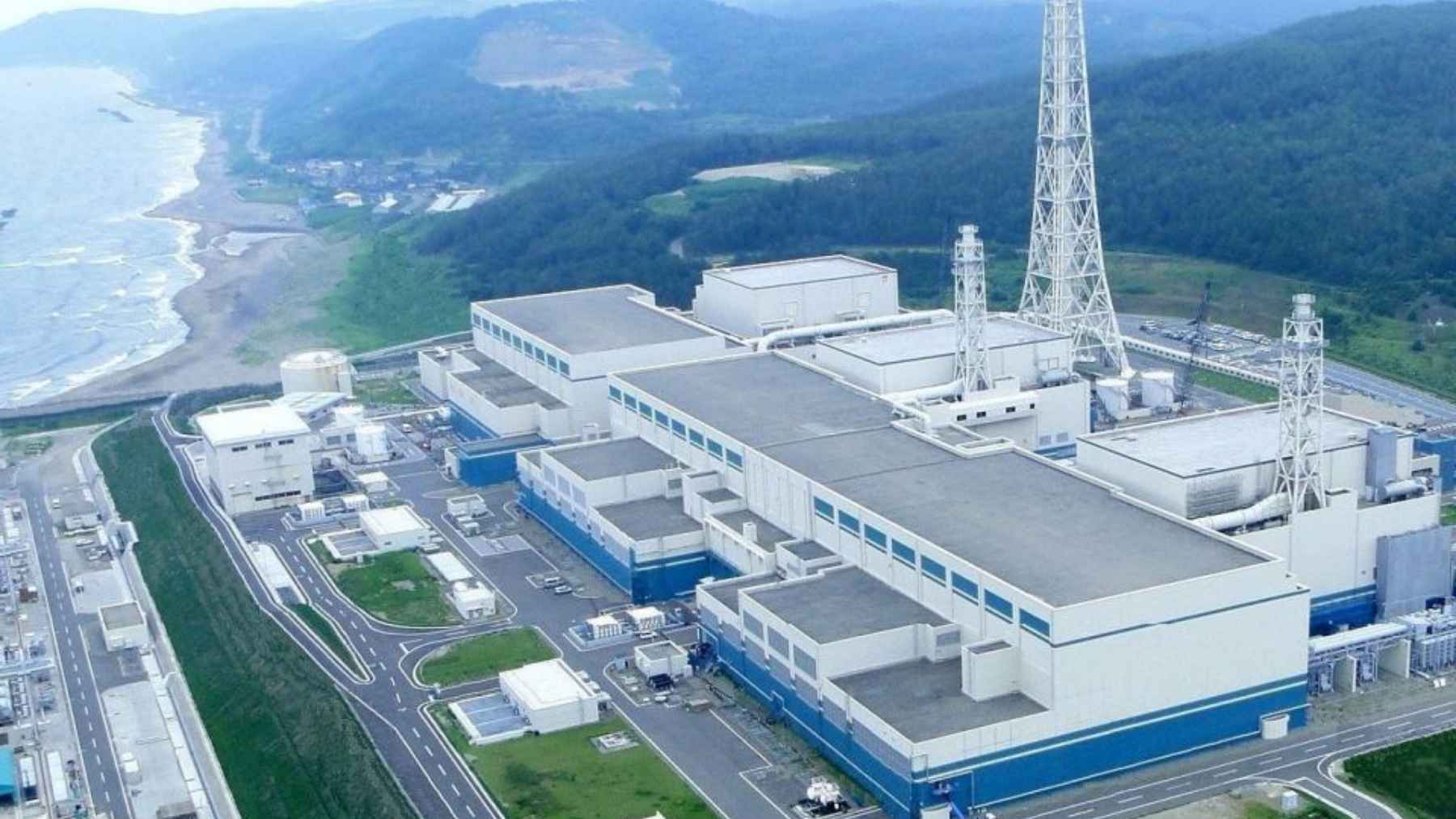
Kashiwazaki-Kariwa sits on the Sea of Japan coast about 135 miles northwest of Tokyo, and it is the largest nuclear power station ever built. Seven reactors, 8,212 megawatts of installed capacity between them, every one of them idle since 2012. On April 16, exactly one re-entered commercial operation.
It took three attempts and about 50 extra days to get there. And within three weeks of that reactor putting power on the wire, the utility that owns it began switching off solar farms in its own service area for the first time.
Getting one reactor started took three tries
Tokyo Electric Power Company, better known as TEPCO, planned to restart Unit 6 on January 20. It postponed by a day because an alarm designed to warn operators about control rod withdrawal failed to sound during a test of that alarm.
The second attempt went further. Workers began pulling neutron-absorbing control rods on the evening of January 21, and shortly after midnight another alarm tripped in the control rod monitoring system, this time on a single rod. Plant general manager Takeyuki Inagaki told reporters he had decided to shut the reactor down, with 52 of the 205 control rods already out of the core.
TEPCO replaced parts and restarted on February 9, with criticality confirmed at 3:20pm local time. Generation and transmission resumed on February 16, the unit came offline again from February 20 to 24 for inspections, and commercial operation was set for March 18.
That date slipped too. In mid-March an alarm indicated a small electricity leak at a generator, and TEPCO president Tomoaki Kobayakawa told reporters he could not say when commercial operation would begin. It finally happened at 4:00pm on April 16, per World Nuclear News.
Fourteen years is a long time to leave a machine sitting. TEPCO plans to run it for one year before the next scheduled inspection in April 2027.
The strait shut twelve days after the reactor came back
Unit 6 is a 1,356-megawatt Advanced Boiling Water Reactor that first entered service in 1996. Kashiwazaki-Kariwa was the first plant anywhere to use the ABWR design.
The U.S. Energy Information Administration estimates the unit will generate about 9,500 gigawatt-hours a year at full output, displacing roughly 1.3 million tons of liquefied natural gas on Japanese government substitution estimates. Japan’s Ministry of Economy, Trade and Industry puts the effect on the Tokyo area at about 2 percent of electricity supply.
Those are not small numbers for a country that imports every molecule of gas it burns. Gas covered 33 percent of Japanese electricity generation in 2024. Nuclear covered 9 percent.
Here is the timing detail most coverage skipped. Unit 6 was generating on February 16. The Strait of Hormuz closed on February 28.
Nobody at TEPCO restarted a reactor because of the Middle East. Niigata Governor Hideyo Hanazumi had consented back in November 2025 and the prefectural assembly backed him in December. The Middle East showed up twelve days after the power did.
The closure took more than 10 billion cubic feet per day of LNG off the water, about 20 percent of global trade, most of it Qatari volume. Kpler tracked no laden LNG vessel crossing the strait between March 1 and April 24.
Asian buyers went to the spot market. The Japan-Korea Marker, Asia’s benchmark LNG price, rose 51 percent to $16.02 per million British thermal units by late April, while Henry Hub in the United States fell 9 percent over the same stretch, according to EIA figures drawn from Bloomberg data. American terminals were already running at 94 percent of authorized capacity, so there was not much slack left to send.
Tokyo started curtailing solar three weeks later
A nuclear plant is baseload. It runs flat out or it does not run, and it cannot be throttled down on an afternoon to chase demand. Coal and gas plants have minimum output floors too, generally 30 to 50 percent of capacity. That leaves one thing in the stack that can be dialed back quickly, and it is the solar.
On March 1, TEPCO curtailed renewable output in its service area for the first time, cutting up to 1,810 megawatts during midday hours. On March 29, with demand about 3,500 megawatts lower than it had been on March 21 and Unit 6 contributing 1,319 megawatts of inflexible supply, curtailment peaked at 3,290 megawatts. More than seven times the March 21 level, when the reactor was not contributing.
Across March 28 and 29 together, curtailed energy came to 16.2 gigawatt-hours, against 9.2 GWh across March 1, 8 and 21 combined.
Those figures come from an April briefing note by the Institute for Energy Economics and Financial Analysis, built on TEPCO’s own published dispatch data. IEEFA argues for renewables and reads the numbers accordingly, so treat the framing as advocacy. The underlying data is the utility’s.
What makes it sting for Japanese households is that curtailed output earns nothing. Japan does not compensate generators for power the grid refuses to take, and consumers still pay a renewable surcharge of 4.18 yen per kilowatt-hour this fiscal year, roughly 20,000 yen annually for a household using 400 kWh a month.
None of that is an argument against the reactor. It is an argument about a grid short on storage and interregional transmission. On the March days when Tokyo was throwing away its own solar, it was simultaneously importing power from the Tohoku region up north.
The other six reactors are not close behind
The obvious follow-up is when the rest of the site wakes up. The honest answer is that most of it may not.
Unit 7 is the same 1,356-megawatt ABWR and cleared regulatory screening alongside Unit 6 in December 2017. TEPCO has pushed its restart to 2029 or 2030, and in September 2025 said it would remove fuel from the unit because required post-Fukushima safety construction would not be finished in time. Running both would add an estimated 100 billion yen, around $633 million, to TEPCO’s annual earnings.
Kobayakawa told the Niigata assembly in October 2025 that the company was considering decommissioning Units 1 and 2. Units 3, 4 and 5 have no announced timetable.
Unit 6 has a clock on it as well. TEPCO has until September 2029 to complete the anti-terrorism safety facility required at the unit, and it can run until then. Japan’s Nuclear Regulation Authority revised those requirements in early April to keep some operating reactors from having to shut down over the deadline.
The national target is nuclear at around 20 percent of generation by fiscal 2040, which needs up to 30 reactors. Fifteen are running. Three more have initial approval, six are under review, and eight of the operable fleet have not filed to restart at all.
The industrial base is not the problem. Japan still does much of the world’s heavy nuclear forging at a single press in Hokkaido, which we covered in June, and it builds inspection robots that take a radiation dose no human should. The reactors are the slow part.
The Unit 6 fuel pool is 88 percent full
During a media tour on May 1, reporters could see the spent fuel cooling pool at Unit 6 from a top-floor observation area. It is 88 percent full.
Kashiwazaki-Kariwa is one of three Japanese plants whose cooling pools will be full inside five years, according to the Federation of Electric Power Companies of Japan. Inagaki put it plainly to the Associated Press: without solid fuel management plans, “our power generation will stall sooner or later.”
Across 17 Japanese plants, cooling pools held more than 17,000 tons of spent fuel as of December 2025, close to 80 percent of national storage capacity, per METI figures. TEPCO is shuffling fuel from Unit 6 into pools at other reactors on the same site.
For permanent disposal, the government has approached Ogasawara village about a feasibility study on Minamitorishima, a government-owned island roughly 1,240 miles south of Tokyo with no permanent residents and an army missile range under construction. It is the fourth site to reach a feasibility study since the early 2000s, and the review process takes about two decades.
What four months of operation actually showed
Japan got the biggest nuclear station on the planet producing power again after fourteen years, which is a real engineering result and a real political one. One reactor of seven, about 2 percent of the Tokyo area’s electricity, and 1.3 million tons of LNG a year the country no longer has to bid for against Europe.
It also showed that dropping 1,356 megawatts of inflexible baseload into a grid that cannot store or move surplus means something else gets switched off, and that something is the cheapest generation on the system. Germany answered the same 2011 accident by shutting everything down, and one of its unused reactors now houses an amusement park. Neither country has a permanent home for the waste.
The next hard date is April 2027, when Unit 6 comes down for inspection. What TEPCO does with that pool between now and then will say more than the restart did.
 hanswolfgangsch DRIVER1 month ago