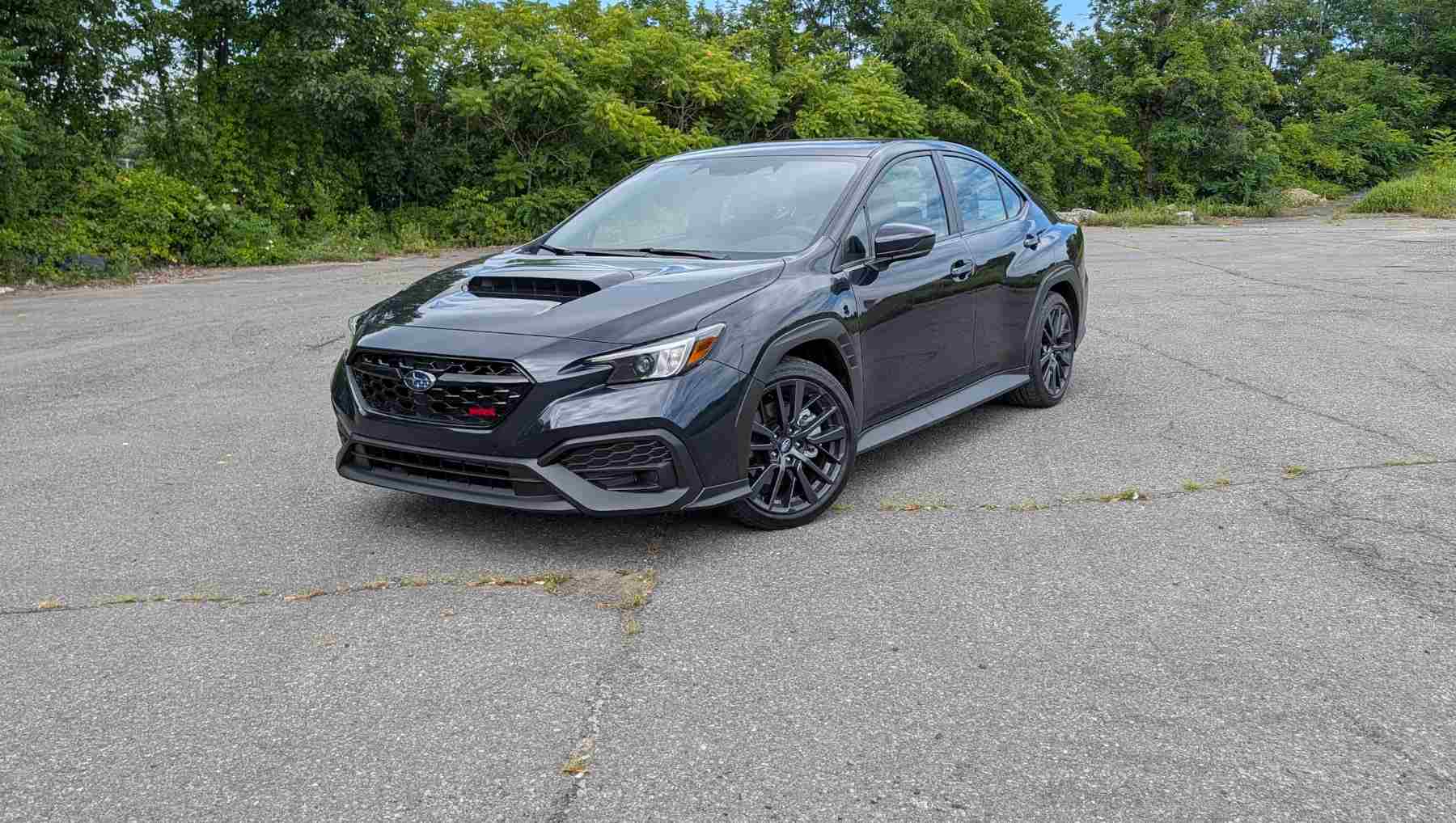

The 2026 Subaru WRX has a bit of a legacy to uphold. Spawned from the Impreza and Subaru’s World Rally Championship successes the compact sports sedan is packing a boxer engine and All-Wheel-Drive as standard.
It’s also one of the few remaining options if you love driving stick. Has a strong affiliation with the car modding community, and costs just a shade over $30,000. Which is a bit of a bargain these days.
All of this sounds great on paper, but cars tend to be tested out on the road. I recently got my hands on a 2026 Subaru WRX and got to try it in both its natural environment, and on a frankly painful daily commute.
Sedans like the Subaru WRX are still practical
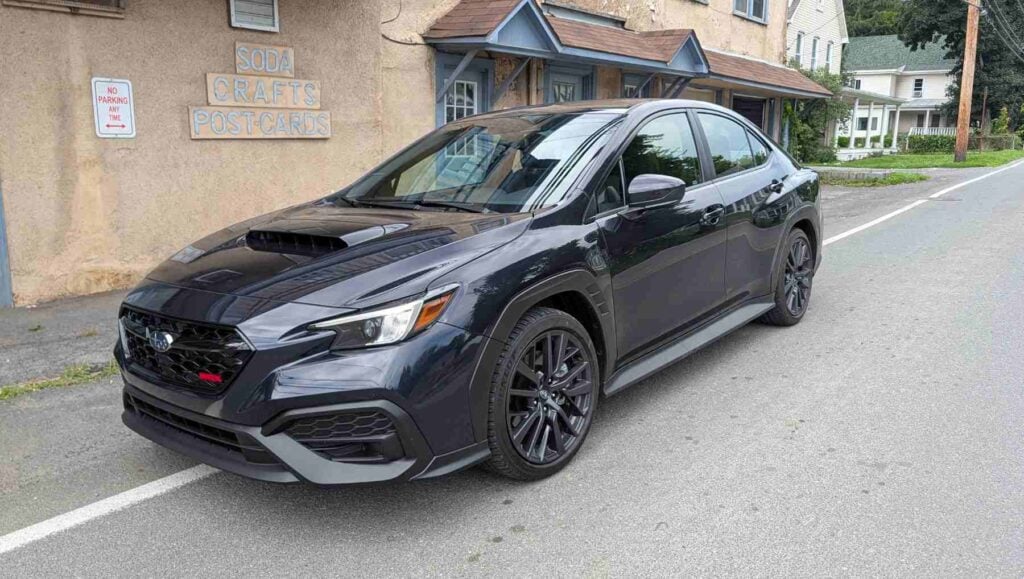
I’m somewhat of a sedan evangelist these days. In the current era, it’s hard to look beyond some form of SUV when it comes to practicality. Even the small ones offer some illusion of all-terrain capability and expansive storage space.
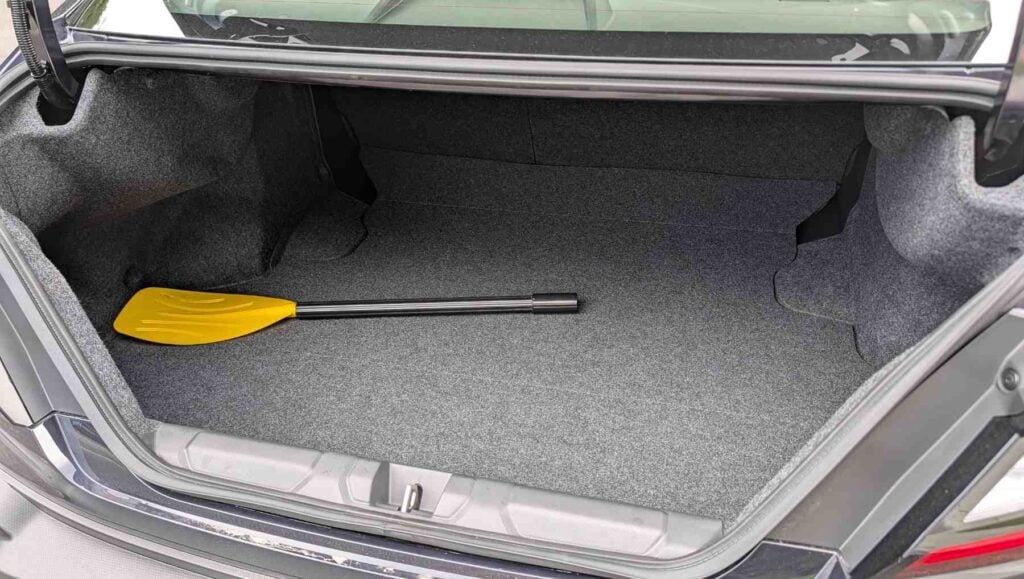
But people got by just fine with a sedan for decades. And I’d argue it’s still more than enough for the majority of people’s daily needs. On paper, the 12.5 cubic feet of storage space you get in the trunk is tiny compared to an SUV. Even the “frunk” of something like an F-150 Lightning has more room. But think of how often you actually fill that space.
With a Subaru WRX, you also have some sporting pedigree folded in. So it’s a bit like a BMW M5 in that respect, a sedan you can have a bit of fun with. Though the M5 is significantly faster, has a nicer interior, and comes in at around five times the price. So don’t expect a shootout between the two.
It’s not the worst interior, but it isn’t the best either
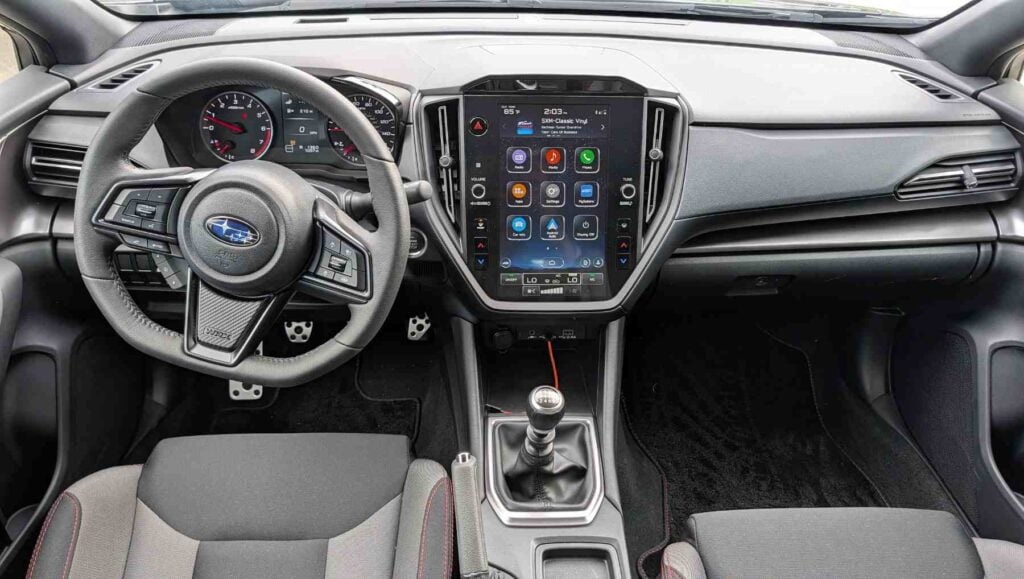
I’ve historically had a bit of an issue with Subaru interiors (aside from the BRZ which is an awesome piece of retro-futurism). Subaru tends to use a pretty poor quality pleather alongside a pretty dated dash layout in its vehicles. And while the central display could use an overhaul on the WRX, at least the Japanese manufacturer has popped a set of fabric seats in its sedan.
With an MSRP of $32,495, you can’t expect too much. Money will have to be saved somewhere. The infotainment’s touchscreen isn’t particularly pleasant. The buttons and indicator stalks are all pretty cheap plastic. But again, I’ve seen worse and I’ve seen worse from Subaru specifically.
The main downside of the interior is the overall outdated feeling it has. Subaru is one of those manufacturers that hasn’t refreshed its cabins in a long time, and a total overhaul might significantly boost the overall experience without jacking up manufacturing costs.
Subaru’s handling is still exceptional
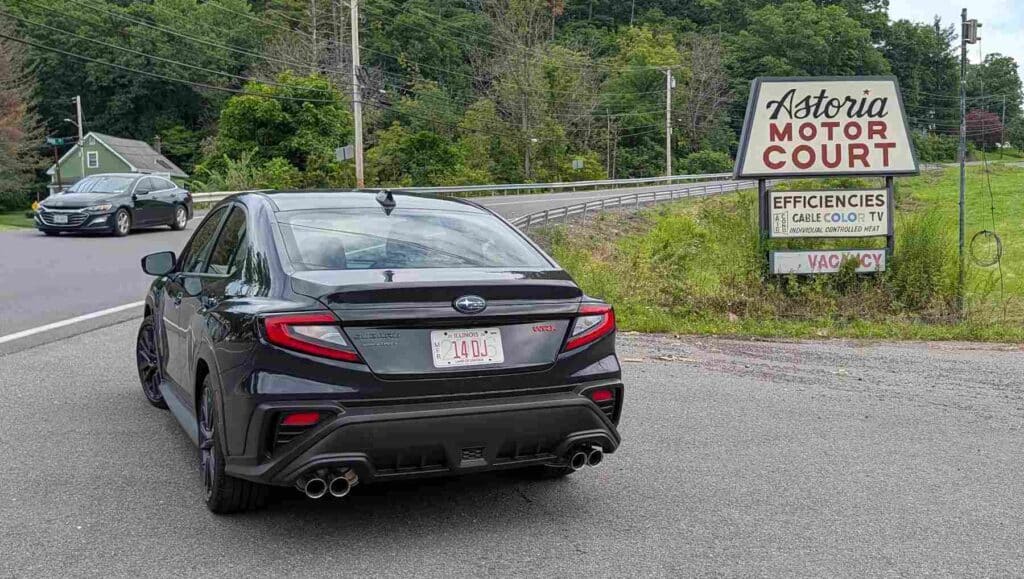
Subarus handle well. This is one of those fundamental facts of life. If I ever got behind the wheel of a Subaru and felt it handle like a shopping cart with a squeaky wheel, I’d be certain the apocalypse is on its way.
But that day isn’t here yet, the WRX is essentially pinned to the road and it takes a tremendous amount of effort, or extreme stupidity, to break that traction. You could argue that the WRX is a little underpowered by modern standards, but 271 horsepower is more than enough to get you in trouble. But the overall design, suspension, torque vectoring, balance, traction control, and all-wheel drive system is more than enough to keep you stable.
As always I won’t hesitate to recommend the WRX, or almost any Subaru, to people who live in an area with bad winter weather, dirt roads, general loose surfaces, or anything else that can make driving a challenge from time to time. You probably won’t get anything as stable for anywhere near this price. Though if you need true off-road capability, something like a Forester or Outback could be a better shout.
The 2026 Subaru WRX is a “no frills” manual
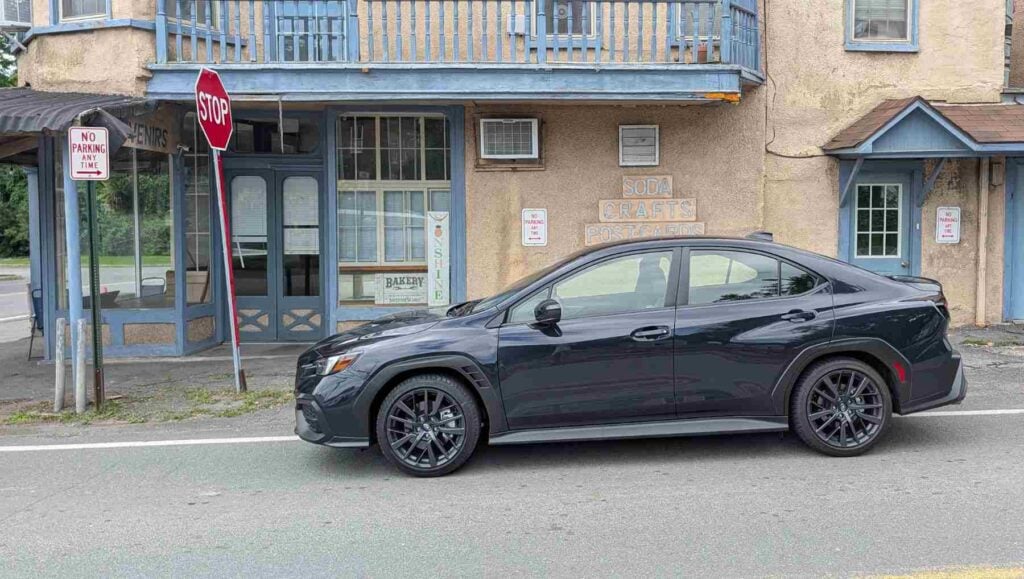
While you can get a WRX with a six-speed stick shift, it’s worth noting that it isn’t as “entry level” as some gearboxes. At the higher end (your Mustangs and Cadillac Blackwings) you get things like rev matching taking some of the difficulty (or skill, depending on who you ask) out of it.
The WRX’s stick is just standard, and can be quite rough. In fact, there are times when it just didn’t want to slip smoothly into gear which was frustrating. The bite point is so high, my left knee was essentially hitting the headliner half the time. While the 271 horsepower and 258 lb-ft of torque offered by the 2.5 liter boxer engine under the hood can be forgiving, the clutch on the WRX feels a bit aggressive. As a result, you can stall it if you aren’t careful, especially on a gradient.
Of course, an automatic option is available if you have no interest in a stick shift. And it’s nice that Subaru still has a manual option, particularly as many manufacturers have ditched the stick altogether.
The ride is pretty unpleasant
One area where Subaru has gone decidedly sporty with the 2026 WRX is suspension. You’re going to feel every bump, hole, crack, and seam in the road when you’re sitting behind the wheel of this thing. On the one hand, this is good.
Firmer suspension drastically improves stability and handling. The ability to feel the road also means you’ll get an early warning if you do somehow push beyond the limits of the vehicle’s traction.
On the other, both myself and many other people prefer it when our daily drivers don’t beat us half to death on our commute. The decision to go overly sporty is even more confusing when you realize that this is not a “sports” version of the vehicle. Despite the fact I was testing the base model (WRX/TUA) it came with “Sport-Tuned Suspension; Active Torque Vectoring” as standard. Some kind of comfort build, especially with the lower-end options, would be appreciated. Especially for anyone buying a WRX as a daily driver.
Is an STi version actually necessary? Yes, yes it is.
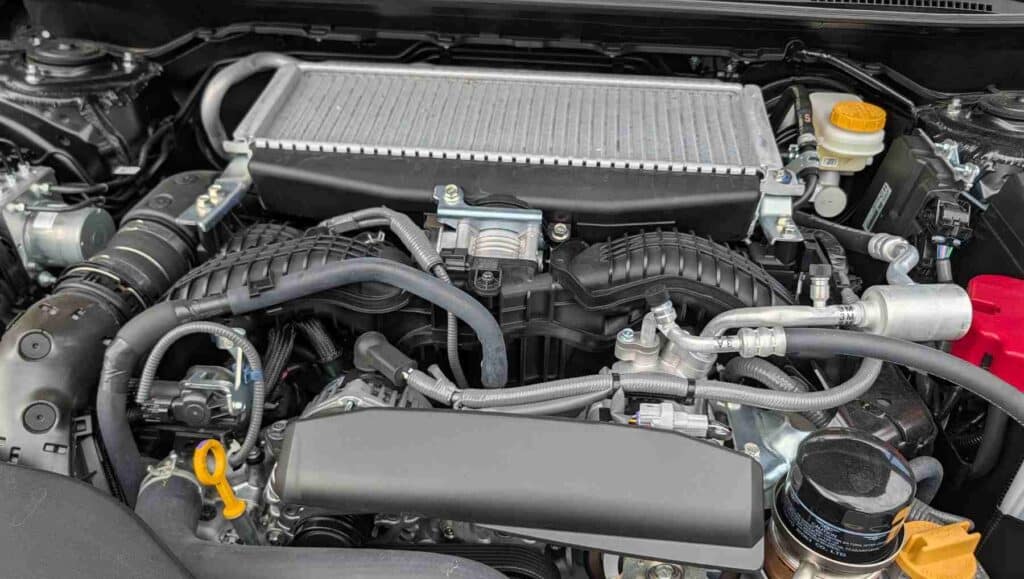
One of Subaru’s stranger choices with the 2026 WRX is the omission of an STI version. Basically there’s no dedicated “sports” version. Yes, some suspension components make it into certain trims, but you don’t get the extra 40 or so horsepower a true STI manages to pry from the engine.
Maybe there is some logic if you dig into it. Sales figures may have simply not justified an STI in 2026, and true performance enthusiasts (especially with something on the JDM-spectrum like the WRX) will likely insist on modifying the hell out of it anyway. And likely getting a far bigger boost than 40 horsepower.
But it still feels like something is missing, even if a WRX STI is a little more sterile than something like a Honda Civic Type R. Because the former’s handling absolutely neuters the sense of impending death you tend to get while thrashing a $30,000 performance sedan around.
It’s a step up on the last WRX I drove, but faces stiff competition
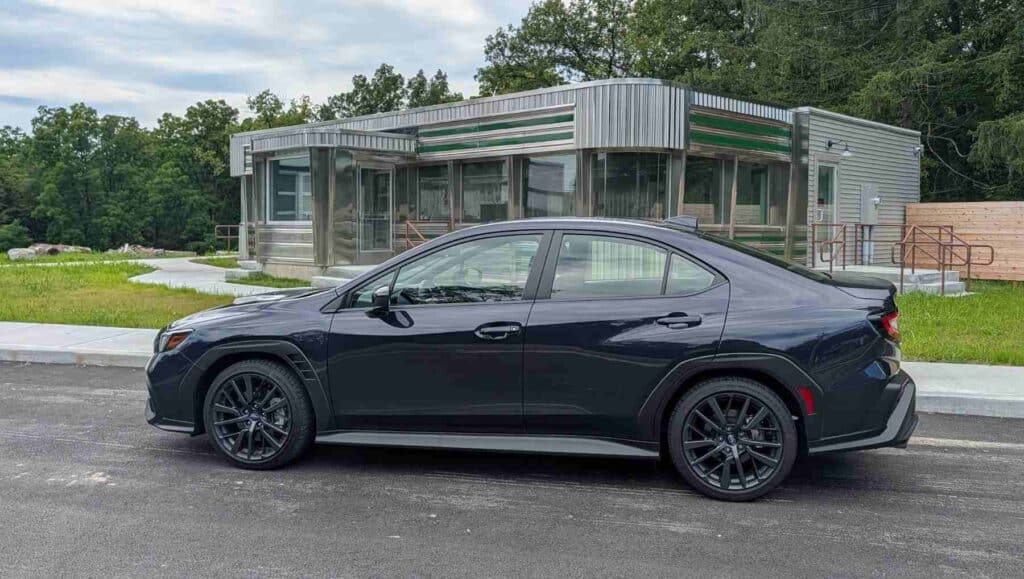
I last drove the Subaru WRX back in 2024, and found it a bit boring. It was a perfectly functional car, but for whatever reason it failed to excite me in any way. Things have somehow improved, and I actually found myself enjoying the 2026 WRX quite a bit.
As I mentioned earlier, it’s M5 adjacent. You can drop grandma off at church, pick up your week’s shopping, ferry a few kids to baseball practice, then try not to cock up a gear change while whipping down your favorite windy back road on the way home. It’s a practical, affordable, vehicle that doesn’t make you feel like you’ve entirely given up on life. And it has just enough of that Subaru rally pedigree to carry over a degree of street cred.
The issue is, it has some stiff competition. A Civic Sedan Sport is not as good, but notably cheaper with the base Civic being utterly soulless but almost $10,000 less. A Hyundai Elantra N is around $2,500 more, but has a better interior and better on-road performance. The Kia K4 GT-Line Turbo is cheaper, more modern, but notably less powerful and practical.
If you like ripping a manual down a dirt road then the WRX takes it in this price category. But if I was picking a daily commuter, I’d honestly go with something more comfortable.