
Stellantis is no stranger to the patent system. While the company’s ideas may not always make it into a vehicle, it still lays claim to a diverse range of design documents. This recently included a modern take on the frankly ancient leaf spring.
However, a recent patent first spotted by CarBuzz relates to something a bit higher tech. And a lot more dangerous. It could save the lives of everyone in a vehicle, while causing a major incident that anyone behind said vehicle will have to deal with. It’s an idea so crazy that everyone was lampooning the Chinese EV industry for suggesting something similar a few months back. And now Stellantis has dibs on the US version.
How could Stellantis’ patent save your life?
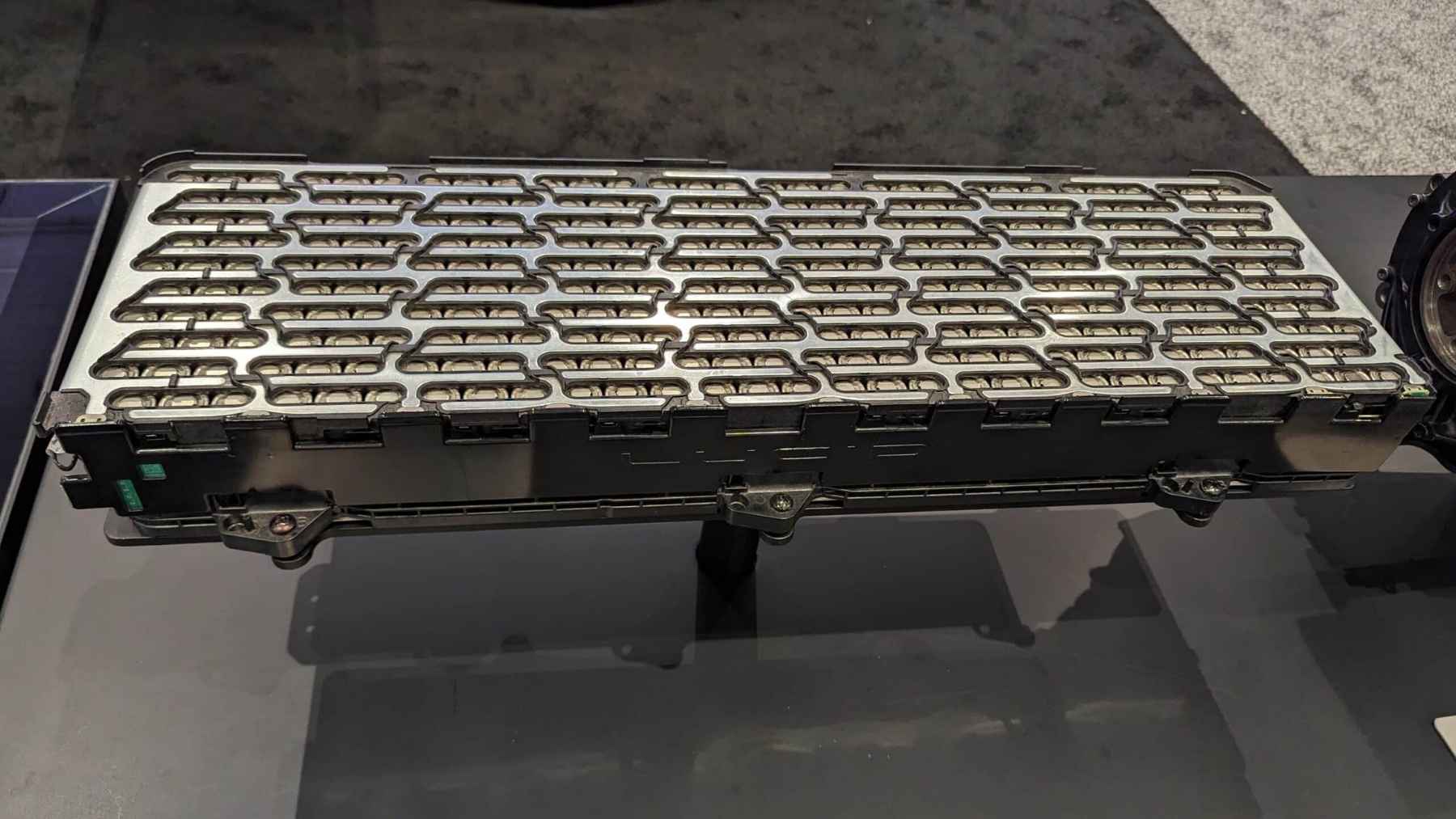
Battery fires are pretty bad. They burn hot and are very difficult to extinguish. Firefighters often need special equipment to put them out, and often it’s a case of cooling the battery so more cells don’t catch fire than it is extinguishing the cells that are already burning.
Vehicles also tend to have people in them. And after an incident like a crash (which can cause a battery fire) those people may be too injured to escape, or too panicked to find an exit. Therefore, a system that allows someone in the car to jettison the vehicle’s battery pack, or automatically jettison said battery pack if a fire is detected, is pretty big.
What is the patent for exactly?
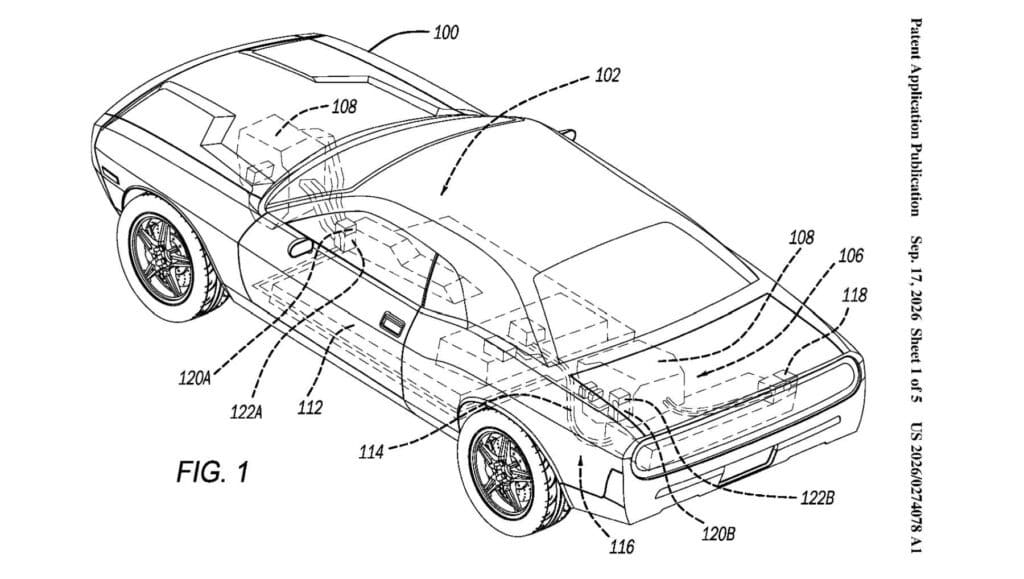
The patent is for a system that will “mechanically and electrically” decouple a burning lithium-ion battery. Individuals can trigger the battery release via a lever, button, touchscreen, or toggle. An additional quick release switch can also be placed in the trunk, which allows a first responder to separate the battery if needed.
As for how it is released, pyrotechnic fasteners” detonate blowing the bolts that attach the battery cell to the vehicle apart. A sliding frame assembly with opposing castellated frames then guides it out of the vehicle where it is released.
A secondary lower-voltage battery can then be used to limp the vehicle to a safe stopping point well away from its burning former battery. The more safety conscious among you may have noticed a bit of an issue with all of this.
Why it’s still not something you’ll likely see in a car
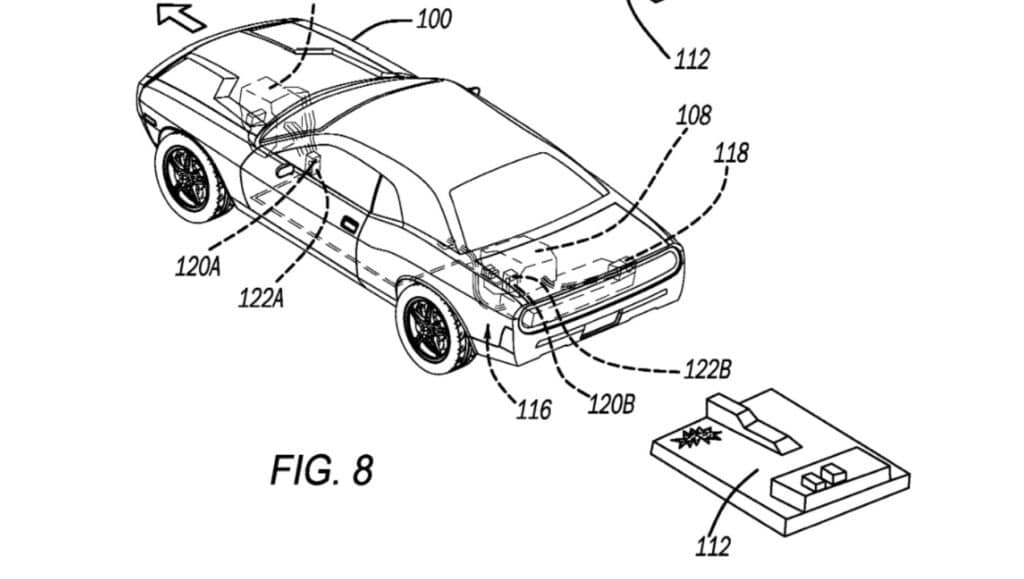
From a driver and passenger safety perspective, removing a burning battery is a great thing indeed. It basically drops the odds of them dying in a car fire to near zero. For everyone else, it’s a major issue.
While you aren’t launching 2,000 pounds of lithium straight at a building or pedestrian, you are still dropping an object that may weigh as much as the vehicle behind you right on to the road. And that object is also made of burning metal. Even if no one is directly behind you, creating a random road block with a ton of violently combusting alkaline metal isn’t something you’re allowed to do in polite society.
Then, beyond the safety benefits for those in the vehicle, we have the potential for error. Vehicles are recalled all of the time, and while many of these recalls relate to something minor a significant number are pretty serious. Th
is can include faults in major safety equipment like seatbelts, defects that cause wheels to detach while a vehicle is in motion, and issues that can make a vehicle catch fire in certain circumstances. If a charging system can have an issue that makes a car’s battery burst into flames, it’s reasonable to suggest the battery ejection system could potentially have a fault that either stops it ejecting when it needs to or, worse still, launch itself from the vehicle at random.
So while Stellantis owns the patent, you’ll only see this in a concept vehicle at best. The NHTSA would never let a feature that could potentially endanger other vehicles on the road.