
Anyone who’s ever run a cordless drill through a long day knows the real trick isn’t the battery. It’s the second battery. One pack’s in the tool, one’s on the charger, and the job never has to stop. The Royal Australian Navy applies the same logic to a 155-pound robot it sends down to look for sea mines, and this robot has a second removable part the drill doesn’t: its memory comes out too.
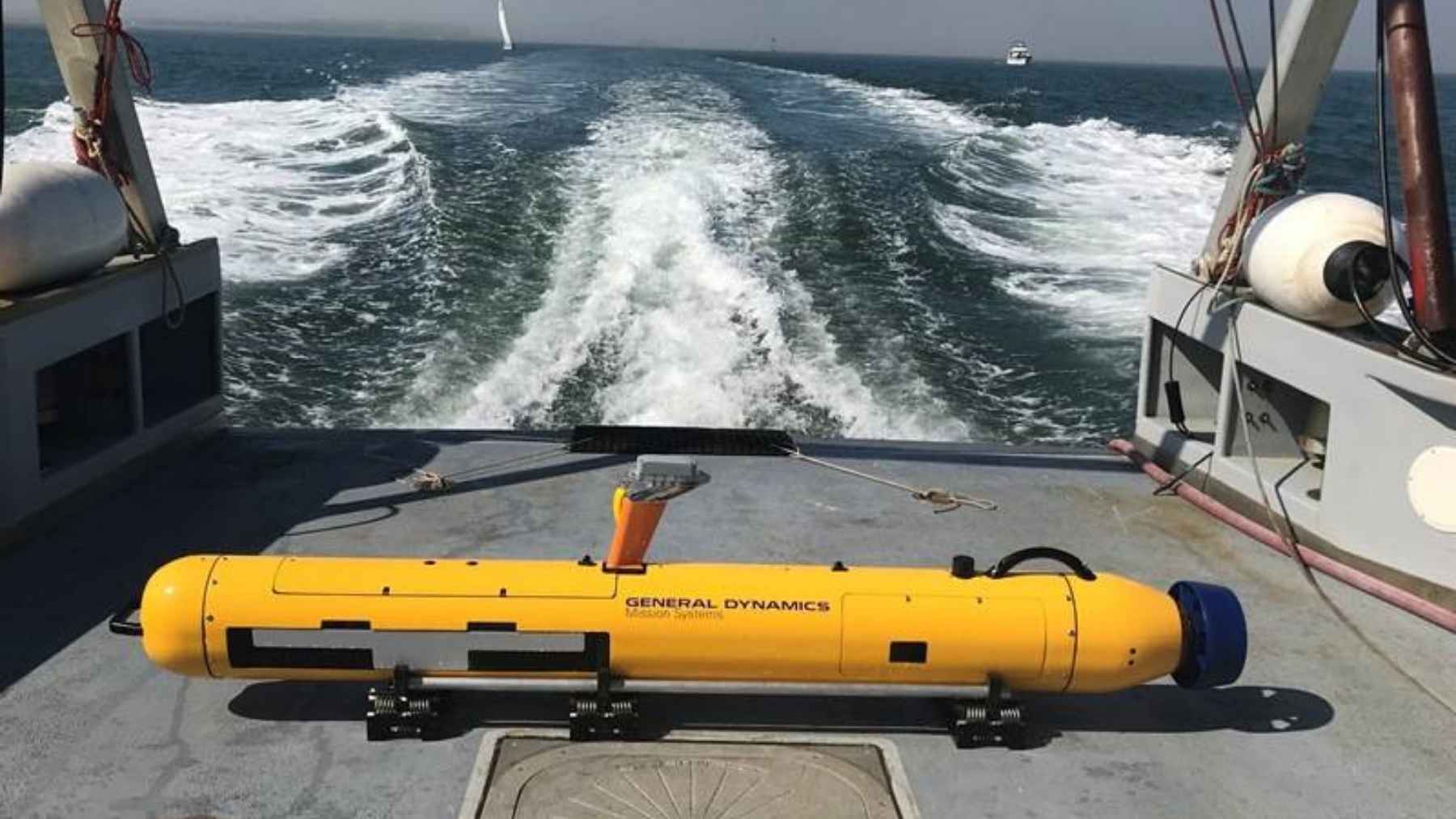
The machine is the Bluefin-9, built by General Dynamics Mission Systems in Quincy, Massachusetts. It’s a torpedo-shaped drone a shade under 8 feet long, light enough that two sailors can grab the handles on its nose and tail and put it in the water from a pier, an inflatable boat, or pretty much anything that floats. Australia bought four of them, along with three of the larger Bluefin-12s, under a program called SEA 1778, and as the navy retires its old minehunter ships, these small machines have been picking up a growing share of the search work.
So what does a navy do with a robot this small?
Mostly, it stares at the seabed. Side-scan sonar works a bit like holding a flashlight sideways in a dark room: the drone throws sound out to both sides as it swims and reads the echoes and shadows that bounce back. Sailors then comb through the imagery for anything shaped like a mine, and there’s plenty of junk down there that looks exactly like one.
The clearest public look at the job came in March 2024, at an exercise called Dugong off Eden, on Australia’s southeast coast. The navy laid live sea mines there for the first time in nearly 50 years, then set a combined Australian, American and New Zealand force loose to find them. Bluefin-9s and Bluefin-12s went into the water from small boats, operators read the sonar returns, and clearance divers or an expendable Seafox robot dealt with anything that needed dealing with. One of the drone operators, Able Seaman Grayden Ash, put the appeal simply: the machines let crews do the work “outside of the minefield.”
It hasn’t been a one-off, either. In July 2024, during a homeland defense exercise called Austral Shield, a navy robotics team ran a sonar confidence check with its Bluefin-9 off the navy’s own base in Cairns, Queensland, with the team leader noting the drones are coming online just as the aging Huon-class minehunter ships head for retirement. And this past March, Australia’s Department of Defence told Naval News that the deployable mine countermeasures capability built around this gear is in service, pairing crewed and uncrewed surface boats with the underwater drones. The same report ran an Australian Defence Force photo of two Bluefin-9s riding the back of a 38-foot support boat, and honestly, two yellow robots on the deck of a boat that size is a fair picture of where mine hunting is headed.
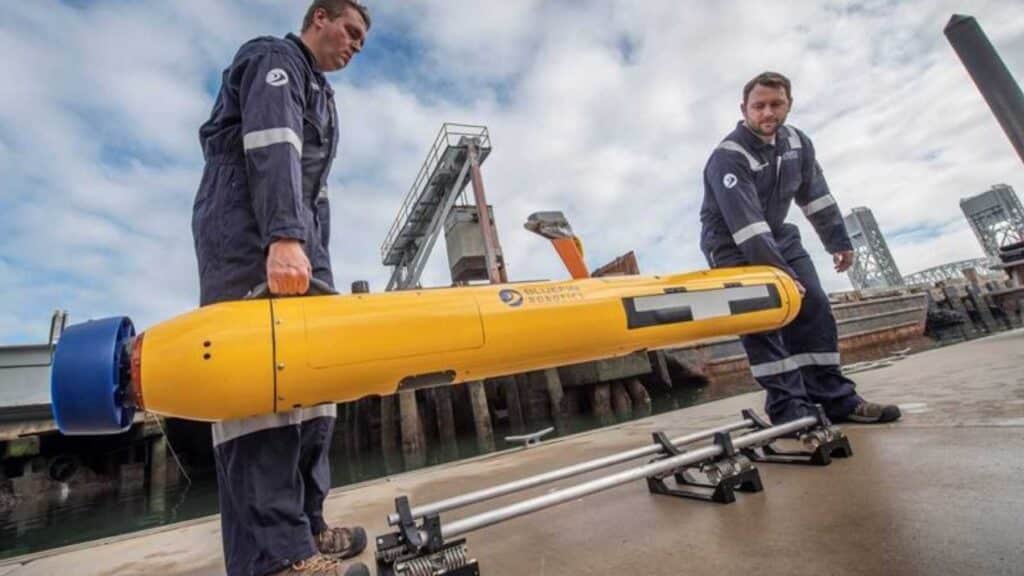
The battery is only half the trick
The spec that earns this robot its keep isn’t the sonar, frankly. It’s what comes out of it. The Bluefin-9 runs on a removable 1.9 kWh lithium-ion pack, and a full recharge takes six hours. That’s most of a working day spent waiting. So a crew doesn’t wait: it slides in a charged spare, the drained pack goes on the charger, and the robot goes back in the water.
Why pull the memory too?
Because the 1 TB Removable Data Storage Module isn’t a dumb hard drive. It processes the sonar and camera data on board while the mission runs, so when the vehicle surfaces, you don’t stand around downloading files. You pull the module, hand it to whoever’s doing the analysis, and slot a fresh one in, and General Dynamics says an experienced crew can have the same vehicle recovered, swapped and back in the water in 30 minutes or less. The company has made that claim since it launched the redesigned Bluefin-9 in October 2018, and it’s a pretty tidy piece of engineering. What I can’t tell you is whether Australian crews actually hit that half hour in the field, because no one has published a timed turnaround from a real exercise.
Don’t expect it to blow anything up
The Bluefin-9 finds things. It doesn’t fix them. Its integrated Solstice sonar, built by the British firm Sonardyne, covers a strip of seabed 656 feet wide on every pass, more than twice the length of a football field. Sonardyne rates the array at 18 watts, less power than most laptop chargers, and that stinginess goes a long way toward explaining how a small battery lasts a full shift underwater.
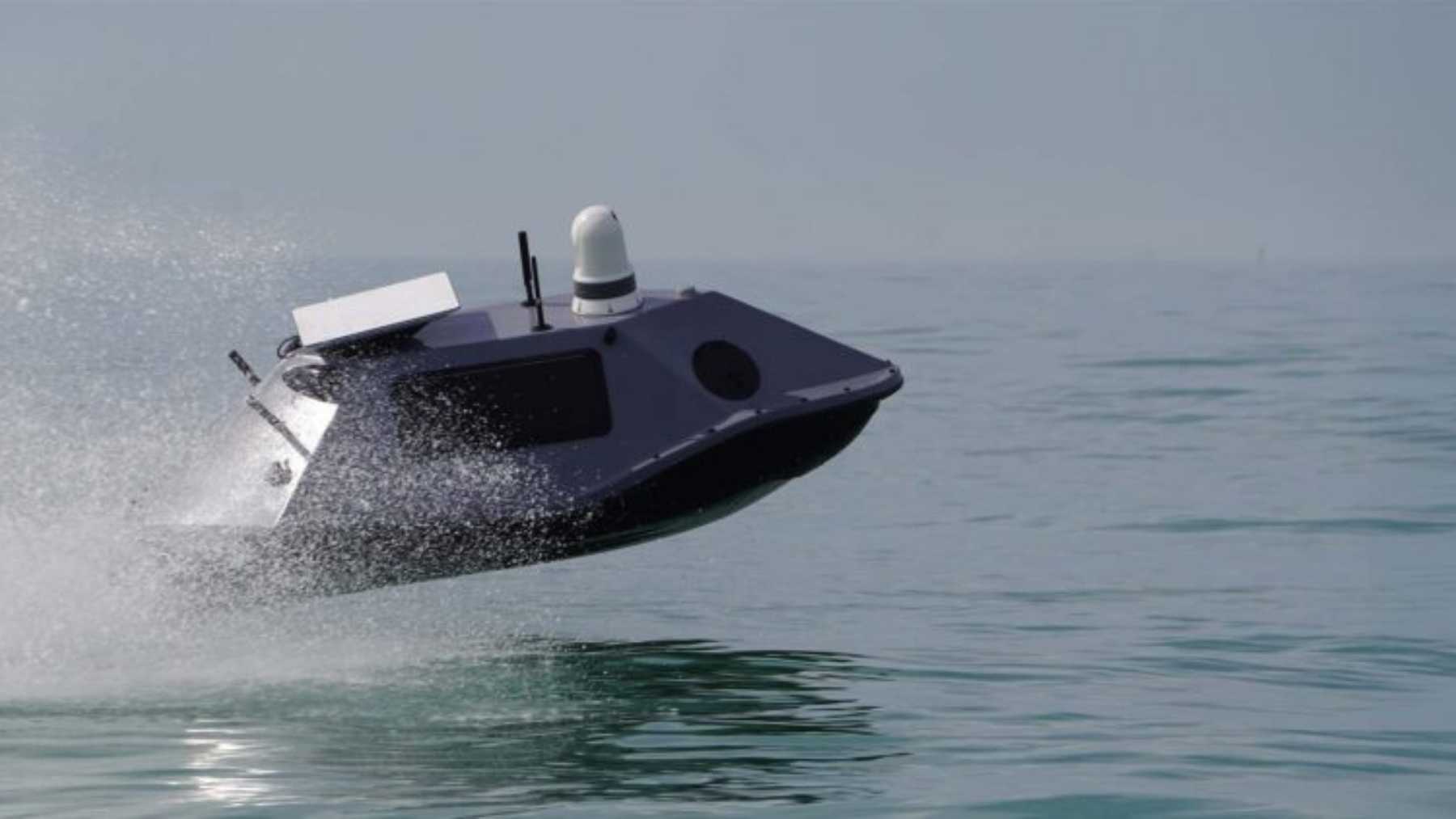
When the imagery does show something genuinely mine-shaped, the dangerous part still belongs to somebody else: a clearance diver, or an expendable robot built to go up with the mine. Australia isn’t alone in shrinking the search down to this scale, by the way. Spain’s navy hunts mines with a 115-pound drone that can stop and hover over a contact, and the whole class runs on the same sales pitch: two people, one small boat, no minehunter ship required.
There are honest limits on the spec sheet. Eight hours in the water assumes the drone putters along at 3 knots, about the pace of a brisk walk. Push it toward its top speed of 6 knots and you’ll drain the pack a lot faster. The hull is rated to 656 feet of depth, though I can’t find any public record of how deep Australian crews actually run theirs. And every contact the sonar flags still goes to a human mine warfare sailor for a decision.
The old ships aren’t coming back anytime soon, either. The Royal Australian Navy is down to two of the six Huon-class minehunters it commissioned, and Sea 1905, the program that was supposed to renew that fleet, sits suspended and slotted for the far end of the navy’s plan. That’s a thin bench, if you ask me. Australia’s Department of Defence, for its part, confirmed the deployable mine countermeasures capability the Bluefin-9s work under as in service, in the Naval News report published on March 17, 2026.