
“Circular economy” is one of those phrases that gets stapled to every corporate sustainability report, and most of the time it means a recycling bin and a nice infographic. So when a mining giant tells me it’s closed the loop for real, my default setting is polite skepticism.
Then I read the fine print on what’s now standing at Kennecott.
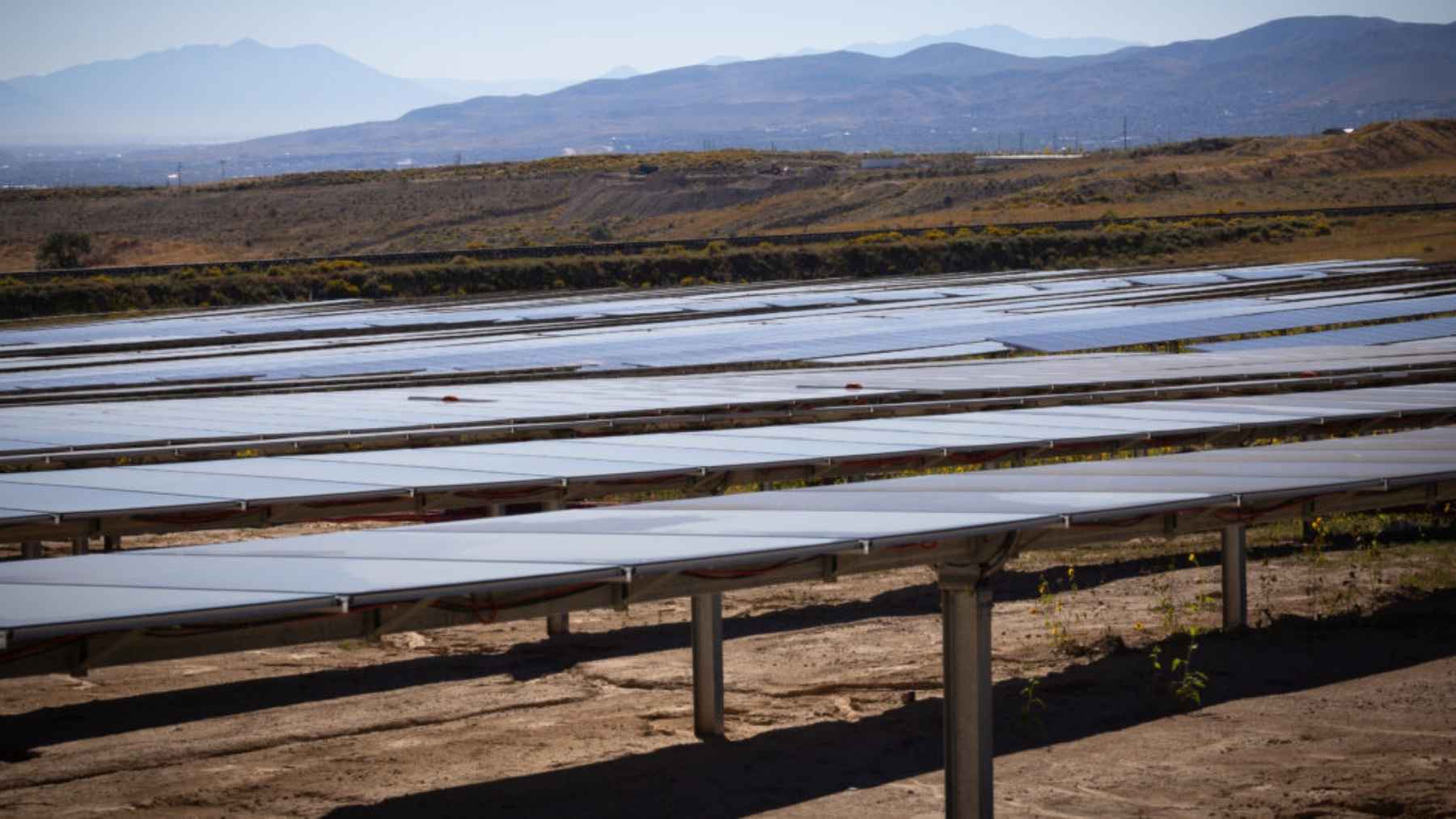
Kennecott is Rio Tinto’s copper operation southwest of Salt Lake City, built around the Bingham Canyon pit, the kind of hole you can pick out from a plane window. Since December 2025 it’s been drawing power from a 25-megawatt solar plant made up of more than 71,000 thin-film panels. And those panels contain tellurium produced right there on the property, pulled out of the same refinery that processes the mine’s copper.
Follow that loop for a second. The mine digs the ore, and the refinery pulls tellurium out of the leftovers. A Canadian company turns that tellurium into semiconductor material, an American company builds it into solar panels, and the panels go back up on the mine’s own land to power the operation that dug the ore in the first place. As loops go, this one’s pretty hard to argue with.
So what’s tellurium doing in a solar panel?
Almost every solar panel you’ve ever seen is built around silicon. First Solar, the company that made these, went a different way years ago: its modules use cadmium telluride, a compound laid down as a film a few microns thick on a sheet of glass. That thin coating is what actually turns sunlight into electricity, and tellurium’s half the recipe.
The catch is that tellurium is scarce, and you can’t really mine it on its own. Back when Kennecott’s tellurium circuit started up in 2022, Rio Tinto Copper’s chief operating officer at the time, Clayton Walker, explained why the metal lives where it does: “Approximately 90 percent of the world’s tellurium resource is contained in copper ore.” So if you want tellurium, you go find someone refining copper.
When a refinery purifies copper, everything that isn’t copper collects as residue in the tanks. Gold, silver, selenium and tellurium all end up in that sludge, and recovering them is basically a second, much smaller mining operation that happens indoors. The US Geological Survey says that’s where nearly all of the world’s tellurium comes from.
Kennecott has been pulling it out of the leftovers since 2022
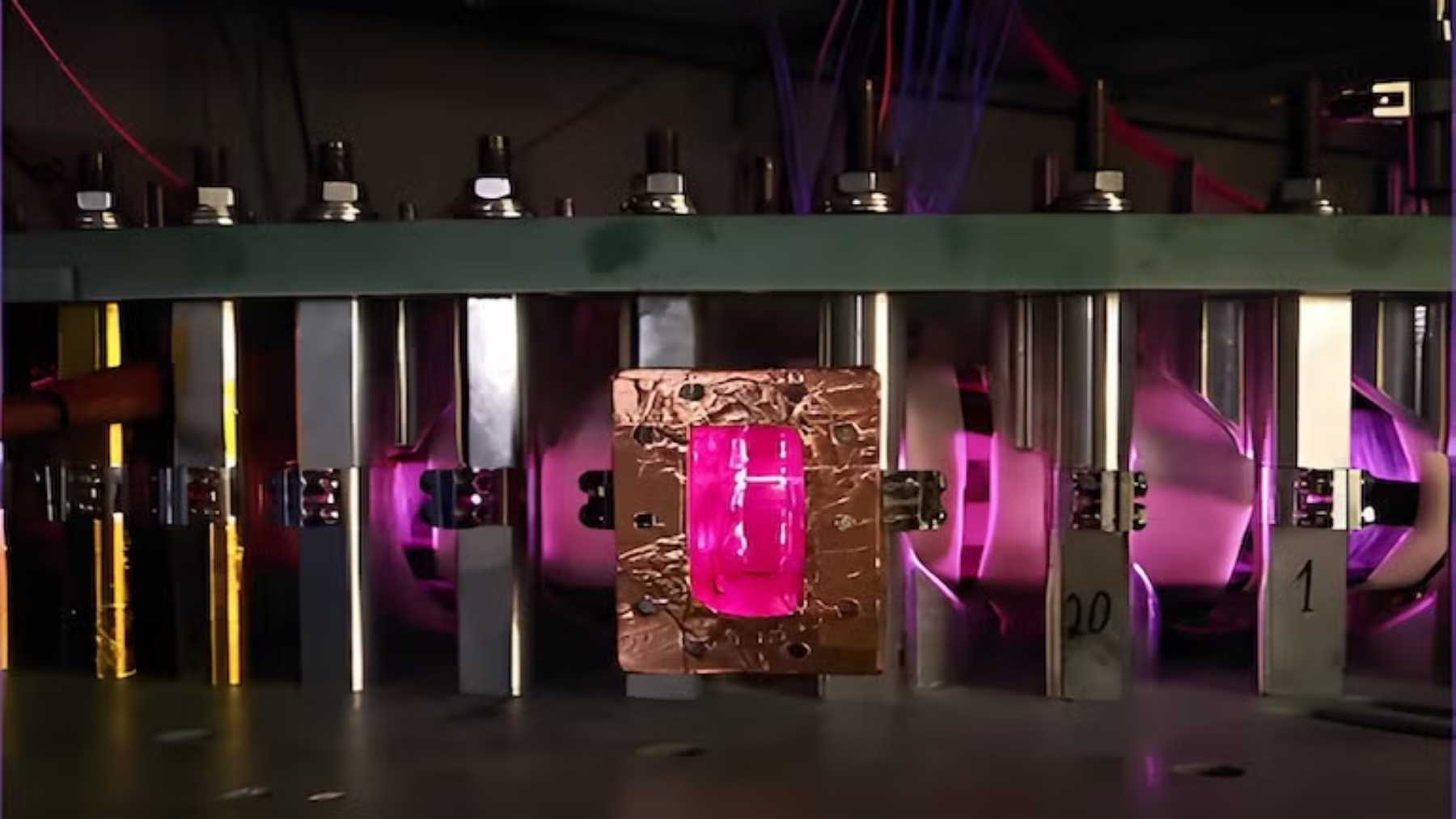
Rio Tinto spent $2.9 million bolting a recovery circuit onto the Kennecott refinery, designed to produce about 20 tons of tellurium a year from those byproduct streams. That made Kennecott one of exactly two tellurium producers in the United States, which sounds like a small club because it is one.
The material that leaves Utah isn’t finished tellurium, though. Per the USGS, there’s no refinery in the United States taking the metal to a finished grade. Kennecott ships copper telluride. 5N Plus, a semiconductor materials company, converts it in Canada into the thin-film feedstock First Solar needs. First Solar builds the panels. And for this project, the panels came back to the exact operation the tellurium started in, a chain Rio Tinto points out never leaves North America.
Let me flag one thing, though. Rio Tinto says the new array’s panels contain Kennecott tellurium; it hasn’t said whether every ounce across all 71,000 came from Utah, and I couldn’t find a breakdown anywhere. The loop is real either way. Just don’t picture each panel as 100 percent homegrown.
30 megawatts sounds bigger than it is
Construction on the 25-megawatt plant started in October 2024 with Bechtel building it, wrapped up in October 2025, and the array was energized in December. Bechtel says it handed the project over two months ahead of schedule, with about 200 local jobs on the build. Add the smaller 5-megawatt plant Kennecott finished in 2023 and the site now runs 30 megawatts of solar.
So does that take a copper mine off the grid? Not even close. Rio Tinto isn’t claiming it does, either. The company’s own math says the 30 megawatts is enough to power about 1,026 average American homes a year and trims Kennecott’s Scope 2 emissions by roughly 6 percent, about 20,000 metric tons of CO2 equivalent, the same as taking 4,400 cars off the road.
Scope 2 is accountant-speak for the emissions behind the electricity a company buys from the grid. And frankly, that 6 percent is the most revealing number in the whole announcement: if 30 megawatts of solar only covers about 6 percent of the purchased-power footprint, you get a feel for just how much electricity a full mine, smelter and refinery complex drinks.
China still refines most of the world’s tellurium
Now, why does a 20-ton circuit in Utah matter beyond Salt Lake City? Because of who controls the rest of the supply.
The USGS put China at roughly 75 percent of the world’s estimated refined tellurium output in 2024. China also put export controls on tellurium-bearing products in February 2025, and exporters have generally needed a government license ever since. First Solar has flagged that exposure to its own investors, something we dug into when its $1.1 billion Louisiana factory opened with no Chinese polysilicon in it and a tellurium question still hanging over it.
The company’s other answer is recycling. First Solar has run its own module recycling for more than 20 years and reported recovering over 95 percent of the material in 2025, tellurium included, which came up when we looked at where America’s dead solar panels actually end up.
Twenty tons a year from Kennecott isn’t going to rewrite that market, and I doubt anyone at Rio Tinto thinks it will. But when a country has exactly two domestic sources of a mineral and the world’s dominant refiner keeps a license book over exports, a $2.9 million circuit bolted onto a refinery that was already running looks like some of the cheapest supply-chain insurance in American energy.
Rio Tinto flipped the switch in December 2025 and made the project official on January 20, 2026, with 30 megawatts of solar now feeding an operation the company says supplies nearly 15 percent of America’s copper.