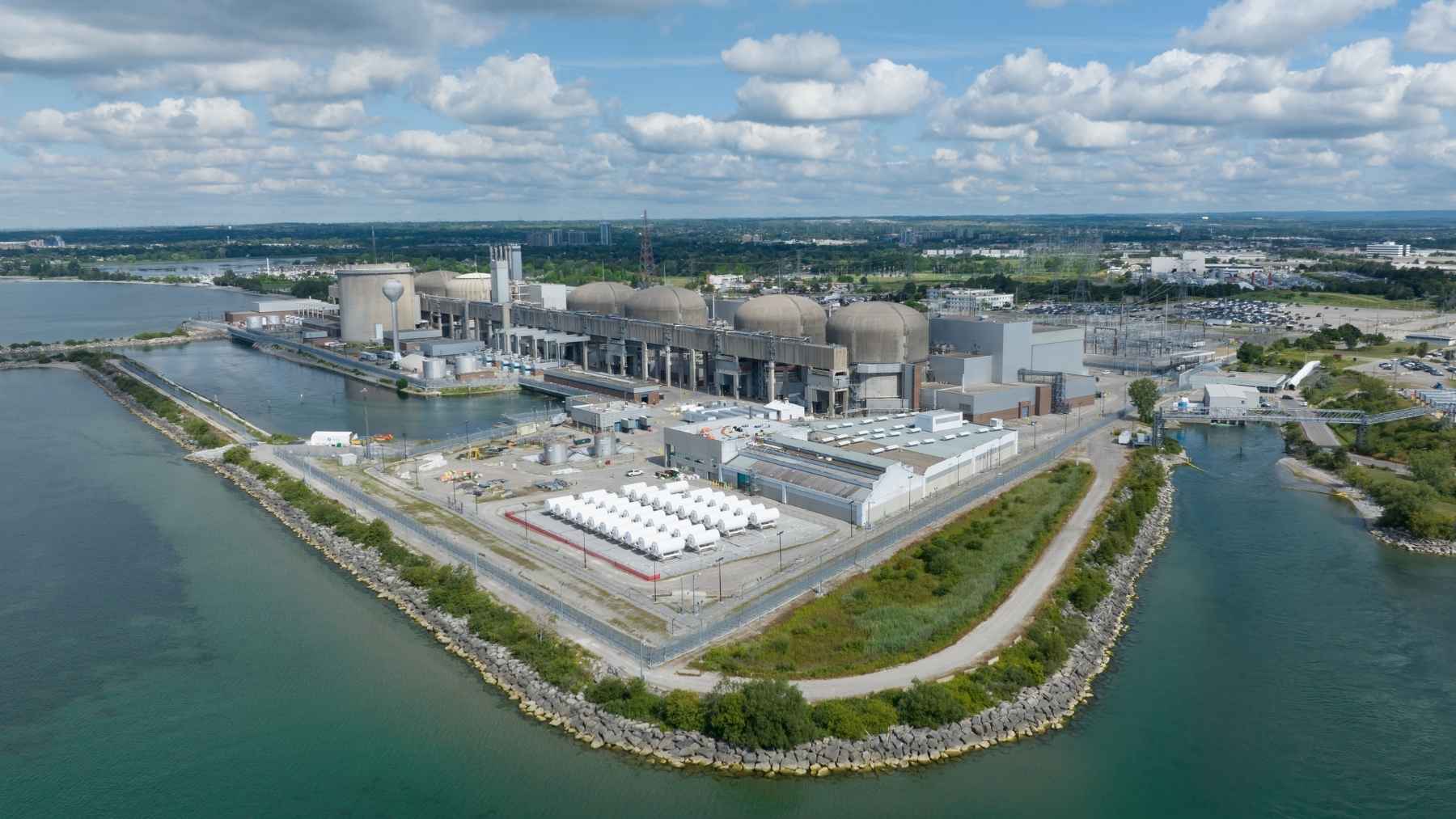

Every big American city sits on top of a giant chemistry experiment. Bury millions of tons of food scraps, yard clippings and soggy cardboard in a hole in the ground, wait a few years, and the bacteria down there will quietly cook it all into methane, the same stuff that powers your gas stove and, on a 20-year timescale, traps heat about 80 times more aggressively than CO2. The standard US move is to drill some pipes into the trash, suck the gas out, and set it on fire. Seoul just decided that was a waste of perfectly good fuel.
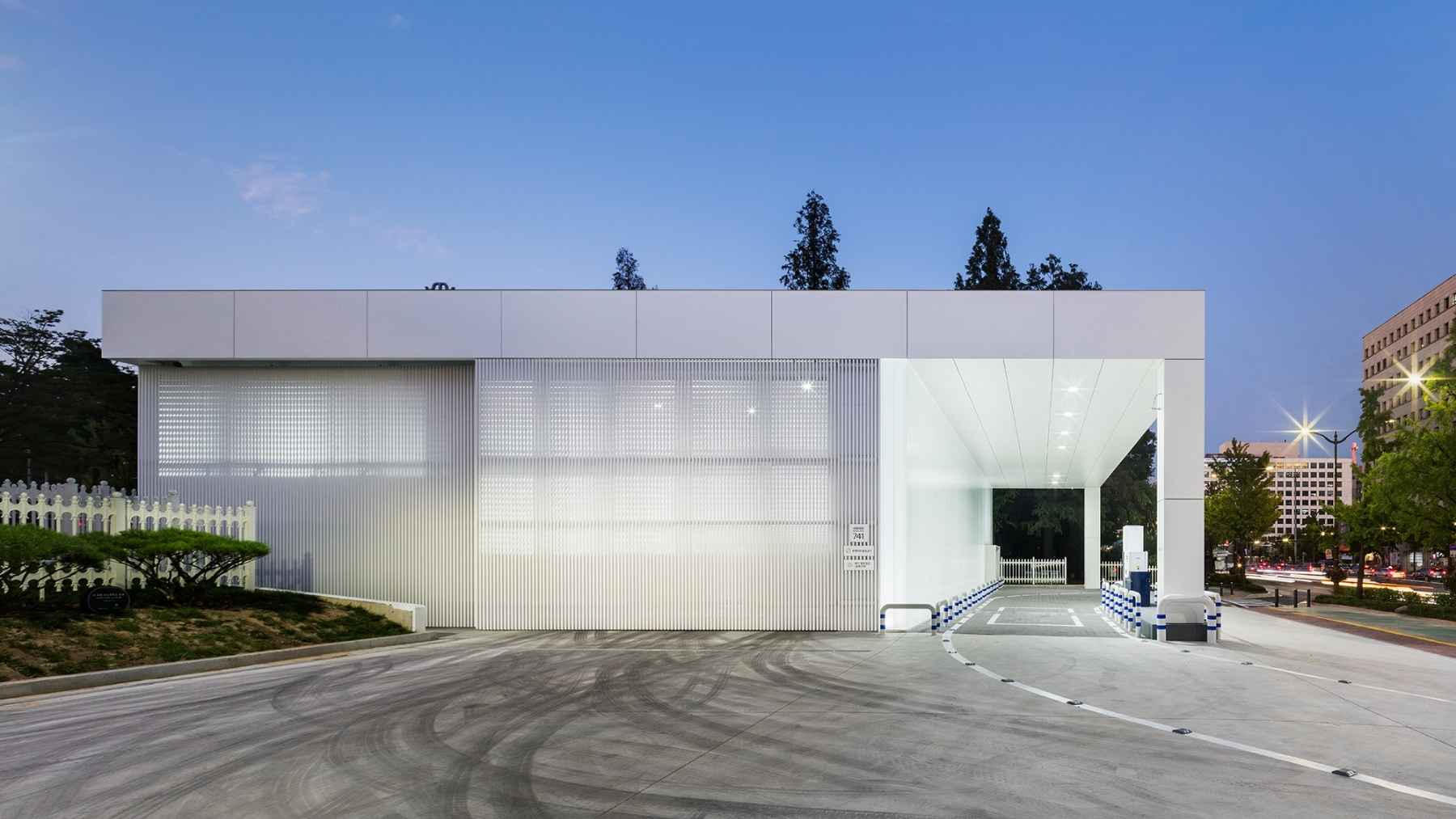
South Korean renewable-energy firm EcoSimplex has begun commercial operation of what it calls the ECO-Hydrogen Station in the Magok district of western Seoul, a facility that grabs biogas from a nearby sewage treatment plant and reforms it into hydrogen for vehicles. EcoSimplex says the plant pulls in roughly 4,000 normal cubic meters of biogas a day and turns it into about 500 kilograms of hydrogen, which goes straight into the dispensers for route buses, police buses and fuel-cell passenger cars. No flare stack. No “we’ll figure out the methane problem later.” Just sewage gas in, transport fuel out.
What’s actually happening in Magok
The technical move is steam methane reforming, the same reaction that makes most of the world’s hydrogen today, except the methane isn’t coming out of a natural-gas pipeline. It’s coming out of the digesters at a municipal wastewater plant, where microbes break down the organic load in Seoul’s sewage and give off a gas that’s roughly half methane, half CO2. EcoSimplex cleans that biogas, runs it through a reformer, and pulls out the hydrogen.
The carbon math is the part the company wants you to notice. EcoSimplex claims the biogas route cuts CO2 emissions by more than 85% versus grey hydrogen, the dominant industrial product worldwide, which is made from fossil natural gas like city gas. That 85% is the company’s own figure, not an independently audited one, but the logic is straightforward: if your feedstock methane would have decayed into the atmosphere anyway, you aren’t adding new fossil carbon to the system. As EcoSimplex vice president Kim Youngmin put it, the station turns “biogas derived from citizens’ sewage” into clean transport fuel. Translation: your shower water is now bus fuel.
Meanwhile, in America’s landfills
This is where the comparison gets uncomfortable. Municipal landfills in the US are sitting on roughly the same chemistry, a slow-motion biogas factory built from food waste, paper and yard trimmings, and they are a big deal. Per the EPA’s Landfill Methane Outreach Program, municipal solid waste landfills are the third-largest source of human-related methane in the country, around 14.4% of those emissions in 2022.
The official menu at a US landfill is short: flare the gas, burn it for energy, or clean it up for sale. In practice, most operators pick the flare, a tall stack with a flame on top that turns methane into CO2 and water vapor and calls it climate progress.
It’s also not as clean as the brochures suggest. A 2024 study led by the Harvard John A. Paulson School of Engineering, published in Atmospheric Chemistry and Physics, paired satellite measurements with an atmospheric model and found US landfill methane running about 51% higher than EPA estimates. The facilities that actually collect gas looked worse, not better: at those sites, methane ran on median more than 200% above what the operators reported. The collection systems aren’t even catching what the official models assume, because the EPA’s default 75% capture rate is closer to 50% in the real world.
The US could do this tomorrow. It won’t.
The block isn’t technical. The EPA itself lists vehicle fuel as a valid use for landfill gas, and a handful of US sites already clean it up to pipeline quality or compressed natural gas for garbage trucks. The hydrogen step, running purified biomethane through a reformer to make H2 for fuel-cell vehicles, is off-the-shelf chemistry. What’s missing is the demand side. There are barely any hydrogen passenger cars on US roads outside California, almost no hydrogen buses, and the country’s H2 retail network has been shrinking, not growing.
Seoul has the opposite problem. Hyundai builds the Nexo, the city already runs hydrogen buses, and national policy is doing the heavy lifting. South Korea’s 2019 Hydrogen Economy Roadmap targets 1,200 hydrogen refueling stations, 15 GW of fuel cells for power generation, and more than five million tonnes of hydrogen a year by 2040. Once you’ve committed to 1,200 stations, finding feedstock that isn’t fossil natural gas turns into a real engineering problem, and sewage works because it’s the one source every city has, every day, forever.
The catch nobody in Magok wants to talk about
Biogas-to-hydrogen is not a solved problem in Korea, and the EcoSimplex station lands in the middle of a national fight over hydrogen reliability. Hyundai’s pilot Chungju project, a food-waste-to-hydrogen plant that also runs at about 500 kilograms a day, has been blamed for producing H2 of insufficient quality and causing breakdowns in fuel-cell vehicles. Fuel cells are famously picky about purity, since trace sulfur and siloxanes from biogas can poison the catalyst, and a single bad batch can brick a bus.
EcoSimplex isn’t the first to try this in Korea, which means it knows the failure mode it has to engineer around. The economics also depend on the broader Korean H2 retail network actually working, which is shakier than the roadmap suggests: industry reporting has flagged stretches where only about 41 of 159 stations on the government’s distribution system were listed as open, with some rationing supply. Standing up one clean station is one thing. Keeping a 1,200-station network supplied with high-purity hydrogen every day is a different industrial problem.
The lesson for US cities
The Magok facility isn’t a silver bullet, and 500 kilograms a day is roughly enough to keep a small fleet of fuel-cell buses moving, not to decarbonize a megacity. But the model is the part worth paying attention to. Seoul worked out that the cheapest feedstock for green-ish hydrogen isn’t seawater you electrolyze with expensive renewables, it’s the methane already coming off the sewage plant whether you use it or not. Capture that methane and reform it, and you take a potent greenhouse gas that would otherwise leak into the sky and turn it into a clean-burning fuel, the same instinct behind chasing cheap hydrogen straight out of the ground instead of paying to manufacture it.
Apply that logic to a US city, say the methane streaming off a big landfill in Florida or Texas where the Harvard satellite work flagged the biggest underestimates, and you’ve got a feedstock currently being set on fire to make worse climate math than necessary. Whether anyone in the US wants to build the demand side for hydrogen vehicles is a separate fight, and right now the honest answer is “not really,” the same demand gap that keeps stalling the broader US hydrogen build-out. But Seoul has proven the supply side works at a real station, with real buses pulling up to real dispensers, instead of a press release and a rendering. That’s further along than most American landfill-gas projects ever get.