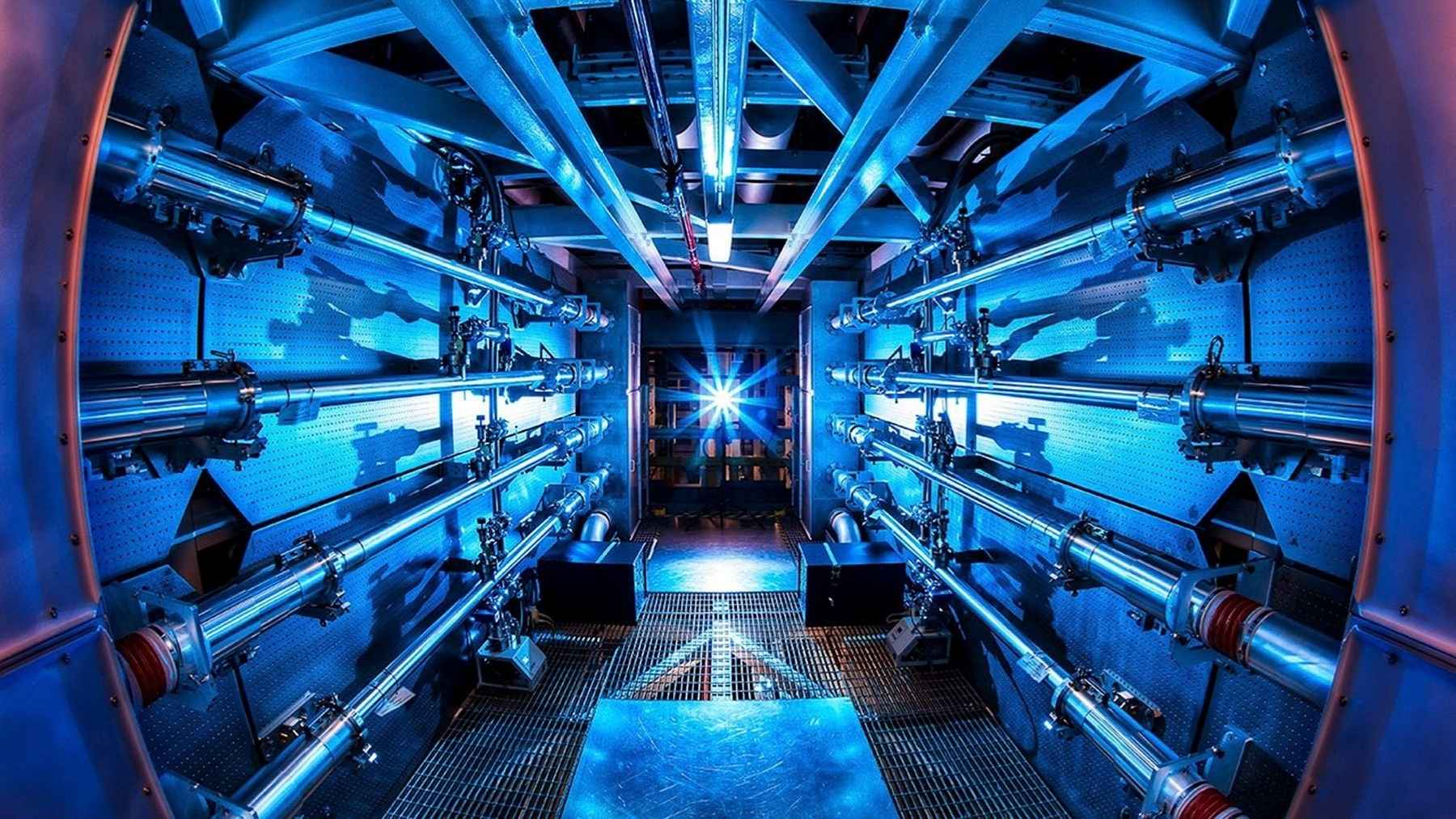

In December 2022, a lab in California fired 192 lasers at a fuel target smaller than a pea and, for a sliver of a second, got more energy out of the reaction than the lasers poured in. Nobody had ever done that before, and it made headlines everywhere.
What most of those headlines skipped is the boring part. Lining up a single shot like that takes hours of setup, and the machine isn’t built to fire on repeat. A power plant would need to do the same trick about ten times every second.
That gap, between a one-off physics result and a machine that could actually keep the lights on, is what’s slowly going up on a hillside outside Fort Collins, Colorado. It’s called ATLAS, it runs to $160 million, and the company paying for two of its three enormous lasers isn’t American. It’s German.
The steel went up first. The hard part comes next
Colorado State University held a “topping-out” ceremony for the building on April 24, when crews set the final piece of structural steel. Colorado Governor Jared Polis showed up to sign one of the beams, which tells you roughly how the state feels about having this thing.
The numbers behind that milestone are the kind construction people frame on a wall. The building is two stories and 77,626 square feet. Getting there took 590 tons of steel across five sequences, sitting on 7,355 cubic yards of concrete that arrived in 736 truckloads, according to the university’s account of the ceremony. It was developed by Tetrad Real Estate, designed by SWBR and built by McCarthy Building Companies.
But topping out a building is not the same as switching on a laser. What’s finished is the shell. Ahead of it is the enclosure, the mechanical and electrical guts, and the cleanroom and lab buildout a machine like this actually needs. CSU says the building is on track for substantial completion in December 2026. The lasers themselves get installed and commissioned after that, which is a multi-year job, not a ribbon-cutting.
Seven petawatts, aimed at a speck the width of a hair
Once it’s running, ATLAS is built around three ultra-high-power lasers. One is an upgraded version of a laser CSU already runs; the other two come from Marvel Fusion. Fired together at a single target, they’re designed to deliver close to 7 petawatts of peak power.
That number is almost useless without a frame, so here’s CSU’s own: the university puts that burst at over 5,000 times the entire electrical generating capacity of the United States, focused onto a spot about the width of a human hair.
Before that sounds like the plot of a Bond film, the catch is time. All that power lands for roughly 100 quadrillionths of a second. The peak is staggering; the actual energy in each flash is tiny, because it’s over almost before it started. Peak power and delivered energy are two different things, and this machine is built to win on the first one.
The real headline spec isn’t the 7 petawatts, though. It’s the repetition. ATLAS is meant to fire that shot about ten times a second, over and over. That’s the number that separates a science demo from a power source, and it’s the whole reason the building exists.
Firing that fast also means feeding it constantly. In Marvel’s design, an injector pushes a fresh fuel pellet into the chamber, the laser pulse slams into it, and supporting systems catch whatever energy comes off before the next pellet drops in. The physics has been shown once. Doing it on a metronome is the engineering nobody has cracked yet.
Why the machine is rising in Colorado, not Bavaria
Marvel Fusion is based in Munich. Its co-founder and CEO, Moritz von der Linden, runs it out of Germany, and the company keeps experimental hardware at home, including a laser chamber called LION 2 at the CALA facility in Garching. So the obvious question is why its most powerful laser cluster is going up on an American campus.
The official answer is talent and track record. CSU has been doing high-power laser work for around 40 years, led by University Distinguished Professors Jorge Rocca and Carmen Menoni, and Marvel had already been collaborating with that group. When you’re building one of the most demanding laser systems on Earth, you go where the people who can build it already are.
The less official answer is money and momentum, and both point at the US right now. The Department of Energy runs a laser network called LaserNetUS that CSU belongs to, the same country’s National Ignition Facility is the one that pulled off the 2022 result, and Marvel picked up a US DOE grant of its own in 2025. It has staffed up stateside too, hiring Puja Gupta to run its US operations.
There’s a push behind it, as well. In an April open letter headlined “Europe is in an energy crisis (again),” Marvel argued fusion has to be part of the continent’s answer. And in March, Bloomberg reported the company is now eyeing defense, medical and industrial uses for its laser tech as the road to commercial fusion energy stretches out. Read into that what you like, but a company hedging its bets tends to build where the funding and the facilities already are. Right now that’s Colorado.
It’s a lab, not a reactor
This is where other coverage tends to run ahead of the facts, so keep it simple: ATLAS is a research facility. It is not a reactor, and it will not be putting power on the grid. Nobody at CSU or Marvel is claiming otherwise.
What it will do is let researchers hit a fuel pellet with laser light at high repetition and see what holds up: the optics, the targets, the timing, the cost. It’s described as similar in spirit to the National Ignition Facility, but built with newer tech aimed at more power, better efficiency and lower cost. The combined old and new labs on campus now go by one name, the Advanced Laser for Extreme Photonics, or ALEPH, Center.
Fusion isn’t the only thing it’s for, either. The same lasers can be aimed at other problems, from depositing energy in a tiny region to treat tumors, to microchip lithography, to X-ray imaging of things moving too fast to photograph, like a jet engine’s turbine at full spin.
Colorado is quietly becoming a hub for this kind of work. A separate company, Xcimer Energy, is building its own high-energy laser in the Denver area, which means the state now hosts two serious bets on laser fusion at the same time.
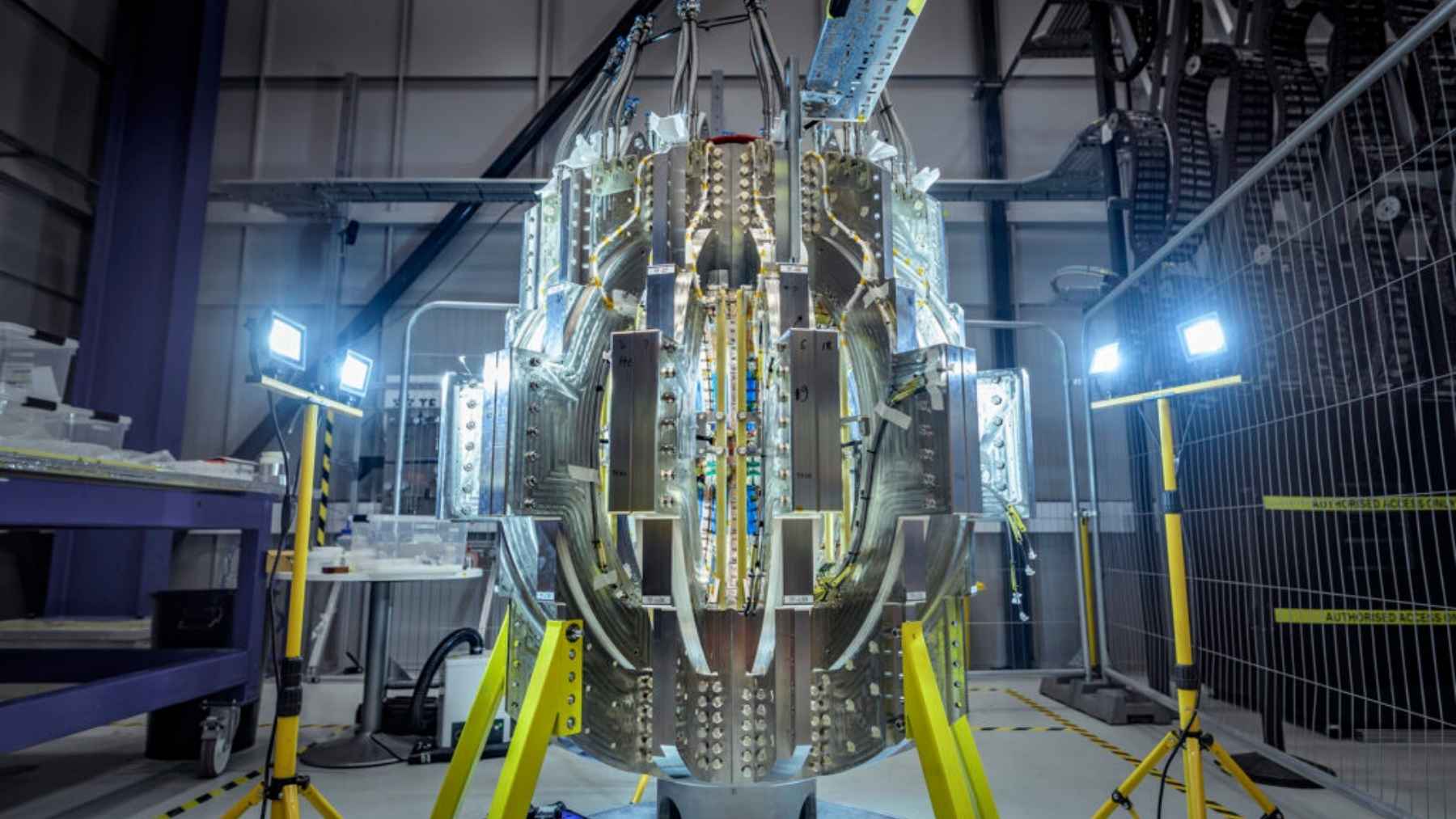
It also puts ATLAS in a different lane from most of the fusion machines you read about. Nearly all of them cage their fuel with magnets: Germany’s own twisted Wendelstein stellarator, Britain’s plan for a reactor you can unbolt one ring at a time, and America’s freshly licensed Helion with its colliding plasma rings. ATLAS doesn’t belong to that club. It’s inertial fusion, which crushes the fuel with light instead of holding it with magnetic fields, and it’s one of the biggest bets anyone has placed on that approach in the US.
So what’s actually true today is narrow and unglamorous. The steel is up, the shell is going on, and the real machine, the lasers, is still the multi-year part of the job. The building should be done around the end of 2026. First light comes later.
And the figure that ends up mattering won’t be the $160 million or the 7 petawatts. It’ll be that unassuming “ten times a second.” Hit a pellet the width of a hair that often, that precisely, without cooking your own optics, and you have the start of a power source. Miss it, and you have the most expensive strobe light in Colorado.
 hanswolfgangsch DRIVER3 months ago