
2026 Chevrolet Colorado
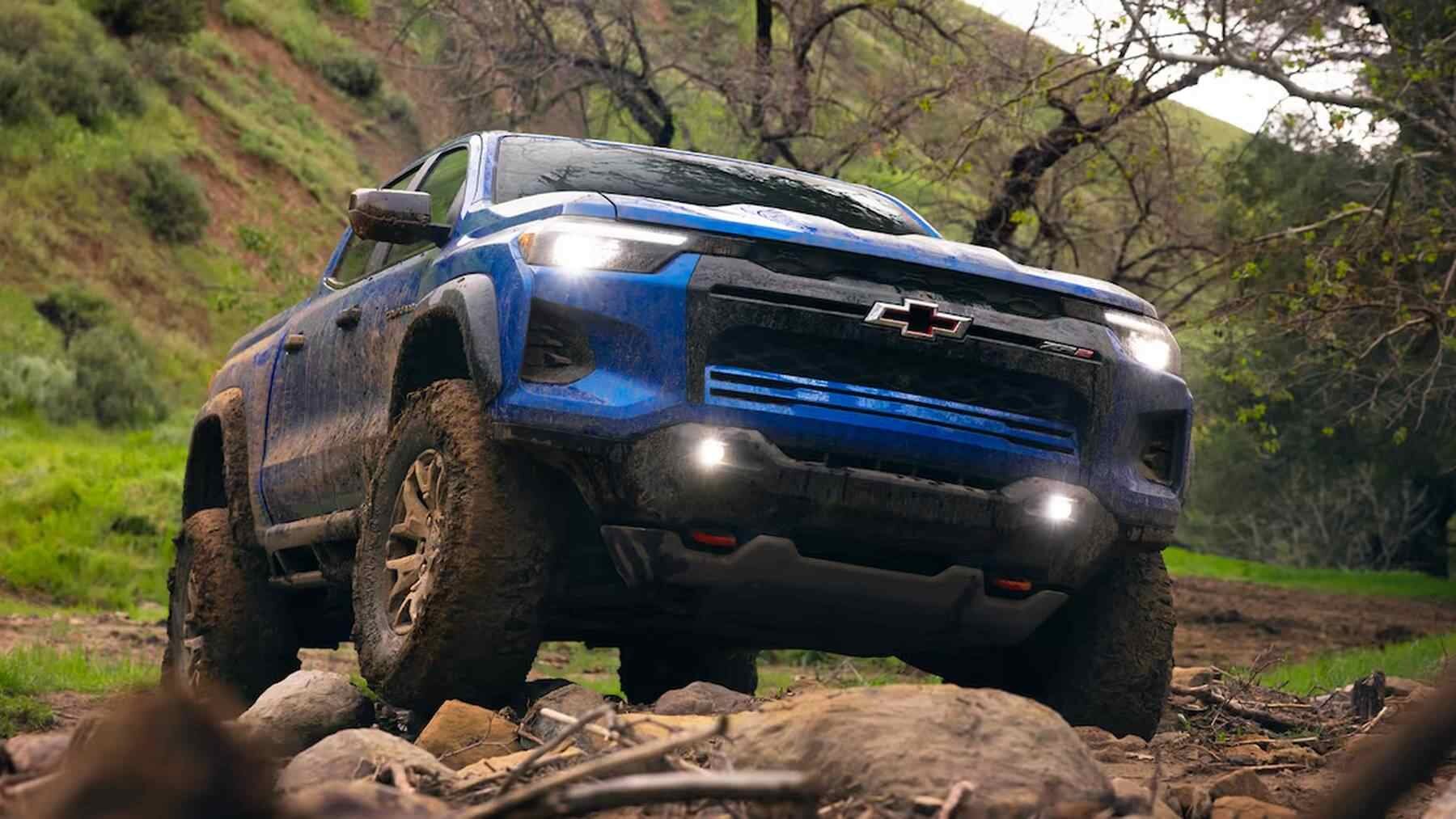
Overview
What's New for 2026
The 2026 Chevrolet Colorado enters its third model year since the comprehensive 2024 redesign, which completely reimagined this midsize truck from structural architecture through powertrain calibration. That redesign brought a modern turbo-gasoline engine lineup, significantly improved interior quality, and enhanced off-road capability through the elevated ZR2 variant. For 2026, Chevrolet has refined the Colorado's execution through improved transmission calibration, updated infotainment software with faster responsiveness, and subtle refinement of interior materials that enhance perceived quality without necessitating wholesale redesign.
The redesigned Colorado faces fierce competition from the Toyota Tacoma, Ford Ranger, GMC Canyon, Nissan Frontier, and Honda Ridgeline. Each competitor brought fresh approaches to the segment during 2023-2024, creating the most competitive midsize truck landscape in a generation. The Chevrolet's competitive strength lies in the 2.7-liter TurboMax engine's balanced power and efficiency, straightforward pricing strategy, and the ZR2's genuine off-road credentials that distinguish it from competitors' lifestyle-oriented truck variants. The Trail Boss bridges mainstream buyers and serious off-road enthusiasts, providing off-road capability without the ZR2's premium pricing.
Powertrain development for 2026 focused on transmission response optimization, particularly in Sport mode shifting and towing scenarios. The eight-speed automatic now offers improved shift mapping that reduces turbo-lag response when requiring rapid acceleration, a benefit most apparent when highway merging or passing maneuvers demand quick power delivery. The diesel alternative that GM provides in some markets remains absent from the North American Colorado lineup, positioning the gasoline turbo as the efficiency leader despite the Tacoma's hybrid option offering superior highway fuel economy.
Overview
The 2026 Chevrolet Colorado is a body-on-frame midsize pickup truck available in multiple cab and bed configurations, with crew cab and standard bed (5'2") as the default specification. The complete lineup stretches from the base WT (Work Truck) at $32,400 through the ZR2 at approximately $50,500, with the ZR2 Bison representing the ultimate Colorado variant at $64,295—pricing that directly competes with the 4Runner's base models despite the Colorado's midsize architecture. This aggressive positioning targets buyers willing to invest substantially for proven off-road competence.
The 2.7-liter TurboMax I4 engine produces 310 horsepower and 430 pound-feet of torque across the entire lineup, with no naturally aspirated alternative available. This single-engine strategy differs fundamentally from some competitors offering multiple powerplant options, but the turbocharged approach provides optimal balance between performance and efficiency that varies only by turbo calibration. An eight-speed automatic transmission pairs exclusively with this engine. The Colorado offers impressive towing capacity up to 7,700 pounds and payload capability reaching 1,700 pounds with standard suspension, with some configurations supporting higher ratings depending on rear axle ratio and equipment selection.
Crew Cab and Standard Cab configurations provide flexibility for different customer needs. The Crew Cab (standard configuration) seats five passengers with a 5'2" bed, balancing seating capacity with cargo versatility. Regular Cab configurations provide genuine jump seating for a third passenger with longer bed options reaching 6'2" in some configurations, though crew cab represents over 90 percent of sales for modern truck buyers. The independent front suspension and solid rear axle architecture reflects proper truck engineering, prioritizing durability and off-road capability over sedan-like refinement. Electronic locking rear differential is available on Z71 and higher trims, providing genuine traction enhancement during low-speed technical terrain negotiation.
Driving Experience
The 2026 Colorado delivers authentic truck dynamics without apology: body motions are noticeable during aggressive cornering, the steering lacks automotive refinement, and the driving experience prioritizes utility over luxury. This isn't a deficit but rather appropriate engineering for a vehicle designed to carry loads and traverse challenging terrain rather than maximize perceived sophistication.
The 2.7-liter TurboMax engine provides excellent real-world performance for a midsize truck context. Initial turbo spool delivers the engine's 430 lb-ft torque promptly, with minimal hesitation during highway merging or passing maneuvers. Power delivery remains linear through the RPM band, avoiding the sudden surge characteristic of larger turbos. The engine feels equally comfortable cruising at steady state or demanding quick acceleration, with transparent throttle response that allows confident power management. Fuel economy of approximately 18 city/24 highway/20 combined (2WD) compares favorably to the Tacoma's base naturally aspirated engine, though the Tacoma's hybrid option delivers meaningful efficiency advantages for highway-focused buyers.
The eight-speed automatic transmission calibration demonstrates improvement for 2026 model year. Sport mode now provides noticeably quicker shift response, beneficial when passing or accelerating from standing starts. Towing mode adjusts shift programming specifically for trailer loads, maintaining lower gears longer to preserve engine braking capability during downhill grades. The transmission's traditional modes prioritize efficiency and smoothness, with minimal perceptible shifts during gentle driving. Real-world testing reveals that highway pulling ability remains adequate but not exceptional compared to the Tacoma's V6 or the Ford Ranger's 3.0-liter EcoBoost—the Colorado's turbo four excels in city driving and light-duty usage more than serious towing scenarios.
Suspension tuning on the Z71 and Trail Boss variants adds Rancho shocks and slightly increased spring rates designed specifically for rough terrain. The 0.8-inch lift height elevation on Z71 models improves off-road departure angles without degrading on-road dynamics excessively. The ZR2 represents the genuine engineering apex, with Multimatic four-way adjustable dampers that allow driver tuning for specific terrain conditions, factory-installed lift providing 2-3 inches additional ground clearance, and standard electronic locking rear differential. The ZR2's 33-inch all-terrain tires wrapped around 17-inch wheels provide dramatic visual differentiation from standard Colorado models, with genuine off-road capability improvements that justify the premium for buyers seriously utilizing rough terrain.
Interior, Comfort & Technology
The 2026 Colorado interior represents a substantial generational improvement over previous models, with soft-touch dashboard materials, improved ergonomic control placement, and modern infotainment integration throughout. The base WT cabin emphasizes durability and practicality, with straightforward hard plastics that resist damage from contractor equipment and jobsite wear. Crew Cab configurations provide reasonable passenger comfort for secondary seating, though the Colorado's jump seats reflect truck priorities rather than sedan-like accommodation.
Infotainment technology centers on a standard 8-inch touchscreen running Chevrolet's MyLink software with wireless Apple CarPlay/Android Auto integration. Higher trims upgrade to an 11.6-inch display providing additional customization capability and available navigation functionality. The system's responsiveness has noticeably improved for 2026, with faster touch-to-response times and cleaner menu architecture that reduces learning curves for typical buyers. Wireless phone charging is available on higher trims, though USB-C charging ports provide standard convenience. The standard safety features include automatic emergency braking, forward-collision warning, and lane-departure warning, establishing baseline protection across the lineup.
Seating comfort improves substantially on higher trims. The base WT provides straightforward cloth seating with minimal adjustment capability. LT and Z71 trims introduce power-adjustable front seats with integrated lumbar support and available heated seat functionality. Trail Boss and ZR2 models offer power front seats with heated and ventilated functionality, beneficial for extended off-road expeditions or highway driving in extreme climates. The 12-volt and USB charging infrastructure throughout the cabin supports modern device ecosystem demands, with multiple charging ports positioned for optimal accessibility. Z71 and higher trims include wireless charging pads, reducing cable clutter during typical commute driving.
Trim Levels & Pricing
The 2026 Chevrolet Colorado offers five primary trim levels, each targeting distinct buyer priorities and usage patterns:
| Trim | Starting MSRP | Key Features & Differentiation |
|---|---|---|
| Work Truck (WT) | $32,400 | Basic cloth seating, manual windows/locks, 8" MyLink touchscreen with Apple CarPlay/Android Auto, standard safety tech (AEB, FCW, LDW), vinyl flooring, 2WD standard |
| LT (2WD) | $36,000 | Power windows/locks/mirrors, 8-passenger capacity with split second-row seating, heated front seats, Bluetooth integration, improved interior materials |
| LT (4WD) | $39,100 | LT features plus four-wheel drive with electronic shift transfer case, locking differential available |
| Z71 (4WD) | $40,400 | Rancho shocks, skid plates, all-terrain tires, terrain response system, 0.8" suspension lift, electronic locking rear differential, off-road styling, power sunroof available |
| Trail Boss (4WD) | $42,200 | Elevated ground clearance, Rancho shocks, all-terrain tires, underbody protection, sport appearance package, heated seats, available leather |
| ZR2 (4WD) | $50,500 | Multimatic four-way adjustable dampers, factory lift (+2-3"), 33-inch all-terrain tires, electronic locking front/rear differentials, rock sliders, underbody skid protection, Bose audio |
| ZR2 Bison (4WD) | $64,295 | ZR2 features plus additional armor plating, AEV-designed protective components, premium interior appointments, maximum off-road capability |
The base WT at $32,400 represents outstanding value for buyers prioritizing pure utility, with comprehensive standard safety features and modern infotainment providing genuine functionality despite minimalist creature comforts. The LT at $36,000 (2WD) introduces power comfort features and improved interior materials at modest premium, representing the volume market sweet spot. The Z71 at $40,400 (4WD) provides legitimate off-road capability enhancement through suspension tuning, electronic locking differential, and protective underbody components—genuine value for buyers engaging moderate off-road driving. The ZR2 at $50,500 positions directly against the 4Runner's TRD Venture, providing comparable off-road capability at significantly lower cost. The Bison variant at $64,295 represents maximum off-road specialization, with integrated armor protection designed by AEV (American Expedition Vehicles) that few competitors can match at any price point.
Safety
The 2026 Colorado incorporates modern safety technology starting with standard features on the base WT trim: automatic emergency braking, forward-collision warning, and lane-departure warning. These foundational systems provide protection against common accident scenarios that cause significant injuries. The 8-inch MyLink touchscreen includes optional features like blind-spot monitoring with rear cross-traffic alert, lane-keeping assist, and adaptive cruise control on higher trims. The surround-view camera system available on Z71 and above dramatically improves parking precision and reduces blind-spot-related incidents, particularly valuable given the truck's elevated seating position.
The Colorado's body structure reflects proper truck engineering with a rigid frame designed to absorb frontal collision energy while protecting the passenger compartment. Multiple airbag positioning throughout the cabin—including roof-rail side curtain airbags—provides occupant protection across all seating locations. Electronic stability control with rollover mitigation enhances high-speed maneuverability safety, though the elevated seating position and narrow track width increase theoretical rollover risk compared to lower-riding vehicles. Real-world accident statistics for midsize trucks demonstrate competitive safety performance, with the Colorado performing in line with segment expectations.
Off-road-specific safety enhancements appear on Z71 and higher trims. The terrain response system automatically adjusts suspension, traction control, and engine response for different terrain conditions (sand, rock, gravel), improving stability during challenging driving. The electronic locking differentials available on Z71 models and standard on ZR2 enhance traction on slippery surfaces, reducing the likelihood of getting stuck in technical terrain where vehicle immobilization creates stranding risk. Hill descent control on Z71+ models automatically manages braking during steep downhill driving, preserving brake thermal integrity while enhancing control. For comprehensive crash test ratings and safety assessment, visit nhtsa.gov and iihs.org.
Warranty & Ownership Costs
Chevrolet's warranty coverage for the 2026 Colorado provides standard protection across the ownership timeline:
| Coverage | Duration |
|---|---|
| Basic Warranty | 3 years / 36,000 miles |
| Powertrain Warranty | 5 years / 60,000 miles |
| Corrosion Perforation | 6 years / 100,000 miles |
| Roadside Assistance | 5 years / 60,000 miles |
Ownership costs for the Colorado prove reasonable relative to the segment. EPA fuel economy ratings of 18 city/24 highway/20 combined (2WD) and 17 city/22 highway/19 combined (4WD) translate to annual fuel costs of approximately $1,400-$1,700 assuming 12,000 annual miles at $3.50/gallon gasoline. The Tacoma's hybrid option delivers 20-22 combined MPG, a meaningful advantage for high-mileage buyers where the additional fuel efficiency recaptures the hybrid premium over time. Insurance rates for midsize trucks run moderately higher than sedans but substantially lower than full-size models, reflecting the Colorado's accessible price point and mainstream market positioning. Maintenance costs align with typical truck expectations: routine oil changes cost $60-$80, scheduled maintenance follows straightforward Chevrolet intervals, and parts availability is excellent through GM's extensive dealer network. The 2.7-liter TurboMax engine family has demonstrated solid reliability in real-world ownership, with no widespread durability issues reported affecting the Colorado's ownership experience.
The Bottom Line
The Verdict: The 2026 Chevrolet Colorado delivers versatile midsize truck capability spanning from basic work applications to serious off-road recreation, with pricing accessibility and feature content that rank favorably against revitalized competitors. The ZR2 variant specifically provides compelling off-road capability at half the cost of full-size alternatives like the 4Runner.
Who Should Buy: Contractors and tradespeople will appreciate the Colorado's straightforward WT trim pricing ($32,400) combined with durable build quality and conventional truck architecture. Lifestyle truck buyers valuing weekend recreation and light off-road exploration should evaluate the Trail Boss ($42,200), which provides authentic capability without the ZR2's premium positioning. Serious off-road enthusiasts capable of utilizing full-featured terrain response systems should commit to the ZR2 ($50,500), which delivers exceptional value compared to body-on-frame alternatives.
Who Should Look Elsewhere: Buyers requiring maximum towing capacity (9,000+ pounds) should consider the full-size Silverado 1500, which provides superior powertrain options and capabilities. Those prioritizing fuel efficiency should evaluate the Toyota Tacoma's hybrid option, which delivers superior highway economy despite the Colorado's competitive turbo engine. Drivers unable to compromise on cargo bed length should explore regular cab configurations, though crew cab dominates the market for practical reasons. Luxury-focused truck buyers should consider the premium GMC Canyon, which provides similar architecture with more refined interior appointments.
Frequently Asked Questions
What is the towing capacity of the 2026 Colorado and how does it compare to competitors?
The 2026 Colorado offers impressive towing capacity up to 7,700 pounds, competitive with the Tacoma (6,800 lbs), Ford Ranger (7,500 lbs), and GMC Canyon (7,700 lbs). The Colorado ties for segment leadership with the Canyon, reflecting shared GM engineering. The Ridgeline uniquely offers 5,000 lbs as a unibody truck, while the Frontier reaches 6,720 lbs. The Colorado's 430 lb-ft torque provides adequate pulling power for small to mid-size trailers, boat hauling, and modest equipment transport. Heavier loads (8,000+ lbs) necessitate full-size trucks like the Silverado 1500, which reaches 13,300 lbs maximum.
Is the ZR2 worth the $50,500 investment for off-road capability?
The ZR2 at $50,500 represents exceptional value for genuine off-road capability, particularly when compared to full-size alternatives like the 4Runner ($44,700 base) or the Wrangler Unlimited. The Multimatic four-way adjustable dampers, factory lift, electronic locking front/rear differentials, and 33-inch all-terrain tires deliver authentic rock-crawling capability without requiring aftermarket modifications. For buyers utilizing moderate-to-serious off-road terrain regularly, the ZR2 delivers proven capability and component durability that justifies the premium. For primarily on-road drivers with occasional light trail usage, the Z71 at $40,400 provides adequate capability at substantially lower cost.
How does the Colorado's 2.7L TurboMax engine compare to the Tacoma's naturally aspirated engine?
The Colorado's 2.7L TurboMax (310 hp, 430 lb-ft) significantly exceeds the Tacoma's base naturally aspirated V6 (278 hp, 265 lb-ft) in both power and torque, providing noticeably stronger acceleration and towing pulling power. The turbo engine achieves comparable fuel economy (20 combined vs. 21 combined for the non-hybrid Tacoma) through efficiency engineering, though the Tacoma's hybrid option (31 combined MPG) delivers substantially superior highway efficiency. The Colorado's turbo approach optimizes performance and efficiency balance, while the Tacoma's hybrid strategy prioritizes maximum efficiency. For buyers prioritizing power, the Colorado excels; for fuel economy, the Tacoma hybrid dominates.
What are the key differences between the Z71, Trail Boss, and ZR2 trims?
The Z71 ($40,400) provides entry-level off-road enhancements: Rancho shocks, skid plates, all-terrain tires, and 0.8" lift for $4,400 premium over LT 4WD. The Trail Boss ($42,200) emphasizes lifestyle appeal with sport appearance and elevated capability, suitable for weekend recreation without serious rock-crawling ambitions. The ZR2 ($50,500) represents genuine off-road specialization with Multimatic adjustable dampers, maximum lift, electronic locking differentials, and rock sliders—comprehensive protection and capability designed for technical terrain. The Z71 suits buyers wanting off-road capability on budget, Trail Boss targets lifestyle positioning, and ZR2 serves serious off-road enthusiasts requiring maximum durability and adjustability.
What is the payload capacity of the 2026 Colorado?
Maximum payload capacity reaches 1,700 pounds with standard suspension configurations, among the segment's highest alongside the Tacoma (1,605 lbs) and Frontier (1,610 lbs). This impressive capacity reflects proper truck engineering prioritizing cargo hauling alongside towing capability. Real-world usage (contractor equipment, tools, materials) typically remains well below payload maximums, but the rating's generosity provides confidence when loading substantial cargo. The Colorado supports various rear axle ratios that impact payload capacity—specific configuration ratings require checking window stickers or manufacturer specifications based on exact equipment selection.
Is the base WT trim worth considering for serious truck work?
The WT at $32,400 represents genuine value for contractors and fleet operators prioritizing functionality over comfort. The straightforward interior design resists jobsite wear, vinyl flooring withstands mud and debris, and minimal electronic complexity reduces repair costs. The standard 8" MyLink touchscreen provides modern infotainment functionality despite WT's spartan approach to creature comforts. Manual windows and power locks balance simplicity against daily convenience. For pure commercial truck work, the WT's base pricing provides exceptional capability-per-dollar, though the $3,600 LT upgrade ($36,000) adds power convenience features that many daily users appreciate sufficiently to justify the modest premium.
Key Highlights
- 2.7L TurboMax I4 across all trims with up to 325 hp (ZR2)nAvailable ZR2 and ZR2 Bison extreme off-road trimsnUp to 7,700 lbs towing capacitynCrew cab standard with 5-foot-2 or 6-foot-2 bed optionsnAvailable MultiMatic DSSV dampers on ZR2nStandard 11.3-inch touchscreen with Google Built-in
Powertrain Options
| Engine | Horsepower | Torque | Fuel | MPG |
|---|---|---|---|---|
| 2.7L TurboMax I4 (WT/LT) | 237 hp | 259 lb-ft | Gasoline | 21 city / 27 hwy / 23 combined |
| 2.7L TurboMax I4 (Z71/Trail Boss) | 310 hp | 430 lb-ft | Gasoline | 19 city / 25 hwy / 21 combined |
| 2.7L TurboMax I4 (ZR2) | 325 hp | 440 lb-ft | Gasoline | 17 city / 22 hwy / 19 combined |
Transmission: 8-speed automatic
0-60 mph: 6.8 seconds
Specifications
Pros & Cons
✓ Pros
- Single engine family simplifies choice while delivering strong powernZR2 is a genuine off-road performer with Multimatic dampersn7,700 lb towing handles most recreational needsnCrew cab standard provides versatile interior spacenModern technology with 11.3-inch touchscreennCompetitive pricing versus Toyota Tacoma
✗ Cons
- No V6 or diesel option for those preferring traditional powertrainsnBase WT trim very basic for a $32,400 starting pricenRide can feel unsettled on rough pavement with lighter loadsnZR2 Bison at $54,700 approaches full-size truck pricingnFuel economy of 21 combined moderate for four-cylinder