
Bolt something to the side of a Bradley and you can probably guess what it should be. Those brackets are where explosive reactive armor goes, blocks that detonate outward when a shaped charge hits them so the jet never reaches the hull. In footage that Swarmbotics AI released on August 25, an M2A4 from the Army’s 1st Cavalry Division has five small robots hanging there instead.
So what are five robots doing in the armor brackets?
The idea is simple enough. A Bradley pulls up with a squad in the back and a rack of robots on the flank. The robots come off first and go into the trench, the dugout or the tree line while the soldiers are still buttoned up behind armor. If something down there is waiting for the first thing that moves, it gets a robot.
TWZ spotted the footage first, on August 26, and the company says it came from Pegasus Charge 3, the third round of a test series the 1st Cavalry runs under the Army’s Transformation in Contact program.
So what is a FireAnt?
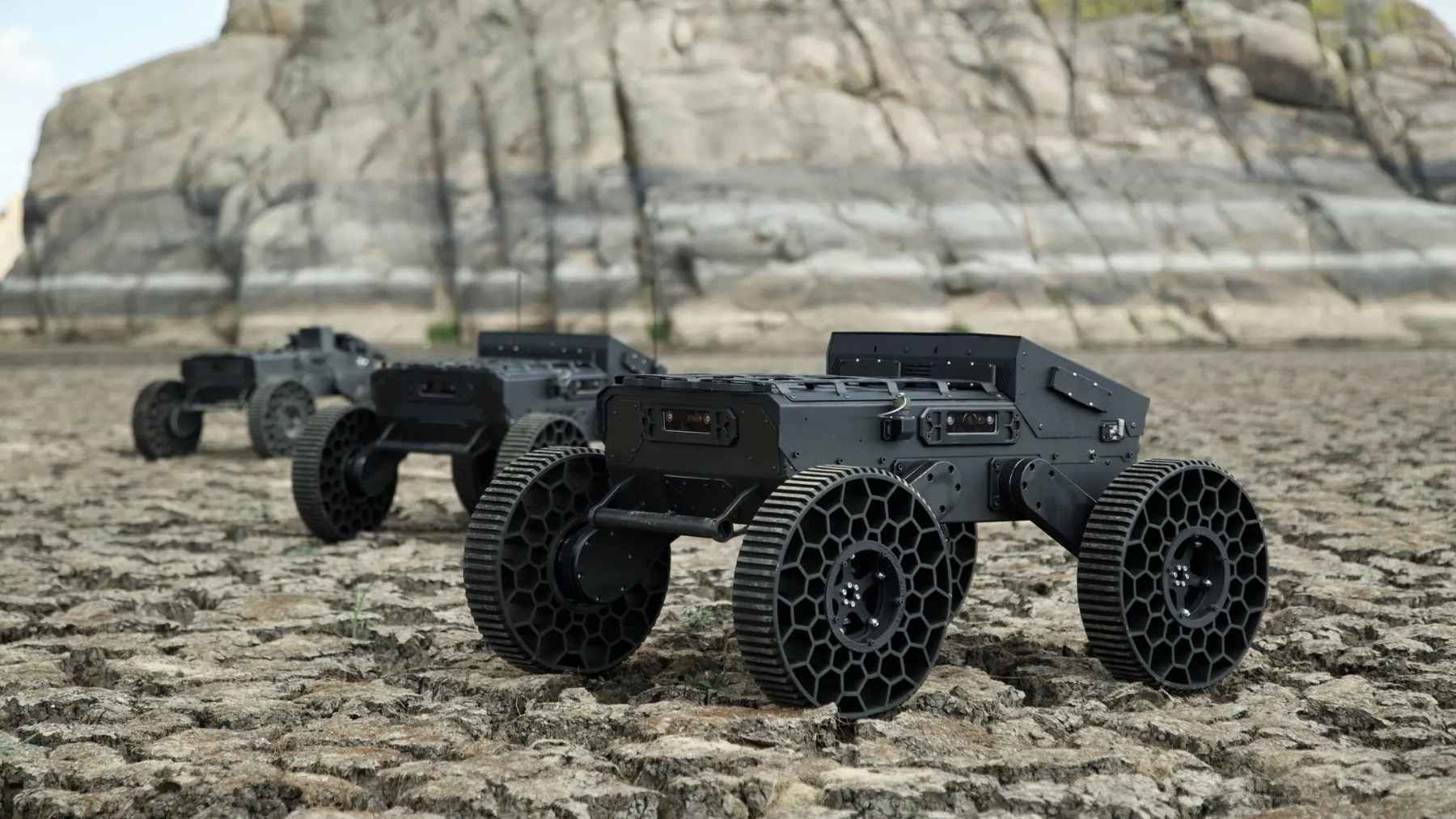
They are called FireAnts, and Swarmbotics AI builds them as the small member of a family the company calls ANTS, short for Attritable Networked Tactical Swarm. The FireAnt is a four-wheeled machine with a payload bay on top, so the same chassis can go out as a camera, a jammer, a radio relay, a counter-drone shooter or a warhead, depending on what a soldier bolts to it that morning.
The anti-armor version has gotten most of the attention, and it carries an explosively formed penetrator. That is a shallow metal dish with explosive packed behind it. Set it off and the dish turns itself inside out into a slug moving fast enough to punch through armor plate, which is also why the robot has to crawl right up to whatever it is attacking before it does anything useful.
The five riding on the Bradley do not appear to be carrying warheads at all.
Swarmbotics has not published a spec sheet for the FireAnt, which is a slightly odd thing to leave off a product page. TWZ put the robots at roughly 70 pounds (32 kilograms) each. The post that first pushed the video around called them 27 kilograms, or about 60 pounds. I would treat both as ballpark until the company puts a number on its own site. What the company does publish is the software side: Swarmbotics AI says its ANTSNet stack runs through a web app and the Android Tactical Assault Kit that infantry units already carry, on triple-redundant comms.
Attritable is a nicer word for expendable
Attritable means the thing is cheap enough that losing it does not wreck the plan. You send it into the spot you would never send a vehicle with people inside, and when it does not come back, the mission keeps going.
Now compare that with what it was riding on. By 2000 the Bradley program had cost $5.66 billion for 1,602 vehicles, an average of $3.17 million each, and the A4 in that video is a rebuilt, heavier, better protected version of the same hull. Losing one of those is a very bad afternoon. Losing a robot is a supply request.
“Mass is our objective,” Swarmbotics CEO Stephen Houghton said in February, when The Defense Post reported the Army award. His CTO, Drew Watson, described the year ahead to TWZ as “hundreds of robots deployed on the X and at the breach.” On the X is soldier shorthand for the piece of ground where people are already shooting at you.
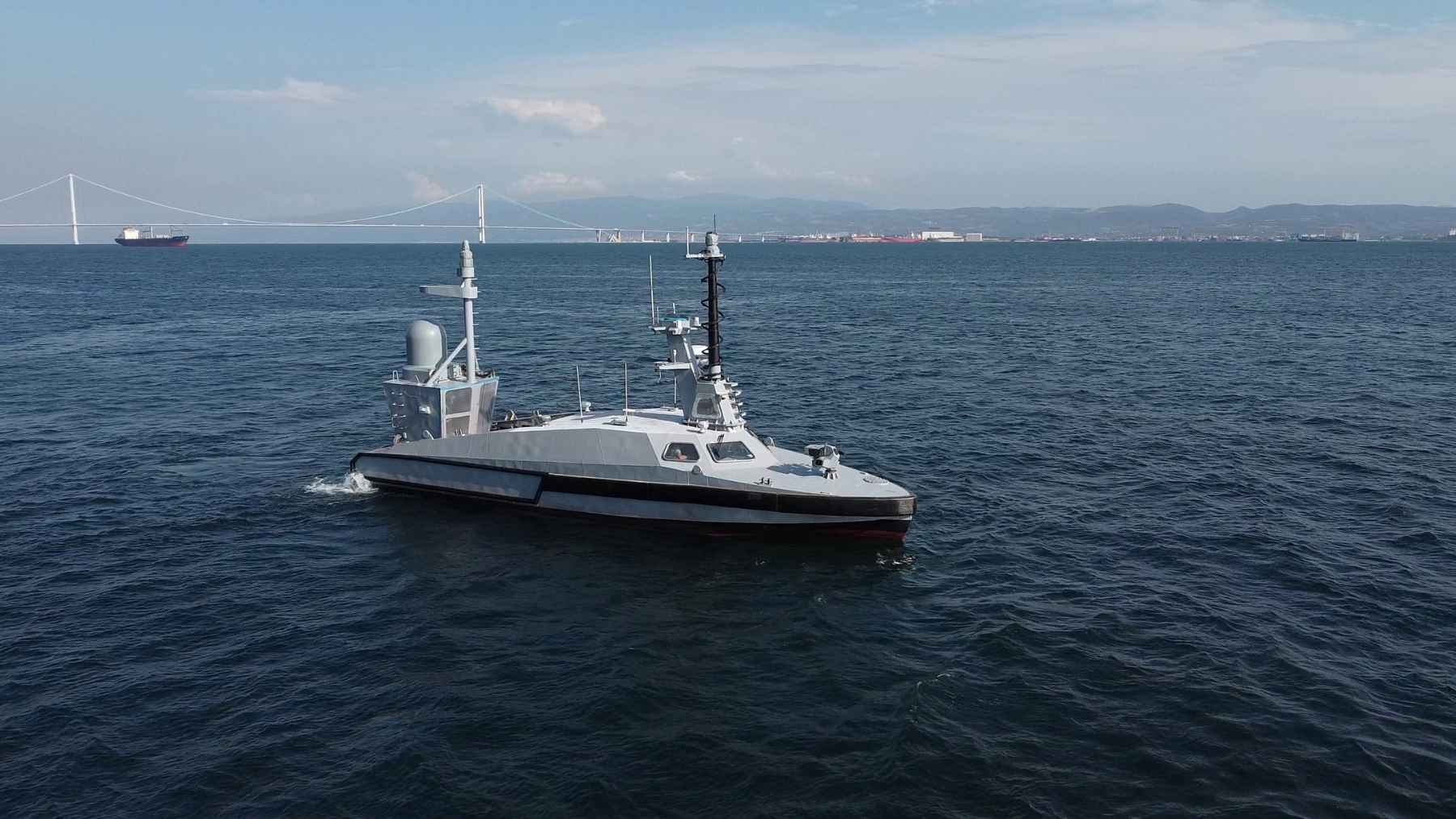
The Navy has been buying into the same logic at sea, where an 11-foot drone boat chasing a Pentagon prize carries a launcher for one-way attack drones on its deck. Industry got there before either of them. A rig contractor in the Permian now has a robotic arm standing on the drill floor where a third of all drilling injuries used to happen.
The Army has been building up to this since October
From October 27 to 29 last year, the Army’s Transformation and Training Command ran xTechOverwatch at the Bush Combat Development Center’s Innovation Proving Ground in Bryan, Texas. Forty invited teams pushed air, ground and payload systems through training lanes with soldiers running them. Twenty teams were selected to continue, working alongside Transformation in Contact formations from January 2026 through July 2027.
Swarmbotics announced its selection on February 5. In that release, the company said a squad-sized Army unit had operated 10 FireAnts during the competition, which works out to roughly nine soldiers and ten robots.
The Fort Hood Herald reported in April that the Army had put a $2 million contract for autonomous vehicles into the division out of the same competition.
Ukraine got to ground robots first
Ukrainian and Russian units have been fighting with unmanned ground vehicles for a while now, from kamikaze machines about the size of a FireAnt up to tracked platforms carrying machine guns and anti-tank missiles. Uncrewed systems led the Independence Day parade in Kyiv on August 24. Most of those robots are driven by a person watching a camera feed, which works until the other side turns on a jammer. Ukrainian crews responded by running control wires out of spools of fiber optic cable, which cannot be jammed and can absolutely be run over.
That is the problem the Army is trying to design around. One soldier steering one robot does not scale to hundreds of them, and every radio link you add is another thing an enemy can break. Swarm autonomy is the proposed answer, with the operator assigning a task and the machines sorting out spacing and movement between themselves.
Whether that survives contact is a separate question, and Pegasus Charge 3 is where the Army starts finding out.
Some pretty basic things are still unclear
TWZ could not tell from the video whether the crew releases the FireAnts from inside the Bradley or whether a soldier climbs out and unclips them by hand, and it said it had asked the company. That matters enormously if the vehicle is taking fire at the time. Those side racks are also not empty by accident. A Bradley hull is aluminum with steel and spaced armor bolted over it, and swapping reactive armor for robots on a vehicle that thin is a real trade that the Army has yet to walk anybody through.
A Bradley can also carry more of them inside and push them out the back ramp, which would leave the armor where it is.
I like this a lot more than the robot tank pitches I have been reading for the last five years, mostly because it is boring. Nobody is proposing a new vehicle here. Somebody hung brackets on a hull that has been in service since 1981 and clipped robots to them.
Swarmbotics posted the Bradley video on August 25. An Army caption from Fort Hood has 1st Cavalry troopers field-testing autonomous systems there from August 10 to 14, and the 20 companies picked out of xTechOverwatch are signed up with Transformation in Contact units through July 2027.