
Greece doesn’t have a nuclear power plant. It never built one. So when I first read that a university in Athens had shipped a ton and a half of reactor fuel to Idaho, my honest first reaction was: where did they get it?
I still don’t have a good answer to that one, and I’ll come back to it. What I do have is the other end of the story, because Idaho National Laboratory has now put out the photos of the machine it built to take that fuel apart, and it’s a pretty satisfying piece of hardware.
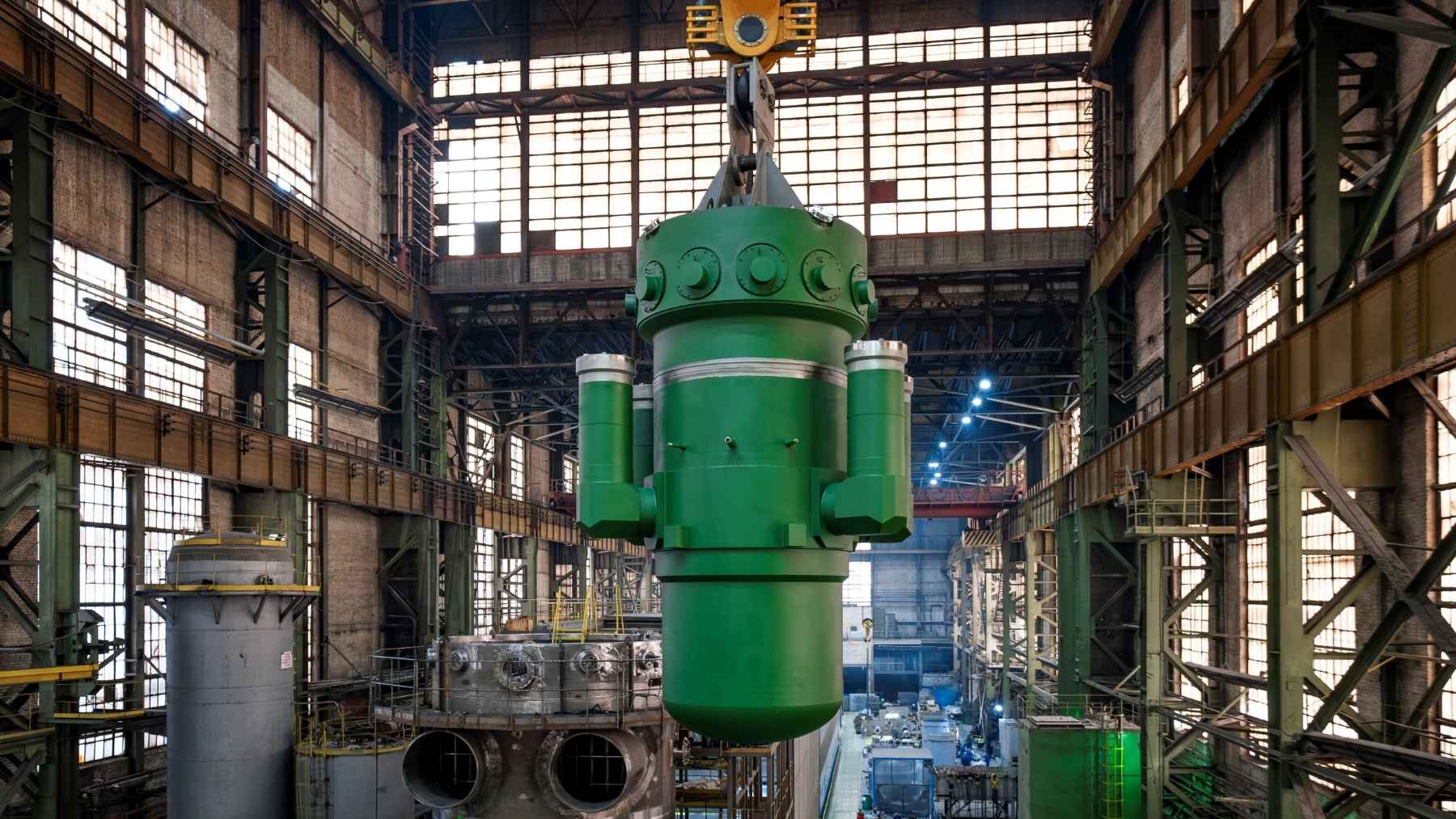
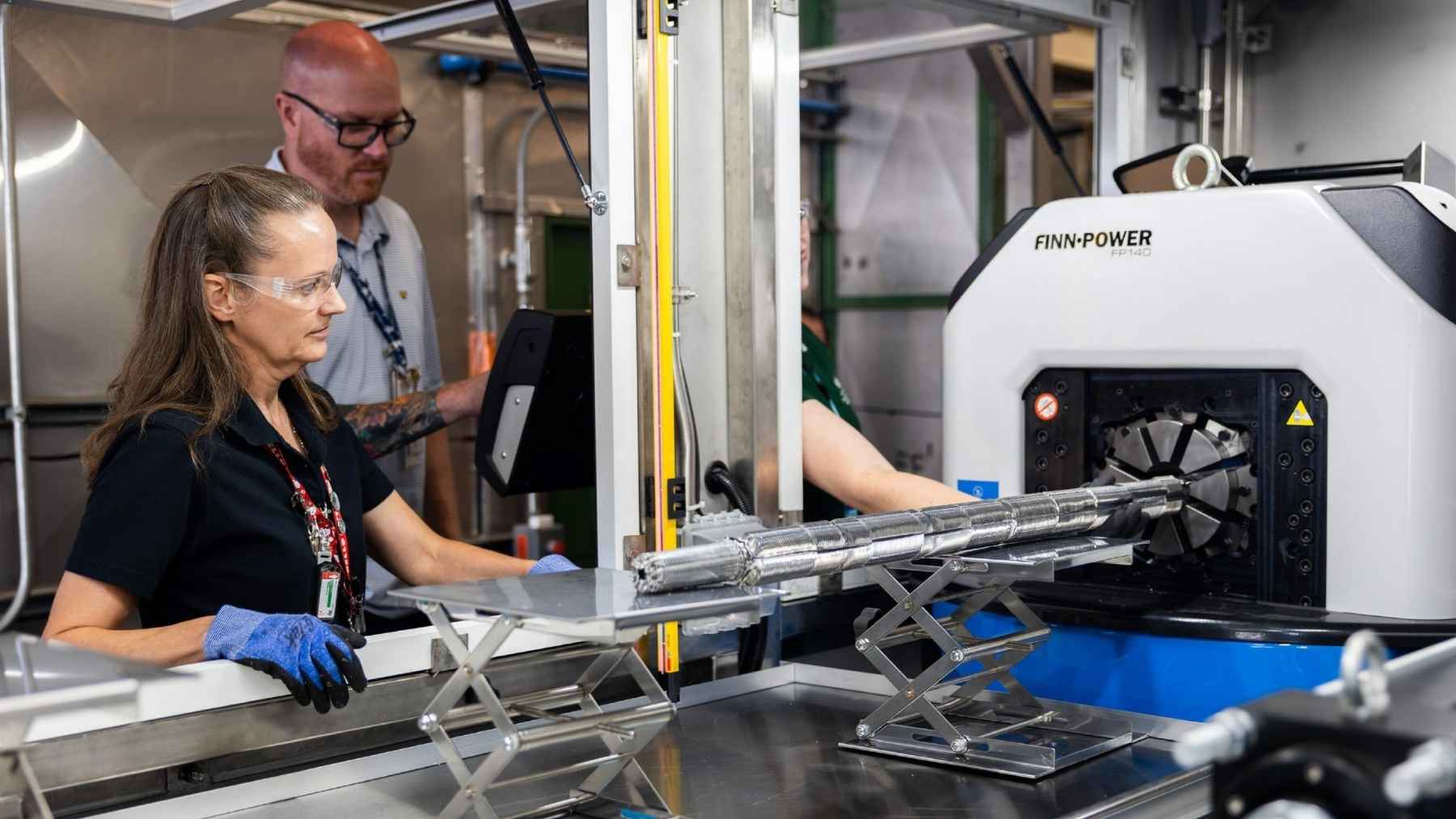
The lab calls it a mobile fuel chopping and decladding skid. A skid, if you’ve never worked around industrial gear, is basically a steel frame with everything bolted to it, so the whole unit comes off a truck as one piece. This one took 20 months to design, build and install, with two outside firms, Integrated Solutions & Designs and Campbell Technical Services, doing the engineering alongside the lab’s own people. It showed up at the Moran facility, out on the lab’s desert site west of Idaho Falls, in April.
Then came the part the lab actually cares about. On May 5 the machine made its first crimp on a real Magnox fuel rod. On June 2 it made its first cut.
So what does a fuel peeler actually do?
Three things, in that order. It crimps the rod, it peels the metal jacket off, and it chops what’s left into pieces short enough to work with. The lab’s own people compare the middle step to peeling a banana, and having stared at the photos for a while, I can’t improve on that.
The jacket is Magnox, a magnesium alloy with some aluminum and a few other metals mixed in, wrapped around a core of natural uranium metal. That combination comes from the first generation of commercial reactors in Britain, and the cladding is where those reactors got their name. Natural uranium means nobody enriched it. It’s the element as it comes out of the ground, refined but not concentrated, and you can’t run an American power plant on it. A gas-cooled reactor with a graphite core will burn it just fine, though, and that’s what the British built.
Why would the US nonproliferation crowd care about a British fuel type that old? INL says in its announcement that the fuel is still relevant to that work and leaves it there. My reading, and I’ll flag that it’s mine and not the lab’s, is pretty simple. Natural uranium metal in a graphite reactor is the classic route to making plutonium, and the reactor North Korea built its weapons program around is a Magnox-type design, which is a matter of public record. If you’re training people to recognize what a plutonium separation process looks like from the outside, this is the fuel you’d want them practicing on.
None of this fuel has been inside a reactor
This is where I’d slow down, because the words “nuclear fuel” and “Idaho” tend to conjure up one picture: used rods, a sealed room, robot arms, four feet of concrete. That place is real and it’s at the same lab. We’ve written about the argon-filled hot cell where America cuts open rods that have done a full career in a power plant, and about the reactor next door that makes them fail on purpose.
The Moran skid is a different animal. The rods from Greece were never irradiated. They never sat in an operating reactor, so they haven’t built up the fission products that make used fuel so dangerous to be near, and the uranium inside them is far less radioactive than anything that’s been through a core. You still don’t want it in your lunchbox. But you can work on it with a machine on a frame rather than from behind a wall.
So what’s the hazard? According to the lab’s environmental paperwork, filed with the Department of Energy back when the machine was still a plan, the worry is fire, not radiation. Chopping uranium metal throws off fine shavings, and fine uranium shavings can ignite in air. The plan called for an inert enclosure around the chopping and decanning work for exactly that reason. INL’s September write-up doesn’t say what the finished skid’s enclosure looks like, so I can’t tell you whether it runs on argon, nitrogen or something else.
The lab also hasn’t published the skid’s dimensions or its weight, which, for a machine whose whole selling point is that it moves, is a slightly odd thing to leave out.
What came over from Athens
The numbers come from an earlier INL write-up on the program that paid for all this. The National Technical University of Athens handed over 1,555 kilograms, or 3,428 pounds, of unirradiated Magnox fuel, plus 71 kilograms (about 157 pounds) of low-enriched uranium oxide. Two teams from the National Nuclear Security Administration went to Greece, checked what was there, packed it, and shipped it.
Most of the Magnox rods are headed for the Moran skid. The oxide went into storage at the Idaho Nuclear Technical and Engineering Center and is being parceled out to Los Alamos, Pacific Northwest and Oak Ridge for their own research, so don’t count it toward the peeler. And that 3,428-pound figure is the size of the shipment, not a tally of what the machine has chopped. INL has said when the first crimp and the first cut happened, and nothing about how many rods it’s gotten through since.
The peeler is the front door to a much bigger process
Moran isn’t a storage shed. INL describes it as a pilot-scale PUREX facility, and PUREX is the chemistry the industry has used for decades to pull uranium and plutonium back out of used fuel. You dissolve the fuel in nitric acid, then run the liquid through solvents that grab the uranium and plutonium and leave the rest behind. Pretty much every commercial reprocessing plant runs some variation on it.
Which is why the jacket has to come off first. The acid wants bare uranium in small pieces, and that’s the skid’s only job in the chain: take a rod, strip it, chop it, hand it on. People in the business call that the head end, and it’s the piece Moran was missing for metal fuel, going by the lab’s own paperwork.
The machine itself is electrically driven, which I’d guess was a deliberate choice for a glovebox-type environment where hydraulic fluid is one more thing to clean up, though the lab doesn’t say so. Its operating parameters are programmable, its tooling swaps out for other fuel shapes, and high-speed cameras film the crimping and cutting so engineers can tune the settings from footage rather than guesswork. Before the real rods went in, the whole thing ran on surrogate material with similar mechanical properties, which strikes me as the sensible way to find out whether your cutter likes magnesium before it meets uranium.
Kevin Lyon, INL’s senior manager for radiochemistry and nuclear measurements, put it this way: “This is not a one-trick pony built only for Magnox fuel.” Every big component unbolts, so the lab can pull a section out, move it, or upgrade it when the next fuel type shows up.
The money came through the Athena Initiative, an NNSA program set up to rebuild expertise in this kind of fuel processing. INL has been pretty candid that it lost a lot of senior people in that field, and a machine you can run apprentices on, with low-activity fuel and cameras recording every move, is arguably the cheapest training tool you could ask for.
As for Greece, the lab says the timing was lucky, since it was already hunting for fuel like this when the Athens university offered up what it had. It doesn’t say how a Greek engineering school ended up holding a ton and a half of British-style reactor rods in the first place, and I couldn’t find out either. If you know, I’m all ears.
Moran feeds a larger test bed called Beartooth that INL says is scheduled to come online in 2028. The skid’s first chop on a real Magnox rod was June 2, and the lab published the photos on September 21, 2026.