
Power plants don’t usually hand out their operating data. A utility will tell you how many megawatts it made last year and maybe how many homes that covers, but the second-by-second stuff, the pressures and flow rates and tank levels, stays inside the control room. So when a commercial solar plant in the French Pyrenees put a full year of that onto a public server last month, I went and read the paper that came with it.
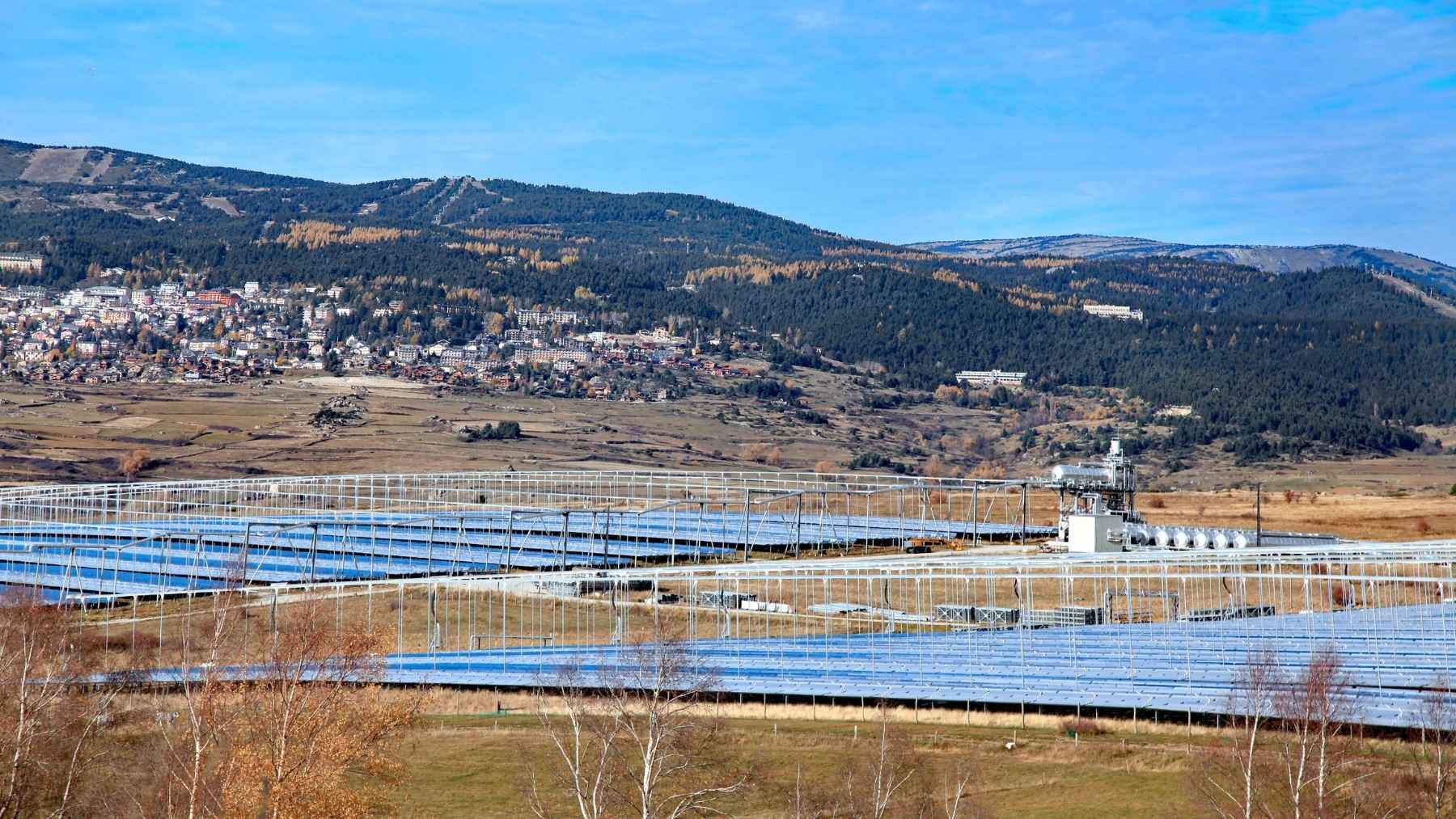
The plant is called eLLO, it sits above the village of Llo in the eastern Pyrenees, and it doesn’t use a single solar panel. It uses 27 rows of mirrors to boil water, and it stores the leftover heat in nine steel tanks so the turbine can keep running after dark. The interesting part, at least to me, is what happens when those tanks are full.
So what’s a mirror field doing instead of panels?
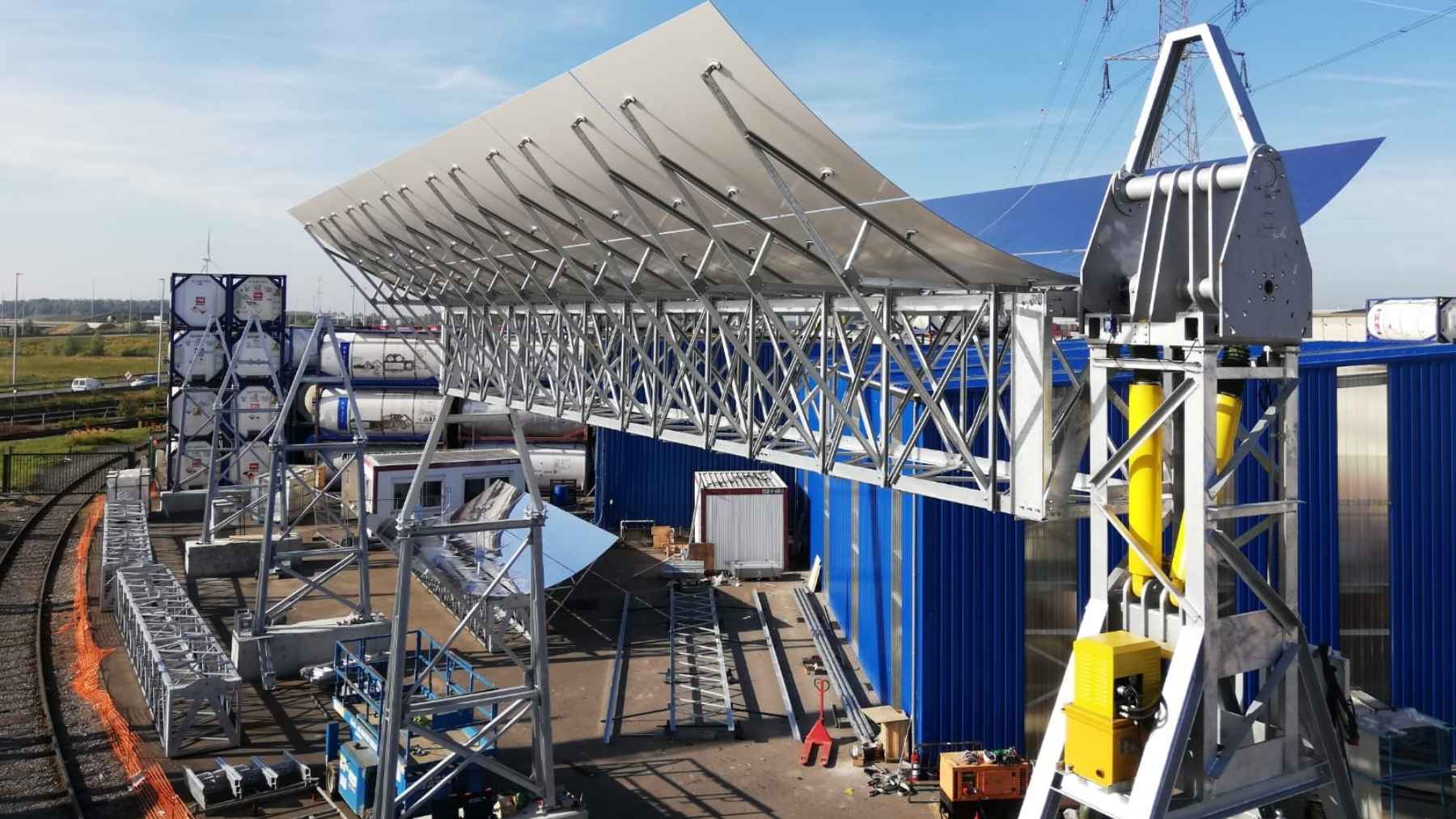
A photovoltaic panel turns light into electricity directly. This plant does it the old-fashioned way, with steam. Flat-ish mirrors on the ground track the sun and bounce it onto a steel tube running 28 feet above them, water flows through the tube, and the water comes out of the field as a mix of steam and hot water at 547 degrees Fahrenheit and 1,015 psi. That steam spins a 10-megawatt turbine, the same basic trick a coal plant uses, minus the coal.
The field is big. The 27 rows add up to 1.64 million square feet of mirror, roughly 38 acres of glass, laid out on a hillside that slopes and bends enough that the engineers had to split it into an east field of 10 rows and a west field of 17. Each row is built from modules 220 feet long and 46 feet wide, and each module carries 140 reflectors made of four mirrors apiece, bonded to a frame under tension so they bow very slightly. The operator’s own count is 95,200 mirrors.
The mirrors get cleaned by robots, which is a sentence I didn’t expect to write about a plant that started feeding the French grid on May 14, 2019.
The tanks are basically pressure cookers
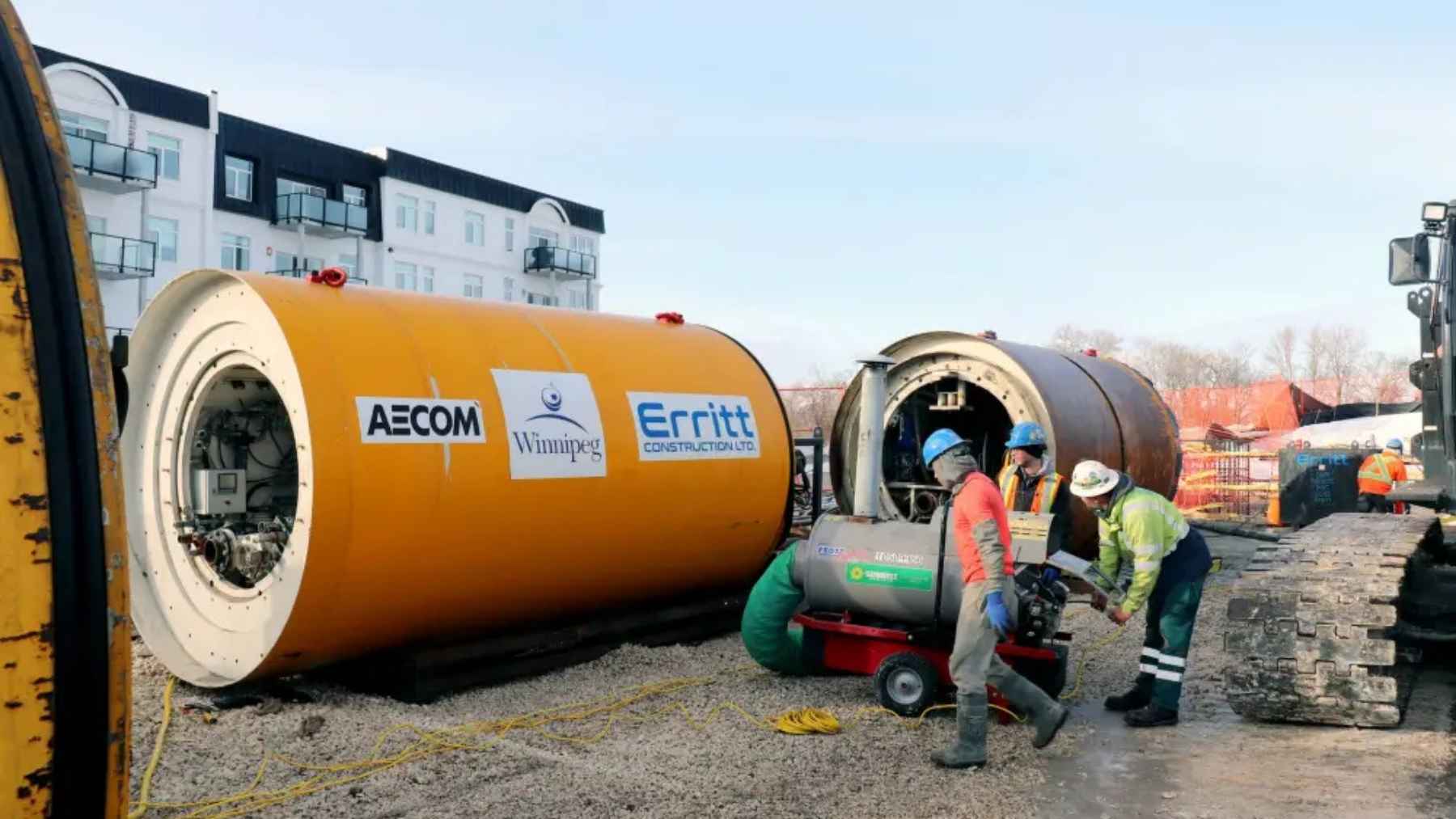
Here’s the bit the paper describes better than any press release ever did. The storage is nine horizontal steel vessels, each holding 120 cubic meters, which works out to 31,700 gallons apiece, and they’re mostly full of water held under pressure.
If you’ve ever used a pressure cooker, you already understand the physics. Water under pressure can sit well above 212 degrees without boiling. During the day, when the mirrors are making more steam than the turbine can swallow, the extra steam gets piped into the water inside those tanks, where it condenses and heats the water up toward 547 degrees. What builds up in the tanks is hotter and hotter water, and that water is the storage medium.
Then the sun drops behind the mountains. The plant opens a valve, the pressure in the tanks falls, and some of that pressurized hot water flashes back into steam, which goes straight to the turbine. The paper’s authors say the nine tanks together hold about 160 megawatt-hours of heat, enough for roughly four hours of full-power running, or around 40 megawatt-hours of electricity once you account for the 25 percent the steam cycle actually converts.
Four hours is the design figure. The 24-hour snapshot the researchers chose to publish in fine detail, July 16, 2025, was picked precisely because it was a clear, high-sun day where the tanks charged fully and then ran the turbine overnight. What the paper doesn’t tell you is how many nights in 2025 got the full four hours and how many got 40 minutes. The hourly data is there if you want to work that out yourself, and I suspect somebody will.
What happens when the tanks are full
This is the detail that got me. The plant’s first job, according to the operating strategy laid out in the paper in Data in Brief, is to push 9.9 megawatts onto the grid. Anything the mirrors make beyond that goes into the tanks. And once the tanks are charged and the turbine is already at full load, the control system starts tipping mirror modules off the sun to cut steam production.
So on a good summer afternoon, a share of a 38-acre mirror field is deliberately pointed at nothing. The plant has more sun than it has anywhere to put it.
You might be wondering why they don’t just build more tanks. Pressure vessels rated for 1,000-plus psi and 547 degrees aren’t cheap, and the paper is frank that large-scale storage is the hard part of this whole steam-in-the-pipes approach. A molten salt tower, like the kind we wrote about in the New Mexico desert, can hold heat for far longer, but it needs a separate loop of salt that has to stay liquid or it turns into a very expensive rock. Pressurized water is simpler, it responds fast, and apparently four hours was the trade-off this operator could afford.
I’d call it a pretty honest design.
What’s actually in the dataset
The paper comes from researchers at the PROMES-CNRS solar lab in Font-Romeu, a few miles from the plant, with the plant’s own production manager, Fabien Roget, listed as a co-author. They pulled readings from 124 sensors: the irradiance meters, the number of mirrors actually focused in each field at any moment, pressure and water level in all nine storage tanks, steam flow to the turbine, and the export meter at the substation.
The logger records every second. For the year, they averaged that down to hourly values from January 1, 2025, through January 1, 2026. After throwing out every hour with a bad or missing reading, they ended up with 338 usable days. The rest went missing to maintenance windows and what the authors describe as freezes in the supervision server, which is a problem anyone who’s run industrial software will recognize.
Is a solar plant in the French mountains really the one to publish? Frankly, yes, because nobody else has. The authors say this is the first open year-long dataset from a commercial plant of this type, and the comparisons they give are a few days of data here, weather readings there, or a full set that a company keeps locked up. If you’re a grad student trying to model how one of these things behaves at half load on a cloudy Tuesday, this is the only real-world answer you’ve got.
The data is out under France’s Etalab open license, so anyone can download it.
How it stacks up to the brick battery
We covered a different take on the same problem earlier this year: a stack of heated bricks in Kern County, California that soaks up cheap solar electricity by day and makes steam for an oil field by night. That one stores 100 megawatt-hours and charges off electricity. The French plant stores 160 megawatt-hours of heat and never touches a solar panel at all. Same goal, two very different machines, and I’m not sure either one has settled the argument.
What the eLLO plant has going for it is a track record. The operator, whose management team took the company over in 2023, says on its own site that it feeds the grid by day and part of the night. CNIM, the builder, sized the output at the electricity use of more than 6,000 households, and NREL’s project database lists an expected 20.2 gigawatt-hours a year. The mirrors, the tanks, and the 10-megawatt turbine were all running through the year the researchers logged.
Valentine Grange and her co-authors published the dataset on September 18, 2026, covering every hour of 2025 at the plant in Llo, France, plus the July 16 day broken down to 10-second steps.