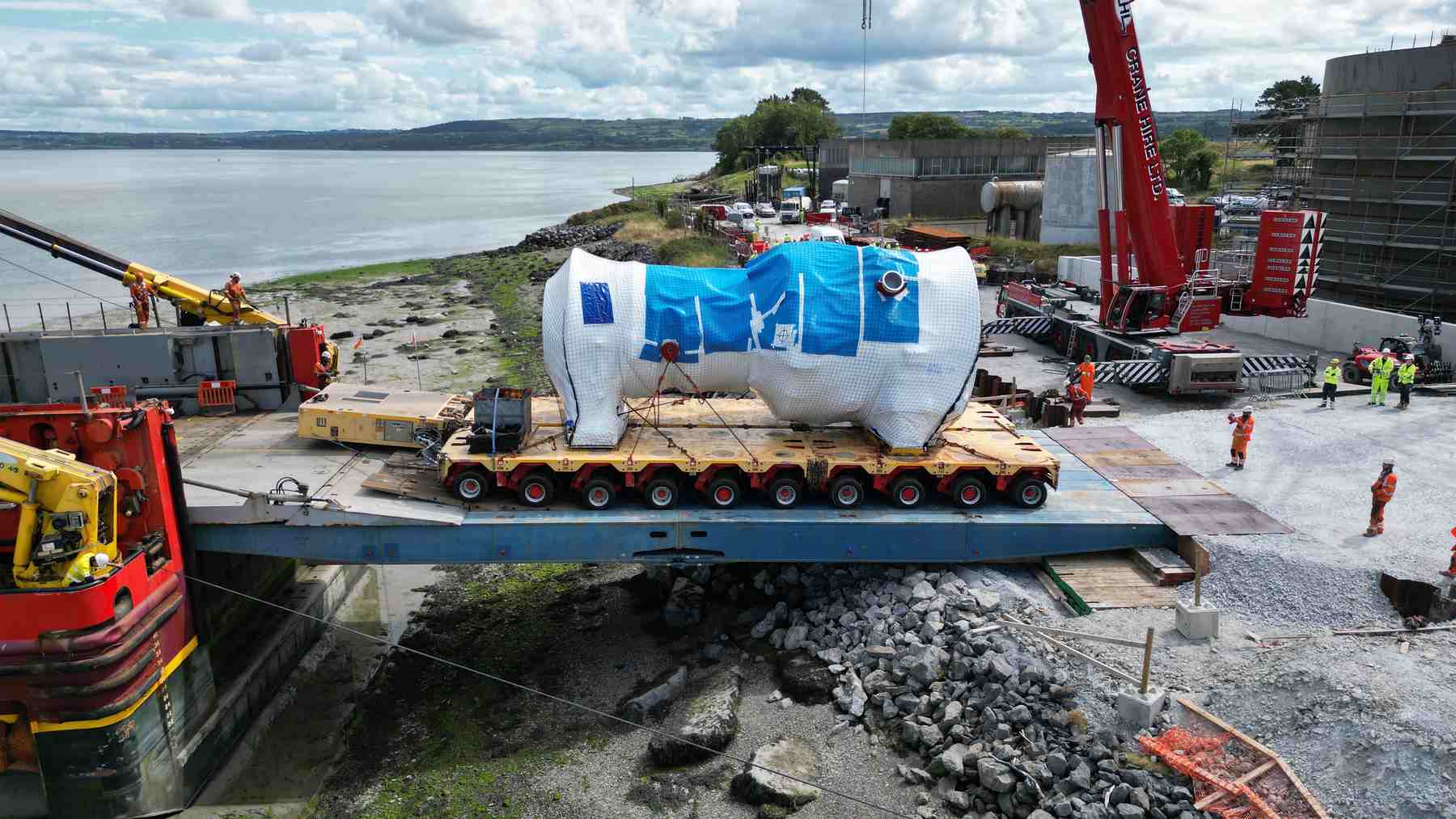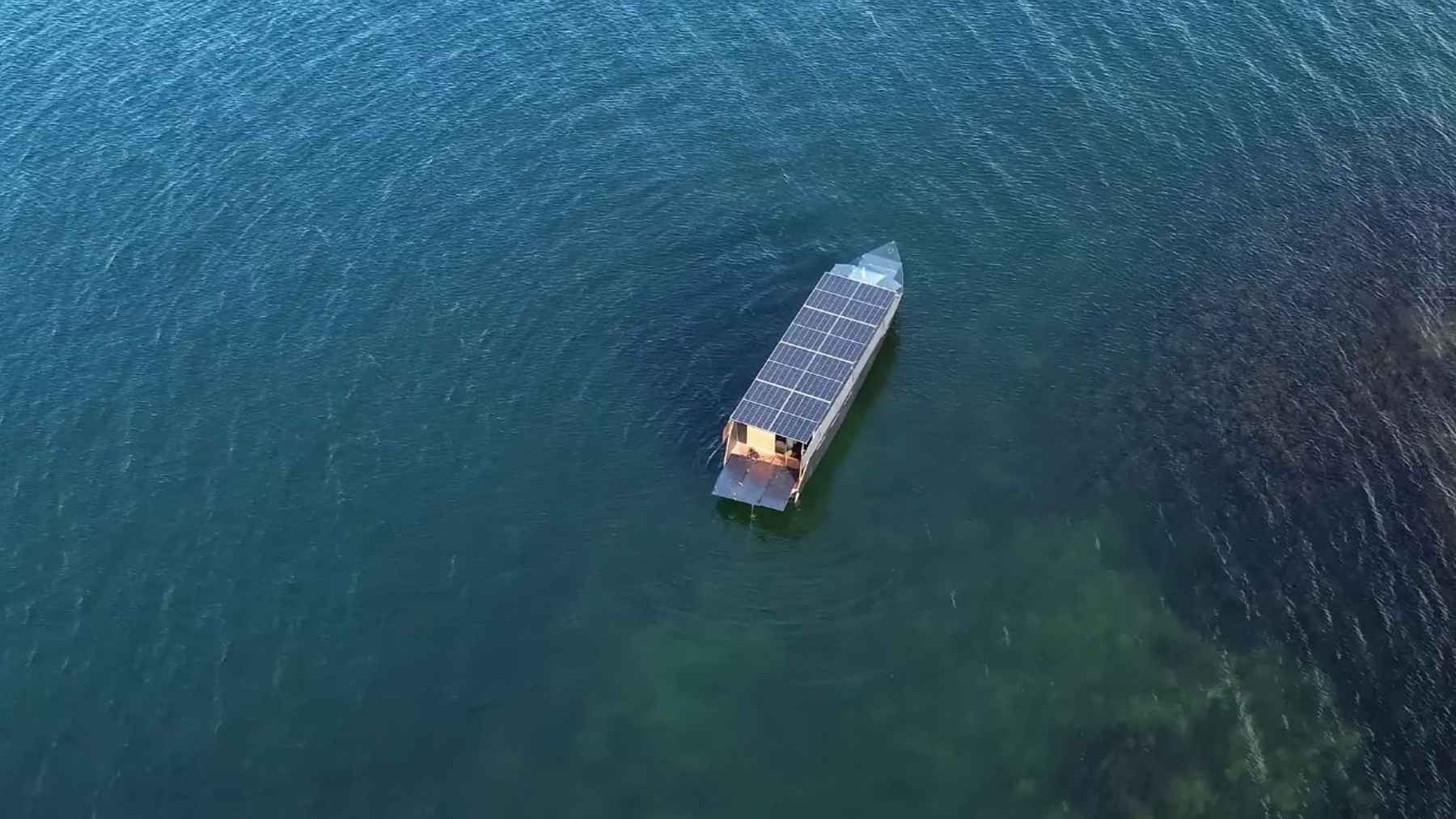

Owning a boat usually means signing up for a lifetime of fuel bills, marina fees, and an engine that wants attention every few months. That is the deal almost everyone accepts before they ever cast off. A Finnish builder named Lukas Sjoman wanted none of it, so he spent roughly 200 days in a shed turning plywood, glass fibre and off-the-shelf solar panels into an 11-meter explorer yacht that runs on sunlight alone. His pitch is simple: a boat designed to, in theory, run forever.
And this spring he spent about $1,900 on a battery upgrade to push it even farther without burning a single drop of fuel.
The boat is called Helios 11, and if you have watched any of it come together on his True North Yachts channel. Blacked-out, narrow, stripped of anything that is not holding the thing together. That austerity is the entire point. Every kilogram Sjoman did not add is a kilogram the sun does not have to move, and that math is what separates a slogan about running forever from a boat that actually crosses water. It is also one of the more extreme attempts yet to put electric propulsion on the water, except this one was built by one person for less than the price of a mid-size sedan.
The $1,900 upgrade is two batteries and a lot of restraint
The upgrade itself is almost boring, which is sort of the flex. Sjoman added two more 48V 100-amp battery packs, bringing roughly 22 kilowatt-hours of usable storage to the solar propulsion system, according to the build he has documented publicly. Combined with what the roof array feeds in, the whole setup tops out near 37 kilowatt-hours of energy on a good day. The roof itself generates somewhere around 15 kilowatt-hours in typical conditions, which is what keeps the batteries topped up while the boat is moving, instead of needing a plug once the sun goes down.
He bolted the new packs low, beneath the waterline, and that placement does double duty. It adds capacity, and it drops the center of gravity to counter the weight of all those panels sitting up on the roof. He could have chased a better power-to-weight ratio with flexible CIGS panels, but those yield less per square meter and cost more, so he stuck with cheaper rigid panels and kept the whole battery job inside that $1,900 budget. The hull is also built to self-right, which matters a lot more on a light boat than on a heavy one.
The amenities are the part that turns a science project into a home. There is an electric stove, a lightweight fridge, and a flushable toilet on board, and Sjoman has talked about adding rainwater harvesting, water filtration, and Starlink so the boat can stay away from a marina for weeks at a time. It is a 1.5-ton apartment that happens to float and never visits a gas dock.
Range on a solar boat is a moving target
This is where the phrase “runs forever” needs an asterisk, because the number moves depending on the sky. On a standard 24-hour run, Sjoman says the upgraded Helios 11 covers about 100 nautical miles without touching fuel. On a bright summer day with the auxiliary sail up, that can stretch toward 150. Push it into rougher water with the sun behind clouds and the daily figure drops closer to 40. None of that is a knock on the boat. It is just what solar range looks like when your fuel tank is the weather.
The cruising speed sits in a useful band too, roughly 5 to 5.5 knots, which is where the electric motor runs most efficiently. Go faster and you drain the batteries; go slower and you are barely moving. Sjoman has settled into that efficient cruise the way a hypermiler settles into 55 on the highway, except his reward is a boat that quietly refills itself once the sun comes back up.
Figures from Sjoman’s publicly documented Helios 11 build. Range varies with sun and sea state.
He sailed it into 20-knot Mediterranean wind to find the weak points
A prototype that only performs in flat water is a pond toy, so Sjoman took the Helios 11 out into 20 to 25 knot winds along the Mediterranean coast, with no backup engine and no generator on board. Just solar, the small sail, and an anchor if everything went sideways. That is either confidence or a dare, and it mostly paid off. Even punching into a headwind north of 20 knots, the boat held a cruising speed between 6 and 6.7 knots while pulling around 3,500 to 4,000 watts, with the panels still feeding in 1,200 to 1,500 watts depending on cloud cover.
The standout moment from his testing is that the Helios reportedly overtook a sailboat three times its size. Sailboats live and die by the wind. A solar-electric hull does not care whether the wind is cooperating, and Sjoman says that even at zero percent battery his panels alone held the boat at 6.5 knots in daylight. He has also been candid that the build is not finished and that he got at least one design choice wrong along the way, which is more honesty than most people building a “perfect” machine on camera will give you. You can watch him narrate the whole thing, including the slow move south toward France and Spain, in his own on-the-water updates.
The ceiling isn’t the battery, it’s the boat
The twist is that the energy side is no longer the hard part. Sjoman has said the upgrade was not about fixing a limitation, just adding capacity he is happy to have on board. The real constraint on a tiny solar yacht is comfort and seaworthiness, because a light hull with minimal ballast starts to roll the moment conditions turn, and a person can only take so much of that before a long crossing stops being fun.
That tracks with what people who study this for a living will tell you. Saman Gorji, who directs the Centre for Smart Power and Energy Research at Deakin University, has noted that solar-plus-battery setups are already viable for some marine uses, especially shorter and more predictable routes, while longer continuous-duty trips are better served by hybrid systems that pair batteries with another clean source.
That is roughly the logic behind the largest electric ferries now in service, and behind clean-propulsion experiments at the luxury end like the hydrogen fuel-cell superyacht that chases the same fuel-free goal by a completely different route. Solar alone works beautifully at Helios scale. It gets harder the bigger and faster you go.
Sjoman is not shy about the comparison. He has pointed out that some people have already crossed the Atlantic on solar power alone, and that his own boat could manage a similar run at an average of around 5 knots if he wanted to. The thing stopping him is not the sun. It is whether a 36-foot hull is comfortable enough to live in for weeks.
A bigger boat is the obvious next move
So the next Helios is going to be bigger. Sjoman has said a version roughly 50 percent larger would turn an ocean crossing from a real question into something close to easy, and his build-plans archive already lays out larger designs, from a stretched explorer monohull to multihull concepts, all aimed at the same brief: a boat that owes the fuel pump nothing. The goal was never really this specific boat. It was proving that one person, in a shed, with hardware anyone can order online, can build something that moves across the planet on sunlight and skips the marine industry’s usual tolls.
For now the Helios 11 is still a prototype, still a work in progress, still occasionally getting a detail wrong in public. It is also quietly out-running boats that cost ten times as much, and the only fuel it has touched so far is sunlight.