
Hanford has a talent for making the news for the wrong reasons. The old plutonium site in Washington state gave America 56 million gallons of radioactive tank waste, a glass furnace that took decades to switch on, and a 50-foot pump tank that burped. So when something out there goes right, I think it’s earned a minute of your time.
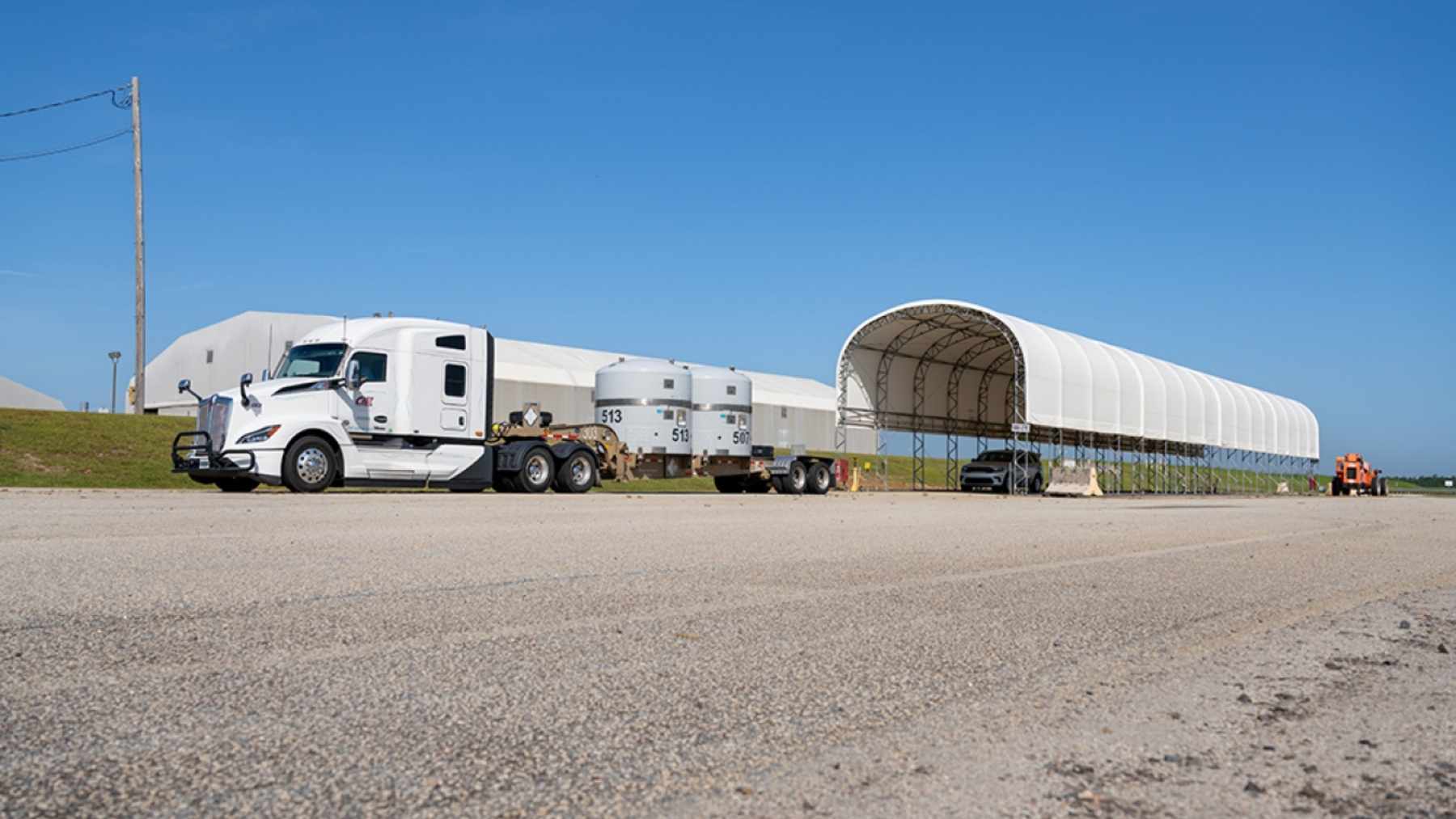
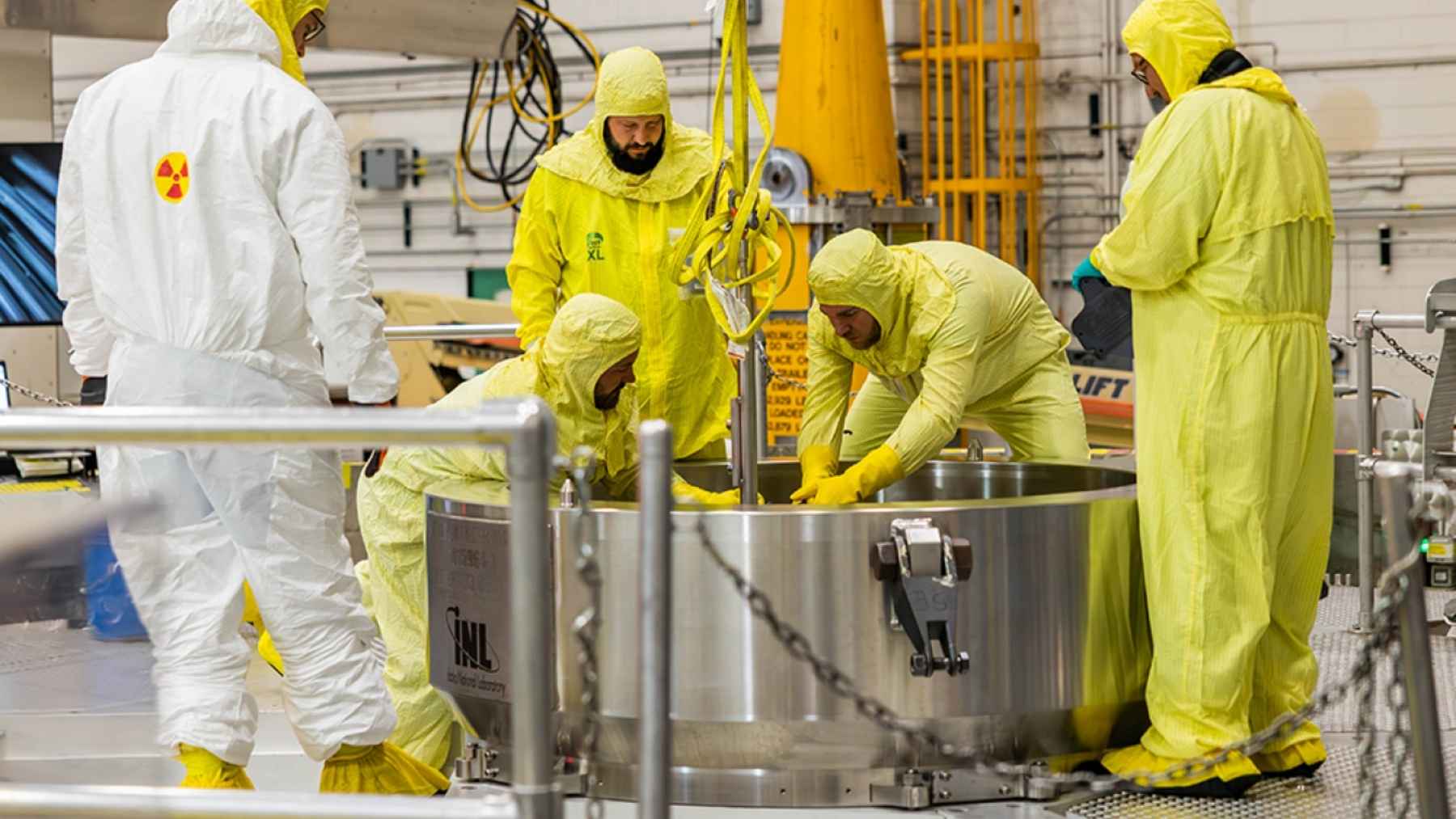
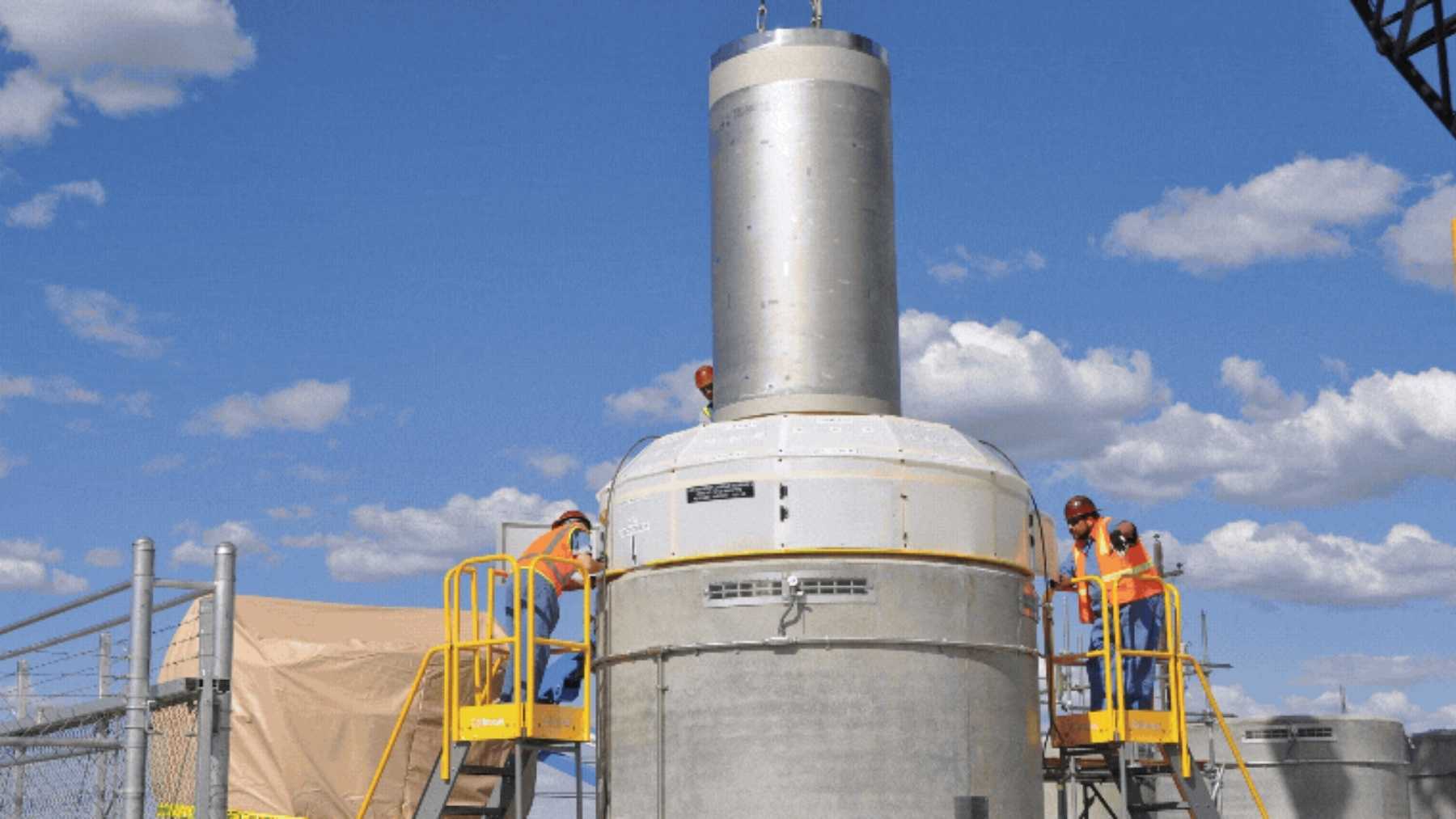
The good news comes from a building called the Waste Encapsulation and Storage Facility, or WESF, and it’s been more than a decade in the making. In January, crews with cleanup contractor Central Plateau Cleanup Company pulled the first batch of highly radioactive capsules out of the facility’s indoor pool, sealed them inside an engineered concrete cask, and hauled the whole thing a quarter mile to an outdoor storage pad. The Department of Energy announced the move on February 3, and the loaded cask weighed about 160,000 pounds.
That’s 80 tons of concrete and steel wrapped around a payload that would fit in the bed of a pickup truck, if the pickup truck could survive the experience.
So what’s actually inside these casks?
Capsules. 1,936 of them across the whole project, 1,335 filled with cesium and 601 with strontium, and each one’s a double-walled stainless steel cylinder. A typical capsule measures 20.8 inches long by 2.6 inches across, according to National Academies documentation built on DOE data, which puts it somewhere between a thermos and a fire extinguisher. Together, those slim cylinders account for roughly a third of all the radioactivity at Hanford.
If a third of Hanford’s radioactivity fitting into fewer than 2,000 small containers sounds off to you, you’re not alone; I’ll admit I read it twice. Cesium-137 and strontium-90 are the isotopes that put out most of the heat in nuclear waste, so a little of them goes a very long way. Hanford’s underground waste tanks were running hot in the early years, and between 1974 and 1985 workers pulled those two elements out of the tank waste, concentrated them into salts, and sealed the salts into these capsules. The tanks cooled down. The concentrated stuff has been sitting in a pool ever since.
Hanford’s doing a version of that same job right now, by the way: a set of 24,000-pound filters is pulling cesium out of tank waste headed for the site’s glass plant. It’s a different machine doing the same basic job, half a century apart.
And the government used to rent these things out, which I didn’t see coming. Hundreds of cesium capsules were leased to commercial operations in the 1980s, mostly for sterilizing medical supplies, according to a fact sheet from the US Nuclear Waste Technical Review Board. Then one of them leaked at a sterilizer plant in Decatur, Georgia, in 1988, every leased capsule got recalled to Hanford, and that was pretty much the end of the capsule rental business.
So why take them out of the pool?
The pool did two jobs at once. Thirteen feet of water sat on top of the capsules, blocking radiation well enough for workers to operate nearby and carrying away the heat the capsules still generate around the clock. Water’s genuinely good at both, and it’s why spent fuel pools exist. Those famous photos of Hanford capsules glowing electric blue underwater? Same pool.
The building around the pool is the weak spot. WESF dates to the early 1970s, and a 2014 review by the Department of Energy’s own Inspector General reportedly singled it out as the department’s most vulnerable facility in a disaster bigger than anything it was built for, since a severe earthquake could damage the basin. Lose the water and the capsules lose their shielding and their cooling at the same time. DOE’s been careful to call that scenario unlikely, but it’s the kind of unlikely you’d rather not test with a third of Hanford’s radioactivity.
The cask is the fix. Each one stands about 11 feet tall and 10 feet across, according to the watchdog group Hanford Challenge, and holds a maximum of 132 capsules. The capsules ride in steel sleeves, the sleeves go into an inner container, a robotic welder seals the lid, and the container gets backfilled with helium to help carry heat out. Cooling on the pad’s completely passive: cool air enters through vents at the bottom of the concrete shell, picks up heat, and rises out the top. It’s the same trick a chimney uses, and nothing mechanical ever has to run. For a package built to sit still for decades, that’s frankly the right kind of boring.
The Washington Department of Ecology, which regulates the project, called the first transfer a major milestone, and Gary Pyles, the federal project director at the Hanford Field Office, said the move “eliminates a significant risk on the site” and opens the door to eventually deactivating WESF. Shutting the old facility down is expected to save up to $6 million a year in operating costs, per DOE, and back in 2014, when the agency started seriously weighing dry storage, it was reportedly spending $7.2 million a year keeping the underwater setup monitored and maintained.
How long is all of this going to take?
A while, and by design. Per Ecology, cask number one started taking capsules in November and rolled out to the pad the week of January 22, and filling a single cask takes roughly two months. The cesium capsules go first, then the strontium. Hanford Challenge expects all of the cesium to be in dry storage by September 2027, with the strontium following in about six more casks.
You’re probably wondering how far along the campaign is today, and honestly, so was I. The most recent public count I can find is an April briefing to the Hanford Advisory Board, which listed two casks moved to the pad. If a newer tally exists, DOE hasn’t published it anywhere I can see, so there’s no live scoreboard here; treat two as the floor.
The capsules still don’t have a permanent home, either. The pad is interim storage, and DOE says the casks stay there until the government settles on a final disposal route, which is agency-speak for “we’ll decide later.” The United States still hasn’t opened a deep disposal site for its high-level waste, so the concrete does the waiting. Hanford Challenge says the casks are designed to last 300 years, which is arguably a comfortable margin.
The transfers keep rolling in roughly two-month cycles, one cask at a time. The Department of Energy expects the last of the 18 to be parked on that outdoor pad by late summer 2029.