
When a carmaker decides to stop selling a model, it doesn’t usually announce it. The car just drops off the online configurator, your dealer suddenly can’t order one, and you find out a few months later from a forum thread. If you’ve ever loved a slow-selling car, you’ve probably been through it.
The Navy apparently did something similar with its most common small drone boat this fall. The difference is that someone told Bloomberg, and the company that builds the boat says the reporting got it wrong.
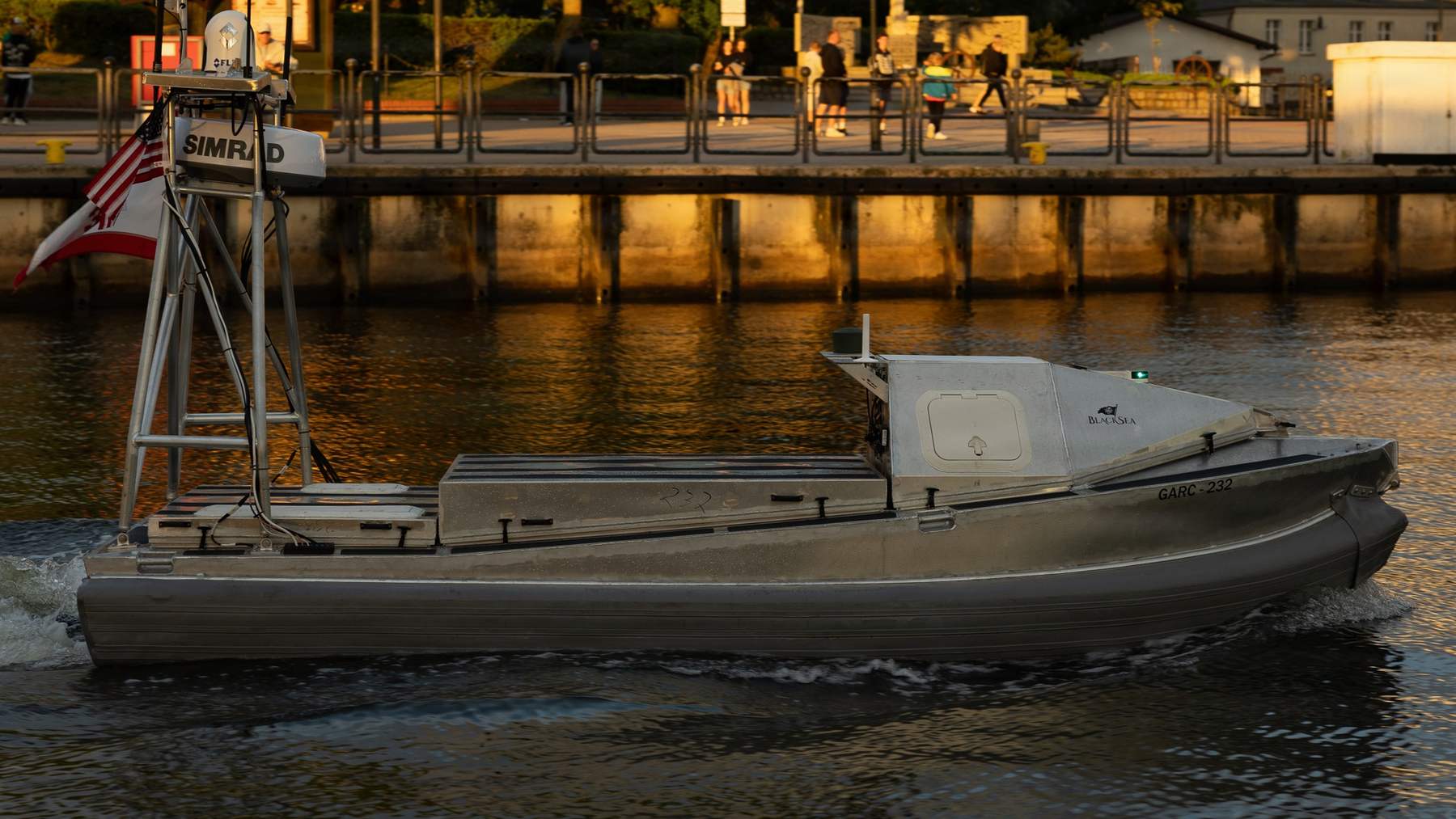
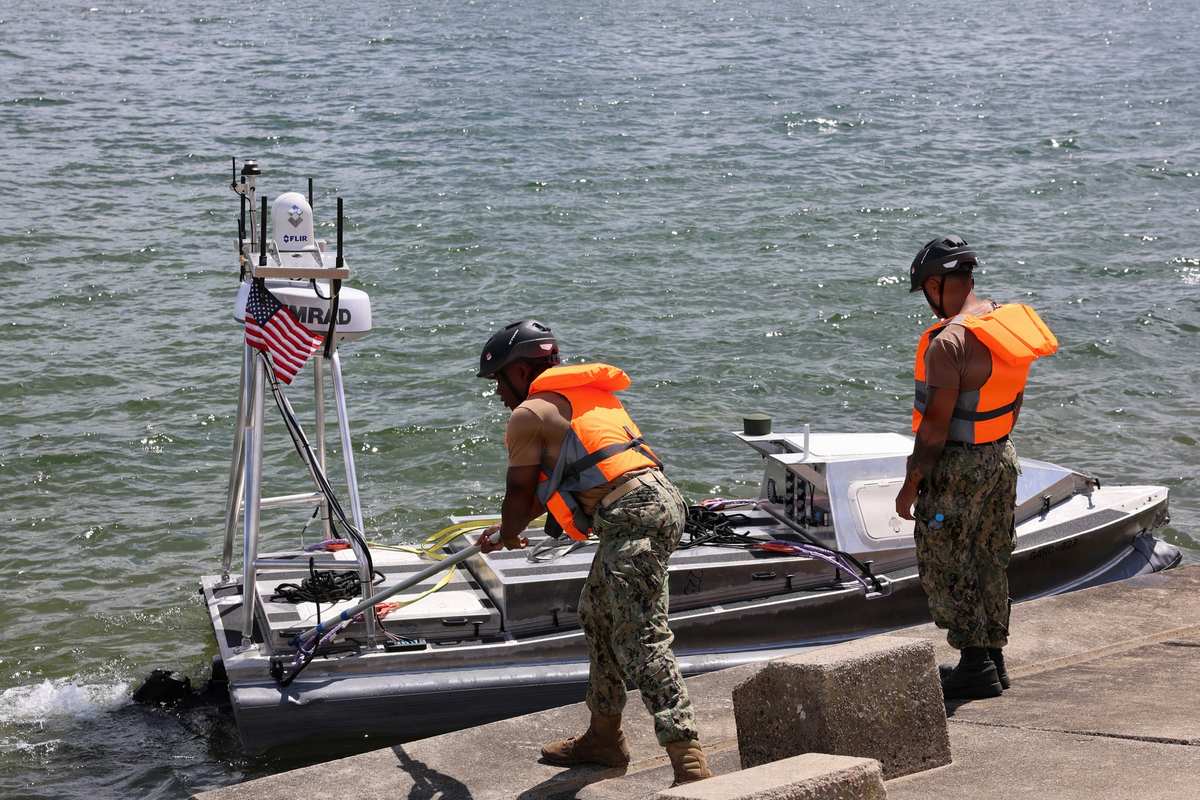
The boat is the GARC, short for Global Autonomous Reconnaissance Craft. BlackSea Technologies’ spec sheet lists it at 15 feet 8 inches long and 4,800 pounds fully loaded, and it can either drive itself or be steered by an operator who’s nowhere near it. You’ve met it here before. In July, one of them blew a hole in the retired USS Peleliu during a sinking exercise off Hawaii, and in August its builder posted a video of one launching an FPV drone out of a case on its deck.
So is the Navy actually done with it?
Bloomberg says the Navy won’t buy any more
On October 20, Bloomberg reported that the Navy has stopped buying GARCs, citing people who’d been briefed on the decision. One of them said the program office in charge of the boat had commissioned an independent review first. New orders were then suspended because of limits in the boat’s hardware, and because cheaper options, one-way attack drones among them, had come along.
A defense official also told Bloomberg the GARC’s showing in testing has been seen as a failure, pointing at the hardware, the software and the sensors.
A Navy spokesperson gave the outlet some numbers. The service has spent $136.8 million so far on 24 prototypes and 301 production boats, which adds up to 325 GARCs. The spokesperson didn’t comment on the decision to stop buying.
Hang on to that 325. It shows up again in the rebuttal.
So who’s right?
The company on the other end of this is AEVEX, a San Diego-area defense firm that bought BlackSea in September in a deal worth up to $650 million. After the market closed on October 21, AEVEX put out a statement saying the reports contained factual errors and that “no orders have been halted.”
Its version is pretty simple. BlackSea finished its contract by delivering all 325 boats last year, and the Navy was never planning to buy more, because it’s busy spreading the ones it has across different commands and missions.
Honestly, I think both sides could be telling the truth. Say you finish paying off your car loan. Technically, you’ve stopped making payments, but you wouldn’t tell anyone your payments had been halted. If every GARC on order had already been delivered, then the Navy not buying more and AEVEX saying nothing was halted are basically two ways of describing the same empty order book.
Where the two accounts really split is the reason. Bloomberg’s sources point to performance. AEVEX says extra boats were never in the plan to begin with. Which one you lean toward probably depends on how you weigh anonymous sources against a company whose stock had just lost about 32% of its value in a single day.
That drop came on Wednesday, October 21. The shares climbed back 13.2% the next day, after the statement came out, and that’s about as far into the stock market as I’m going to wade in an article about boats.
What’s a one-way attack drone, and why would it win?
A one-way attack drone is basically a guided bomb with a motor attached. It goes to its target once and explodes, so it doesn’t have to be tough enough, smart enough or expensive enough to come home and do it again.
The GARC was designed for close to the opposite job. It’s a reusable boat that heads out with up to 1,000 pounds of sensors or other gear, has a look around and comes back. That’s the reconnaissance in its name. On its maker’s spec sheet it cruises at 22 knots, about 25 mph, and can sprint at 40 knots, roughly 46 mph.
And this is where it gets a little awkward. The GARC’s big headline moment this year came off Hawaii in July, when the Navy used one as, well, a one-way attack drone. It drove an explosive payload into the Peleliu’s hull, and a second GARC shot the footage the Navy released afterward, showing a fresh hole near the waterline.
I’d argue that cuts both ways. It proves the hull can do the kamikaze job if you ask it to. But divide the Navy’s $136.8 million by 325 boats and you get roughly $420,000 per GARC, prototypes included. That’s my math, not the Navy’s, and it leaves out whatever’s been spent since on upgrades. Still, it’s a pretty pricey way to deliver a warhead if something simpler can do it for less.
The GARC has had a bumpy couple of years
Reuters reported last year that the GARC had run into a series of performance and safety problems in testing, including one incident where it hit another boat at speed. In March, when Reuters revealed the Navy was using GARCs on patrols during the war with Iran, it also cited a source who said one of the boats had broken down and couldn’t be used during a separate test in the Middle East that went badly.
Those patrols were real, for what it’s worth. Central Command said at the time that the boats had logged more than 450 hours and covered more than 2,500 miles.
AEVEX has its own explanation for the rough patches. According to Bloomberg, company officials said the boat has outgrown its early life as a remotely piloted boat for surveying the ocean, and that some of the setbacks came down to process, testing and integration. Paul Seiffert, who heads AEVEX’s drone boat work, said the Navy signed off on about 75 engineering changes during development, each one aimed at performance or reliability. That sounds like a lot. Frankly, it’s also what development is for.
The boats the Navy already owns are still working
Nobody’s suggesting the 325 boats are headed for the scrapyard.
A Navy spokesperson told Bloomberg the GARCs are still going out on missions, and that the time sailors have spent training and operating with them has helped the service move faster on robotics and autonomy more broadly. AEVEX says the fleet has logged more than 25,000 hours on the water.
The money hasn’t dried up either. AEVEX says the Navy modified the existing GARC contract several times this year, pushing the deal to about $350 million and stretching it through June 2027. That cash pays for upgrades, payload work and new mission gear for boats already in the Navy’s hands rather than for new hulls.
One of those packages is for mine countermeasures. That basically means finding sea mines and destroying them before a ship finds them the hard way. AEVEX says GARCs fitted with that gear are running mine-clearing missions in the Strait of Hormuz right now.
The Navy hasn’t confirmed it. Asked whether GARCs were helping clear mines in the strait, Capt. Tim Hawkins, a Central Command spokesperson, pointed to remarks Adm. Brad Cooper, the head of Central Command, made in August. Cooper credited divers, SEALs and aircraft with clearing the shipping routes and didn’t bring up boats at all. So I can’t tell you from anything public whether those GARCs are actually out there hunting mines.
So what comes after the GARC?
AEVEX says it’s now pushing two newer BlackSea designs, a compact modular boat called Chaser and a bigger, faster combat boat called Comet, the missile-armed one we covered in June. If Bloomberg’s sources are right that cheaper one-way drones are winning these jobs, that’s arguably a tougher sell than it was a few months ago.
BlackSea did pick up a win this fall. It was one of three companies to win a Navy prize competition for drones that find and destroy mines on their own, and that contest had nothing to do with the GARC.
For now, the 325 GARCs the Navy bought are still in the water, and the contract paying to upgrade them runs through June 2027. AEVEX is set to report third-quarter results, its first since the Bloomberg story, after the market closes on November 11.