
When the Navy is finished with a warship, that ship has three possible futures: museum, scrap metal, or target. The former USS Peleliu drew door number three. On July 17, the retired amphibious assault ship, a flat-deck giant displacing nearly 40,000 tons, was sunk by ships, aircraft and submarines from seven nations during RIMPAC 2026, in water 15,000 feet deep off the Hawaiian island of Kauai.
None of that is unusual. The Navy has been sinking its own retired hulls in these live-fire drills, called SINKEXs, for decades. What was unusual sat much lower in the water. Among the Harpoons, the torpedoes and the helicopters, one of the weapons sent against the Peleliu was a 16-foot robot boat, about the length of a Toyota Camry, that drove itself into the hull and detonated.
It was the first live-fire strike ever carried out by the Navy’s GARC drone boat, and the first time the service has run a kamikaze boat attack as a sanctioned training event. The timing is the part worth sitting up for. Five days earlier, on July 12, the U.S. had used drone boats to hit real targets in combat for the first time. So in a single week, America’s exploding robot boats went from debut to doctrine.
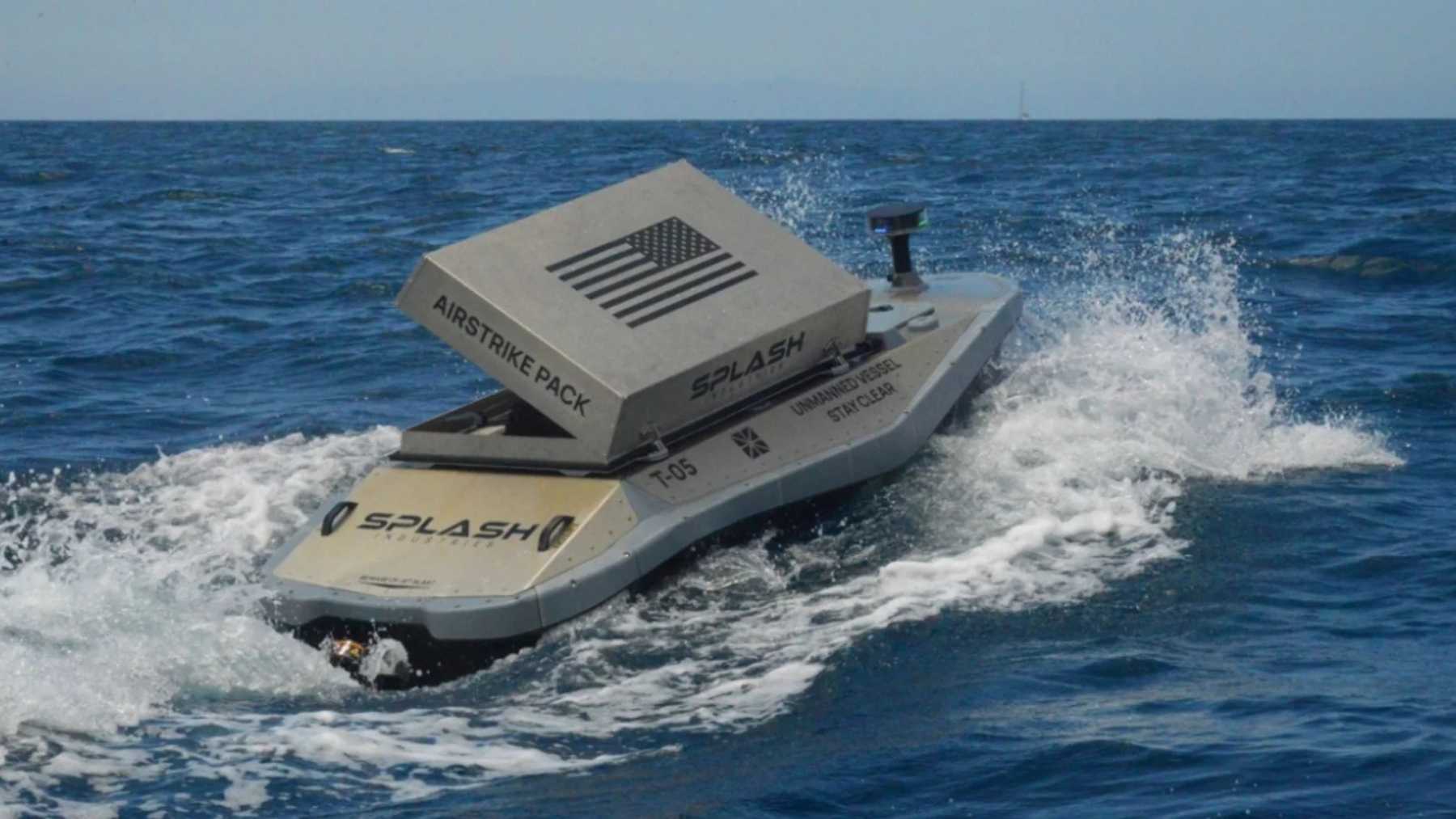
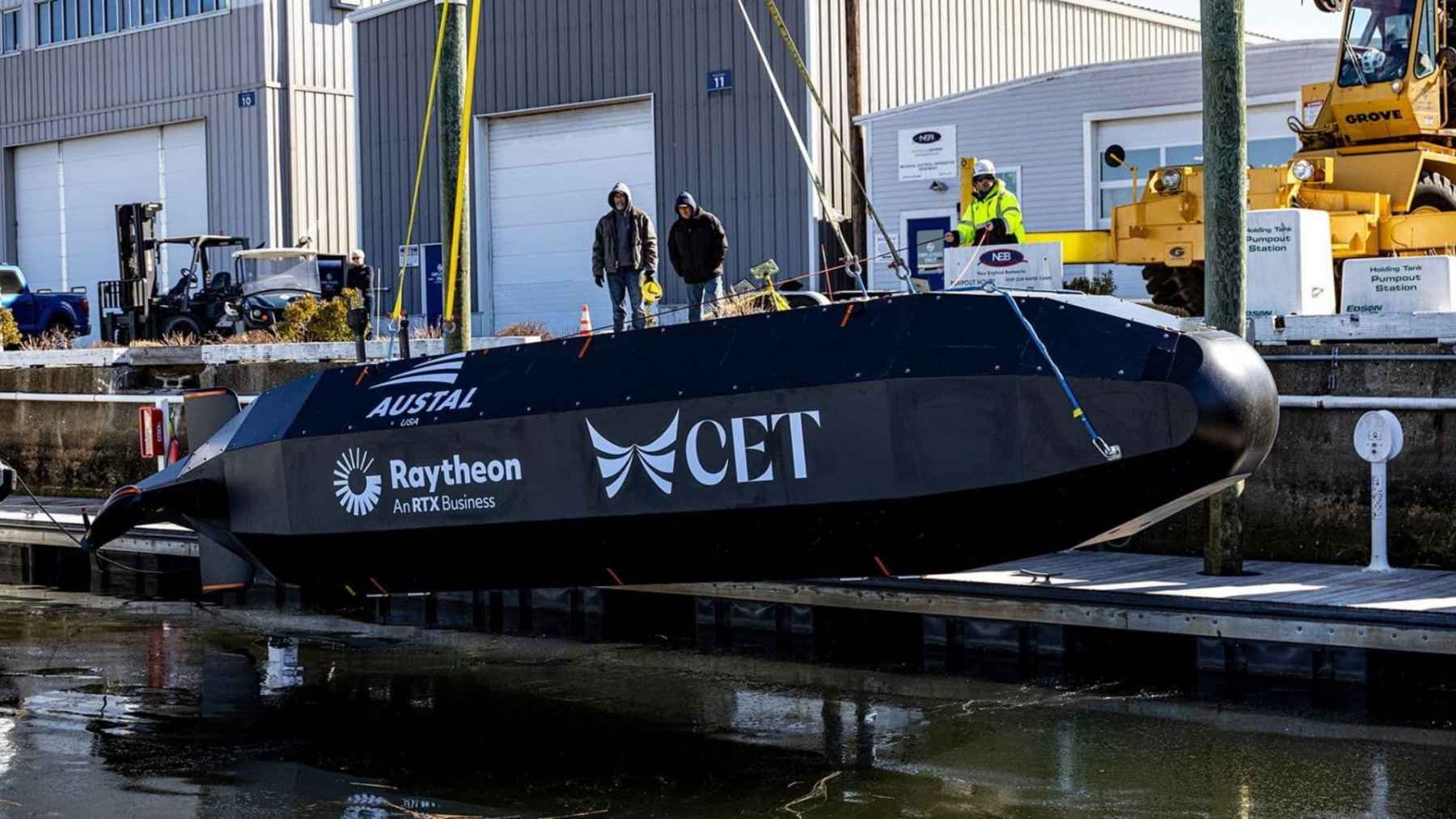
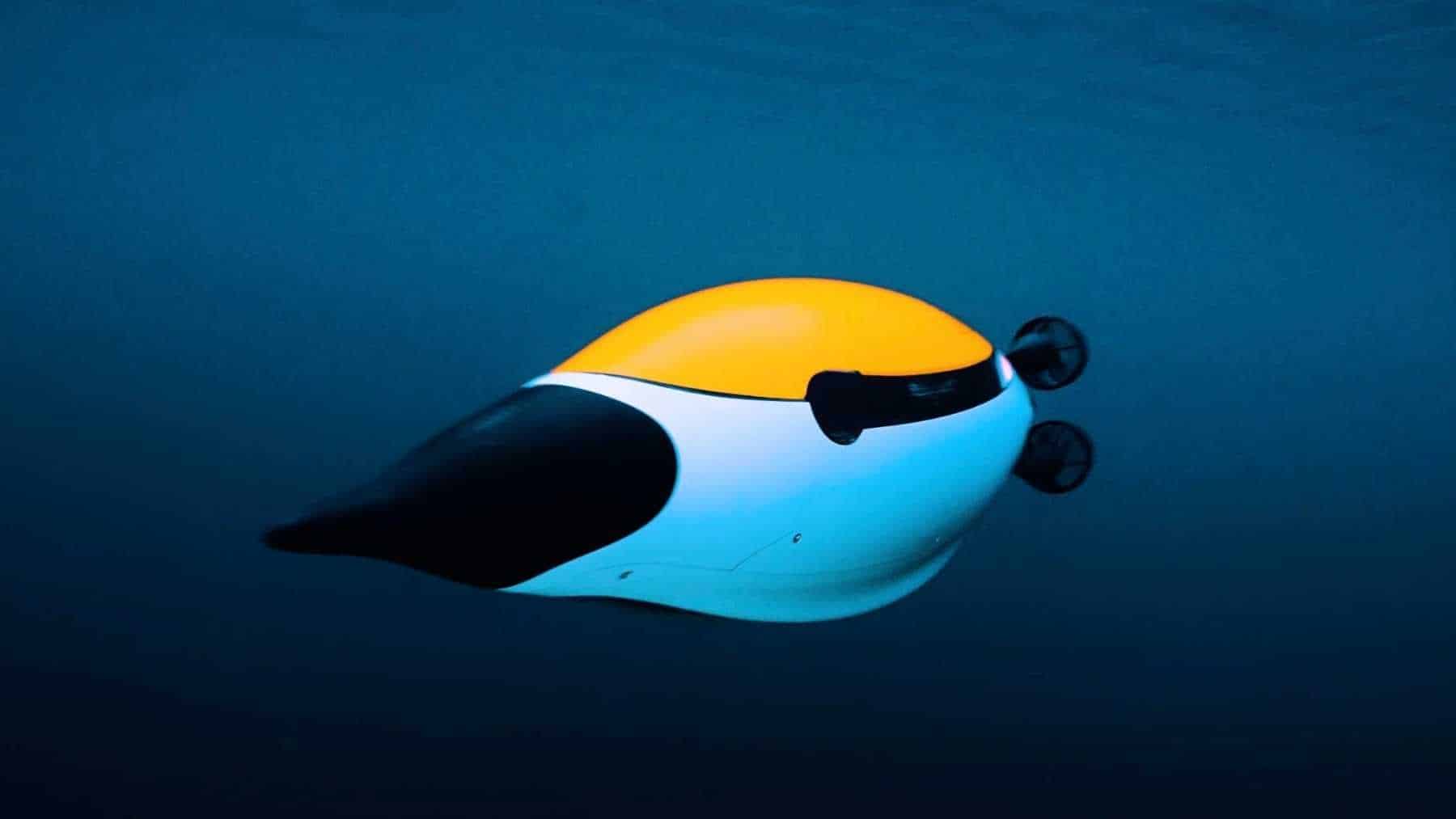
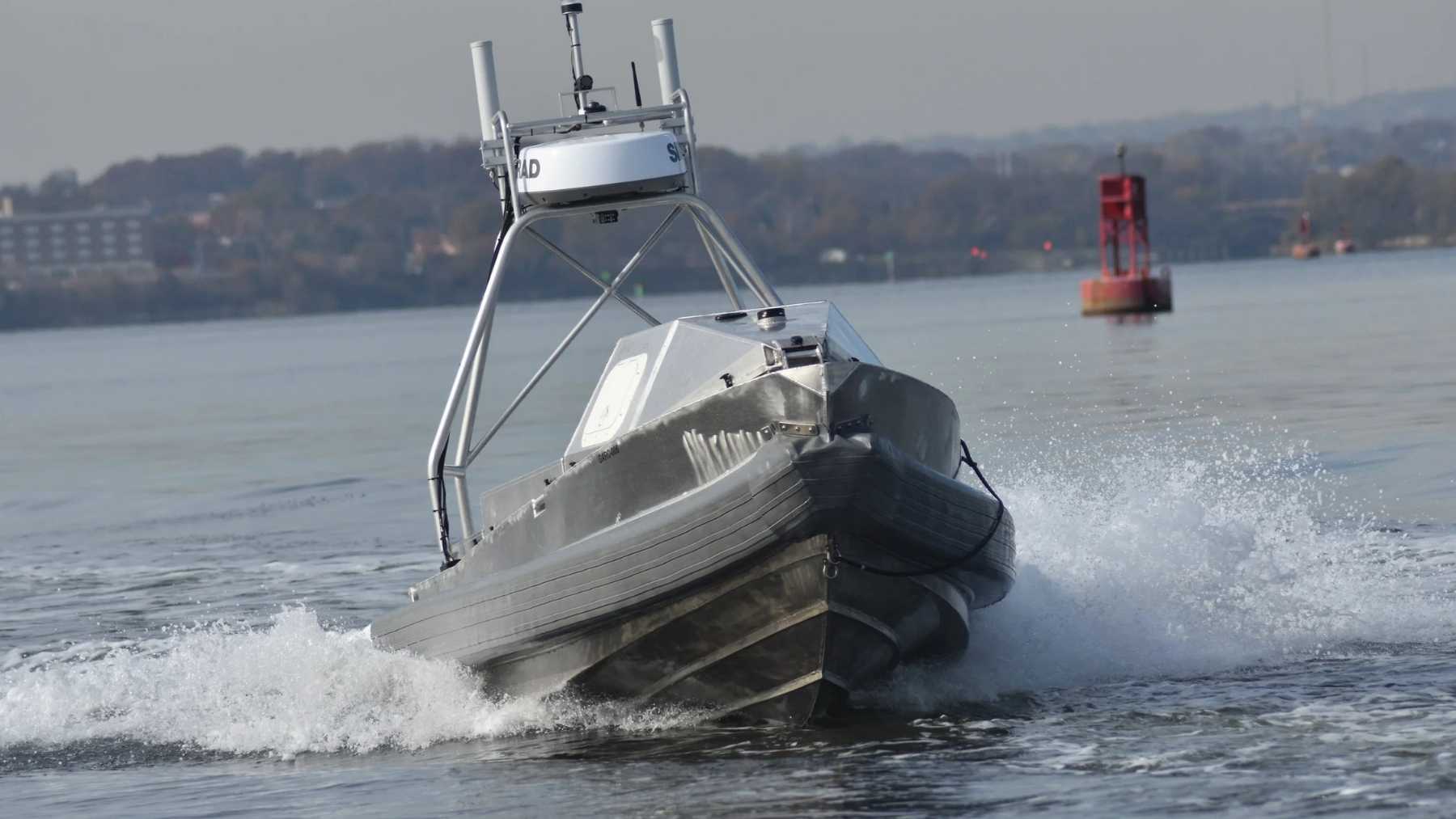
The GARC is a 16-foot boat with a very flexible job description
GARC stands for Global Autonomous Reconnaissance Craft. It comes from Baltimore-based BlackSea Technologies, the same builder that rolled out the missile-armed Comet drone boat we covered in June, and it has quietly become the workhorse of the Navy’s small uncrewed fleet.
The numbers, as reported by The War Zone: around 16 feet long, a full-load displacement of 4,800 pounds, and a range of 700 nautical miles at 22 knots. Against the Peleliu, the target outweighed the attacker by roughly 16,000 to one.
The boats in the exercise were run by Unmanned Surface Vessel Division 32, a unit the Navy only stood up early this year. Sarah Weinstein, its first commanding officer, confirmed the milestone on LinkedIn, calling it “the Navy’s first GARC Live Fire” of RIMPAC 2026. Her division took the same boats to the Baltic in June for BALTOPS, where NATO crews practiced spotting and stopping them. The Navy has even created a new enlisted job, Robotics Warfare Specialist, for the sailors who operate them.
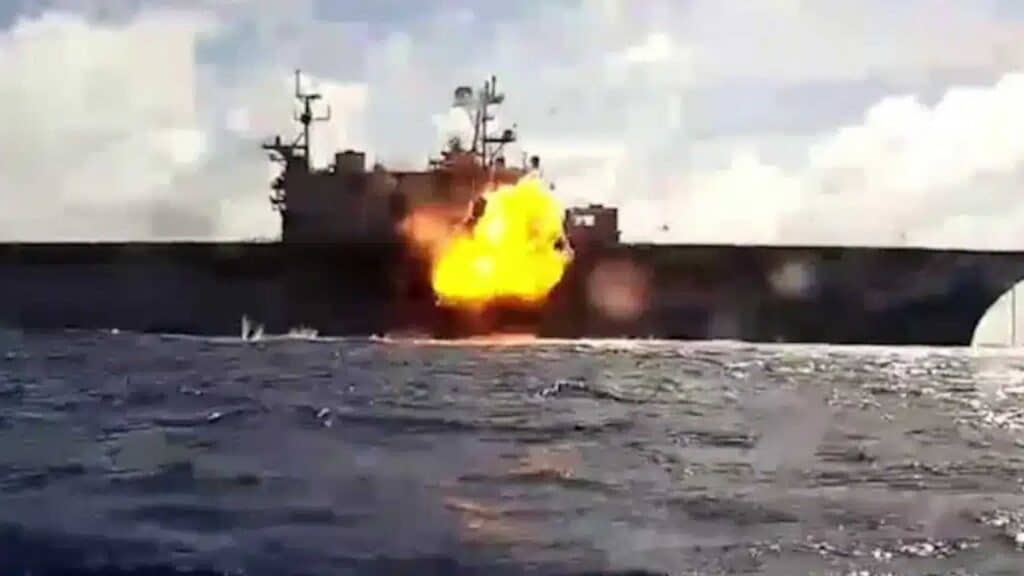
One boat made the attack run, the other one filmed it
By July 17 the Peleliu had already been worked over. Naval News reports the drone boats motored past impact holes left by Harpoon, Spike and LRASM missiles before reaching the hull. The ship was visibly taking on water when they arrived.
Two GARCs were on scene, but according to a source who spoke to The War Zone’s Howard Altman, only one flew the full mission profile and detonated against the ship. The second boat had a different assignment: get in close and record the damage. That footage is the video the Navy released on July 24, showing a fresh hole blown near the waterline of a ship the length of three football fields.
The attacking boat ran on Anduril’s Lattice autonomy software and carried a 1,000-pound payload. How much of that weight was actual warhead, the Navy hasn’t said. What the hull of the Peleliu says is that it was enough.
Five days earlier, the Navy did it for real off Iran
The exercise didn’t happen in a vacuum. On July 12, amid the escalating exchange of strikes between the U.S. and Iran around the Strait of Hormuz, three Saronic-built Corsair drone boats hit a submarine and a ship maintenance facility at Iran’s Bandar Abbas naval base, according to U.S. Central Command. That was the first time American forces had ever employed kamikaze boats in combat.
It capped a strange couple of months for the type. Back in June, a Corsair pulled two downed Apache pilots out of the water near Hormuz, the first rescue of its kind. So within six weeks, American drone boats saved two lives, took their first shots in anger, and then demonstrated the whole playbook in front of 29 allied nations.
The concept itself is borrowed, and the Navy isn’t pretending otherwise. Iranian-designed explosive boats in Houthi hands hit a Saudi frigate back in 2017. Ukraine then turned the idea into a campaign, using its Magura boats and their cousins to batter Russia’s Black Sea Fleet so badly that Moscow pulled much of it out of Crimea. Kyiv’s crewless boats have since moved on to launching interceptor drones off the water. What Ukraine improvised under fire, the U.S. is now industrializing with program offices and training syllabi.
The world’s biggest naval exercise now doubles as a weapons showcase
RIMPAC is the largest international maritime exercise on the planet, and the 2026 edition is its 30th since 1971. Per the Navy’s own numbers: 30 nations, 30 ships, five submarines, more than 190 aircraft and over 30,000 people, operating around Hawaii from June 24 to July 31.
It has also become the stage where the Navy debuts hardware on purpose. In 2024 it was the ultra long-range AIM-174B missile. This year it was a robot boat exploding against an amphibious assault ship while everyone watched.
The Peleliu got a proper send-off first. It took four tugboats to haul the hulk out of Pearl Harbor on July 15, and units from Australia, Canada, Italy, Japan, New Zealand, Spain and the U.S. all took part in the sinking drills. Spain’s frigate Álvaro de Bazán put a Harpoon into her. A New Zealand helicopter added a Penguin missile. The same week, the retired cruiser USS Mobile Bay went down in a separate SINKEX on July 12. Both ships served over 35 years. Neither lasted a day as a target.
One housekeeping note to finish. GARC officially stands for Global Autonomous Reconnaissance Craft, and after July 17, the R is the least accurate letter in it. The Navy’s job titles have already caught up with reality faster than its acronyms have. The reality sits 15,000 feet down off Kauai, with a drone-boat-sized hole near the waterline.