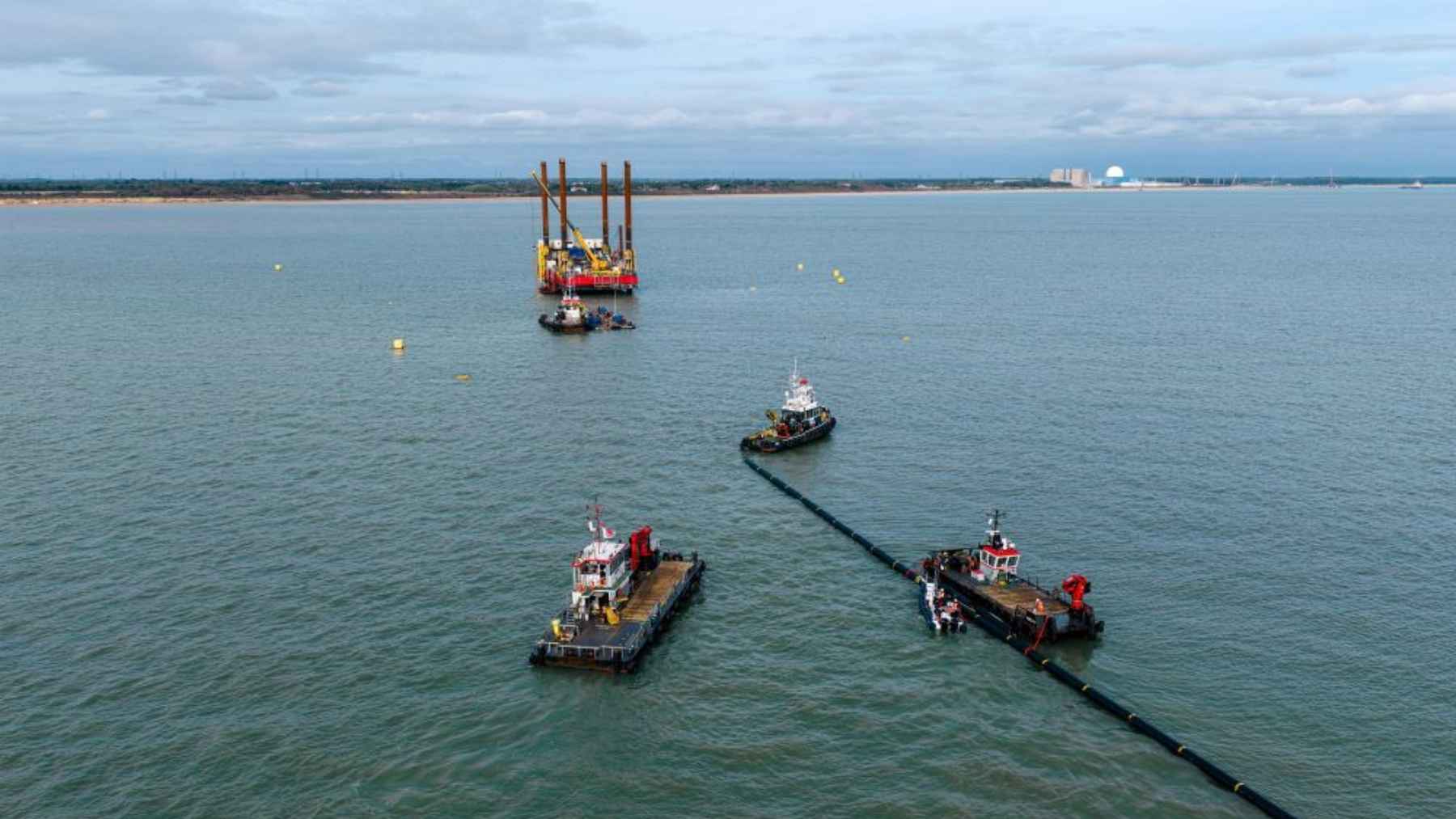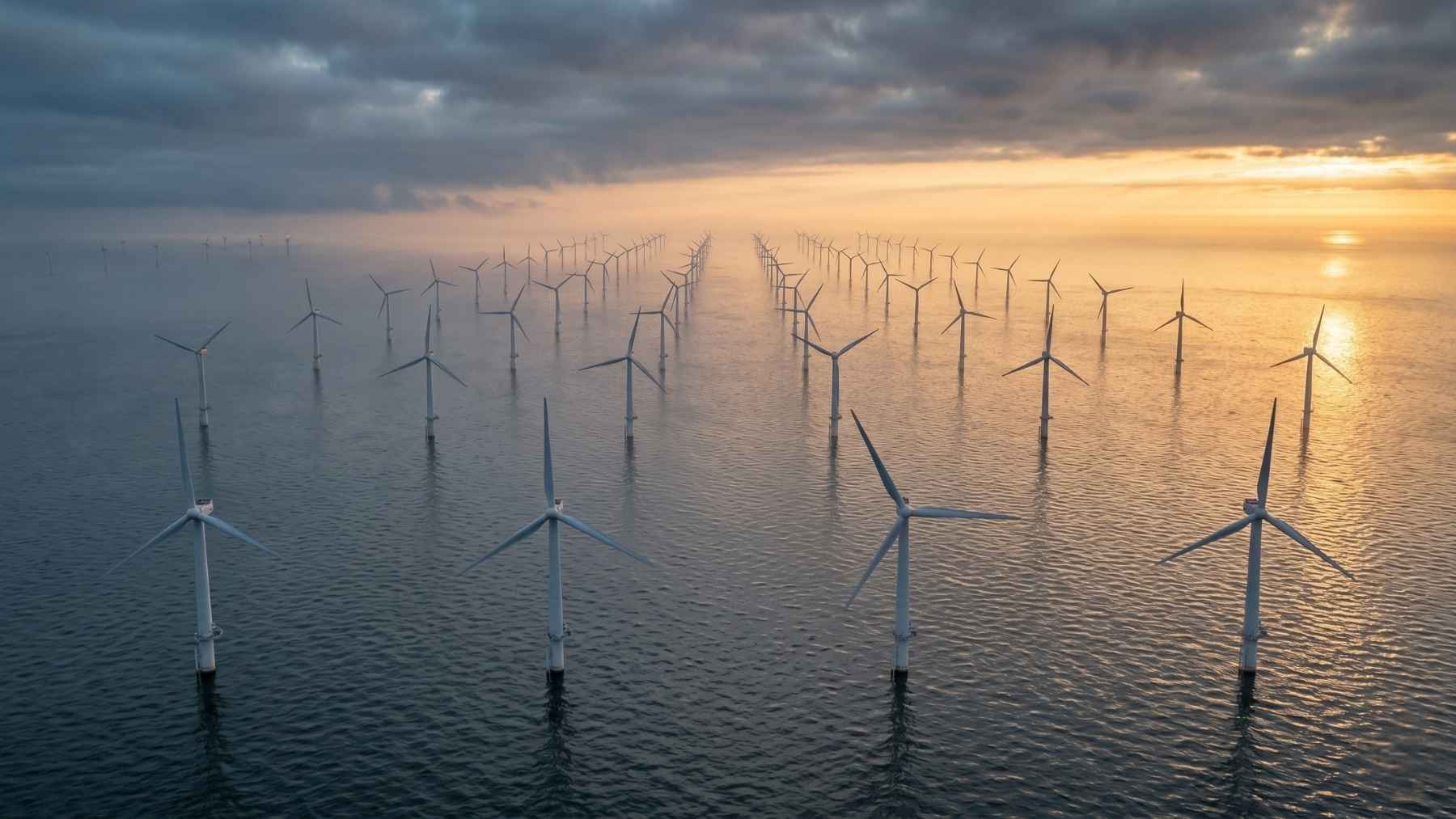

The American Clean Power Association says the Pentagon is currently sitting on the paperwork for 165 onshore wind farm projects across the United States. Combined, they represent around 30 gigawatts of new electricity generating capacity. That’s not offshore. That’s not federal land. These are wind farms on private property, going through what used to be a more or less routine military review to make sure the towers don’t mess with radar or flight paths. Since August 2025, that routine review has stopped being routine. According to CNN, meetings have been canceled, applications are no longer being processed, and in April the Pentagon sent letters to developers telling them it is reviewing how it evaluates “the national security impact of energy projects.”
That’s the headline. Here’s the part nobody is putting next to it. In the same window of time that the Pentagon has been blocking wind projects on national security grounds, the same federal government has spent more than $10 billion buying its way into rare earth and critical mineral supply chains overseas. The reason given is also national security. The materials it is buying are the same ones that go into the magnets inside wind turbines. So one half of Washington is paying to secure the magnets, and the other half is freezing the project pipeline that would actually use them on American soil.
What the Pentagon has actually done
The story broke in the Financial Times on May 3, then in The Telegraph the day after. The number — 165 projects — came from the American Clean Power Association, the main US wind and solar trade body. Jason Grumet, who runs that organization, called it “direct obstruction” back in March, when Axios was already reporting around 30 wind farms on hold. The number has roughly quintupled in two months.
The Pentagon’s official line is that wind turbines and the transmission infrastructure they need have “inherent potential” to interfere with military training and radar. That’s true for some sites and not for others. The trade group says several of the stalled projects are nowhere near a radar installation. Kit Kennedy of the Natural Resources Defense Council put it bluntly. “The Trump administration’s attempts to block wind projects keep getting struck down in court, so it’s reaching for ever more extreme and absurd methods,” she told the FT.
The courts piece is important. On December 22, 2025, the Department of the Interior suspended five large offshore wind projects: Vineyard Wind 1 in Massachusetts, Revolution Wind off Rhode Island and Connecticut, Coastal Virginia Offshore Wind, and both Empire Wind 1 and Sunrise Wind off New York. Interior Secretary Doug Burgum framed the move as a response to “emerging national security risks, including the rapid evolution of the relevant adversary technologies, and the vulnerabilities created by large-scale offshore wind projects with proximity near our east coast population centers.”
Roughly two weeks earlier, US District Judge Patti Saris had vacated Trump’s January 20 executive order on wind energy, calling it “arbitrary and capricious.” The original order had paused leasing and permitting for any wind project on federal land or water. The case had been brought by a coalition of 17 state attorneys general plus Washington DC, led by New York AG Letitia James. The Pentagon route, in other words, opened up just as the executive-order route got slammed shut.
The money going the other way
Now here’s where things get a bit weird. While one part of the federal government has been pulling national security as a reason to block wind, another part has been spending serious money to buy access to the raw materials that wind turbines depend on. The reasoning is, you guessed it, also national security.
In late October 2025, the Trump administration signed more than $10 billion in critical-minerals deals in under a week. The list reads like a Risk board: Australia, Japan, Malaysia, Thailand, plus active talks in Indonesia, Vietnam, and Cambodia. The stated goal was to cut China’s 90 percent grip on global rare-earth refining and shore up supplies for “defense and clean-tech industries.”
The big domestic deals are worth knowing by name. In January 2026, the administration took a 10 percent stake in USA Rare Earth as part of a $1.6 billion debt-and-equity package. That money is going into the Round Top Mountain mine in Texas and a 310,000-square-foot magnet plant in Stillwater, Oklahoma. The plant is set to begin commercial production in the first half of this year, and it will make sintered neodymium-iron-boron magnets — the type used in F-35s, EV motors, and the generators inside wind turbines.
That isn’t the only one. The Department of Defense became the single largest shareholder in MP Materials, the only operational US rare earths mine, with a stake of around 15 percent. The administration picked up 5 percent of Lithium Americas, plus another 5 percent of its Thacker Pass joint venture with General Motors in Nevada. That one’s been on the auto press’s radar for years. Then there’s a $1.4 billion partnership with Vulcan Elements for a domestic magnet supply chain. Overseas, the US Trade and Development Agency put $1.8 million into a feasibility study for the Monte Muambe rare earths project in Mozambique, while the Development Finance Corporation lined up $50 million for the Phalaborwa project in South Africa. There are also ongoing discussions about an 8 percent equity stake in Critical Metals, which owns the Tanbreez deposit in Greenland — the same Greenland Trump spent much of 2025 saying should belong to the United States.
Where both wires meet
If the connection between blocking wind farms and buying rare earths isn’t jumping off the page yet, here’s the join. The kind of wind turbine actually being installed at utility scale today — both onshore and offshore — uses a permanent magnet synchronous generator. That generator depends on neodymium-iron-boron magnets containing dysprosium and terbium for high-temperature operation. They are exactly the materials Lynas processes in Malaysia, that Rainbow Rare Earths plans to extract from phosphate dunes in South Africa, that MP Materials pulls out of Mountain Pass in California, and that the USA Rare Earth plant in Stillwater is about to start sintering into finished magnets.
An electric car drive motor uses roughly one to two kilograms of those same magnets. A modern wind turbine generator uses substantially more. So the supply chain Washington is funding through one door — to secure those magnets for “defense and clean-tech industries” — is the same supply chain another door is leaving idle by sitting on the approvals that would actually let domestic wind farms use the output. This isn’t a hypothesis. It’s the wording the Trump administration has used in its own announcements. Rare-earth deals abroad: national security. Wind farm reviews at home: national security. Same words, opposite outcomes.
The UK is running the opposite playbook
You might be wondering whether anyone else is doing this differently. They are, and the comparison is pretty stark. On May 15, the UK Secretary of State for Energy Security and Net Zero, Ed Miliband, granted Development Consent Orders for two large offshore wind farms, Dogger Bank South West and Dogger Bank South East. Together they will deliver around 3 gigawatts of generation, sited more than 100 kilometres off the north-east coast of England, in a joint venture between Germany’s RWE and Abu Dhabi’s Masdar. The same week he greenlit Rampion 2 in the English Channel — turbines as tall as the Eiffel Tower, due to start construction shortly.
The framing Miliband used at the Rampion 2 announcement is the bit worth holding next to Burgum’s statement. “The UK has a boundless supply of wind that cannot be turned on and off at the whims of dictators and petrostates,” he said. That treats domestic wind as energy security itself. The Pentagon’s letter to developers treats domestic wind as a national security risk. The UK gets close to a third of its electricity from wind across onshore and offshore combined. The US gets a little over a tenth, and that share isn’t growing right now because the queue isn’t moving.
It also doesn’t mean the rare earth deals are a mistake. A government can perfectly well decide that securing a magnet supply chain matters and that some wind farms create real risk in specific locations. Both can be true. What’s harder to explain is why the magnet supply chain is being built explicitly to serve the wind turbines the same government won’t approve. Doug Burgum, in his December statement on the offshore pause, said the prime duty of the US government is to protect the American people. The Pentagon’s April letters say something similar in flatter language. The 165 developers sitting on stalled projects are, presumably, waiting to find out what that means in their case.
For an EV buyer in 2026, the math at the dealership hasn’t moved much. The harder math is the one nobody puts on the sticker. An EV draws from a grid that has to keep growing to handle data centers, heat pumps and millions of new cars plugged in overnight. If 30 gigawatts of new wind stays in the Pentagon’s inbox for another year, you don’t lower the demand — you just leave less new generation chasing the same load, which moves wholesale electricity prices in one direction. So the same buyer ends up paying a few cents more per kWh, in a market where the gasoline truck they didn’t buy would have cost ten dollars more at the pump. Both of those things stay true regardless of which Washington office wins this argument.