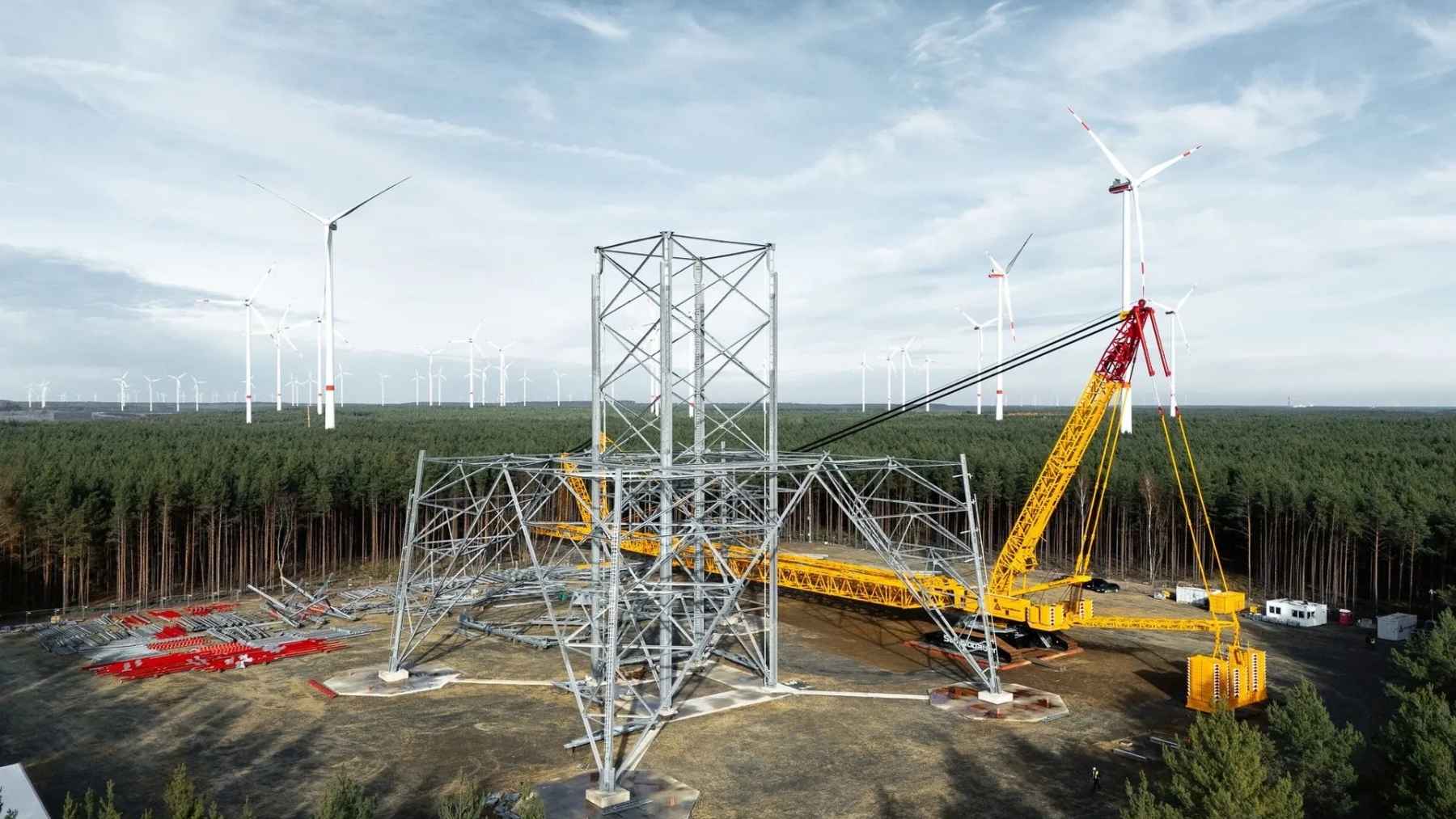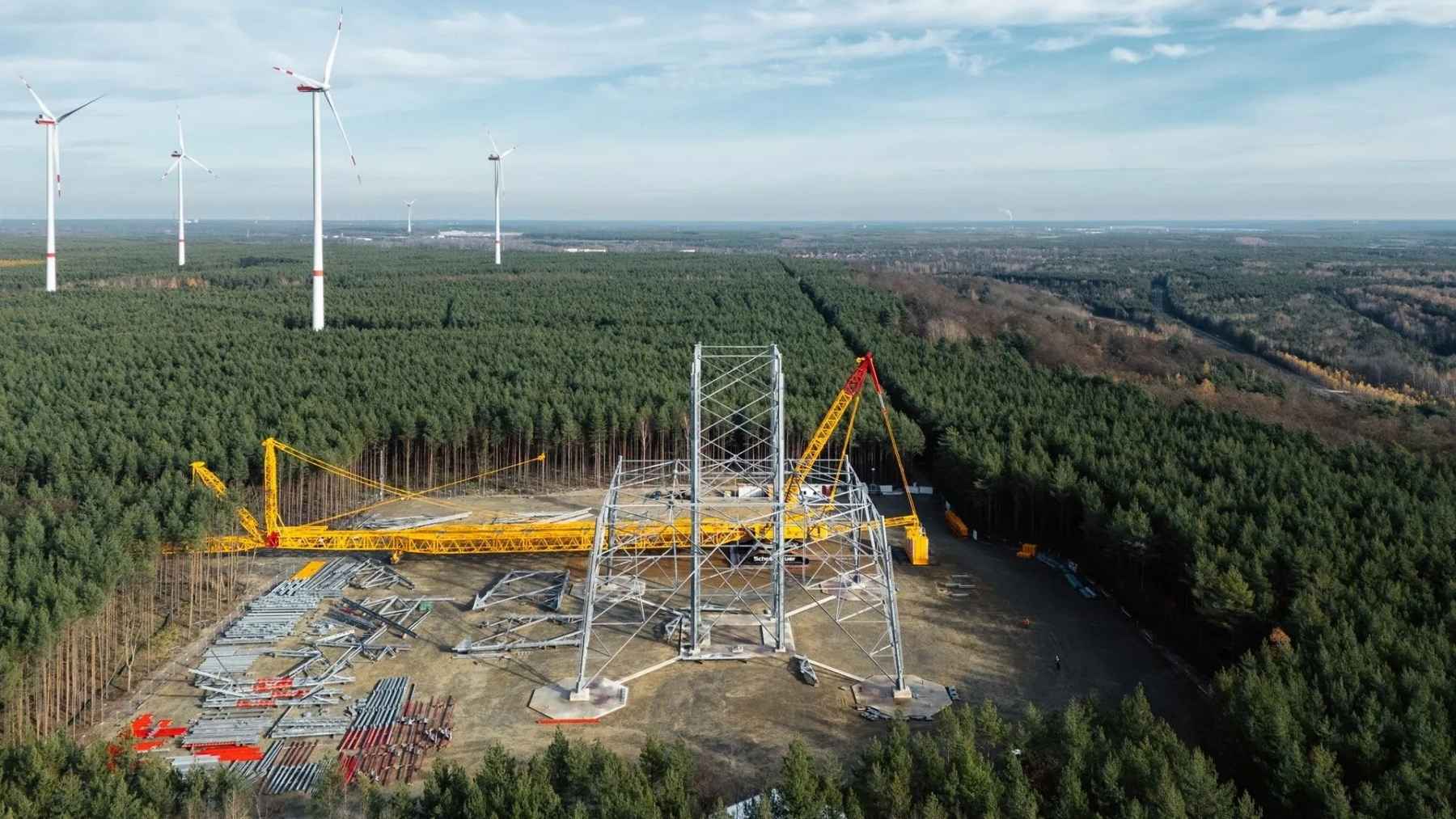

Wind turbines have a body count. The spinning blades kill bats in real numbers, and one often-cited estimate put the toll at U.S. wind facilities at around 888,000 in a single year back in 2012. So solar always looked like the gentle renewable for wildlife. No moving parts, nothing to fly into, just panels sitting quietly in a field.
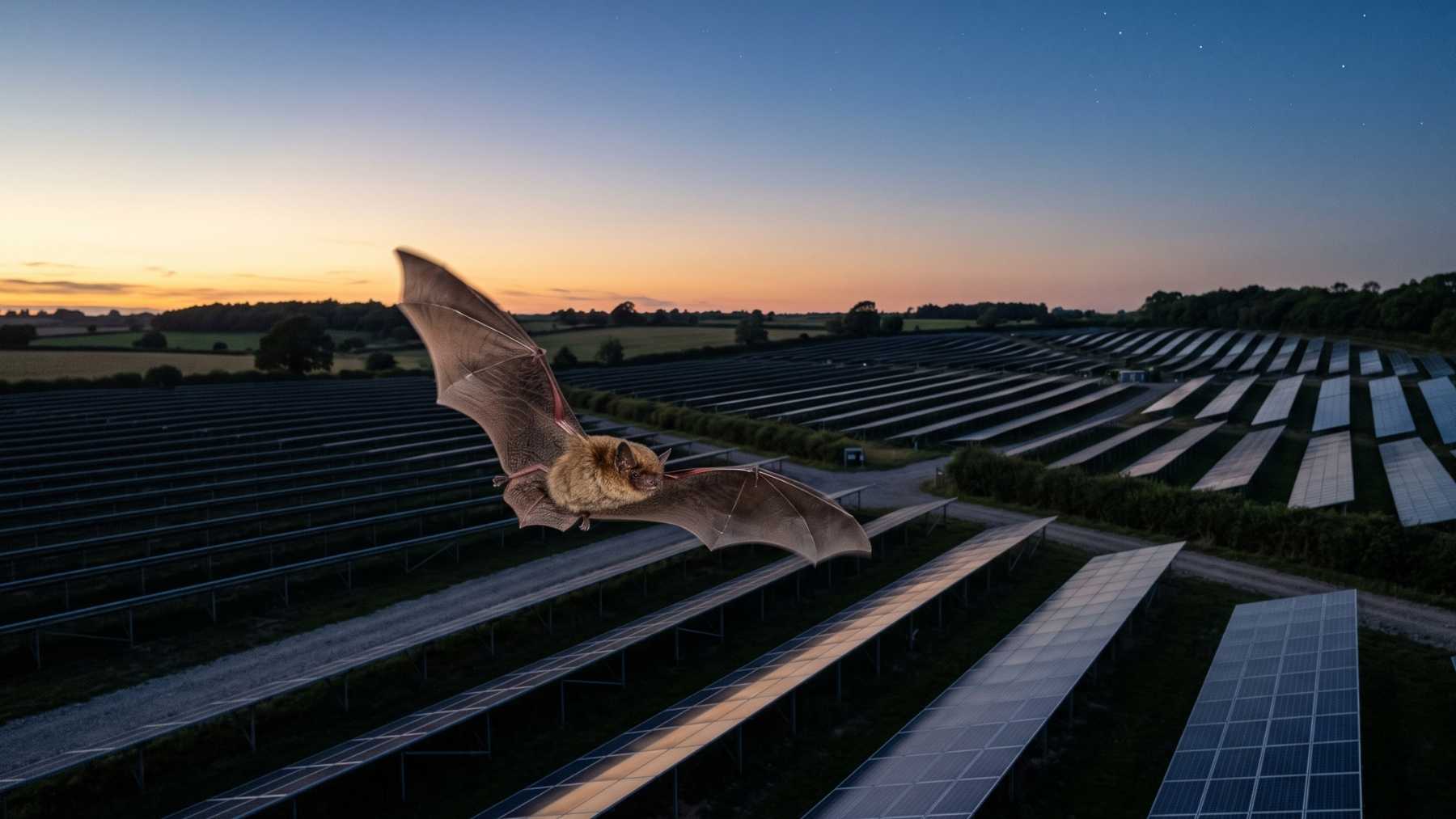
Then a team at the University of Bristol drove out to 19 solar farms in southwest England, pointed bat detectors at them, and found the fields had gone quiet in a way nobody expected. The bats weren’t being killed. They were just leaving, and by a lot.
The fields that went quiet
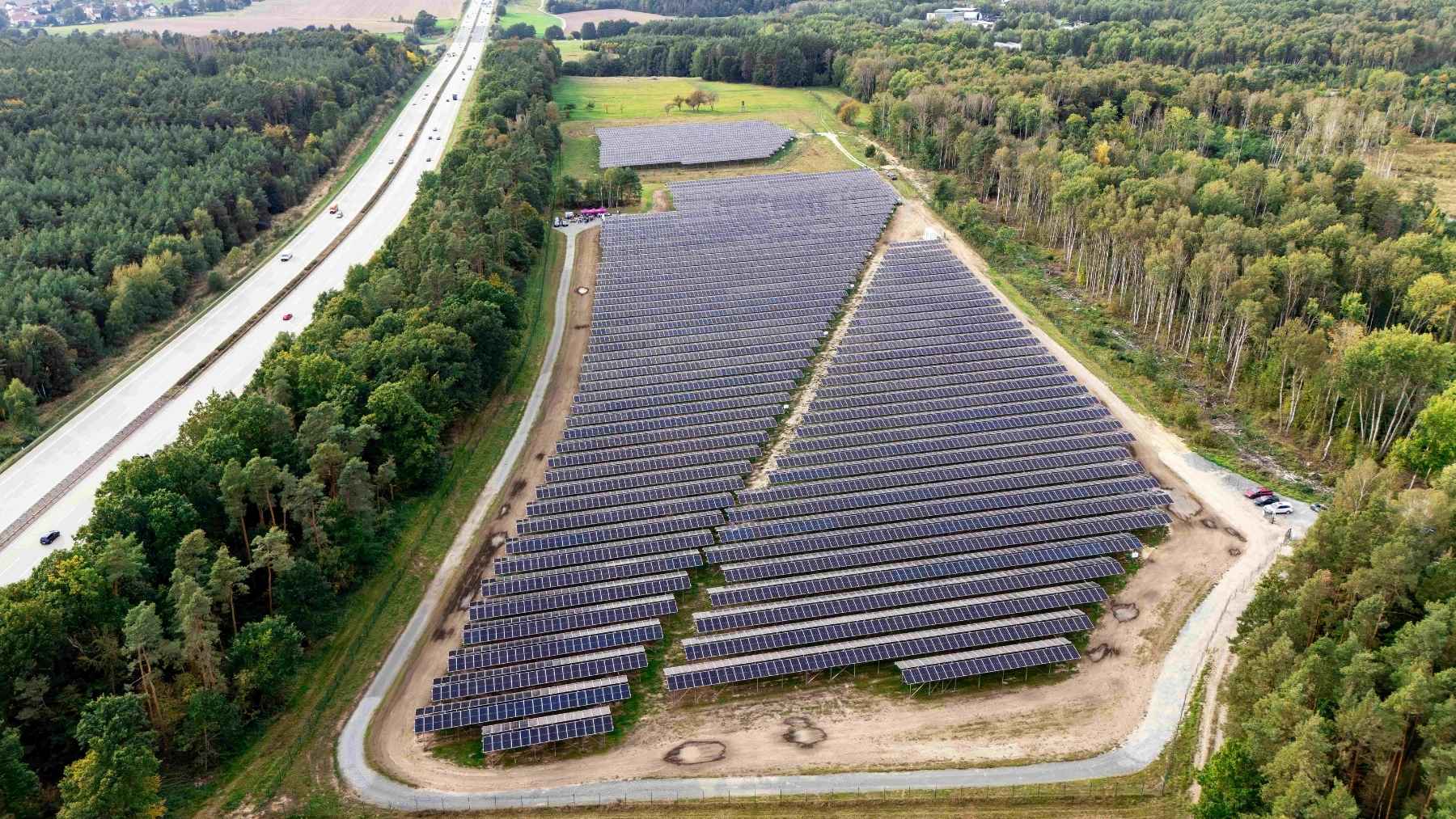
The study, published in the Journal of Applied Ecology, paired each of those 19 solar farms with a near-identical neighboring field that had no panels. Same size, same hedges, same land use. The only real difference was the glass.
Over 50,000 echolocation calls later, the pattern was hard to miss. Common pipistrelles, which accounted for almost half of all the bat activity recorded, dropped 40% along the edges of the panel fields and 86% in the middle.
Six of the eight species or groups the team could model showed lower activity around the panels. Soprano pipistrelles, noctules, serotines, myotis bats and long-eared bats all turned up less.
Add it all up and total bat activity was almost halved at the field boundaries and down by roughly two-thirds in the centers. Out in open habitat, common pipistrelles were up to 7.3 times more active over the control fields than over the panels.
To a bat, a smooth surface is a lake
What a bat actually perceives is where this gets strange. A bat doesn’t really “see” a solar panel the way you do. It builds a picture of the world out of echoes, and a flat, smooth surface does something very specific to those echoes. It acts like a mirror.
Most of the sound a bat sends down at a smooth surface bounces away from it. Only the small slice that hits dead straight comes back. To a bat, that pattern reads as one thing in nature. Silence everywhere, except a clean echo bouncing straight up from below. That means still water.
The instinct runs deep. In a now-classic experiment at the Max Planck Institute for Ornithology, researchers put bats in a flight room with smooth metal, plastic and wood plates, and the animals tried to drink from all of them. Texture the same plate with tiny ridges and they ignored it.
They ran 15 species from three distantly related families. Every one did the same thing. Bats raised in captivity that had never seen a pond tried to drink from the smooth plates the first time they flew, which means the rule isn’t learned. It’s wired in.
Some kept lunging at a metal plate dozens of times in ten minutes, even when it was propped on a table they could fly underneath and echolocate empty air below. The ears overruled everything else.
So a giant sheet of smooth glass in a field sounds, on paper, like a bat trap. The Bristol authors raise the idea, but they don’t lean on it. Solar panels sit tilted, not flat, which changes the echo, so the team figures the drinking-from-water effect probably isn’t the main thing pushing bats away here.
Nobody’s actually sure why
The lead author titled her own write-up of the study, more or less, “bats are avoiding solar farms and scientists aren’t sure why.” That’s not false modesty. It’s where the science actually sits.
The leading explanations are quieter than any mirage. Solar arrays may simply support fewer of the insects bats hunt, if the panels shade out or crowd out the plants those insects depend on. Fewer bugs, fewer reasons for a bat to work the hedgerow next door.
The panels might also be scrambling the hunt itself. A hard, flat surface can throw a bat’s calls around and make it harder to pick a single insect out of the clutter, so feeding near the array gets less efficient.
Professor Gareth Jones of the University of Bristol, a co-author, noted that bats “can mistake flat surfaces for water, and attempt to drink from them.” But he was careful to call the whole situation little understood, especially in the UK.
More fields, same direction
Bristol wasn’t a one-off. A French team reported in 2024 that insect-eating bats changed how they flew and fed around ground-mounted solar farms. The signal keeps showing up across borders.
A 2025 study in Ecological Indicators found the same activity drop across multiple species, with one detail worth flagging for anyone designing a solar farm: fixed-panel arrays kept more bats around than the single-axis trackers that pivot to follow the sun.
And the question is live right now. In late 2025 the Bat Conservation Trust, working with the University of the West of England and funded by Natural Resources Wales, opened a formal call for evidence on how solar farms affect bats. It pulls in survey data, carcass reports and drinking-attempt sightings from across the country, and the review is due to wrap this financial year.
The fix is cheaper than the problem
None of this is an argument against solar. The Bristol team is blunt that their results shouldn’t slow the build-out, and the menu of fixes is short and cheap.
Plant tall hedgerows and native trees along the edges of a solar field and you hand insects somewhere to live and bats somewhere to commute. Leave corridors to nearby insect-rich habitat. Screen sites with a proper ecological assessment before the panels go in, and steer the worst locations away from prime bat country. Put more panels on roofs, where bats were never feeding anyway.
It’s the same lesson the wind industry learned the hard way, where nudging up the wind speed at which turbines start spinning cut bat deaths by at least half for barely a dent in power output.
The coexistence stories are piling up, too. On California’s Carrizo Plain, an endangered kit fox moved in under the panels and raised pups as safely as the foxes living outside the fence. In Minnesota, swapping the gravel for wildflowers under two solar farms sent native bee numbers up twentyfold. The land under panels doesn’t have to go dead. It just has to be designed for something.
Bats are the odd exception in that hopeful pile. They’re the animal that walks off instead of moving in. But “we built a few thousand of these before anyone asked the bats” is the kind of problem you fix with a hedgerow and a site survey. It isn’t a reason to stop building panels.
England already answered the hard question: yes, the bats leave. What’s left is the easy one, which is whether anyone bothers to plant the hedge before pouring the next field.
 @donwhyte ROOKIE4 months ago