
Breaking news: President Donald Trump is still against electric vehicles, and he’s being really weird about it.
After having a Tesla infomercial on the White House lawn where he announced that “everything is computer,” Trump is back to his anti-EV campaign. This time, he has decided to poke fun at EV drivers during a very important speech at the Red Rock Casino Resort in Las Vegas.
“You’re driving along in an electric car, they have a disease, you know, it’s a disease,” Trump said. “These people are crazy.”
What made Trump call EV drivers crazy? I guess the very real and common thing that EV drivers do where they frantically look for charging stations while their battery is at 75%. Range anxiety is definitely real, but it’s usually people that are not keen on EVs that have that. People who love EVs are usually not as paranoid.
The attack on EVs in the US
The second Trump Administration has been really anti-EV, which has caused a lot of issues for automakers that put all their stock into making electric vehicles. Some pivots have been extremely dramatic as companies racked up hundreds of millions of dollars in losses.
It all started when the financial incentive was removed on buying a new EV, sending electric car sales plummeting. California has attempted to make its own incentive, but many automakers had already canceled upcoming electric vehicle models due to the decline in interest.
In February 2026, the EPA rescinded the greenhouse gas endangerment finding, essentially removing the regulations for light, medium, and heavy-duty vehicles under the Clean Air Act. This was all a mess anyway, causing automakers to create large, ugly, dull vehicles to fit the new regulations. However, part of the emissions standards would have led to 68% of new vehicles being EVs by 2032, which is no longer a thing. Who cares about emissions, am I right? In the same breath, the Trump Administration passed a 2025 tax and spending bill that eliminates the penalties that manufacturers previously had for violating the Corporate Average Fuel Economy requirements. Those standards are essentially gone.
Meanwhile, Trump has continued to try and stop California from having its own state-level vehicle emissions standards. Previously, California was hoping to reach 100% zero-emission vehicle sales by 2035. The Administration even sued California to block the state’s Advanced Clean Cars II standards.
This is all despite health reports continuing to show that we are extremely unhealthy thanks to vehicle emissions. But that checks out with this government. I’m all for ICE vehicles, so I’m not too bummed or anything. However, it’s strange to see our own president making fun of people for wanting to charge their vehicles before they die.
Which EVs were canceled?
Honda pulled the plug on its planned 0 Series lineup for the U.S., including the 0 Series SUV and 0 Series Saloon. Acura’s RSX EV has also been canceled.
These cars were supposed to be a major part of Honda’s electric future, with the first models expected to arrive in the U.S. in 2026. Instead, Honda is shifting its attention back toward hybrids. Honda has since confirmed that Prologue production ends after the 2026 model year, with sales continuing into early 2027 as dealers clear inventory.
The Volvo EX30 was supposed to be one of the more affordable ways to get into a new electric vehicle, with pricing initially hovering around $35,000.
That didn’t last.
Tariffs on Chinese-built EVs pushed the price higher, while Volvo worked to move production to Europe. By the time the car was nearing the end of its run, pricing was getting close to $50,000.
Add in ongoing technology and battery issues, and Volvo has decided to move on. The company is instead focusing on models like the EX90 and EX60.
Kia hasn’t abandoned EVs altogether, but it is clearly becoming more cautious. The upcoming EV4, which was supposed to arrive in 2026 with pricing below $40,000 and up to 330 miles of range, has been delayed indefinitely.
The high-performance GT versions of the EV6 and EV9 have also been pushed back. Interestingly, the GT-Line versions built in Georgia are still moving forward, so Kia isn’t completely pulling the plug on its electric lineup. It’s more of a selective slowdown.
Hyundai took a slightly different approach. The Ioniq 6 SE, SEL, and Limited trims are being discontinued, leaving the performance-focused Ioniq 6 N as the remaining version.
That might sound backwards at first. Why get rid of the cheaper versions while keeping a roughly $70,000-plus performance model? But Hyundai appears to be shifting its attention toward SUVs, particularly the Ioniq 5 and Ioniq 9. The Ioniq 6 simply hasn’t been selling as well, while the Ioniq 5 had a record year in 2025.
Even Tesla cut back. The company has ended production of the Model S and Model X, with the factory space expected to be repurposed for Optimus robot production. The timing probably isn’t a huge surprise. Sales of Tesla’s older luxury models have fallen sharply, and consumers just aren’t lining up to spend six figures on an aging luxury EV like they once did.
Tesla’s overall sales have also declined, marking its second consecutive year of decline.
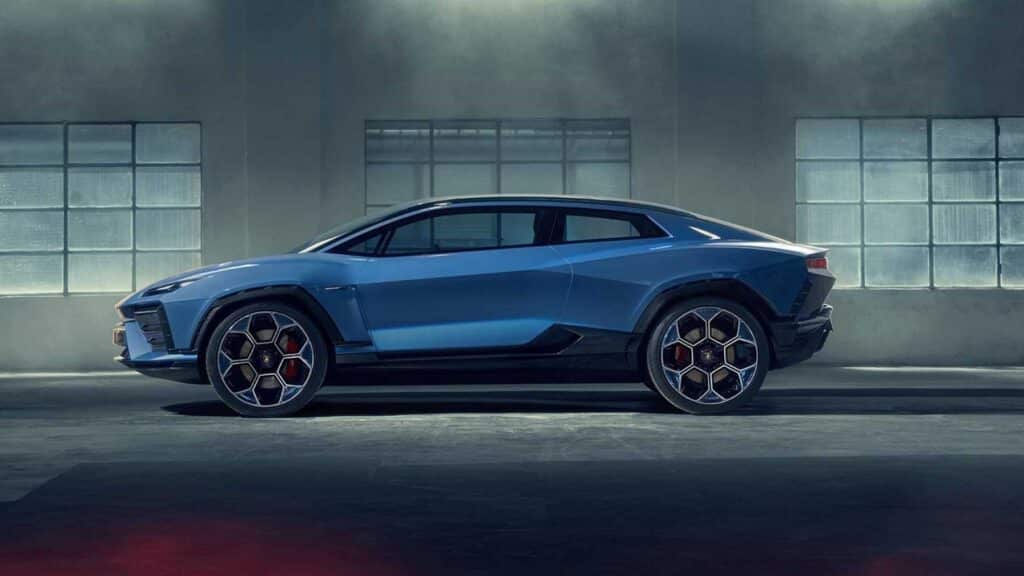
One of the most cursed cancellations was the Lamborghini Lanzador. The company had been working toward an all-electric Lanzador and electric Urus, but the lack of interest in an electric Lamborghini changed those plans. The CEO even called EVs a “hobby,” which he later denied.
Lamborghini buyers aren’t necessarily looking for the most efficient way to get from A to B. They want drama, sound, performance, and emotion. Lamborghini seems to have realized that a fully electric powertrain might not deliver the experience its customers expect. After the horrific Ferrari Luce launch, Lamborghini made the right choice.
Some existing EVs were also cut, including the Ford F-150 Lightning (sad) and the Dodge Charger Daytona R/T (yay). There are plenty more, but I think you get the idea. Automakers are definitely pulling back to avoid further losses.