
Every new power plant in America arrives with an argument about where to put it. Solar wants flat acreage, wind wants ridge lines, and both tend to come with a county hearing where somebody stands up to talk about the view from their porch.
Irrigation canals skip that part entirely. The concrete was poured decades ago, the right-of-way was settled by people who are long dead, and the water inside is already moving downhill on a schedule set by farmers.
An Atlanta company called Emrgy has been arguing since 2014 that this makes the American irrigation network the cheapest power plant in the country, on the grounds that most of it is already built. In May, the European Patent Office agreed enough to name founder Emily Morris and her co-inventor, Professor Thorsten Stoesser, finalists for its 2026 European Inventor Award. They lost the category in Berlin on July 2 to a Chinese battery-recycling team.
The number that came out with the nomination is the part worth holding onto. Emrgy has agreements with 48 water and irrigation districts giving it access to roughly 19,000 kilometers of canal, which is about 11,800 miles of American ditch.
The invention is the flume, not the blade
Putting a propeller in moving water is not new, and on its own it is not very good. Most of the water goes around the rotor instead of through it, and canal water tends to be shallow and slow, so what you get back is disappointing.
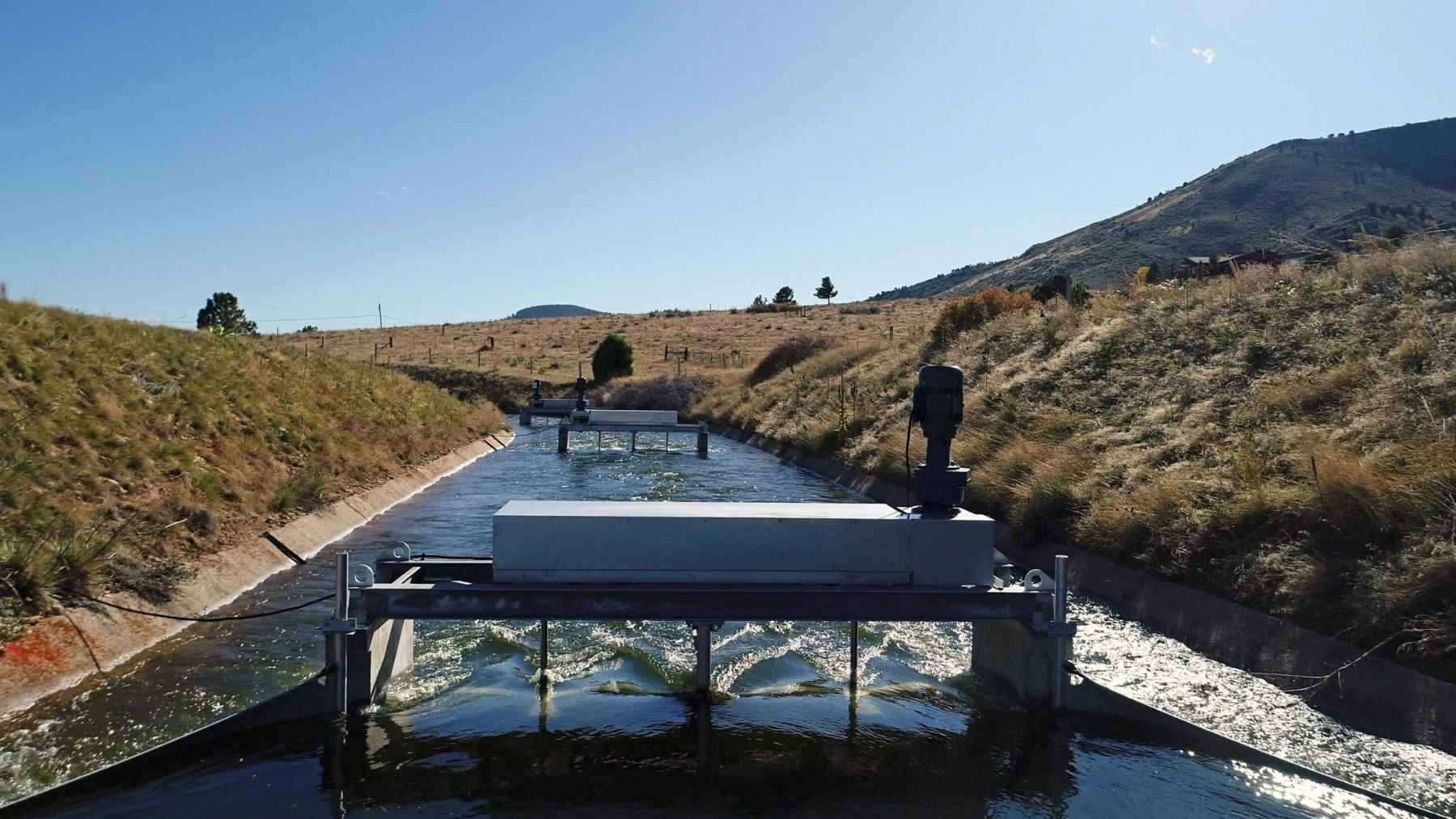
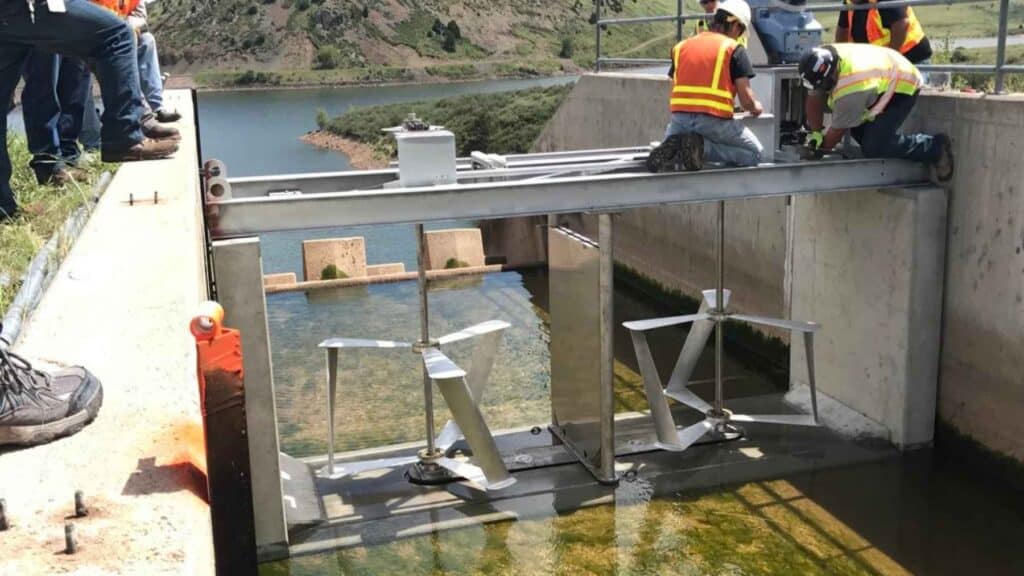
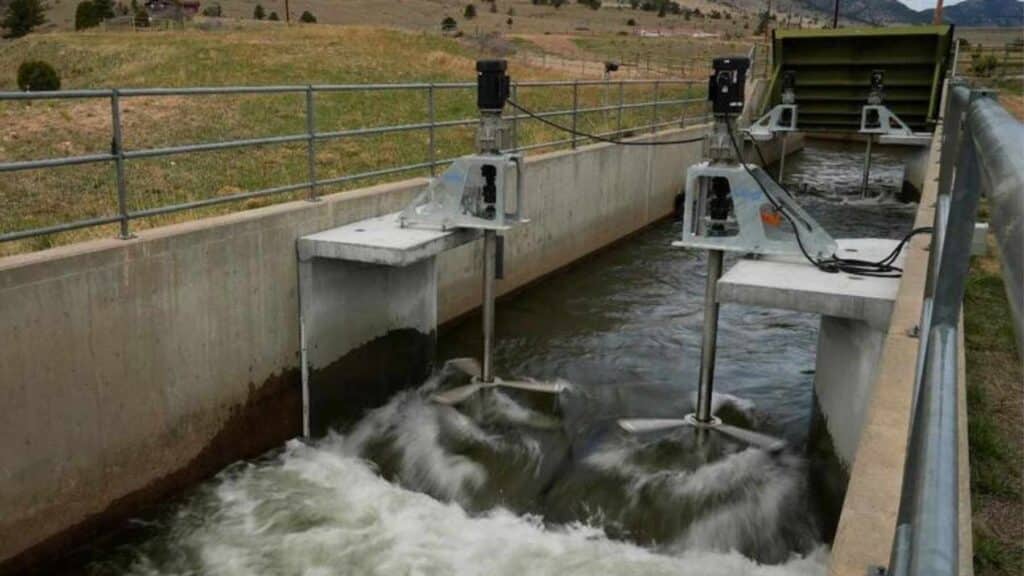
The piece Morris and Stoesser patented is a Hydro-Transition Unit, and it does the boring, useful thing: it redirects and constricts the flow so more of the water is forced through the turbines, faster. The rotors themselves are counter-rotating vertical-axis Darrieus units, a design that copes with shallow channels and water levels that move around during the season.
Each module makes 5 to 25 kilowatts depending on depth and velocity, according to the EPO. That is roughly what three Level 2 home EV chargers pull at full tilt, which tells you immediately that nobody is powering a city with one of these.
The parts are standardized, the flumes are modular, and the mounting is cassette-style, so a crew can drop a unit in or pull it out without shutting off water delivery. For a district whose entire job is moving water to farms on a deadline, that detail matters more than the efficiency curve.
The origin story is stranger than the engineering. Stoesser was an assistant professor at Georgia Tech in 2008, testing hydrokinetic devices in a university flume after the Girl Scouts of Georgia asked him about generating power from tidal streams for their camp. Morris was working on naval drivetrain technology at a company called AMT at the time, and when that project changed direction she took the engineering sideways into shallow water.
“For a researcher, there is nothing more rewarding than seeing ideas leave the laboratory,” Stoesser said in the EPO announcement.
Oak Ridge already counted what is sitting in the ditches
This is where the story stops being a startup pitch and starts being a measured resource. In 2022, Oak Ridge National Laboratory ran the first national assessment of hydropower potential on existing water conduits for the Energy Department, covering pipelines, irrigation canals and cooling water discharge.
The answer was 1.41 gigawatts of new capacity, spread across every state. Agriculture holds the biggest slice at 662 megawatts, mostly across the 17 western states that live on irrigation, with 374 megawatts in municipal systems and 378 megawatts industrial.
For scale, the report put existing US conduit hydropower at around 530 megawatts. The Bureau of Reclamation alone owns about 8,000 miles of canals, according to the Energy Department.
There is a catch in that 662 megawatts, and it is worth being honest about it. Oak Ridge modeled the agricultural number at canal drop locations, meaning places where the water falls and you can extract energy from the height difference. Emrgy’s machines do something different: they harvest velocity out of flat reaches where there is no drop at all. The two resources overlap, but 662 megawatts is not a shopping list for in-canal turbines.
The permitting is the part that actually changed
Hydropower has a reputation for taking a decade to approve, and it earned that reputation honestly. Licensing a dam project is a multi-year federal process with fisheries agencies, tribes and state water regulators all holding a pen.
Congress carved out a different lane for canals. The Hydropower Regulatory Efficiency Act of 2013 created a category called a qualifying conduit hydropower facility, and America’s Water Infrastructure Act of 2018 raised its ceiling from 5 megawatts to 40.
If a project sits on a non-federally owned conduit that exists to move water rather than make electricity, and was not already licensed before August 9, 2013, FERC does not require a license or an exemption at all. The developer files a notice of intent, the public gets 30 days to object, and that is the process.
Emrgy’s chief technology officer, Tom Cuthbert, told the trade journal Hydro Leader back in 2022 that the company also works inside existing hydro licenses, adding generation without a heavy permit lift where it stays under 15% of the power a licensee is already authorized to produce. None of which means every array is automatically exempt, since the qualifying tests are specific and FERC decides case by case.
Agreements are not turbines
Here is the gap. Access to 11,800 miles of canal is a real number, and it is also a number about signed paperwork rather than installed hardware.
The Energy Department’s own write-up on the company, last updated in April, says Emrgy generates distributed hydropower in four US states plus New Zealand. Deployment in Italy and Thailand is planned rather than done, and South Africa was a pilot.
The named American customers are not obscure: Denver Water, the Oakdale Irrigation District in California’s Central Valley, and the Davis and Weber Counties Canal Company in Utah. The Denver installation is four turbines strung along the South Boulder Canal above Ralston Reservoir, which the Associated Press photographed in 2023.
Morris has been direct about which half is proven. “We’ve proven the functionality and marketability of our technology,” she told the Energy Department, before adding that scalability and cost competitiveness are what comes next.
The arithmetic explains why. At 25 kilowatts a unit and roughly 100 yards of spacing between them, a megawatt of canal generation means dozens of machines strung along miles of water, all of them installed, wired, monitored and maintained. Morris has said the company would never deploy a single turbine, in the same way a solar installer does not turn up to fit one panel.
There is an operating cost buried in the physics too. Turbines pulling energy out of a canal slow the water down, and a district that has spent a century guaranteeing delivery times to farmers cares about that far more than it cares about kilowatt-hours.
California is already farming the same ditch from above
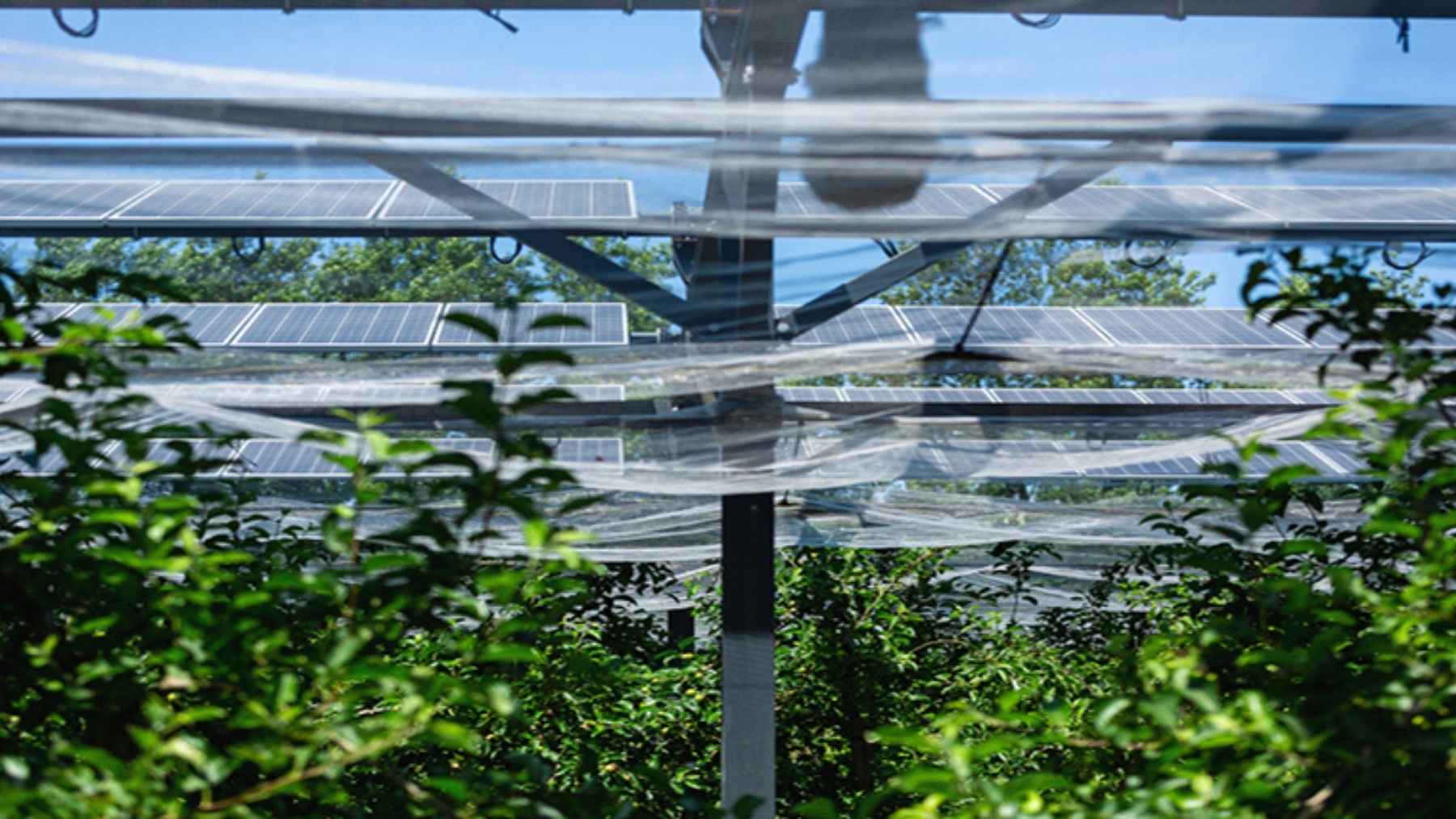
Canals are quietly becoming contested real estate, which is a strange thing to say about a trench full of water. California has spent $20 million roofing two Turlock Irrigation District canals with solar panels, and the pilot cut evaporation underneath by 50 to 70% while knocking back algae growth by around 85%.
Same infrastructure, different harvest, and no particular reason a canal cannot do both. Elsewhere the pattern repeats with local variations: a German startup has been anchoring small hydrokinetic turbines into the Rhine, and in Alaska a riverbed turbine has been feeding a village of 70 that otherwise burns flown-in diesel, where Congress has moved to stop licensing it like Hoover Dam.
What links them is not the technology, which varies a lot. It is the recognition that America and Europe both finished building enormous quantities of moving-water infrastructure long before anyone thought of it as generating capacity.
Whether the ditch pays is now a district-level decision
The technical question here looks close to settled. Turbines that work in shallow moving water exist, they have been running for years at Denver Water, and the federal government has both funded the engineering and cleared most of the paperwork out of the way.
The open question is commercial, and it belongs to a few thousand irrigation districts that were set up to deliver water and have no particular ambition to become power companies. Emrgy’s answer has been to remove the reasons to say no: no dam, no construction, no license in most cases, and financing structures that put the capital on somebody else’s balance sheet.
Whether that is enough will show up in the next couple of years as a number of states, not a number of miles under agreement. Four is where it stands today.