
Hurricane prep in Florida runs on a pretty predictable calendar. You buy the water and the batteries in June, you forget about all of it in July, and you start actually watching the tropics in the first week of August, because that is when the Atlantic normally wakes up and gets to work.
This year it hasn’t. NOAA’s updated seasonal outlook, published on August 6, counts two tropical storms so far and not a single hurricane, and puts the odds of a below-normal season at 75%.
Which makes the numbers coming out of one Florida town look a little odd. Babcock Ranch sits about 30 miles inland from Fort Myers and sells storm resilience as its headline feature, the way other developments sell golf. It just had the best six months of home sales in its history.
And the more you dig into why the place keeps its lights on, the less it has to do with the 687,000 solar panels it is famous for.
The 2026 season has produced two tropical storms and no hurricanes
NOAA’s August update trimmed the year to 7 to 13 named storms, 2 to 6 hurricanes and 0 to 2 major hurricanes. A normal Atlantic season runs 14 named storms, seven hurricanes and three majors.
The forecasters give a 75% chance of below-normal activity, 20% near-normal, and 5% above-normal. The culprit is El Niño, which cranks up wind shear and tears storms apart before they organize.
Matt Rosencrans, lead hurricane season forecaster at NOAA’s National Weather Service, said the pattern “continues to get stronger every month.”
The two storms that did form were Arthur, which came out of the Gulf in mid-June and dumped record rain on Louisiana, and Bertha, which formed south of the Florida panhandle and made landfall in St. Bernard Parish. Neither reached hurricane strength. Both still caused damage.
That is worth holding onto, because the peak of the season is still ahead on September 10, and because water does most of the wrecking anyway. NWS Director Ken Graham put it plainly: inland rainfall is a major cause of damage from tropical storms and hurricanes, as Arthur demonstrated.
Babcock Ranch is selling faster than it ever has
Southwest Florida has been one of the worst new-home markets in the country. Punta Gorda, right up the road, saw home values fall 7.97% between January 2025 and January 2026, the sharpest drop in the nation according to Realtor.com data.
Babcock Ranch went the other way. The town logged 651 home sales through June 28 of this year, roughly 35% ahead of the same stretch in 2025, according to the Babcock Ranch Telegraph.
The first four months alone accounted for 470 of those, up 43.7% year over year, with 138 homes moving in March. That is the busiest month the town has had since it opened in 2017.
All of it builds on 2025, when Babcock Ranch recorded 1,066 sales, a 34% jump, and finished as the fourth top-selling master-planned community in the United States in rankings from RCLCO and John Burns Research and Consulting.
Founder Syd Kitson, who bought the 91,000-acre ranch in 2006 and sold most of it to the state for preservation, describes what he is seeing as a “general flight to quality.” Which is developer-speak, but the sales sheet is doing the arguing for him.
The town houses about 15,000 people at roughly a quarter of planned capacity. Full build-out calls for 20,000 homes and close to 60,000 residents, at prices from the upper $200,000s to $4 million.
Ian went over the top of it and the lights stayed on
The reputation was earned on September 28, 2022. Hurricane Ian came ashore as a Category 4 and knocked out power to more than 2.6 million customers across Florida, including about 90% of Charlotte County, where most of Babcock Ranch sits.
The town had roughly 5,000 residents then. None of them lost power, water or internet.
Kitson rode it out on site and told CBS News that “we were in the bullseye,” with the storm parked overhead for eight to ten hours. When he drove out the next morning he found a few downed trees and some missing shingles. Recovery took about a day.
Worth being precise about the wind, though, because the marketing version has drifted upward over the years. One resident who has worked in solar since the 1980s told NPR the community felt winds around 100 mph and did not take the storm at its most intense. The lights flickered once and stayed on.
Not a single solar panel came off its rack. That part is real, and for anyone who has watched what weather does to utility-scale arrays it is a legitimately good result. American solar farms now stow their panels bolt upright when hail is inbound precisely because glass in the open is fragile.
The utility says the solar is not what kept the power on
Here is where the popular version of this story falls apart. The panels did not carry Babcock Ranch through Ian, and Florida Power & Light has said so directly.
FPL spokesperson Chris McGrath told E&E News that “the lights stayed on at Babcock Ranch not because of solar or batteries,” but because the FPL grid serving the community is storm-hardened, buried, or both.
That tracks with how the system is wired. Babcock Ranch is not an islanded microgrid that disconnects and runs itself. It draws from FPL’s standard distribution network like any other customer, and its solar exports the surplus back into that same network.
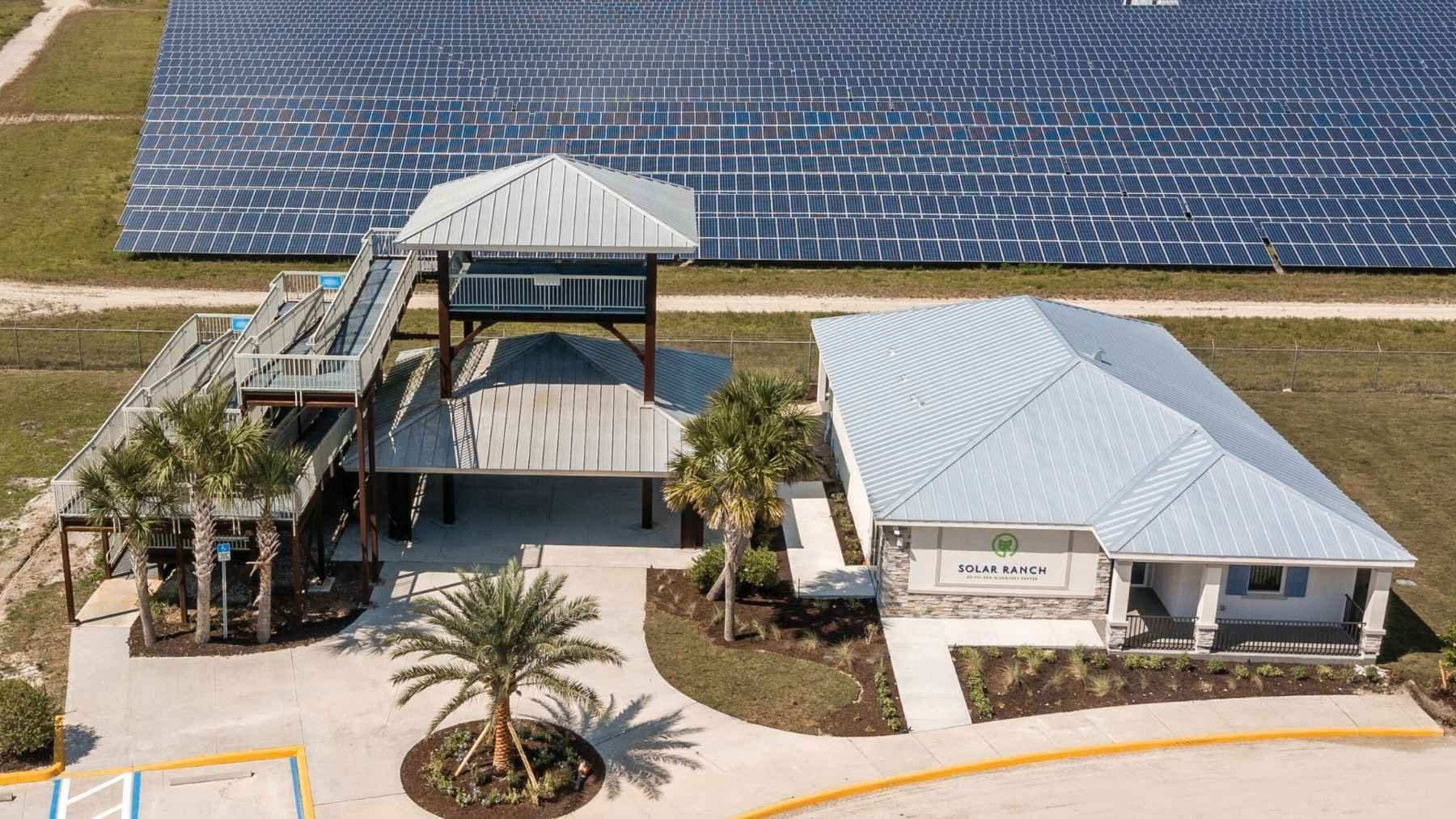
The array is two adjacent plants on 870 acres the developer handed FPL at no cost, around 75 megawatts each, 150 megawatts combined, roughly 687,000 panels between them.
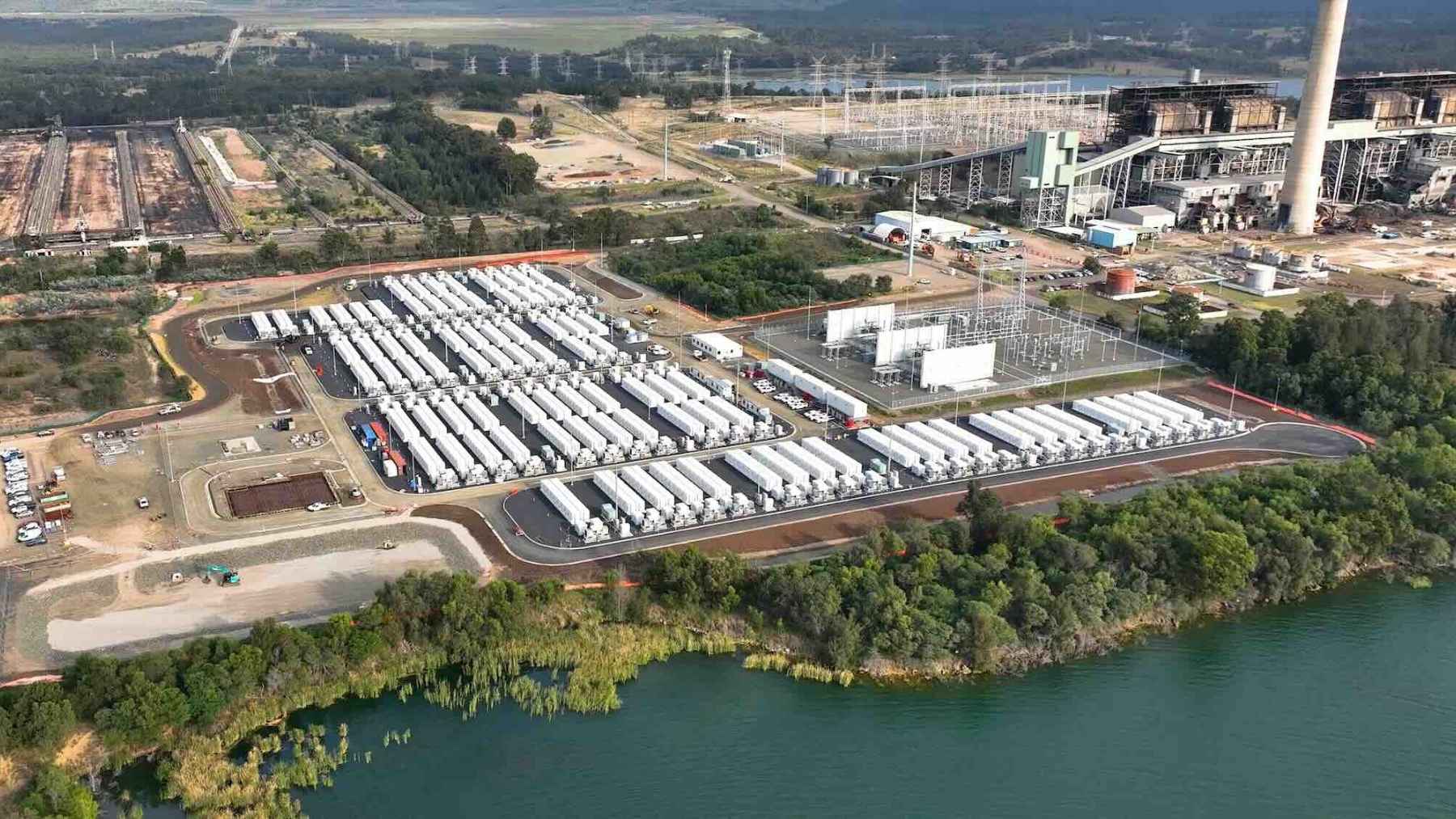
The battery is the part that gets oversold hardest. FPL added 10 megawatts and 40 megawatt-hours of storage in March 2018, ten steel cabinets each holding a megawatt for four hours. At the time it was the largest solar-plus-storage installation in the country.
Forty megawatt-hours is a useful smoothing tool for cloudy afternoons. It is not a backup generator for 15,000 people, and a hurricane is exactly the moment when a solar field produces almost nothing anyway. Storage at the scale that would actually run a town overnight looks like the 19 gigawatt-hour battery Abu Dhabi is building, which is nearly 500 times bigger.
The stormwater system does more work than the panels
Strip out the solar and what is left is a list of deeply unglamorous engineering decisions, which is where the actual resilience lives.
The site sits 25 to 30 feet above sea level and about 30 miles from the coast, which takes storm surge off the table before anything else gets designed. Every power, water and communications line is buried.
Homes are elevated 18 inches above road level, not the 25 feet you sometimes see quoted, which confuses the height of the ground with the height of the slab. Buildings are built past state code for wind.
The stormwater network is the piece that earns its keep. Every retention pond in town is connected, monitored with real-time gauges, and can be rebalanced with pumps when one area fills faster than another. Overflow runs into preserved wetlands that filter it before release.
Half of the 18,000-acre footprint is greenway, park and lake, so the water has somewhere to go, and the streets are graded to carry it away from houses.
Given that Arthur did its damage in June with rain rather than wind, drainage is arguably the most relevant system on the property right now.
Buyers are paying for this while Florida insurance rates are falling
The neat story would be that Floridians are buying resilience because insurers are abandoning them. That was true a few years ago. It is not true this summer.
Homeowners insurance litigation in Florida has dropped by close to half in the 18 months since the state’s legal reforms took effect, according to research from the American Property Casualty Insurance Association cited by Florida Realtors.
Citizens Property Insurance, the state-run insurer of last resort, has an average 8.7% rate cut running at spring 2026 renewals covering more than 330,000 policyholders. Around 17 new carriers have entered the state since the reforms.
Florida is still expensive. Average annual premiums sit somewhere between $4,200 and $5,700 against a national average near $2,580. But the direction of travel has flipped, and buyers are still paying up for buried wire and drainage anyway.
There are costs the brochure is quieter about. Babcock Ranch is financed through a Community Development District, so owners carry CDD assessments on the tax bill on top of HOA dues, and both need to go into the math before the mortgage does.
The developer is also running a summer sales event on quick move-in inventory through August 31, which is not what a community with no unsold houses does.
The resilience record is not spotless either. Two weeks ago the town issued a precautionary boil water notice covering the entire community. The cause was a brief loss of power at the water treatment plant during Phase III construction work, and the notice was rescinded on July 26 after regulatory testing cleared it.
No storm was involved and nobody’s grid went down. It is still a reminder that this is a construction site with 15,000 people living in it, and that the failure modes of a half-built town are not the ones the marketing addresses. There was also a short outage during Hurricane Irma in 2017, before most residents had moved in.
What buyers are actually paying for
The solar field is the billboard. It generates more electricity than the town uses, exports the surplus to the rest of Florida, and gives the place a story that travels, which is the same trick a 710-megawatt array in Minnesota pulled by plugging itself into a retiring coal plant.
But the thing keeping the lights on in Charlotte County is buried copper, hardened poles outside the fence, 30 miles of distance from the Gulf, and a drainage plan drawn before the first slab was poured. None of that photographs well, and none of it is why anyone calls it the solar town.
Six hundred and fifty-one families bought into it in the first half of a season that has so far produced nothing to hide from. They will find out in September whether that was foresight or an expensive hunch, and the honest answer is that a below-normal season only needs one storm to go the wrong way.