
Tunnel boring machines get women’s names. Seattle dug its downtown highway tunnel with a machine called Bertha, after Bertha Knight Landes, who ran the city from 1926 to 1928 and was the first woman to lead a major American city. London is grinding toward Euston with one named Karen. Adelaide has Mary turning under its houses right now.
The habit is older than any of those jobs. Miners prayed to Saint Barbara before going underground in the 1500s, the machines inherited the superstition, and Victoria’s Big Build still explains it in those exact terms on its own paperwork.
The crews inside the machines have been a different story for two centuries. Melbourne now has 18 women in training to change that.
On July 16, the Victorian government’s infrastructure arm published an update on the all-women tunnel boring machine crew being assembled for Suburban Rail Loop East, the 26-kilometer (16-mile) twin-tunnel rail project under Melbourne’s southeastern suburbs. Eighteen women are on board. They are in specialist training, they have been spending time on the construction sites, and from 2027 they are meant to come together and operate a boring machine as a single crew.
Victoria’s Big Build, the contractors and the tunnelling trade press all describe it the same way: a world first. Nobody has produced an earlier example.
Just under 870 women applied. Eighteen are in.
The recruitment opened in August 2024 and closed on October 4 that year. When it shut, just under 870 women had put their names down for a crew scoped at around 25 specialist roles.
That is the number worth sitting on for a second. Not because the ratio is flattering to the program, but because almost two years later the crew is at 18 and the machine they will run as a unit does not start until 2027.
Some of that is just how tunnelling hiring works. Previous experience was never required, which was the whole point, so the project has to build the qualifications from scratch rather than pull them off a résumé.
The training is not a photo opportunity
Crew members with less than five years in civil construction are working through a Certificate III in Civil Construction at the Victorian Tunnelling Centre, run out of Holmesglen Institute. It is the only dedicated tunnelling training facility in the country.
The syllabus is what you would expect and slightly grimmer: work health and safety, underground services, excavation methods, operating plant and machinery. Everyone on an SRL boring machine crew also spends time inside a hyperbaric chamber, so they know what working under pressure does to a body before they meet it 40 meters down.
The roles themselves are the actual jobs on a borer. Machine operator, gantry crane operator, segment crane operator, grouters, support. These are the people who keep a 100-meter machine advancing and lining the tunnel behind it as it goes.
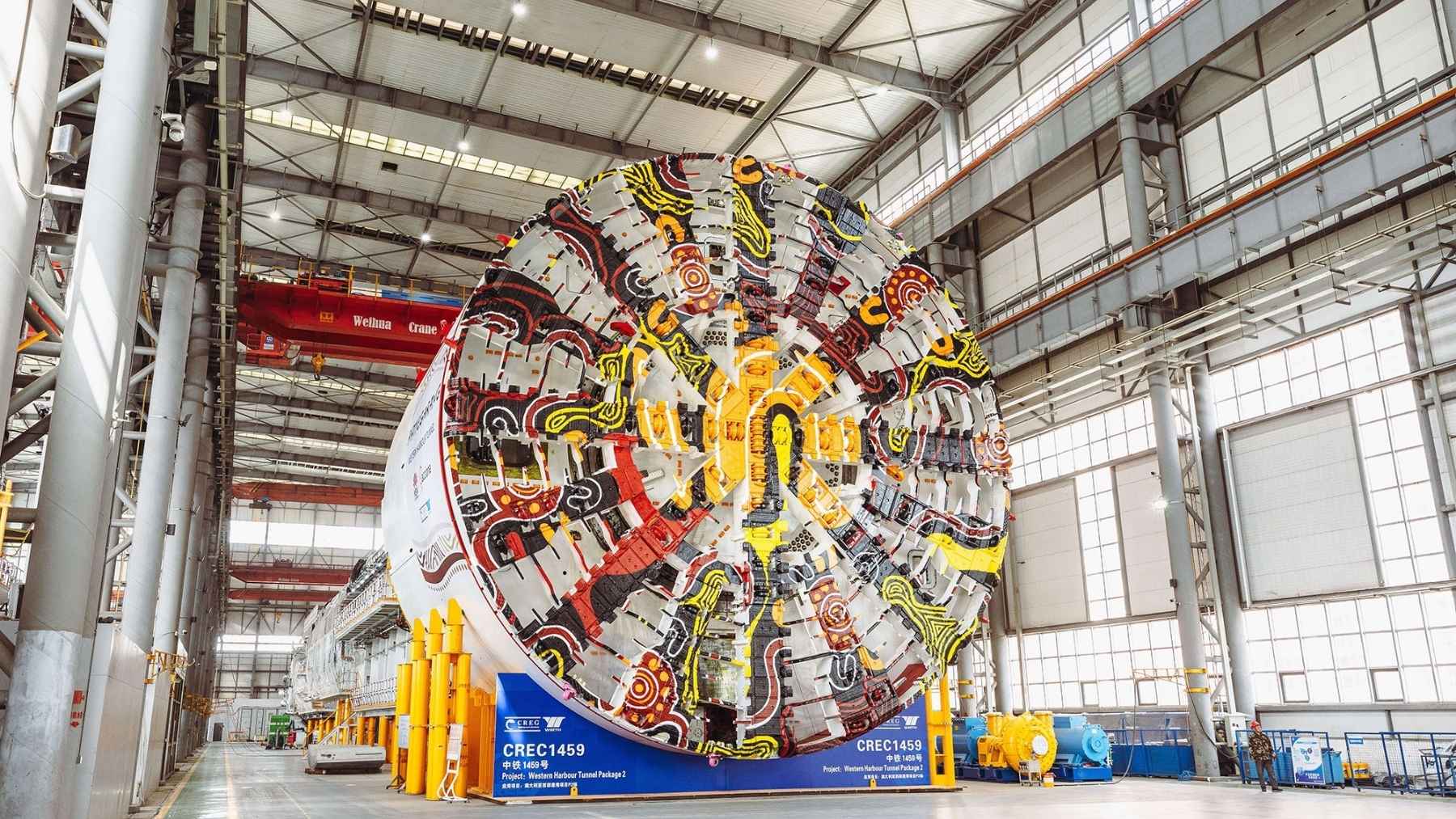
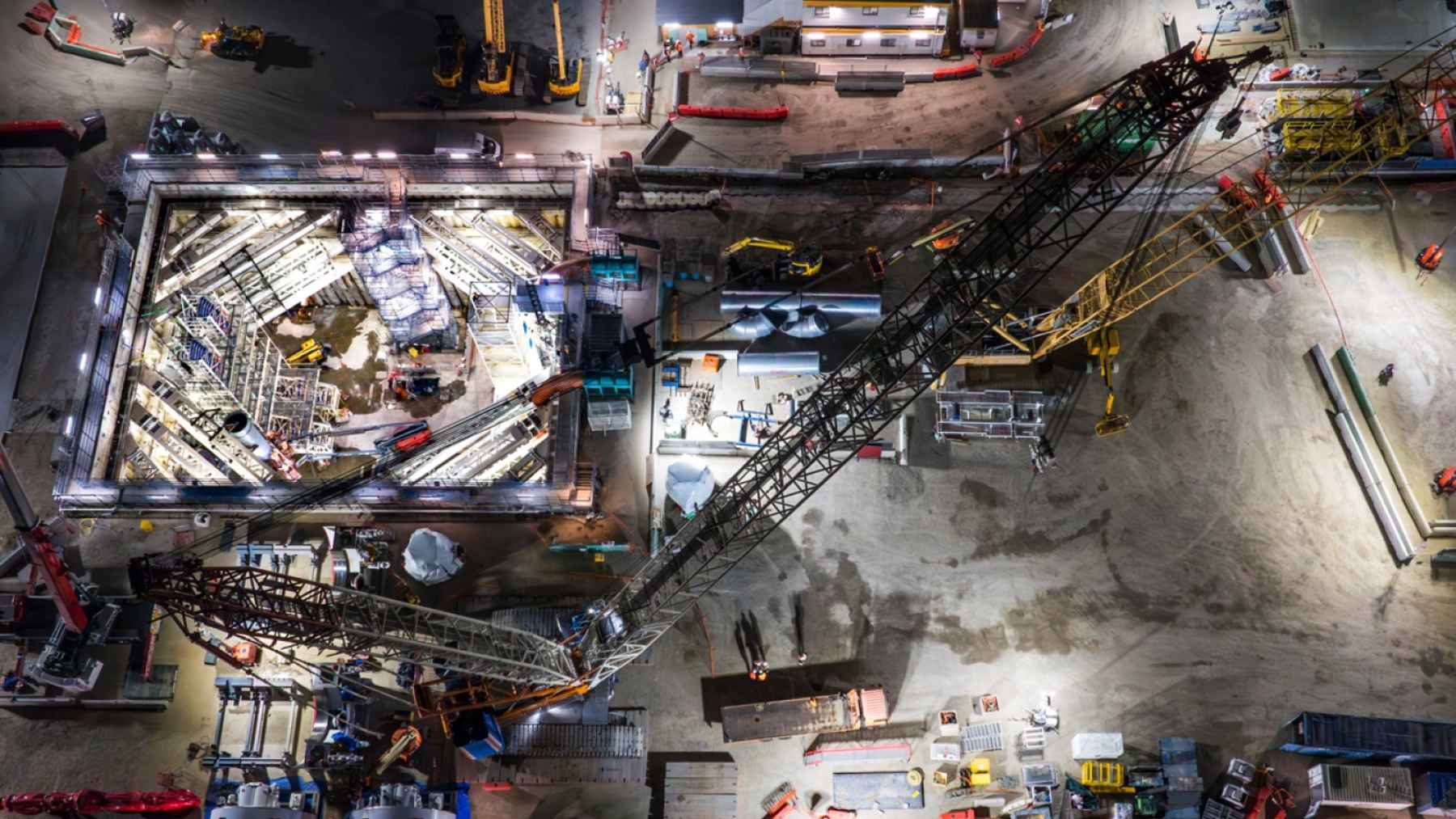
Big Build describes its machines as underground factories, which is closer to literal than promotional. Each one runs 24 hours a day, seven days a week, with up to 25 people inside it, and comes with an office, a kitchen and toilets because nobody is walking back out for lunch. Adelaide’s Mary carries around 20 specialists inside her at a time, which is the same arrangement on a different continent.
Isolde Piet did this without a crew behind her
The program is led by Isolde Piet, SRL East’s construction manager for tunnels, and she is the reason the whole thing is not theoretical. More than 20 years ago she became the first woman in the world to pilot a tunnel boring machine.
Her first job out of university was the Groene Hart Tunnel in the Netherlands, bored by a machine called Aurora with a cutting face nearly 15 meters (49 feet) across. At the time it was the largest tunnel boring machine anyone had built.
She now oversees all eight tunnelling crews on the southern half of SRL East, of which the all-women crew is one. Her contractor, CPB, says she also worked as a technical advisor through the recruitment, which means she helped pick them.
When students from eight primary schools along the route named the eight machines, Huntingdale Primary picked her. TBM Issy is one of the four borers working the southern stretch. Piet said it would be “an especially nice moment” to watch that one launch, which is a restrained way to describe watching a machine with your own name on it get lowered into a hole.
The machines are already turning
SRL East’s tunnelling fact sheet, updated on July 22, now states that tunnelling has started. Machines are launching from Burwood, Clarinda and Heatherton, and the project logs the commencement year as 2026.
All eight borers are named after Victorian women. Alice Ivy the music producer, Aunty Muriel Bamblett, chef Elizabeth Chong, Bich-Cam Nguyen, Hacia Atherton of Empowered Women in Trades, doctor and social entrepreneur Aayushi Khillan, and Belinda McKenzie, who spent nine years qualifying to drive Puffing Billy and marked it by crewing that railway’s first all-female train.
Each machine is more than 100 meters (328 feet) long with a cutterhead over seven meters (23 feet) across, running on renewable electricity. On a good week one covers up to 100 meters. The tunnels sit around 26 meters (85 feet) below the surface on average and drop to roughly 60 meters at the deepest point, about the height of a 16-story building, straight down.
Trains are due to carry passengers in 2035. The commitment attached to the southern package is that women work at least 10 percent of total labor hours on those tunnels.
The American numbers are worse than the headline figure
Women are about 11 percent of the US construction workforce, and that number gets quoted constantly. It is also misleading, because most of those jobs are in offices, estimating and management.
The field number is the one that matters here. The Institute for Women’s Policy Research, working from federal data, put women at 4.3 percent of construction trades workers in 2025, flat against the year before.
Which is why an 18-person crew on the other side of the Pacific gets written up in the trade press at all. It is not a large number. It is the first one of its kind, and the trade has been running shielded machines since Marc Brunel patented the idea in 1818.
The naming convention has always been the industry’s cheapest form of respect. American projects do it too. Seattle’s students picked Bertha out of a contest and got a first female mayor onto the side of a 57.5-foot cutterhead, and HS2’s Karen honors a woman who broke onto British Rail’s footplate in 1979 against her colleagues’ objections.
Melbourne’s version costs more than a nameplate. Eighteen women are in Certificate III classrooms and hyperbaric chambers, and they will spend 2026 split across other crews before they operate as one from 2027.
The trains are not due until 2035. Nine years of shift work sits between the training photos and that, which is the part of this that actually decides whether the idea travels anywhere else.