
The script has gotten predictable. A fiber-optic cable gets severed somewhere cold and contested, an investigation crawls along without naming anyone, and a Western navy answers by buying one more underwater drone to patrol the seabed. We have written up plenty of those purchases lately, including a Kiwi-British startup that put a seabed drone in the water specifically to guard cables.
Italy is running a different play. Rather than buy seabed robots one at a time, it is assembling the entire industrial stack that builds them.
The newest piece landed on June 17, when energy giant Eni and shipbuilder Fincantieri signed a strategic agreement handing Fincantieri’s unmanned-systems subsidiary, IDS – Ingegneria dei Sistemi, an exclusive worldwide license to commercialize Clean Sea, a hybrid underwater robot Eni has operated since 2016. That deal sits on top of the headline system Fincantieri first showed off last October, an integrated drone network it calls DEEP.
DEEP can watch a cable from up to 100 km away
On October 23, 2025, at the Italian Navy’s experimentation center in La Spezia, Fincantieri ran a live demonstration of DEEP, which stands for Dynamic Ecosystem for Enhanced Performance. The name is corporate mush, but the architecture is straightforward enough. DEEP is a “system of systems,” which in plain build terms means four things working together instead of one hero drone.
According to Naval News, those four pieces are an acoustic early-warning barrier built from fiber-optic hydrophone sensors that can sit up to 100 km from the asset it protects and flag intruders; a team of autonomous underwater vehicles that go inspect whatever the barrier hears; a command-and-control center that runs the mission in real time; and an AI layer that chews through the sensor data and sorts a fishing trawler from a problem.
Fincantieri CEO Pierroberto Folgiero called the launch “tangible proof of our commitment to pushing the boundaries of innovation.” The marketing is doing some work there, but the dual-use idea is the real point: the same kit that inspects a pipeline for corrosion can watch a naval chokepoint for sabotage.
The newest robot is an inspector that has been working since 2016
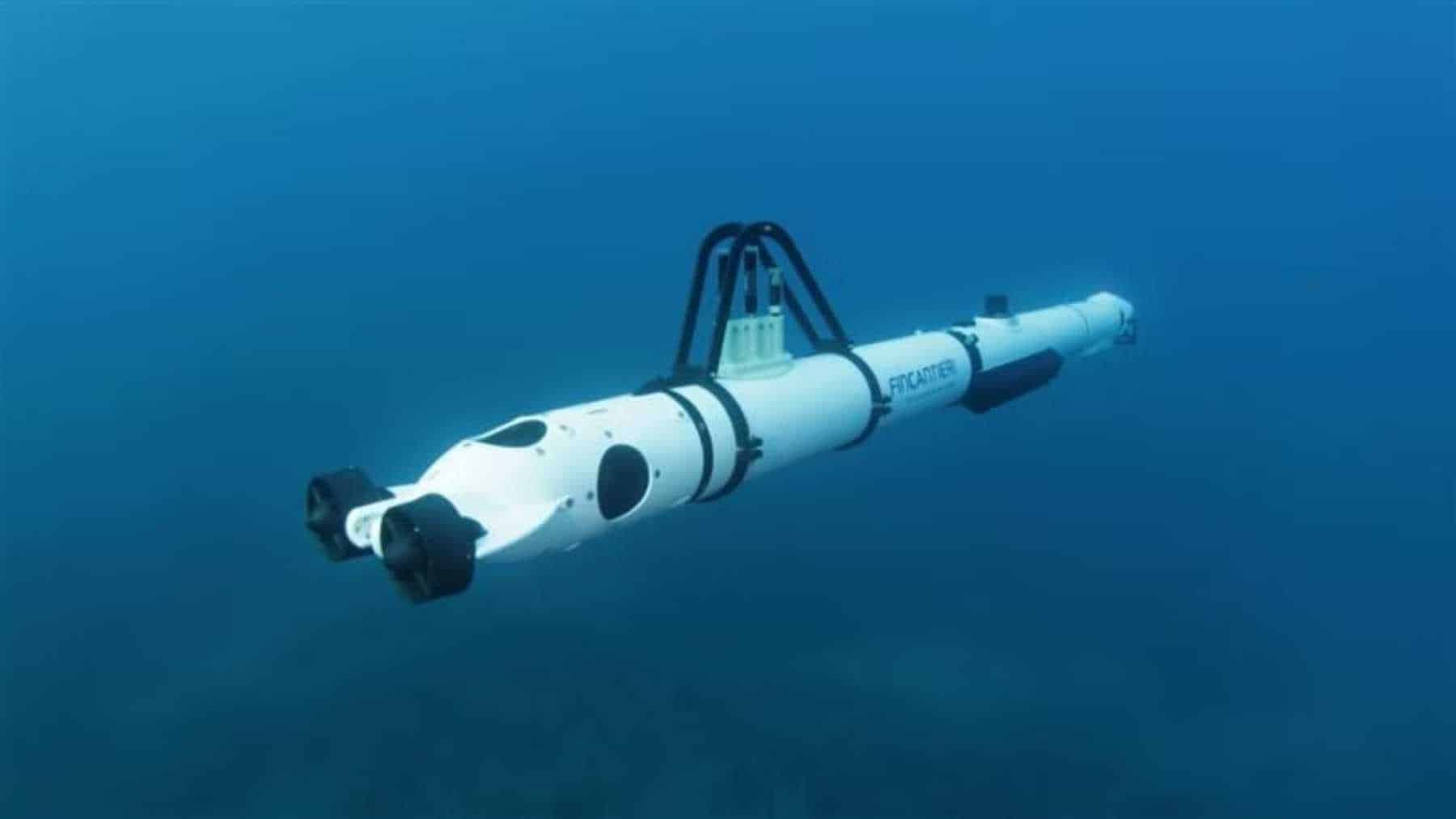
Clean Sea, the technology at the center of the Eni and Fincantieri agreement, is not a weapon and was never meant to be one. Eni built it to monitor marine ecosystems and check subsea infrastructure for damage, and it has been in the water on the company’s offshore operations since 2016.
The vehicle uses a hybrid ROV/AUV architecture, so it can run on a tether from a support ship or go fully autonomous, and it carries swappable payload modules Eni calls e-pods for jobs like water sampling, close-up visual inspection, and 3D acoustic mapping of the seafloor.
The license gives IDS worldwide rights to sell and develop it, with a stated focus on offshore inspection and carbon capture and storage projects on the seabed. IDS CEO Matteo Marchiori said the deal “consolidates IDS’s role in the development and integration of advanced solutions.”
Plugged into Fincantieri’s other unmanned platforms, Clean Sea becomes one more vehicle the group can throw at an inspection contract, or at a stretch of cable someone wants watched. One honest caveat belongs here: Eni and Fincantieri are related parties, a point the companies flag in the release, so this is as much internal industrial consolidation as it is an arm’s-length market deal.
Why Italy is pointing all of this at the Mediterranean
Most of the seabed anxiety you read about happens up north. The cables connecting Finland, Sweden, Estonia, and Germany keep getting dragged through by anchors, and NATO stood up its Baltic Sentry patrol in January 2025 to deal with it. We have covered the US Navy rehearsing on the Baltic floor during BALTOPS 2026 for exactly this reason. The Mediterranean has stayed quieter, which is precisely the gap an Italian shipbuilder is positioned to move into.
Fincantieri’s own pitch leans on the idea that the hybrid threat to undersea infrastructure is spreading from the Baltic into the Mediterranean and the Black Sea, which happen to be the waters it knows best. NATO is thinking along the same lines. Its Critical Undersea Infrastructure Network met in Rome in November 2025, toured the Italian Navy’s surveillance center, and spent the session talking up drones and seabed sensors, according to the alliance’s own readout.
The market math explains the urgency. By common industry estimates, submarine cables carry roughly 99% of intercontinental data, and there are well over 500 of them lying on the seafloor. China is testing underwater drones the size of submarines that Western analysts worry could tamper with those lines. Whoever can sell a credible way to watch the cables has a real business on their hands, not a press release.
Italy spent a year stacking the underwater deck
DEEP and the Clean Sea license did not appear out of nowhere. Fincantieri set up a dedicated Underwater segment in May 2025 and has been buying and building toward it ever since. The biggest move came in January 2025, when it closed the purchase of Leonardo’s Underwater Armaments & Systems business, the historic Whitehead torpedo and sonar house, for a fixed 287 million euros (about $296 million) and an enterprise value of up to 415 million euros.
That deal pulled decades of acoustic and AUV expertise in house, including the lineage behind vehicles like the V-Fides, a surveillance-capable underwater drone the old Leonardo unit developed with sonar, optical, chemical, and magnetic sensors and a lithium-polymer battery.
The financial side is moving in the same direction. Fincantieri’s first-quarter 2026 results showed underwater revenue up 43.3% year over year to 135 million euros, with the segment’s margins running above 17%, and the company’s own business plan expects the underwater market it can address to roughly double from about 22 billion euros to 43 billion euros by 2030. For a shipbuilder, watching the seabed is turning into one of the better businesses on the books.
Demonstrators are not deployments
For all the momentum, it helps to keep the gap between a demo and a deployment in view. What Fincantieri showed in La Spezia last October was a single DEEP system installed for demonstration, not a live network already guarding Italy’s cables. Clean Sea is a proven inspection tool, but the June 17 deal is a commercialization license, not a contract to go watch a specific stretch of seabed tomorrow.
And every player in this space, Italy included, is selling protection and detection, not the legal authority to stop a ship that drags an anchor through a cable in international water. That part still belongs to coast guards and courts.
What Italy has actually done is decide that the seabed is an industry worth owning end to end, from the sensor sitting on the cable to the AI reading it, and then move faster than most rivals to own it. The robots watching the Mediterranean floor are going to speak Italian. Whether they are pointed at the right patch of it when something finally happens is the part nobody gets to demo.