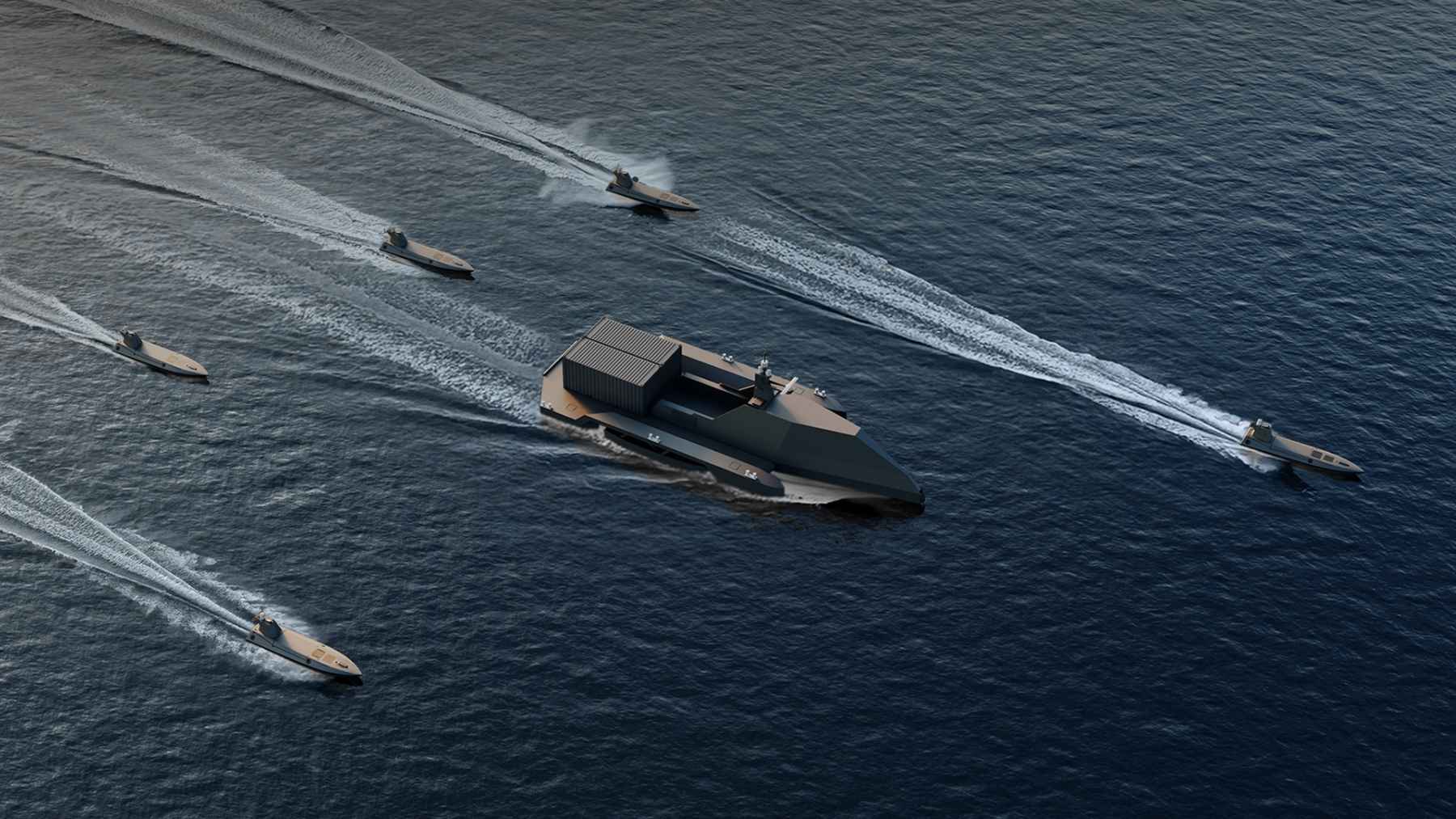

Four years ago, SYOS Aerospace did not exist. This month, at the Combined Naval Event in the United Kingdom, it unveiled an underwater drone called the SU10 and became one of a short list of Western companies that can sell a military customer an uncrewed vehicle for the air, the ground, the surface of the ocean, and now the seabed. The same company that builds heavy-lift helicopter drones and uncrewed boats has, in the span of about 18 months, bought its way into subsea robotics and put a product in the water.
SYOS is a joint UK-New Zealand business, founded in 2021, with its maritime headquarters in Fareham near Portsmouth in England and its aviation operations in Mount Maunganui on New Zealand’s North Island. CEO and founder Sam Vye has told the New Zealand press he wants the company to become “the next Rocket Lab.” The SU10 is the piece that fills out the pitch, and it lands at a moment when governments on both sides of the Atlantic are spending real money to put eyes on the ocean floor.
What the SU10 actually is
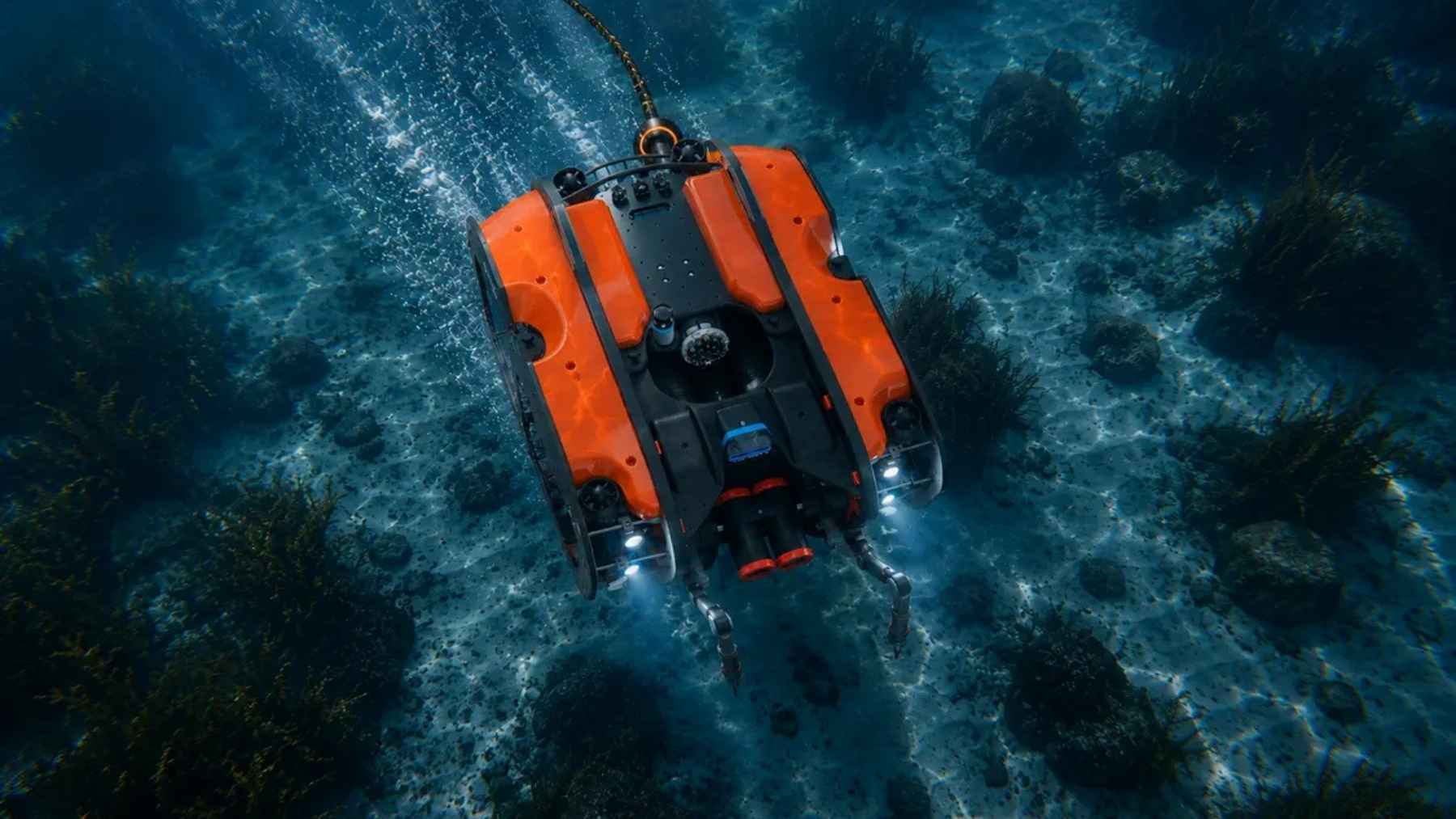
The SU10 is a small, tethered uncrewed underwater vehicle. It operates to a depth of 500 metres, about 1,640 feet, and carries a modular payload of up to 10 kilograms that can be configured for inspection, intervention, or intelligence, surveillance, and reconnaissance sensors. On its internal battery it runs for roughly four hours. Connected by tether to surface power, it can stay down indefinitely.
That tether is the design decision that defines the platform. It is an ultra-slim fibre-optic line that carries control signals and a live data feed at the same time, which is what lets a single operator keep the drone on station inspecting a fixed asset for hours rather than running a short pre-programmed sortie. According to Marine Technology News, the SU10 can be launched from shore, from a crewed vessel, or from one of SYOS’s own uncrewed surface vessels through a launch-and-recovery system, which is the configuration that turns it into part of a larger uncrewed network rather than a standalone tool.
The whole thing runs on AAIMS, SYOS’s open-architecture autonomy software, which lets one operator plan, task, and re-task multiple vehicles across domains in real time, prioritizing the data stream as a mission changes. SYOS lists the SU10’s mission set as mine countermeasures, subsea infrastructure protection, harbour and maritime security, persistent surveillance, and contributions to anti-submarine warfare, plus route clearance, search and identification, and underwater inspection and intervention. Earlier variants of the platform already have an operating history in New Zealand’s offshore oil and gas sector doing pipeline survey work, which is where the underlying hardware comes from.
Vye framed the launch simply: the SU10 “extends our portfolio undersea and strengthens SYOS as a provider of affordable interoperable uncrewed capability.” The vehicle, he said, can stand alone or operate as part of a connected system “delivering operationally from the skies to the seabed.”
Why the seabed is suddenly worth guarding
The commercial logic behind the SU10 is the same logic driving the entire subsea drone market right now. Submarine cables carry roughly 99 percent of the world’s internet traffic, and the seabed they sit on has stopped being treated as neutral ground. A string of attacks and suspected sabotage incidents against undersea cables and pipelines in the Baltic and North Seas between 2023 and 2025 turned cable and pipeline protection from a niche concern into a defense procurement line item across NATO members.
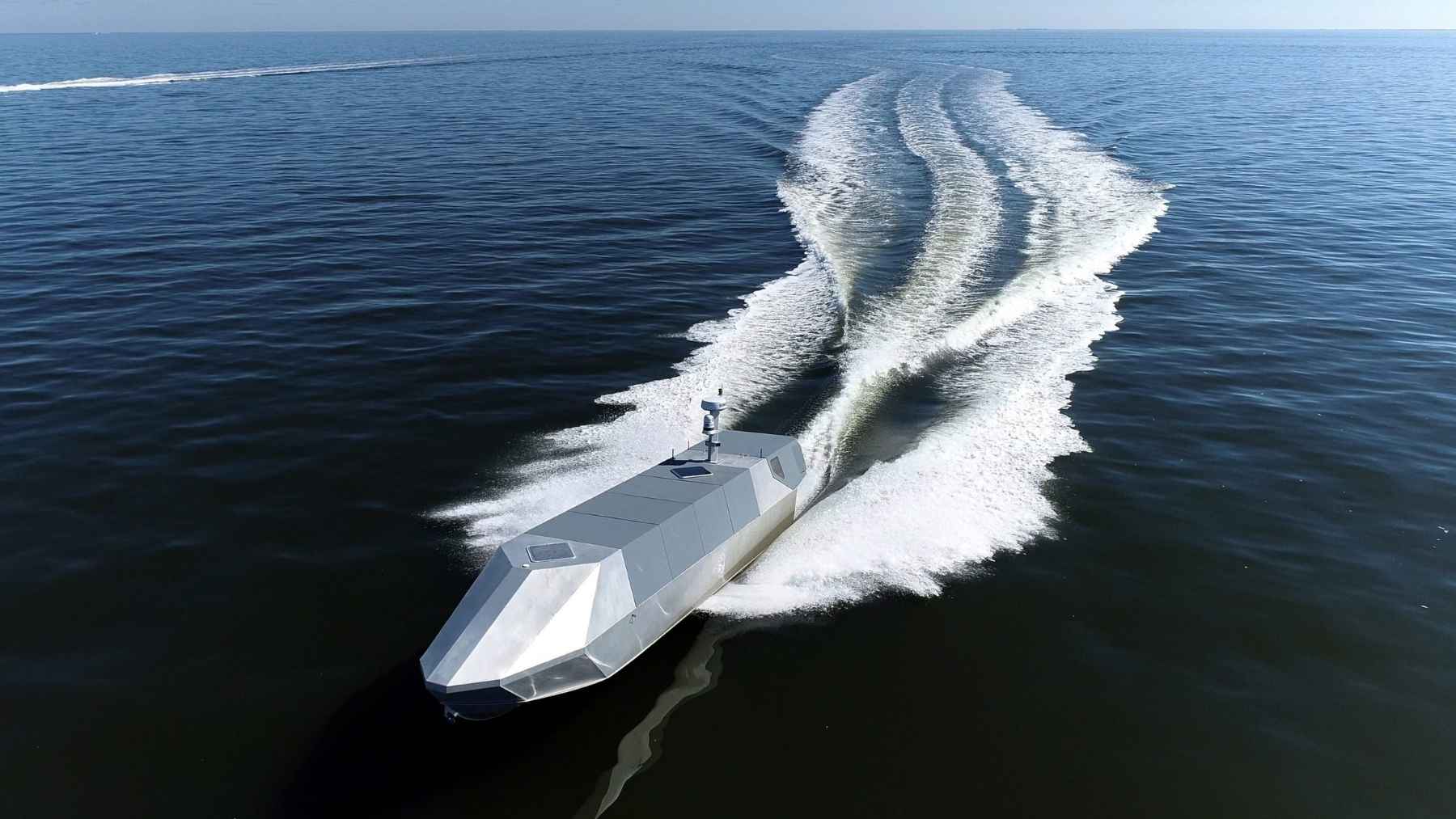
SYOS had already sold uncrewed surface vessels to the British government for cable-protection work, and described that as a fast-growing part of the business. The SU10 takes the same job to the bottom. A small drone that can sit on station near a cable or a pipeline, inspecting it for hours, costs a fraction of what it costs to keep a crewed ship in the same spot doing the same thing. That cost gap is the entire commercial argument, and it is the reason a 10-kilogram tethered inspection drone is being pitched at navies rather than only at oil companies.
This is the thread AutoNotion has been following. The German hydrogen-powered Greyshark, unveiled by Euroatlas and rated for 16 weeks submerged, attacks the same problem from the long-endurance autonomous end. The SU10 attacks it from the cheap, tethered, persistent-inspection end. Both exist because the same incidents in the same waters made the same governments want more sensors underwater.
How SYOS got here this fast
The speed is the part of this story worth slowing down on. SYOS was founded in 2021. In April 2025, UK Prime Minister Keir Starmer announced that the company would supply the United Kingdom with uncrewed military vehicles for use in Ukraine, a deal worth £30 million, or roughly NZ$67 million. The company runs an operational and support presence in Ukraine, which has become the most active real-world testing environment for uncrewed systems anywhere in the world.
In October 2025, SYOS acquired Bay Dynamics, an underwater robotics specialist based in Tauranga, New Zealand. Bay Dynamics’ founding director Matt Mooney stayed on, and the acquisition is the reason SYOS did not have to build subsea capability from scratch. It bought a company that already knew how to make underwater vehicles for inspection and construction work in oil and gas, inshore energy, and civil engineering, then folded that into its existing autonomy stack. The SU10 is the first public product out of that combination.
In February 2026, the New Zealand Defence Force signed SYOS to a multi-domain contract covering air, land, and sea platforms for Army and Navy experimentation, announced by Defence Minister Judith Collins. The UK Ministry of Defence has separately shortlisted SYOS for Project NYX, a programme worth around £100 million developing autonomous drones to fly alongside British Army Apache attack helicopters. The company was named 2025 Company of the Year at the New Zealand Hi-Tech Awards and took Business of the Year, Innovation, and International Trade at the 2026 Tauranga Business Awards. It now employs roughly 150 people, around 60 percent of them engineers.
Its product family already spanned the SA200 autonomous heavy-lift helicopter, which recently cleared serial production, smaller rotary platforms, the SG400 uncrewed ground vehicle, and uncrewed surface boats. The SU10 is the fourth domain.
What this means for the American supply chain
Here is where the framing has to stay honest. The SU10 is not a giant autonomous submarine, and it does not compete head-to-head with the platforms the Pentagon is buying for deep, long-range work. Anduril’s Dive-LD, delivered to the U.S. Navy’s Unmanned Undersea Vehicle Squadron 1 in Keyport, Washington, in April 2025 as part of the Replicator initiative, operates to 6,000 metres and stays down for up to 10 days without a tether. Anduril’s larger Dive-XL, selected in March 2026 for the Navy’s Combat Autonomous Maritime Platform project, is an 11-metre autonomous mothership that can travel more than 2,000 nautical miles and launch smaller drones of its own. A 500-metre tethered inspection drone is a different animal.
What SYOS is doing is competing on a different axis. The American undersea drone market is largely split across specialists: one company builds the deep XL-AUV, another builds the small inspection vehicle, a third builds the surface boat. SYOS is selling all of it under one autonomy architecture, at what it repeatedly describes as a lower cost-to-capability ratio, from a company that did not exist when most of those specialists were already established. For a mid-tier navy that wants air, land, surface, and subsurface drones without integrating four vendors and four software stacks, that single-supplier pitch is the actual product.
For the U.S. defense industrial base, the signal is less about the SU10 itself than about where it came from. The cheapest integrated multi-domain uncrewed offering aimed at Western militaries right now is being built by a four-year-old company headquartered partly in a Bay of Plenty beach town. New Zealand has quietly produced a cluster of defense and aerospace exporters, from Rocket Lab in Auckland to Dawn Aerospace in Christchurch, and SYOS is now selling hardware into UK and allied programmes from the same small base.
What is not settled
The SU10 was unveiled at a trade show, not delivered into a fielded program, and SYOS has not published independent test data on the platform’s endurance, payload performance, or autonomy in contested conditions. The planned Antarctic under-ice mapping deployment, scheduled for late 2026 as part of an international research partnership, is the kind of mission that will generate real operating data, but it has not happened yet. The tether that gives the SU10 its persistence is also a limitation: a tethered vehicle is tied to a surface node, which is fine for fixed-asset inspection and harbour security and less useful for the long-range autonomous patrols that the larger AUVs are built for.
What is not in question is the trajectory. A company that started in 2021 has gone from a single product line to a four-domain portfolio, an active war-zone testing relationship, contracts with two governments, and a subsea drone in the water, while the established names in the field were still defending their single specialties. The seabed was the last gap in the lineup. As of this month, it is filled.