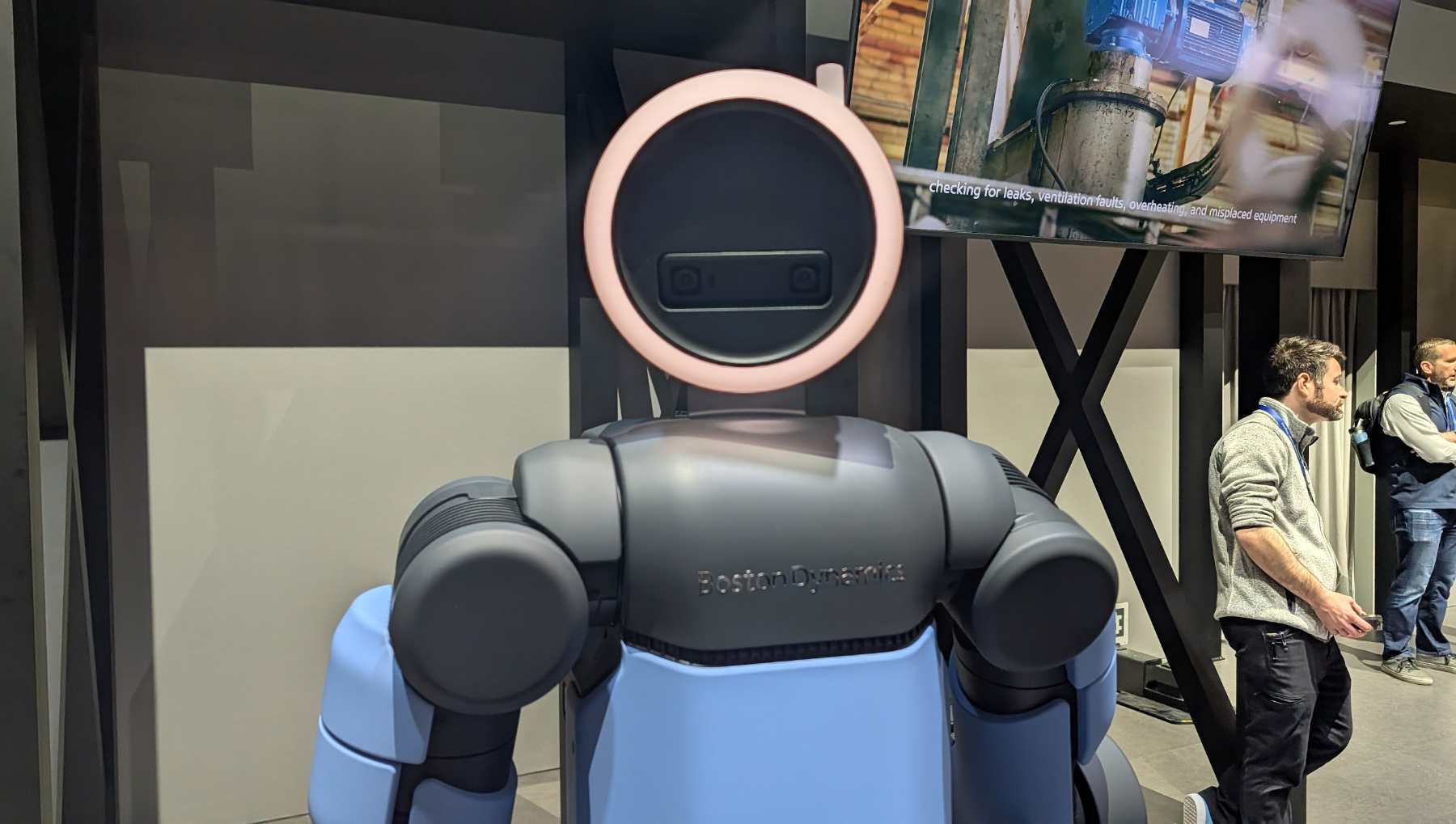

The US auto industry just took another large step towards automation with Hyundai importing 25,000 humanoid robots to work in its factories. The bots in question are built by Boston Dynamics, a company you may recognize for building “Spot” a robot dog similar to those in the Black Mirror episode “Metalhead.”
Once imported, the bots are set to work in Hyundai’s plant in Georgia with their first shifts starting in 2028. Kia, another Hyundai Group company with a Georgia-based plant, will be putting robots to work in 2029.
The bots are intended to make up for labor shortages, and Atlas’ humanoid shape means it can fit into an environment built for people. Like a factory, for example. The robot can also help with physically demanding and menial jobs, such as shifting heavy objects from one place to another.
Boston Dynamics has stated that Atlas is capable of working 24/7, aside from the occasional break for maintenance. The humanoid bot has a detachable battery pack, and is capable of swapping out batteries itself. So once a robot sees its charge is getting low, it goes to a station, puts its empty battery on charge, and replaces it with a full one.
Of course, just as AI has many white collar workers worried some blue collar workers might look at Atlas with suspicion. Is Hyundai hiring thousands of robots to take on what were human tasks the thin end of the wedge?
Are robots taking all of our jobs?
Having personally witnessed Atlas up close during CES 2026, I can confirm no one truly skilled is losing their job to this robot quite yet. It seems well suited to fetch and carry tasks, along with tasks requiring organization, but can’t do much beyond that. So it may be bringing parts to workers, who can then perform their jobs more efficiently.
It’s not surprising that the auto industry is leading the way here either. Robots have been assembling cars for decades. It’s just potentially a bit more unsettling when the robot is a humanoid, and not a large mechanical arm with a welding set on the end of it.
With that being said, the robot is being actively trained. And a factory is a great environment to train a robot in, as it’s a mix of complex tasks and efficiently organized areas. If a part needs to be attached, those parts tend to be in a standard location and marked with a QR code. So it may not be long before Atlas is doing more than just fetching and carrying.
You can also put robots in dangerous positions that you can’t really put humans in these days. Although AI and robots taking people’s jobs is a worry, a significant reduction in industrial accidents is a good thing. And whether it’s the pressure from wrongful death lawsuits, or some semblance of morality, most companies would likely sacrifice a few hundred thousand dollars worth of robot instead of an actual human.
On a related note, part of Elon Musk’s logic behind dumping Tesla’s Model S and Model X was to free up production for the company’s Optimus robots. Like Atlas, Optimus is initially designed for industrial and business use, but Musk plans to roll them out into people’s houses by the end of the decade. So you may have a domestic robot handling all of your chores some time soon, and all of the Mars bases prove that Elon’s never been optimistic about a deadline.