
The car community has largely been weirded out by Tesla’s pivot from passenger cars to robots, but we’ve finally figured out why CEO Elon Musk has been pursuing these new business ventures: the vehicles aren’t making Tesla any money.
Tesla’s Q1 2026 earnings call was quite jarring: Tesla made basically no money on its EVs. In the first quarter, Tesla reported a profit of $491 million, far short of its peak of $2 billion a quarter in 2023. Still, nearly $500 million doesn’t seem that bad. Well, until Musk admitted it went right into carbon credit lines and Bitcoin, leaving Tesla with just $21 million in profit. This means Tesla has lost $70 million over the past two quarters, according to calculations by Fortune. They wrote: “In autos, Tesla is a no-growth engine.”
With Tesla’s vehicles making the company zero profit, stocks plummeted. On April 23rd, Tesla’s shares dropped 3.7%, continuing its 2026 decline. I think Elon Musk is panicking. He needs a new way to draw investors back in.
Tesla hopes to win over investors with lofty AI claims
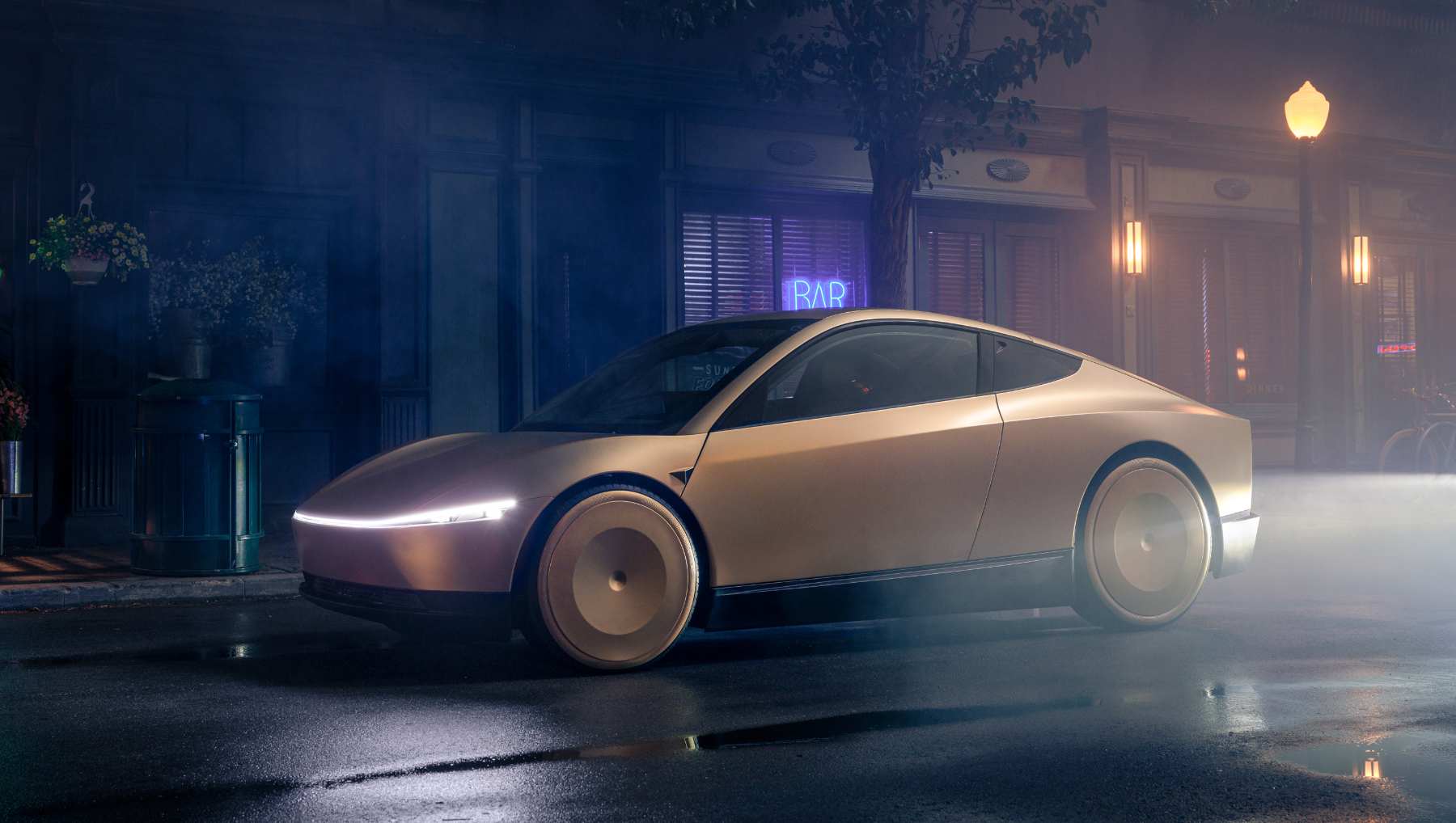
Tesla has been looking for a way out for a while now. It’s been talking about a pivot to AI for a while now, with Musk showing off some lame robots and ugly Cybercabs, both of which are nowhere near ready to do what he claims they can do. Now, Tesla has announced it will be investing over $25 billion in 2026 to become an AI and robotics company.
This includes transforming its Fremont, California plant into a robot factory after the discontinuation of Model S and Model X vehicles. It will now be focused on building EVs designed for autonomous driving as well as 1 million Optimus robots a year. The Gigafactory in Texas will also be used for robot production, with Tesla hoping to produce 10 million a year. Then there’s the new battery and material factories.
“We believe this is the right strategy to position the company for the next era,” said CFO Vaibhav Taneja. “We’ll make such investments in a very capital-efficient manner.”
Musk added in that same call that it’s going to “pay off in a big way.”
Turning to AI seems like a lofty goal for Tesla, which currently has the worst robotaxi fleet among all competitors worldwide. While Musk promised a Cybercab years ago, Tesla has since released only a small Model Y fleet in a few cities — and these Model Ys are using Tesla’s very questionable Full Self-Driving mode, which has been constantly investigated over Musk’s exaggerated promises. Cybercabs have started rolling out this month, but Musk admitted on the call that Full Self-Driving mode is nowhere near as autonomous as previously claimed.
I guess Musk believes this will all be solved thanks to its now-completed final chip design for its next-generation AI5 inference processor. This will be used on its robotaxis and robots. As always, it feels like a bunch of talking. It sounds great to give investors hope with all these wild robot goals and production changes. But where is the money even coming from? And how will it make the money back? I am shocked investors even exist at this point. I feel like if this were a “Shark Tank” presentation, Kevin O’Leary would pull his famous “cockroach” line.
I’d be asking why he is planning to make 10 million Optimus robots a year. Who is buying this thing? Musk admitted in January 2026 that they are not performing anything useful in factories. I mean, nobody is surprised after previous presentations were clearly relying on humans controlling the robots from afar. Optimus robots face three big issues. The first is something most humanoid robots face: overheating and a short battery life. The second is Tesla’s really limited AI that never works as intended. The third is the cost: $30,000 per unit.
“Tesla is working on a lot of large, ambitious projects,” Musk said. “They’re all very challenging, but I think they’re going to be revolutionary. And that’s what the team does best: solve the hardest problems and build amazing products.”
Meanwhile, Toyota has been working in silence on an AI system. This is Toyota’s way: test, test, test before implementation. This controlled testing is likely what will lead Toyota to eventually present an actual solution for an autonomous future. I’m personally a fan of the concept of robots living and working amongst us. But probably not ones made by the same company that agreed a blind person should use Full Self-Driving mode.