
Shooting down a drone has always been a targeting problem. You find it, you point something at it, you deal with it, and then you start the whole thing over for the next one. Missiles work that way. Lasers work that way. So does a guy with a shotgun.
Lockheed Martin turned up at the Farnborough Airshow on Monday with a machine built to skip that part.
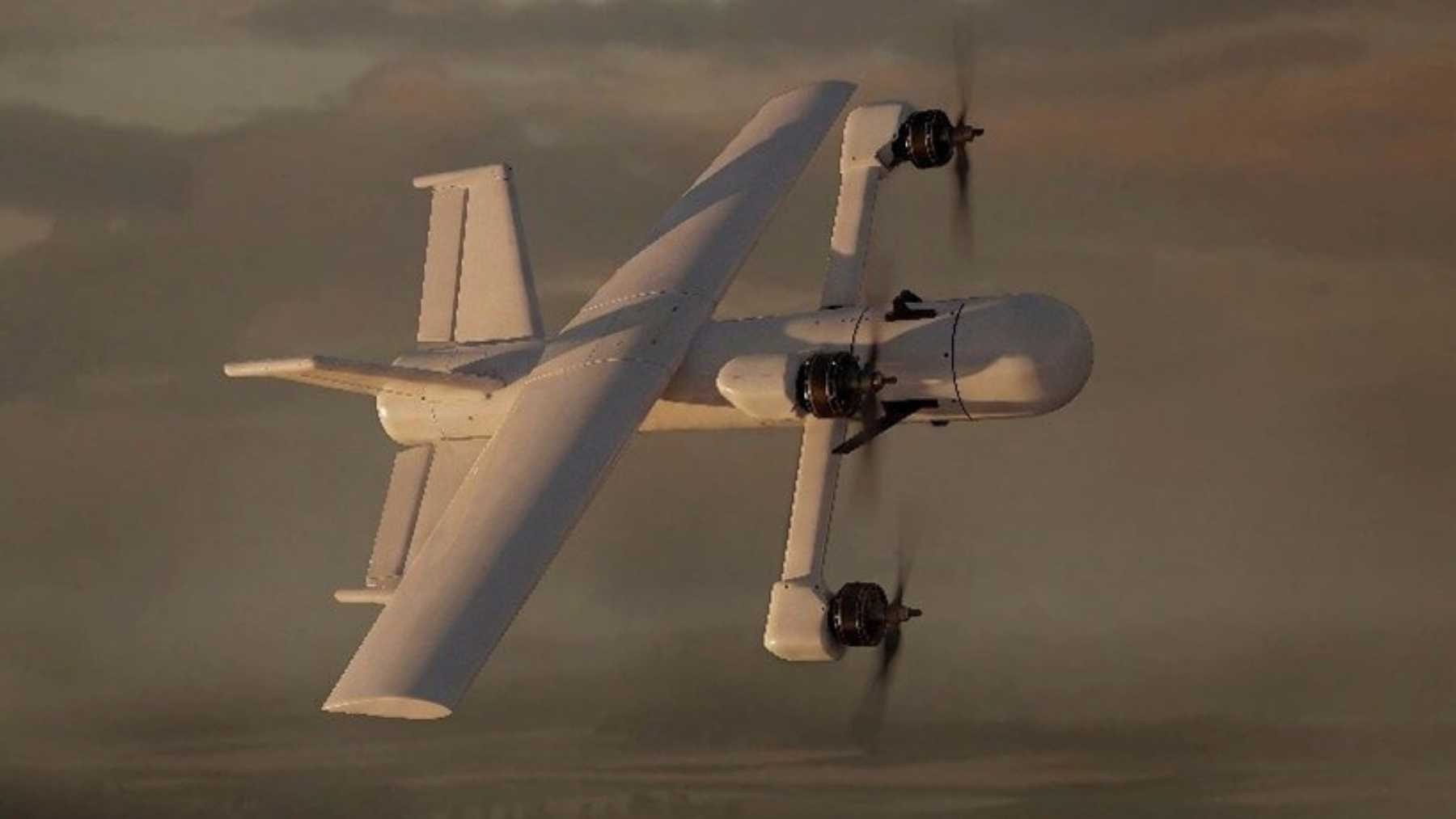
It is called the MORFIUS X-Rotor, and it does not fire anything at all. It launches from the ground, flies out toward the incoming drones, and switches on a high-power microwave payload that the company says can neutralize more than 50 of them in a single flight. Then it comes back down, gets picked up, and goes again.
Lockheed’s announcement went out on the opening morning of the show, which runs through Friday in Hampshire, southwest of London. The phrase the company keeps repeating is “one-to-many.” One aircraft, one flight, dozens of dead drones, and no interceptor spent.
The weapon does not aim at anything
This is where microwaves part company with lasers, and the gap is wider than it sounds.
A laser is light. It leaves the emitter as a narrow beam and it has to sit on one airframe long enough to burn through something or blind a sensor. Then it slews to the next target and starts over. Precise, cheap per shot, strictly one at a time.
A high-power microwave weapon is radio energy, and it does not care where any individual drone is. It pushes electromagnetic energy through a volume of air, and that energy couples into whatever wiring, antennas and circuit boards are sitting inside it. Flight controllers, receivers, motor drivers.
The drone does not explode. It just stops being a computer.
That is the whole reason the category gets pitched at swarms. A laser’s kill rate is capped by how long each target takes to cook. A microwave’s kill rate is capped by how many drones fit inside the beam at once.
We have covered the other two answers to this problem in the past few weeks, and none of the three do the same job. The German INLEAP system is a high-energy laser bolted to a tracked robot, working targets one by one. The NUBURU trials in Italy were not a kill mechanism at all, but a dazzler that floods a drone’s camera until the aircraft cannot see what it was sent to find. Both of those are optical. MORFIUS is radio frequency, which is why it gets a group instead of a queue.
Lockheed brought two answers to the same math problem
On the same Monday, at the same show, Lockheed also introduced a cheaper Patriot interceptor.
The PAC-3 Adapted Capability Effector will cost less than half of a PAC-3 Missile Segment Enhancement and works with existing Patriot equipment, according to Defense News. The reason that exists sits in the two numbers next to it. A PAC-3 interceptor runs an estimated $4 million. An Iranian Shahed drone typically costs around $35,000.
American forces worked through a large share of a finite interceptor stockpile shooting down Iranian drones during Operation Epic Fury, and the defense industry has not shut up about it since. Lockheed’s two Farnborough reveals are the two available exits from that trade. Make the missile cheaper, or stop firing missiles.
MORFIUS is the second exit. Randy Crites, vice president and general manager of Lockheed Martin Missiles and Fire Control Advanced Programs, described it as “delivering a high kill rate while keeping the cost per kill low.” The company has not published what that cost per kill is.
MORFIUS has been flying since 2017
The X-Rotor is new. MORFIUS is not.
The name stands for Mobile Radio Frequency-Integrated UAS Suppressor, and earlier versions have been flying since 2017 on the same family of microwave effectors. The original was a tube-launched fixed-wing aircraft built on the ALTIUS-600 airframe, small enough to be fired from a vehicle, a helicopter or a bigger drone. It showed up in DARPA’s Mobile Force Protection program, and the Pentagon has been prodding it for counter-drone work ever since.
The most useful public data point is from 2023. The Defense Department’s Joint Counter-small Unmanned Aircraft Systems Office ran MORFIUS through an evaluation at Yuma Proving Ground in Arizona against Group 3 one-way attack drones, as DefenseScoop reported at the time. Breaking Defense reported that the issue the team came away with was distance, and closing the gap between the microwave and the thing it was meant to fry.
Microwave energy falls off hard with range. That is the entire reason this interceptor flies out to meet the drones instead of sitting on a truck waiting. Getting close enough, fast enough, is the job.
The new version drops the tube-launched fixed wing for an X-shaped rotor aircraft launched from the ground, built to be recovered and flown again. Lockheed has not publicly connected those two facts. What is on the record is that the airframe changed, and the airframe is what decides how you get close.
Five American bases are already lined up for this class of weapon
None of this is purely an overseas story, which is the part worth knowing if you live near a military installation.
In May, the Pentagon’s counter-drone task force, Joint Interagency Task Force 401, named five installations for a directed-energy counter-drone pilot authorized in the fiscal 2026 National Defense Authorization Act. Fort Huachuca in Arizona, Fort Bliss in Texas, Naval Base Kitsap in Washington, Grand Forks Air Force Base in North Dakota and Whiteman Air Force Base in Missouri.
The task force said the pilot covers high-energy lasers and high-powered microwave systems, and gave the bases 180 days to work out how they will run them. Directed energy gets the nod for domestic sites for an unglamorous reason: it does not drop shrapnel on the neighborhood.
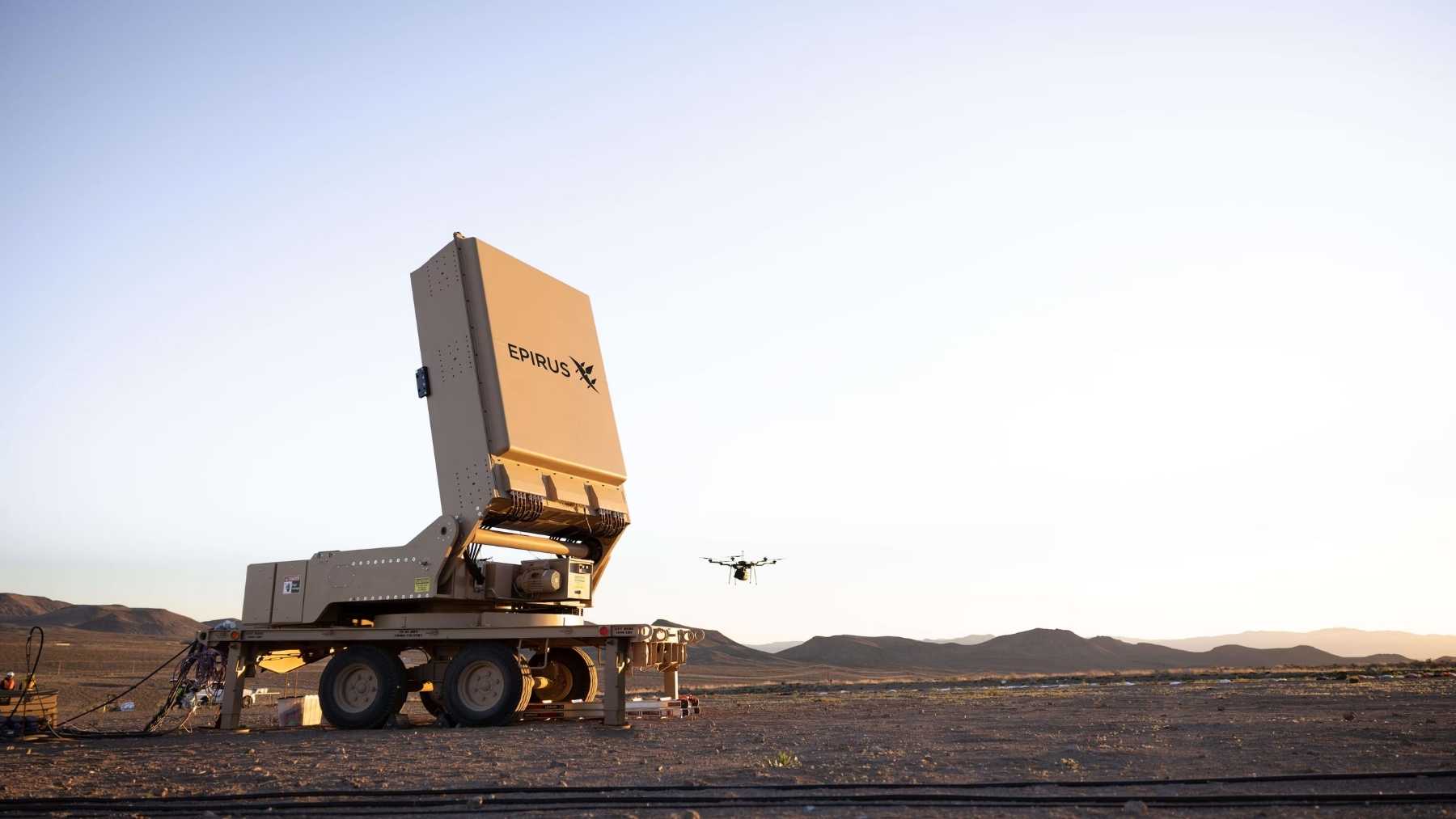
The microwave half of that lineup is a ground game today. The Air Force Research Laboratory has THOR. Epirus builds Leonidas, which the Army has been buying as prototypes under its Indirect Fire Protection Capability-High Power Microwave program and which rides on a vehicle. Both of them wait for the drones to come to them.
That is the space Lockheed is going after, and its release stakes out a deliberately narrow patch of it. No other airborne microwave system, the company argues, is launched from the ground, recovered in the field, rated past 50 kills a flight, and able to plug into any command and control setup without a fire control radar sitting behind it. That last item carries more weight than it reads. A base can hang this off the sensor network it already owns rather than buying a radar to go with it.
Both halves of this arms race are converging on the same price tag, too. The one-way attack drone the US built by cloning the Shahed design, LUCAS, carries a unit cost the Pentagon has put at roughly $35,000. Shield AI was hired this spring to give groups of them an AI pilot so they can coordinate on the way in.
There is a lot Lockheed has not said
The power output of the microwave payload is not public, and it never has been on any MORFIUS variant. Neither is the unit price, the effective radius, the endurance, or how many drones actually came down across the Arizona, California and Oklahoma test campaigns.
Lockheed’s more-than-50 figure is a manufacturer’s number given at an airshow, not a test result anyone outside the company has published. It is worth reading it that way until somebody else puts their name on it.
What Lockheed has actually committed to is accelerating prototype production of the aircraft and its microwave payload, with another round of flight tests to come. That is a real step, and it is also not the same sentence as an order.