
Building a nuclear reactor on land in the US usually starts with an argument over where to put it. You pick a site, then spend years in environmental reviews, licensing hearings, and local objections before anyone pours a foundation. By the industry’s own account, the planning and the paperwork are often slower than the engineering.
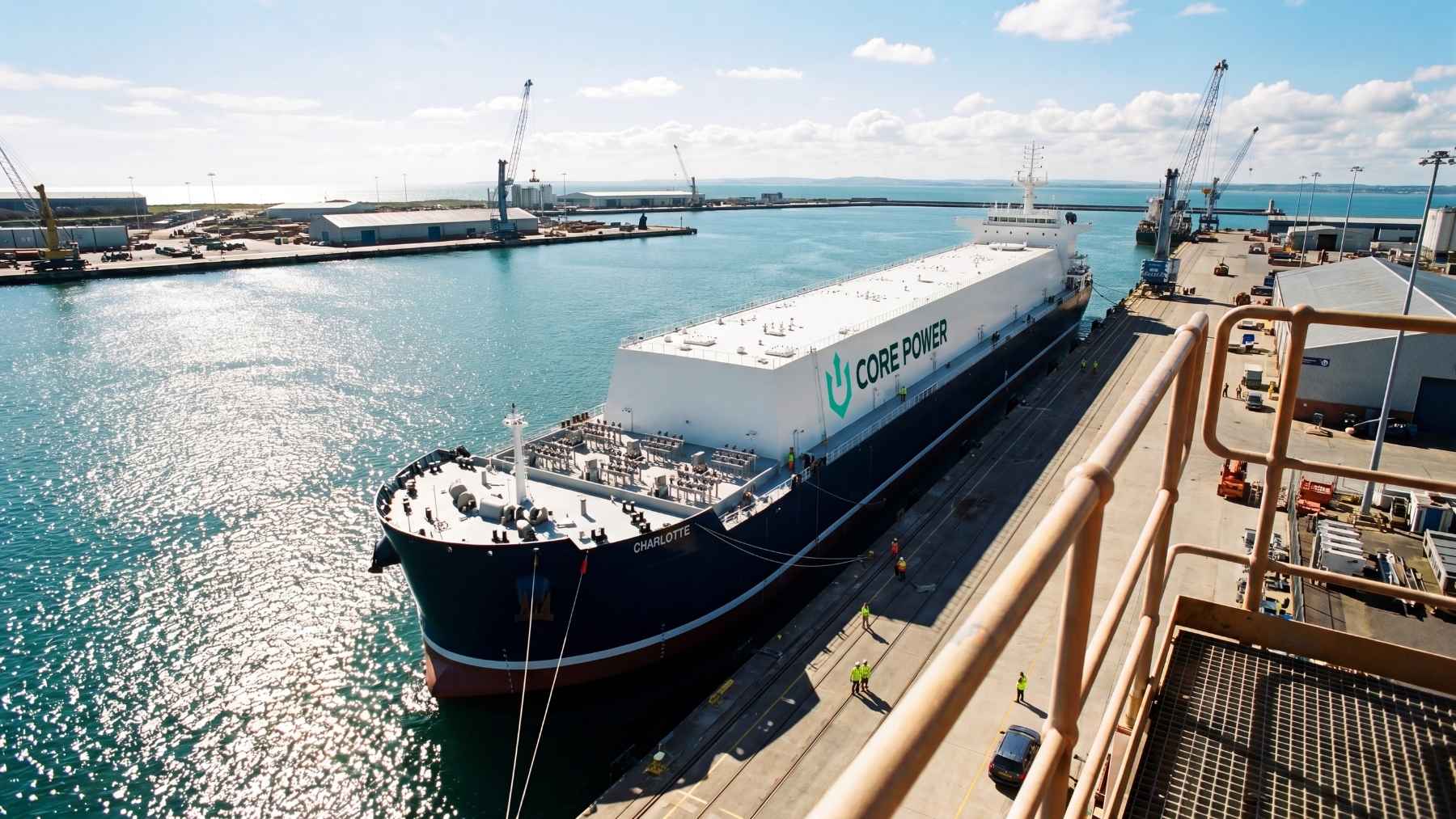
Core Power, a maritime nuclear company based in the UK, wants to sidestep most of that. Its pitch is to build the entire power plant inside a shipyard, reactor and hull together, the way you’d build a ship. Then you mount it on a barge and tow the finished plant to wherever the power is needed: a port, an island, a stretch of coastline the grid never reached. No custom site, no decade-long groundbreaking.
In June, the company took a concrete step toward answering the obvious question. Which reactor actually goes on the barge?
The reactor Core Power picked was shelved almost a decade ago
On June 17, Core Power’s US arm said it had launched a feasibility study on putting BWX Technologies’ mPower small modular reactor onto its floating plants, as World Nuclear News reported. The study is self-funded, and it’s the early kind: systems engineering, marine integration, a regulatory pathway, and a techno-economic analysis to see whether the numbers hold up.
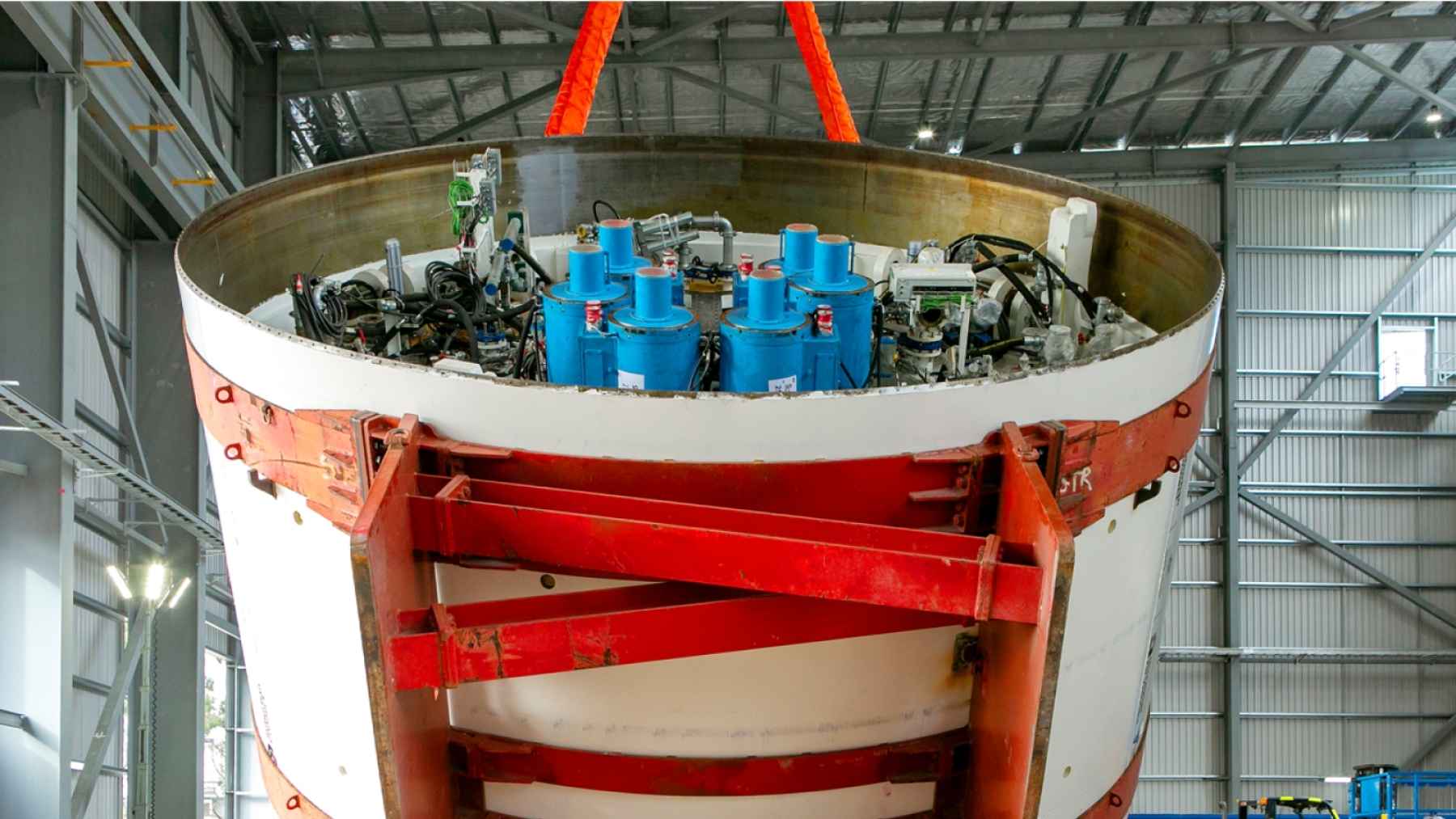
Here’s the part that makes it interesting. The mPower isn’t a new reactor. BWXT developed it years ago as a Generation III+ integral pressurized water reactor (195 megawatts of electricity, 575 megawatts of thermal output per unit) and then shelved the program in 2017 when the market for it dried up. The company kept the engineering archive and the test facilities in storage.
Now it’s coming back out. The timing was hard to miss: one day after Core Power announced its marine study, a separate company, Applied Atomics, signed a licensing deal with BWXT to deploy mPower on land in the US and Canada, and said it would return to the Nuclear Regulatory Commission to restart the design certification that stalled in 2017. Same reactor, two very different homes.
It isn’t even Core Power’s first reactor partner. Back in 2024 the company signed a cooperative agreement with Westinghouse to study putting the much smaller eVinci microreactor on floating plants. In effect, it’s still shopping for the reactor that fits the barge.
Why build a reactor like a ship
The logic behind the whole approach is boring, in a good way. Shipyards already know how to build enormous, complicated steel structures on a production line, on a schedule, with a workforce that does it every day. A conventional nuclear plant is a one-off project on a fresh piece of land, which is a big reason those plants run late and over budget.
Move the build into a yard, Core Power argues, and you get repeatability: the same plant, over and over, with the delivery risk of custom civil construction stripped out. The company has framed its Liberty program as a way to reach places hemmed in by grid capacity, land, or the long timelines that come with planning permission.
The finished units, in the plan, would be moored at ports and along the coast, with larger ones anchored further offshore. A central yard would handle commissioning, maintenance, refuelling, and waste, so the reactor comes back to the shipyard instead of the waste piling up wherever the plant happens to sit.
The timing isn’t an accident
Core Power didn’t dream this up in a vacuum. US electricity demand is climbing fast, largely because data centers running AI workloads need enormous, steady power, and in a lot of places the grid can’t add capacity quickly enough. That’s a big reason nuclear is back in the political conversation. The Department of Energy is openly pushing to roughly quadruple US nuclear capacity by 2050, and the current administration has leaned on executive orders to speed new reactors along.
Core Power’s argument, made when the mPower study went public, is blunt: power demand is outstripping supply, and the markets that need reliable electricity can’t wait for conventional infrastructure timelines. Whether floating plants are the right answer is a separate question. The demand behind the pitch is real.
The flagship reactor is still an experiment
The mPower study is the pragmatic option, a proven-ish water reactor Core Power could bolt onto a barge relatively soon. But the technology the company has talked up most is stranger and further off: the molten chloride fast reactor.
That reactor uses liquid salt as both fuel and coolant. It runs at near-atmospheric pressure instead of the high pressure that makes conventional plants so expensive to contain, and it’s being tested through a US government project called the Molten Chloride Reactor Experiment, or MCRE. Southern Company leads it, TerraPower owns the reactor design, and Core Power is the maritime partner, alongside Orano and Idaho National Laboratory under a Department of Energy program.
The DOE calls MCRE the world’s first test of a fast-spectrum, salt-fueled reactor. It’s also nowhere near finished. Idaho National Laboratory made the first-ever batch of chloride fuel salt for it in late 2025 and needs somewhere between 72 and 75 batches for the reactor to go critical. MCRE isn’t scheduled to run until 2028, and even then it’s a six-month sub-scale experiment, not a power plant. Commercial versions, if they arrive, are a 2030s story.
What actually exists, and what doesn’t
For all the shipyard talk, no company has yet built a commercial floating nuclear plant on a production line. The one working example in the world is Russian: Rosatom’s Akademik Lomonosov, a barge with two small reactors that’s been feeding an Arctic port since 2020. It exists, and it works, but it took years of one-off construction to get there. That’s the opposite of mass production.
Others are chasing the same shipyard idea Core Power is. In South Korea, Samsung Heavy Industries and a group of partners are working on a molten-salt power barge of their own. And the US Navy has been running reactors at sea for 70 years. The ones on the newest carrier, the USS Gerald R. Ford, were built by the same BWXT that makes the mPower Core Power is now studying.
The money behind Core Power is unusual, and worth knowing. It hasn’t come from Silicon Valley venture funds but from the shipping world: shipowners, yards, and trading houses. A group of 13 Japanese companies, led by Onomichi Dockyard and Imabari Shipbuilding, put around $80 million in back in 2023, part of a roughly $100 million funding milestone the company has since passed.
The catch
None of this is a sure thing. There’s still no established way to insure a commercial reactor that moves between jurisdictions, and no settled legal regime for towing one across borders, problems the World Nuclear Association lists as genuinely unsolved. The mPower design has to clear the NRC again after nearly a decade on the shelf. And the molten chloride reactor that got everyone excited won’t switch on until 2028.
What Core Power has right now is a build method borrowed from shipbuilding, a reactor pulled out of retirement to test it with, and a bet that the power crunch gets bad enough that ports and industry stop waiting for the grid to catch up. The shipyards are ready. The reactors are the part still being sorted out.
 mikeconley DRIVER2 months ago