
The 405 through the Sepulveda Pass is the kind of traffic that makes people move house. Fourteen lanes wide in places, one of the most congested stretches of freeway in the country, and a drive between the San Fernando Valley and the Westside that Metro clocks at 60 to 90 minutes when it seizes up. The freeway carries more than 400,000 vehicle trips a day by the agency’s own count.
Los Angeles has spent decades and a lot of money widening roads like this one. The crawl is still there.
So the plan now is to quit fighting the surface and go under the mountain.
There are two tunnels in that plan, at two very different stages. One is already carrying passengers under Wilshire Boulevard. The other lives on paper, would run hundreds of feet beneath Bel-Air, and is now the official strategy for beating the worst commute in the region.
The subway that’s already down there
The D (Purple) Line has been creeping west under Wilshire for more than a decade. Its first extension section opened on May 8, adding three underground stations at Wilshire/La Brea, Wilshire/Fairfax and Wilshire/La Cienega and pushing service almost four miles past the Miracle Mile into Beverly Hills.
The Wilshire/La Cienega stop is a small piece of history by itself. It gives Beverly Hills passenger rail for the first time since September 26, 1954, when the old Pacific Electric Hollywood Line shut down.
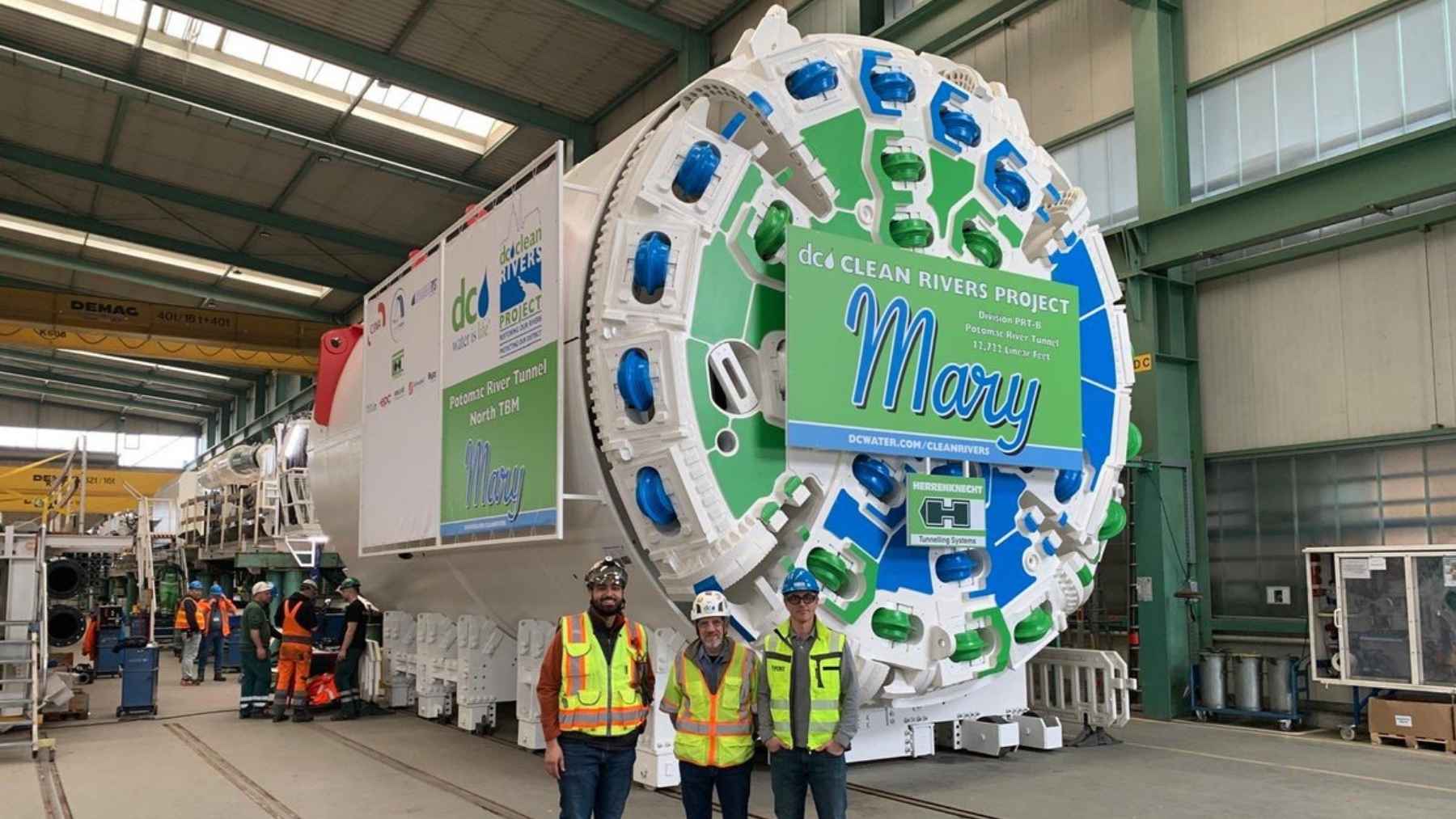
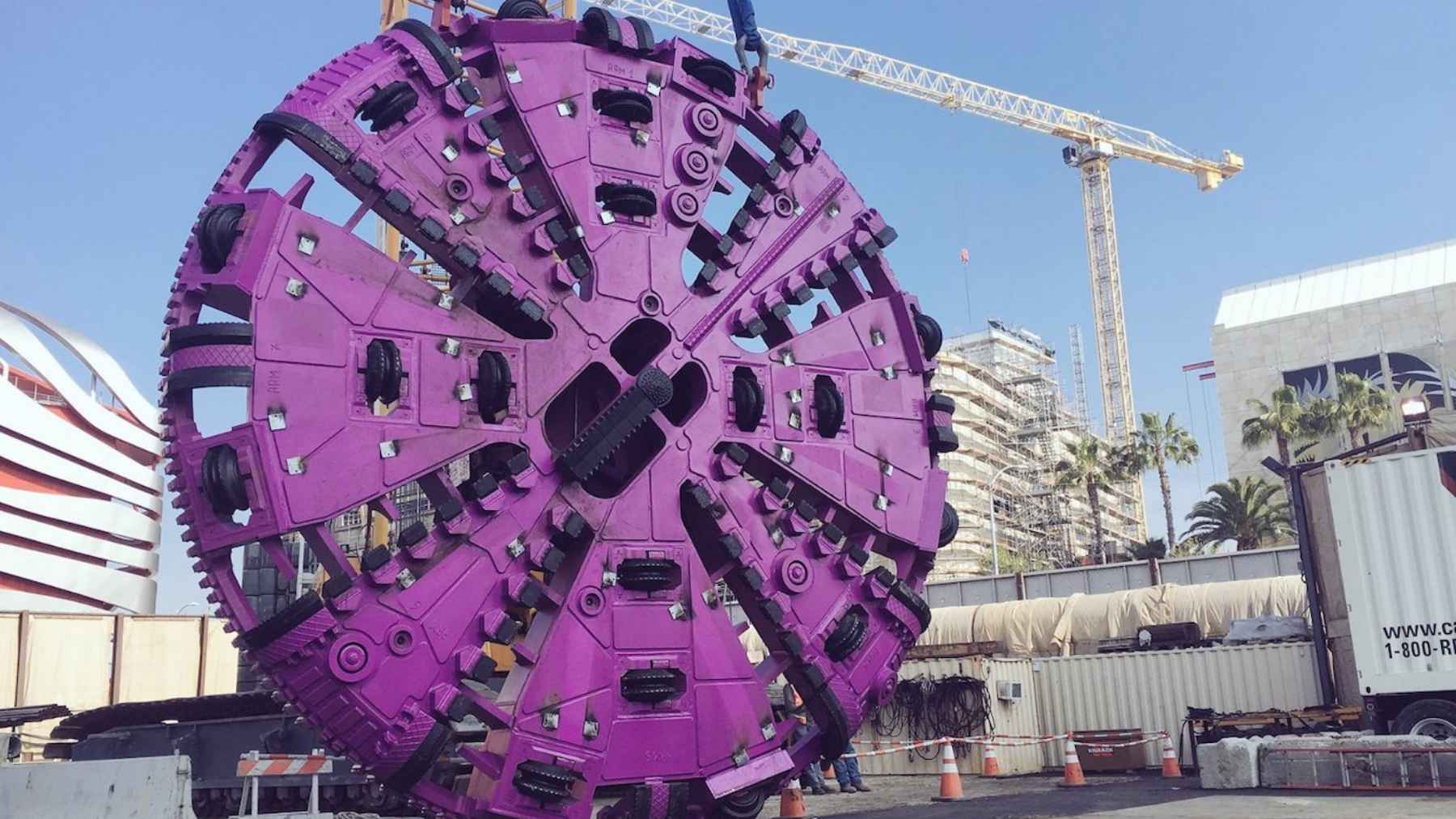
The digging under there is done. Metro finished tunneling on the entire nine-mile extension in April 2024, and the machines that did it are worth a look. Six of them, built in Germany by Herrenknecht, the firm behind a lot of the world’s big subway tunnels.
Each machine weighed around 1,000 tons, ran about 450 feet from cutterhead to tail, and measured 21.5 feet across, grinding forward roughly 60 feet a day. Metro let the public name them. Elsie and Soyeon went first under Wilshire, then Harriet and Ruth, then two more for the westernmost push toward UCLA.
The part that makes them unusual is what they were built to survive. Wilshire runs straight over the Salt Lake Oil Field, the same ground that feeds the La Brea Tar Pits, and it leaks methane and hydrogen sulfide. So every component on the machines was made explosion-proof, and crews ran an oversized ventilation system around the clock to keep the air breathable. The concrete rings bolted in behind each borer were sealed against gas and water. You don’t do any of that for a normal subway.
The rest of the line is a race against a deadline. Sections 2 and 3, running through Century City and out to Westwood and the VA campus near UCLA, are now forecast for 2027 and 2028. When the whole thing is running, Metro says you’ll get from downtown to West LA in under 30 minutes. It’s part of the agency’s “Twenty-Eight by ’28” push to finish 28 projects before the Olympics open in July 2028.
The one that goes under the mountain
The bigger swing is the Sepulveda Transit Corridor, and it’s a different animal. In a unanimous vote on January 22, the Metro board picked its route and its technology: a fully underground, automated heavy-rail subway, roughly 13 miles with seven stations, running from the Van Nuys area across to the E Line’s Expo/Sepulveda station on the Westside.
Between those endpoints it goes places freeways can’t. The alignment runs under Sherman Oaks, under Bel-Air and Beverly Crest, and under UCLA, in a single-bore tunnel that local outlets reported would reach depths of at least 500 feet in spots.
Trains would run end to end in about 20 minutes, against that 60-to-90-minute drive, and Metro puts peak frequency at one every 2.5 minutes. Officials estimate the line could pull about a quarter of drivers off the 405.
The single-bore, automated approach is the same one being used on the hardest tunnel jobs going right now — the four machines digging New York’s new Hudson River rail tunnel, or the pair boring HS2’s Euston tunnel under London. LA’s version just has to do it under some of the priciest hillside real estate in America.
Sepulveda’s machine doesn’t exist yet, though. The project is still in procurement, a construction contract isn’t expected until 2027, and estimates say boring it will take two to four TBMs running at once. At roughly 13 miles, it would be the longest transit tunnel in the country.
If Metro goes single-bore, one tube wide enough to stack both tracks, those machines run 40 to 50 feet in diameter. That’s the class of the nearly 54-foot borer Herrenknecht built for BART’s new tunnel under San Jose, a $76 million machine and one of the largest ever made. Something that size would have to crawl under Bel-Air.
And that’s only phase one. Metro’s long-range plan has the corridor eventually pushing south from the Westside to connect with the K Line near LAX, which would give the Valley a rail route toward the airport it has never had.
Why the subway beat the monorail
Metro didn’t get here quickly. It studied five build options, three heavy-rail and two monorail, in a Draft Environmental Impact Report released in June 2025 that drew more than 8,000 public comments. Fewer than 70 of them opposed the project outright.
The winner, “Modified Alternative 5,” is a subway that borrows the fully-tunneled automated design from one option and a cleaner Valley alignment from another. Monorail would have been cheaper. The board went with heavy rail anyway, because it carries more riders, moves faster, and runs more often.
The concept itself came out of a private consortium, Sepulveda Transit Corridor Partners, led by Bechtel and infrastructure financier Meridiam, working under a pre-development agreement. Metro signed those agreements back in 2021, the first time a US transit agency had used the tool to bring a private partner in early to help design, price, and de-risk a project before the environmental work was even done.
Two amendments got tacked onto the January vote: one to beef up community outreach during design, and one to study a possible connection to the Getty Center.
The part that runs under people’s houses
Not everyone in the path is happy about it. The alignment tunnels beneath homes, streets, and canyon neighborhoods, and homeowners in Bel-Air have pushed back on the idea of trains passing under their property.
The politics are pointed. Katy Yaroslavsky, the L.A. city councilmember who represents Bel-Air and sits on the Metro board, is the same person who has to answer to those homeowners. She voted for it anyway, likened the project to the Los Angeles Aqueduct, and said decades of widening freeways over the mountains had “failed.”
No party has alleged the project is doing anything unlawful. The fight is the normal one over a tunnel that happens to pass a few hundred feet under expensive backyards.
What has to happen before a train runs
The catch is money and time.
Metro has secured funding for only about 14% of the $24.2 billion estimate, most of it from the county sales-tax measures voters passed in 2008 and 2016. The rest has to come from some mix of federal, state, and local sources, plus possible private financing through a public-private partnership.
And the schedule is long. The first buildable piece is an initial operating segment, linking the G Line in the Valley to the D Line on the Westside, and that’s what the board actually locked in. Full service isn’t expected until somewhere in 2033 to 2035.
So the two tunnels tell you exactly where LA stands. The D Line proves the city can dig a subway under the Westside and put people on it; riders are on it right now. The Sepulveda bore is that same bet aimed at the one thing that’s beaten every fix anyone’s tried on the 405 — the mountain itself. The strategy is finally settled. Paying for it, and getting a machine into the ground, is the next decade’s problem.