
Every bridge that crosses open water stands on something you never see: steel piles hammered down into the seabed until they hit rock. The machine that does the hammering runs on a hydraulic cylinder, which is about the least glamorous part of any heavy machine. It’s a steel tube with a piston inside, the same basic idea as the hydraulic jack a mechanic rolls under your car.
China just built one the size of a building.
It rolled off a factory floor in Changzhou in January, it can shove with the force of 5,000 tons, and it does one thing no pile-driver has done before: it recycles the energy of its own downstroke instead of dumping it as heat.
That cylinder is the mechanical heart of the tallest pile-driving ship ever built. And the ship just got handed its first job, driving what its builders call the deepest bridge foundations in the world, off the coast of Brazil.
A cylinder that lifts the weight of 3,500 cars
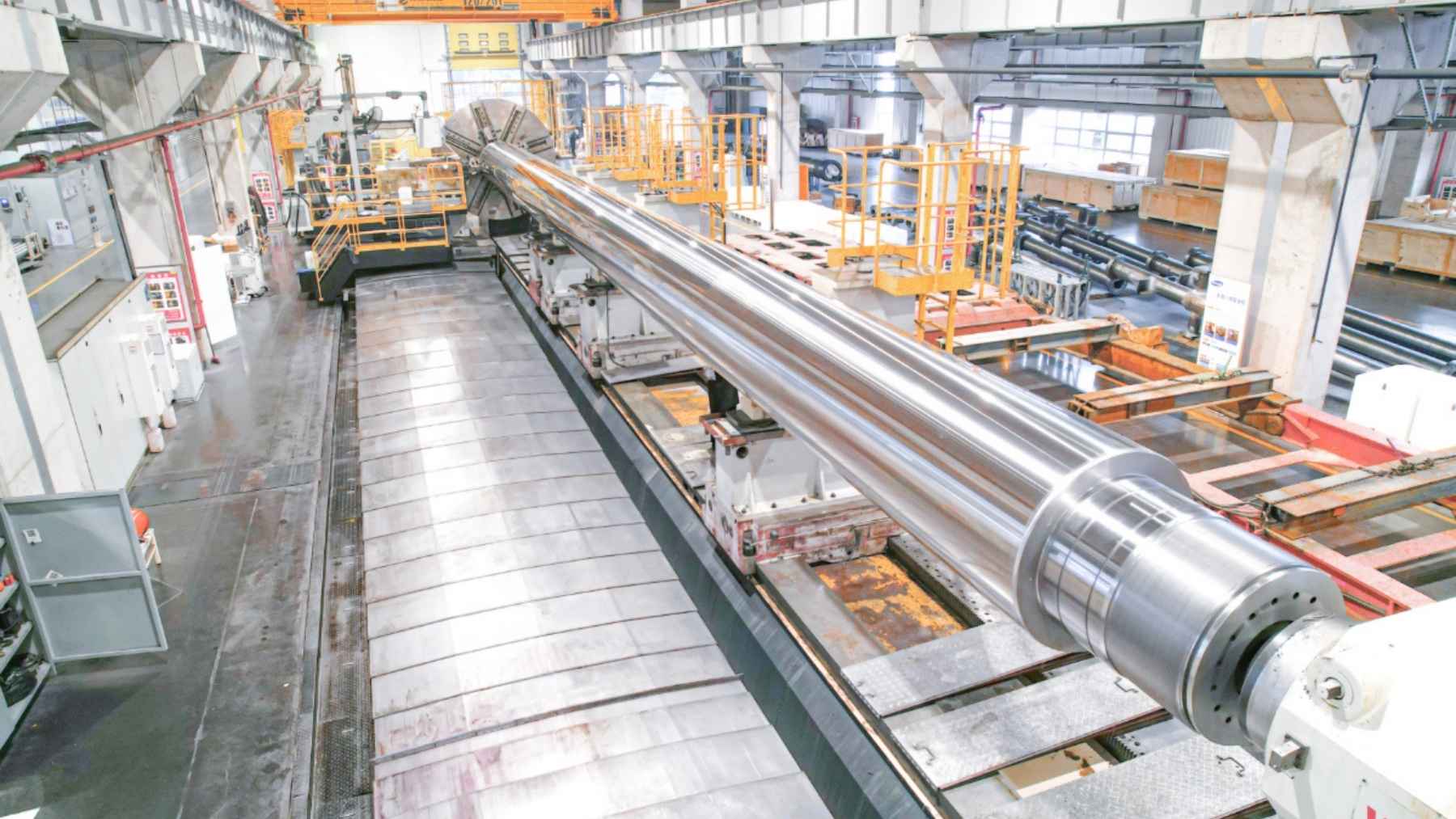
The cylinder came out of a plant in Changzhou, in Jiangsu province, on January 16. It was built by the China Railway Construction Bridge Engineering Bureau Group, a unit of the state giant China Railway Construction Corporation.
The bore is 1.6 meters across. The piston stroke runs 21 meters, and fully extended the whole thing reaches close to 50 meters — roughly a 17-story building stood on end.
Its rated thrust is 5,000 tons. To put that in something you can actually picture, the state-run Global Times ran the math and landed on about 3,500 passenger cars. That’s how much dead weight this single actuator can push at once.
Chinese state media bills it as the largest hydraulic cylinder ever made for a pile-driving ship. The more interesting number, though, is what happens on the way back down.
The part that recycles the way down
When a pile-driver hoists a massive hammer or lets a heavy load settle under gravity, all that potential energy normally turns into heat and disappears. This cylinder runs a closed-loop system that catches it instead, converts it to electricity, and feeds it back into the ship.
China Railway says it’s the first pile-driving hydraulic system anywhere to do this, recovering around 40 percent of that energy and switching between spending power and regenerating it depending on the load.
If that sounds familiar, it’s the same idea as the regenerative braking in a hybrid or an EV: capture the energy of something slowing down or coming down, rather than throwing it away as waste heat. The difference is scale. Your car recovers the energy of a two-ton vehicle easing off the highway. This recovers the energy of 700-ton steel piles being driven into a seabed.
A ship taller than it is long
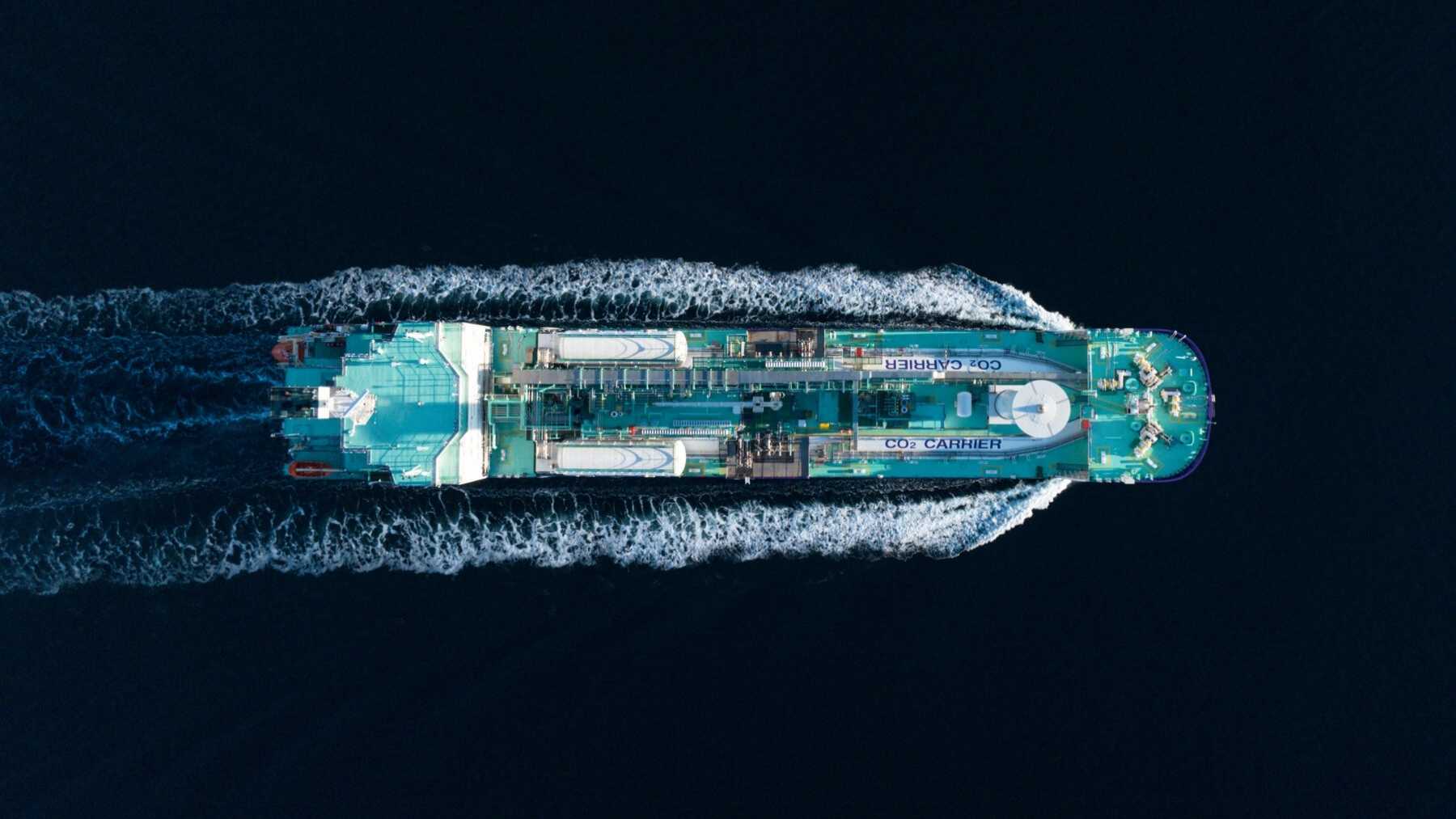
The cylinder doesn’t work alone. It’s built into a vessel called CRBC Bridge Pile 1, delivered on March 31 by Jiangsu Dajin Heavy Industry in Nantong.
The proportions are strange. The hull is 130 meters long, but the pile-driving frame that stands on top of it reaches 156 meters — so the tower is taller than the ship is long. A vessel review by Baird Maritime lays out the rest of it: 40 meters across the beam, a working depth past 70 meters, and piles up to 700 tons apiece.
China’s shipbuilding press calls it the tallest pile-driving vessel on record, with the deepest working depth and heaviest pile-lifting capacity of its kind. It also holds position in open sea using dynamic positioning, which China says is a first for one of its pile-drivers. Instead of dropping anchor, the ship uses thrusters to stay locked over a target while it drives.
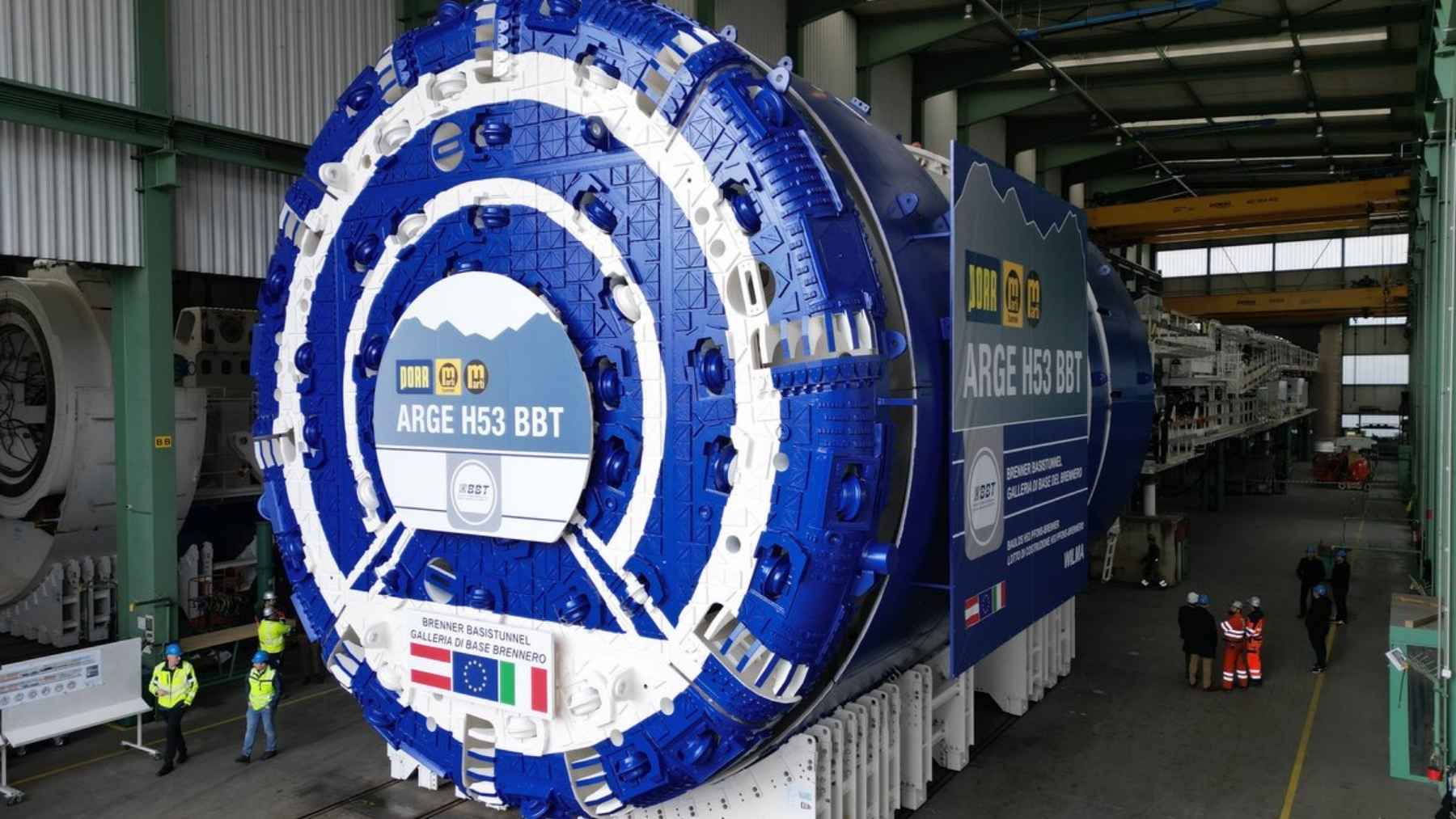
Giant civil machines are having a moment. Germany recently put a tunnel borer named Mary to work under the streets of Adelaide, and China has a boring machine with a 54-foot cutter head grinding under the Yangtze right now. The pile-driver is that same appetite for scale, pointed offshore.
Its first job is a bridge in Brazil
CRBC Bridge Pile 1 wasn’t built for home waters. Its first assignment is the Salvador–Itaparica Bridge in the Brazilian state of Bahia, a 12.4-kilometer crossing over the Bay of All Saints that links the city of Salvador to Itaparica Island.
When it’s done, it will be the longest cross-sea cable-stayed bridge in Latin America. The roughly $1.9 billion project is being built by China Railway Construction together with another state giant, China Communications Construction Company, and construction started this spring.
Here’s why it needs a ship like this. The bridge is set to sit on what its builders describe as the deepest pile foundations of any bridge in the world. Driving them means punching steel down through deep water into the rock under the bay, which is exactly the job the 5,000-ton cylinder was designed for.
Brazil is just the latest place a Chinese mega-machine has shown up to do work the local industry couldn’t. A Chinese-built borer recently started digging under Sydney Harbour, assembled underground because it was too big to move on any road there.
For the people of Bahia, the payoff is more ordinary. Today the crossing is a ferry that takes about an hour. The bridge is meant to cut that to around 15 minutes and carry some 28,000 vehicles a day, with completion penciled in for 2031.
Why China keeps building the biggest one
There’s a strategy underneath the spectacle. For years China imported the heavy hydraulic parts that machines like this depend on: the big cylinders, the high-spec seals, the oversized bearings.
Building the cylinder, the ship, and running the whole operation itself is what Chinese industry calls full-chain localization — design it, build it, operate it, with no foreign part in the critical path. An expert panel that reviewed the cylinder concluded its performance matched or beat comparable imported hardware.
It’s the same playbook China ran on tunnel-boring machines, where it now makes most of the world’s units and ships them everywhere from Australia to South America. The pile-driver pushes that logic into deep water and cross-sea bridges, the kind of work only a handful of countries can even attempt.
The cylinder will spend the next few years anchored in the Bay of All Saints, driving 700-ton piles down through deep water into rock. Most people who eventually cross the finished bridge won’t think about it once. They won’t know the machine that laid the foundations was also quietly banking a share of its own energy on every stroke, which, for a pile-driver, is a new trick, even if nobody crossing at highway speed will ever notice.
Image credit: People’s Daily report