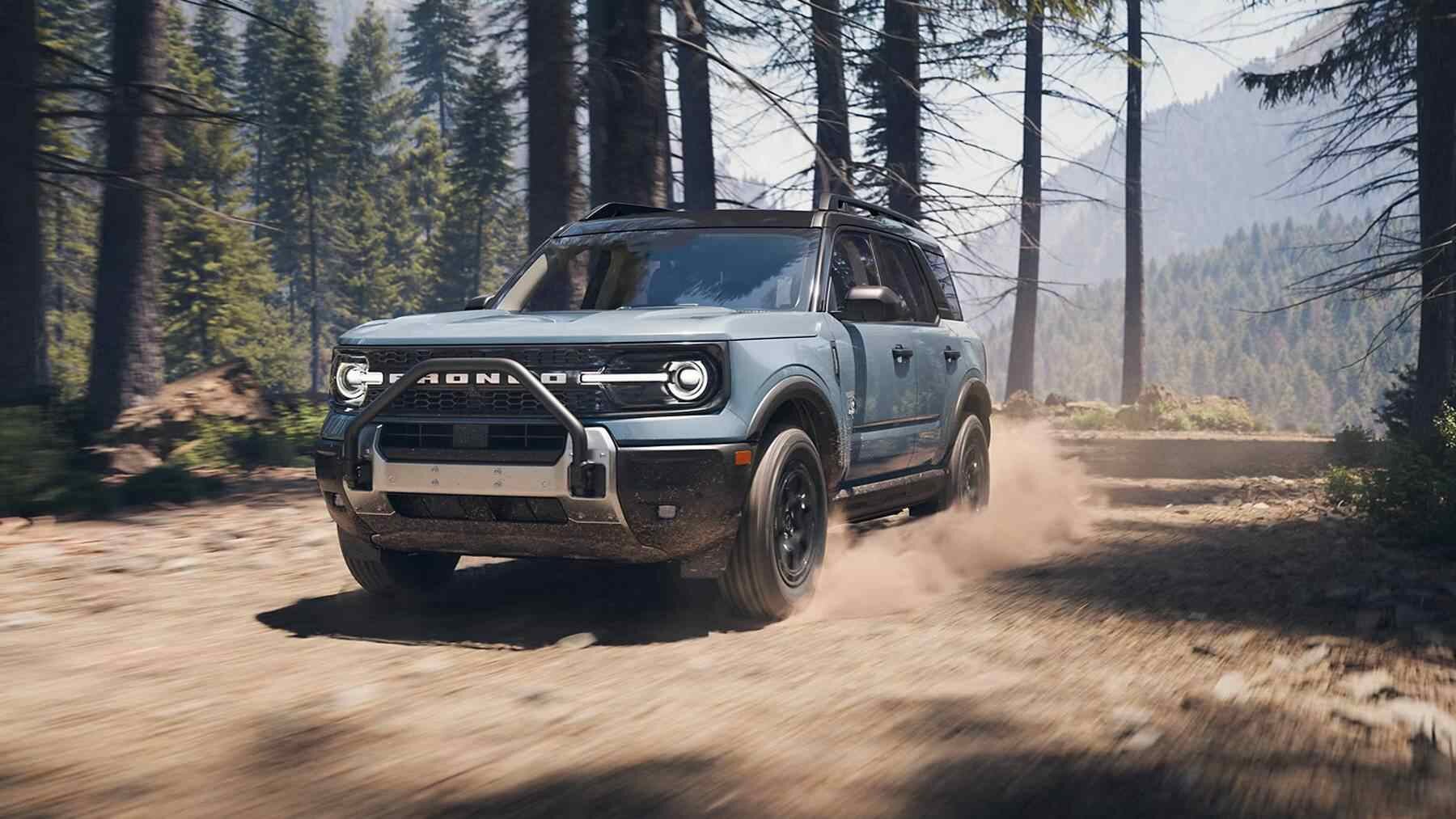

We may have just seen our first glimpse of the next-generation Ford Bronco.
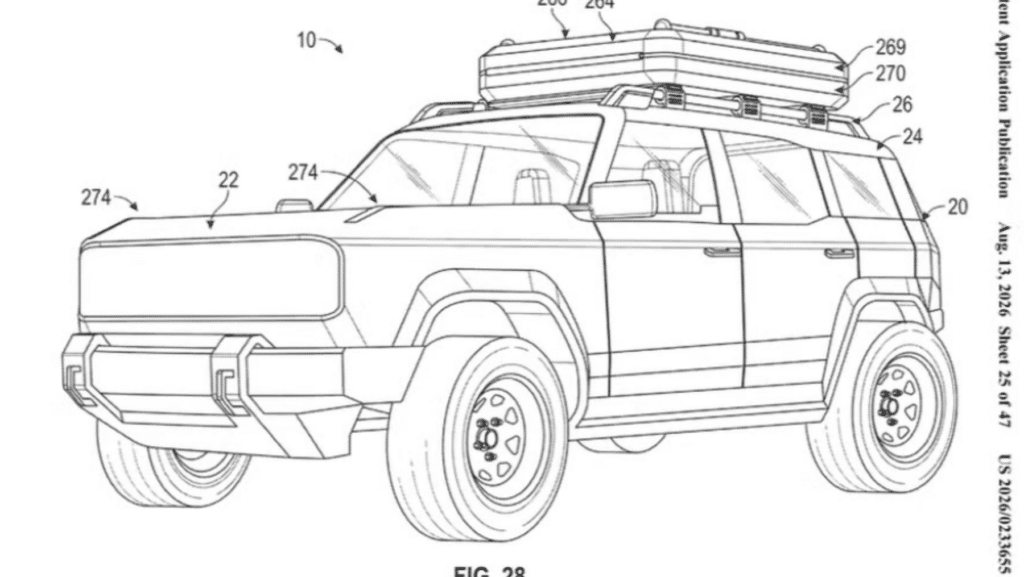
Multiple patents filed by Ford show a boxy SUV that looks quite like a Bronco, but maybe a bit smaller. The patents are for sleeping arrangements, including a fold-out platform inside and a tent on top of the SUV, as well as a modular storage system. The drawings show vertical tow hooks up front, a pretty chunky front bumper, and a top-hinged liftgate.
It’s honestly not all that riveting. But we’ll take any information about the Ford Bronco we can get.
What we know about the new Ford Bronco (sorta nothing)
The newly designed Ford Bronco is expected to start production in late 2029 and arrive in 2030. This would put the patent right in the midst of its design phase.
In all fairness, 2030 is quite far away. Especially since the Ford Bronco hasn’t had any major changes since it was revived in 2021. Ford is promising a hybrid of the existing Bronco in 2028 and maybe even some kinda pickup truck. But most people just want the new generation of the off-roading SUV itself. Unfortunately, we don’t know much about it. Ford is pretty focused on slowly dripping random information about its cheap electric pickup truck.
The current Bronco is part of the 6th generation. It arrived in 2021 after being gone since 1996. The current Bronco has retro styling with modern comforts and features, meant to compete against the Jeep Wrangler. It comes with three engine options, including a 2.3-liter turbocharged I4, a 2.7-liter V6, and a 3.0-liter twin-turbo V6. They all come with four-wheel drive. There’s a lack of V8 like in previous generations, but plenty of horsepower, torque, and off-roading features.
“We know the fans have been waiting for the Bronco – and we’re so excited to bring it back. And this Bronco is better than ever,” Ford’s Chief Marketing Officer, Suzy Deering, said at the time. “We’re staying authentic to Bronco’s goes-over-any-terrain heritage and have leveraged the brand’s Built Wild innovative design, durability, and advanced off-road capability to get the most out of every adventure in the wild.”
Which should you get for now: Ford Bronco or Jeep Wrangler?
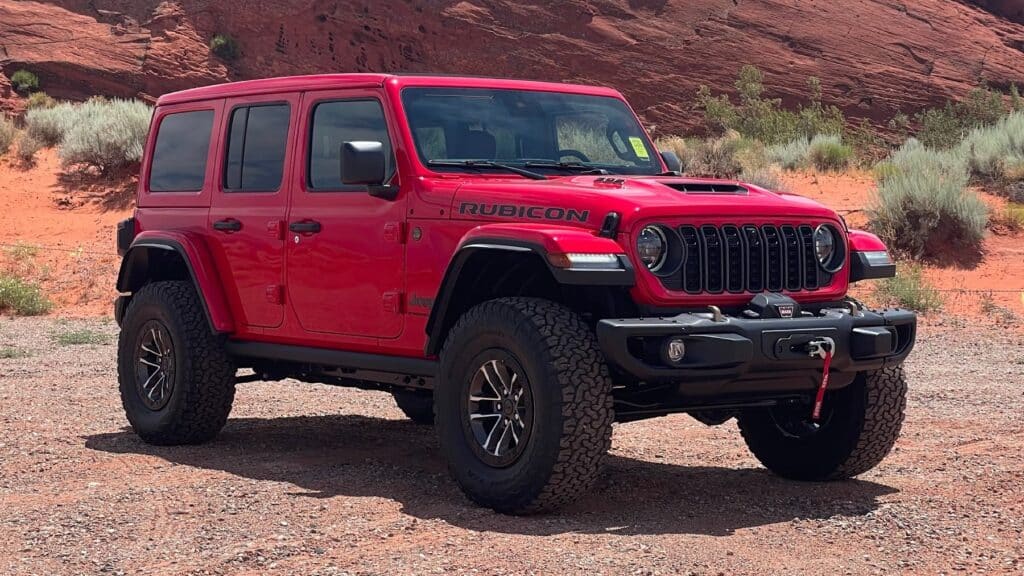
It’s gonna be a while until we get the new Ford Bronco, and we don’t even know what changes it will have. For now, let’s see who the current Ford Bronco and Jeep Wrangler do when compared head-to-head.
The battle between the Jeep Wrangler and Ford Bronco has become one of the most entertaining rivalries in the automotive world, and the 2026 model year gives both sides plenty of new ammunition. Jeep leans on decades of trail heritage, while Ford continues refining the Bronco’s return with fresh trims and updated hardware. For anyone shopping for a rugged, go-anywhere SUV, choosing between these two often comes down to details that only reveal themselves once you’re off the pavement.
Both vehicles ship with genuine 4×4 hardware rather than dressed-up crossovers pretending to be trucks. That means locking differentials, disconnecting sway bars, and serious ground clearance are on the table from the factory, not bolted on later. Where they differ is in how each brand packages that capability and who it’s aimed at.
This year’s changes matter too. Jeep introduced the Moab 392, a V8-powered flagship, while Ford expanded its Bronco lineup with the Stroppe Edition and tweaked safety equipment across a few trims. Neither brand is standing still, and that competition benefits buyers.
Off-road hardware and trail tech
The Wrangler Rubicon comes standard with the Rock-Trac 4×4 system, electronic front and rear locking differentials, an electronic disconnecting front sway bar, and heavy-duty Dana axles. Step up to the Rubicon Xtreme 35 package and you get 35-inch tires, beadlock-capable wheels, and improved approach and departure angles.
The Bronco counters with its G.O.A.T. Modes (Goes Over Any Terrain), offering up to seven drive settings, including Rock Crawl and Baja. The Sasquatch Package adds electronic-locking front and rear axles, 35-inch tires, and high-clearance fender flares. Ford also claims up to 13.1 inches of ground clearance and a 37-inch water fording depth on its most capable trims, numbers that edge out the standard Wrangler.
Power and performance
Jeep’s headline act this year is the Moab 392, packing a 6.4-liter HEMI V8 that produces 470 horsepower and 470 lb-ft of torque. It’s the most powerful Wrangler ever built. The rest of the lineup runs a 3.6-liter V6 or a 2.0-liter turbo-four.
Ford’s Bronco Raptor sticks with a twin-turbo 3.0-liter V6 paired with Fox Live Valve shocks, favoring high-speed desert running over raw horsepower. It’s tuned for a different kind of off-roading: think Baja dunes rather than technical rock crawling.
Everyday Livability
The Bronco tends to edge out the Wrangler on daily comfort, with a quieter cabin and more refined road manners. Jeep still holds an edge in customization and aftermarket support, something decades of Wrangler ownership have built into a genuine ecosystem.
So…?
If your off-roading involves rock crawling, technical trails, or you simply want the most raw power available, the Moab 392 gives Jeep a serious edge this year. But for buyers who want a mix of high-speed desert capability, water fording, and daily comfort, the Bronco Raptor makes an equally strong case. For pure rock-crawling purists, the Wrangler still wins. For everything else, the Bronco is tough to beat.
As always, it’s largely about personal preference. Or maybe you just wanna wait until 2030 to make a decision.