
Radar on a small boat has a ceiling, and the electronics have nothing to do with it. Put an antenna 20 feet off the water and the curve of the planet hides everything past about six miles. Sailors have solved that the same three ways for a century: a taller mast, a helicopter, or a bigger ship.
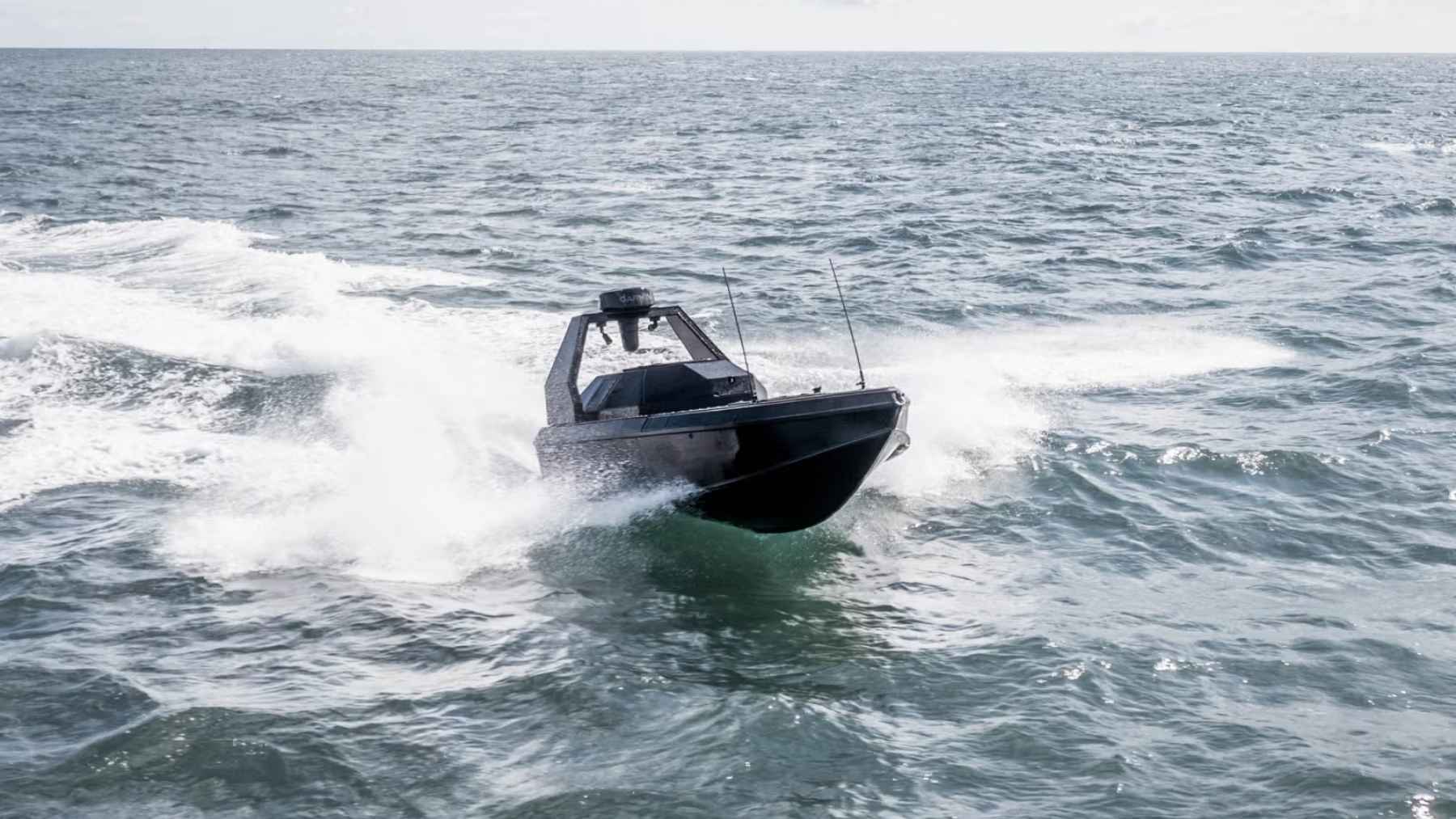
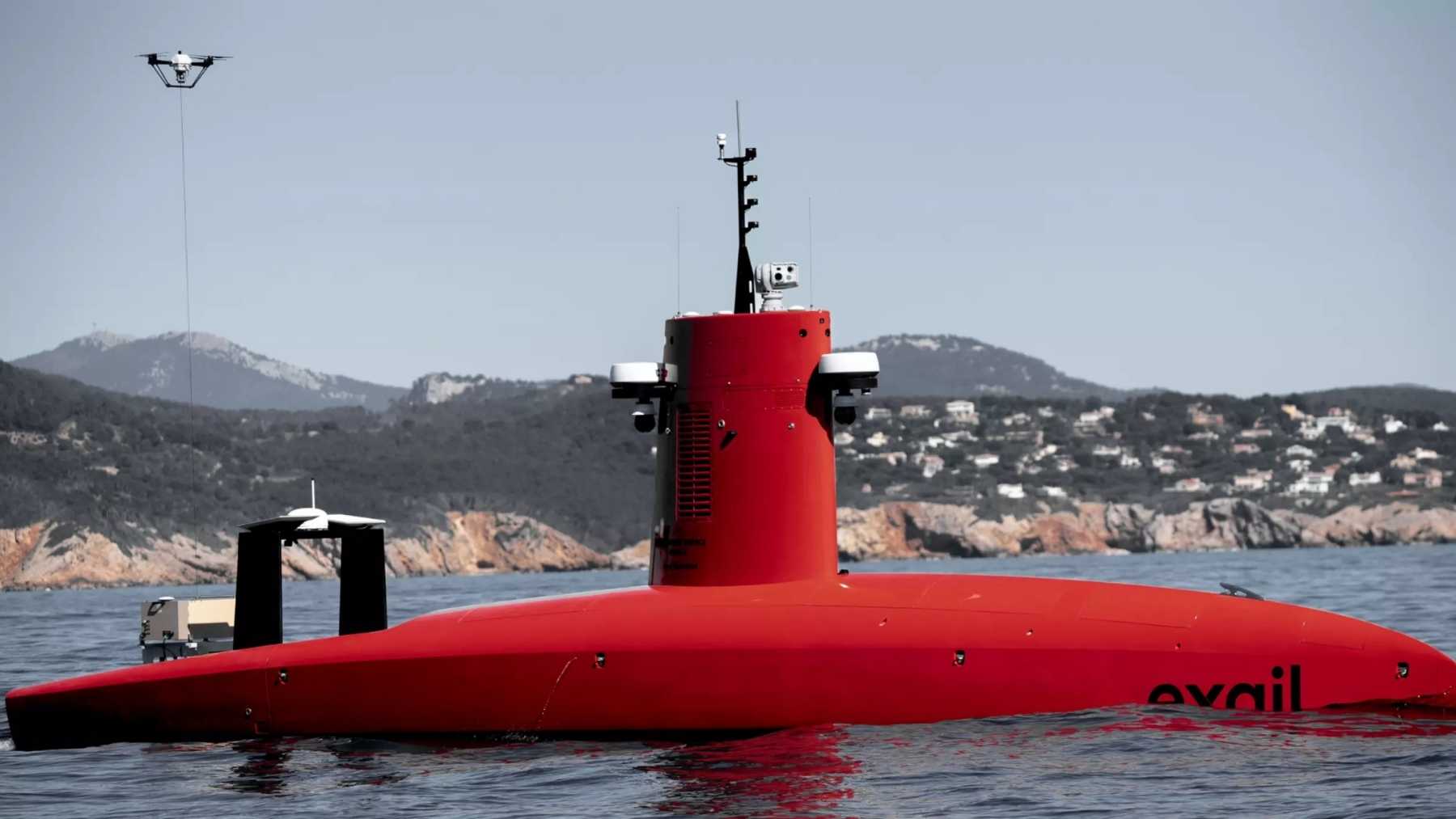
French maritime robotics firm Exail went looking for a fourth option. On July 1 the company said it had completed sea trials in which its DriX O-16, a 51-foot uncrewed boat, ran a tethered drone off its own deck alongside a Safran stabilized camera.
Nobody was aboard. Nobody was on a chase boat either. Both the vessel and both payloads were managed from Exail’s remote operations center in La Ciotat, on the French Mediterranean coast, which is the entire point of the exercise.
The drone flies itself and the boat pays for the electricity
The flying half is a product Elistair calls Khronos, and calling it a drone undersells it a little. It is a sealed box holding the aircraft, its landing pad, its power supply and its control software, built to bolt onto a vehicle or a deck and run without anyone opening it.
Per Elistair’s published data sheet, the whole system weighs 70.5 pounds, gets airborne in under two minutes and flies for 24 hours without landing. It never has to land because it never runs out of battery. Current goes up the tether from the host platform and video comes back down the same cable at 100 megabits per second.
The tether is 70 meters, or 230 feet. Hovering height is 60 meters, 197 feet. Elistair lists the system as ITAR-free and built to keep working when satellite navigation is jammed, with a mode that runs dark and radio-silent.
Run the horizon math and the reason for any of this stops being abstract. A sensor 20 feet up sees roughly six miles. The same sensor at 197 feet sees closer to 19. “Surface sensors stop at the horizon,” Elistair CEO Guilhem de Marliave said in a company statement carried by Naval News on July 22.
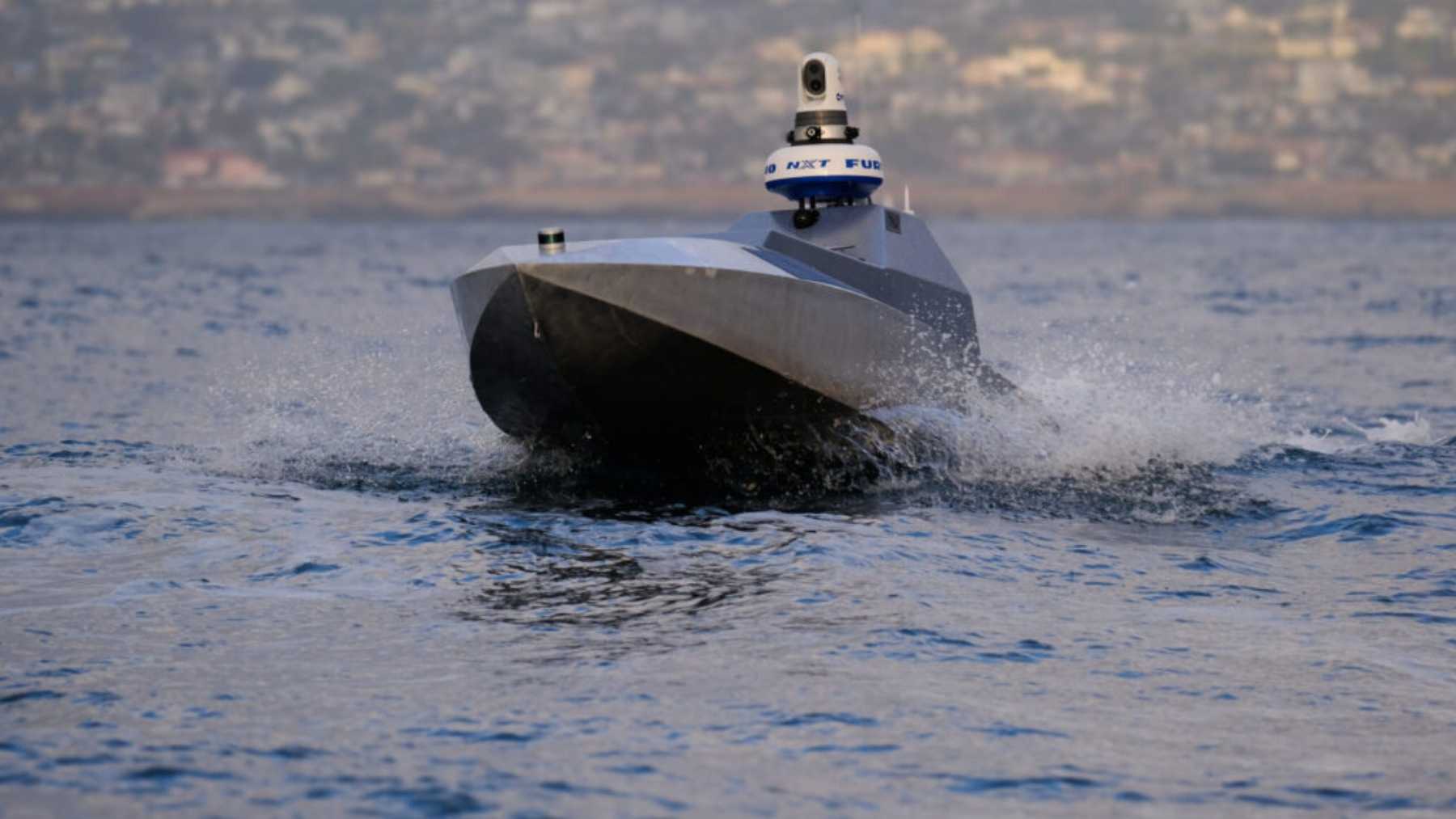
The second payload was Safran’s VIGY 4, a stabilized observation turret combining visible light with mid-wave and short-wave infrared. That mix is what lets someone ashore work out what a distant contact actually is at night or through haze, instead of only knowing that something is out there.
This boat already went through Gibraltar with nobody aboard
The DriX O-16 is not a prototype wheeled out for a camera crew. In September 2025 Exail sent one from La Ciotat to Troia, in Portugal, and it made the trip alone.
The run covered about 1,100 nautical miles, roughly 1,266 miles, in six days with no port calls, past the Balearics and through the Strait of Gibraltar. Exail supervised it from that same building in La Ciotat and called it a world first for a large uncrewed surface vessel.
The boat was also working the whole way. It ran a Kongsberg EM304 multibeam echosounder across the seabed during the transit, then joined NATO’s REPMUS 2025 exercise once it arrived. Running the multibeam on a delivery leg is free data, since there is no crew aboard being paid to sit through it.
The two owners so far are laying cable and counting fish
None of this belongs to a navy. The DriX O-16 buyers announced so far are a Malaysian subsea telecoms contractor and a Portuguese ocean research institute, and both bought the thing to do survey work.
OMS Group, based in Kuala Lumpur, ordered a second unit in April after buying its first the year before. That first hull went in the water at La Ciotat in early April 2026 and is due in service as USV Elite around the middle of this year, carrying a Kongsberg EM124 multibeam for cable route surveys, with a remote operations center planned in Singapore.
Exail vice president for maritime autonomy solutions Olivier Cervantes told Hydro International that using uncrewed vessels can “reduce the survey carbon footprint by up to 99%.” That figure is the company’s own, and it is measuring a 10.5-metric-ton boat against a crewed survey ship, which is a comparison with a fairly predictable outcome.
The other customer is the Oceanic Observatory of Madeira, which won its unit through an international public tender funded under Portugal’s recovery plan. Its islands sit as much as 200 nautical miles apart and its exclusive economic zone covers roughly 193,000 square miles, so the boat arrives with a multibeam, Exail’s own acoustic positioning and a biomass echosounder for fish stocks.
Thales signed the next piece of paper on Thursday
The corporate layer moved while the trials were still being written up. On July 6 Thales announced a binding agreement to buy the Gorgé family’s 35.51% stake in Exail Technologies at 134 euros a share, valuing the group at around 3.9 billion euros, three days after Safran said it had ended its own exclusive talks.
On July 30 the two companies signed the tender offer agreement covering everything the Gorgé family does not hold. The price did not move.
What has not happened is the handover. Closing on the family stake is expected by the third quarter of 2027, subject to antitrust and regulatory clearance, with the mandatory offer for the rest expected to close at the beginning of 2028 at the latest. Exail is not a Thales company today, whatever the consolidation headlines imply, and the same regulatory grind is currently working over the Saipem and Subsea 7 merger in the same corner of the industry.
Transoceanic is a design word, not a logbook entry
Exail sells the O-16 as a transoceanic vessel and the published specification backs the label on paper. Propulsion is a 161-horsepower diesel working with a 27-horsepower electric azipod, drawing on 687 gallons for that 3,500-mile range.
No DriX O-16 has crossed an ocean. The longest verified run is the six-day trip to Portugal, which stayed in European waters the whole way, and design range is not the same thing as a completed passage.
The drone numbers need the same care. The 197-foot figure is the hovering ceiling. Elistair’s own table puts automated follow-me mode, the setting that keeps the aircraft parked above a moving platform, at up to 164 feet of drone height and 30 kilometers an hour of platform speed, which is about 16 knots.
Exail has also not said when the trials ran or in which stretch of water, only that they took place in real maritime conditions with the control loop closed at La Ciotat. The Naval News item three weeks later was an Elistair press release rather than reporting from the deck, and no navy has been named as a customer for this configuration.
The people stay ashore, which was always the expensive part
Strip the marketing out and what is left still counts. An uncrewed boat can now carry a second robot that flies, power it from its own diesel for a full day, and hand the picture to people sitting in a building on the coast.
For cable and seabed survey work, that mostly saves money and fuel, which is why the only two announced buyers are in that business. For coastal patrol it changes the shape of the problem, because the expensive part of watching a piece of ocean has always been keeping humans out there to watch it.
Whether anyone buys the O-16 for that second job is a separate question, and nobody has said they have. What Exail put on the record on July 1 is that the hardware works and the people can stay ashore, which is roughly the same thing the industry has been proving one drone launcher and one self-docking hull at a time.