
Back in June, three startup reactors went critical inside a single month in Idaho and Utah, and one of them was built in about 150 days with a core its founder drove to the lab in the bed of a Ford F-150. So you’d be forgiven for assuming the government’s own microreactor, the one Idaho National Laboratory has been building for years, would’ve beaten them to it.
It didn’t. But it has now gotten the two things it was waiting on, and its first chain reaction has a month attached to it.
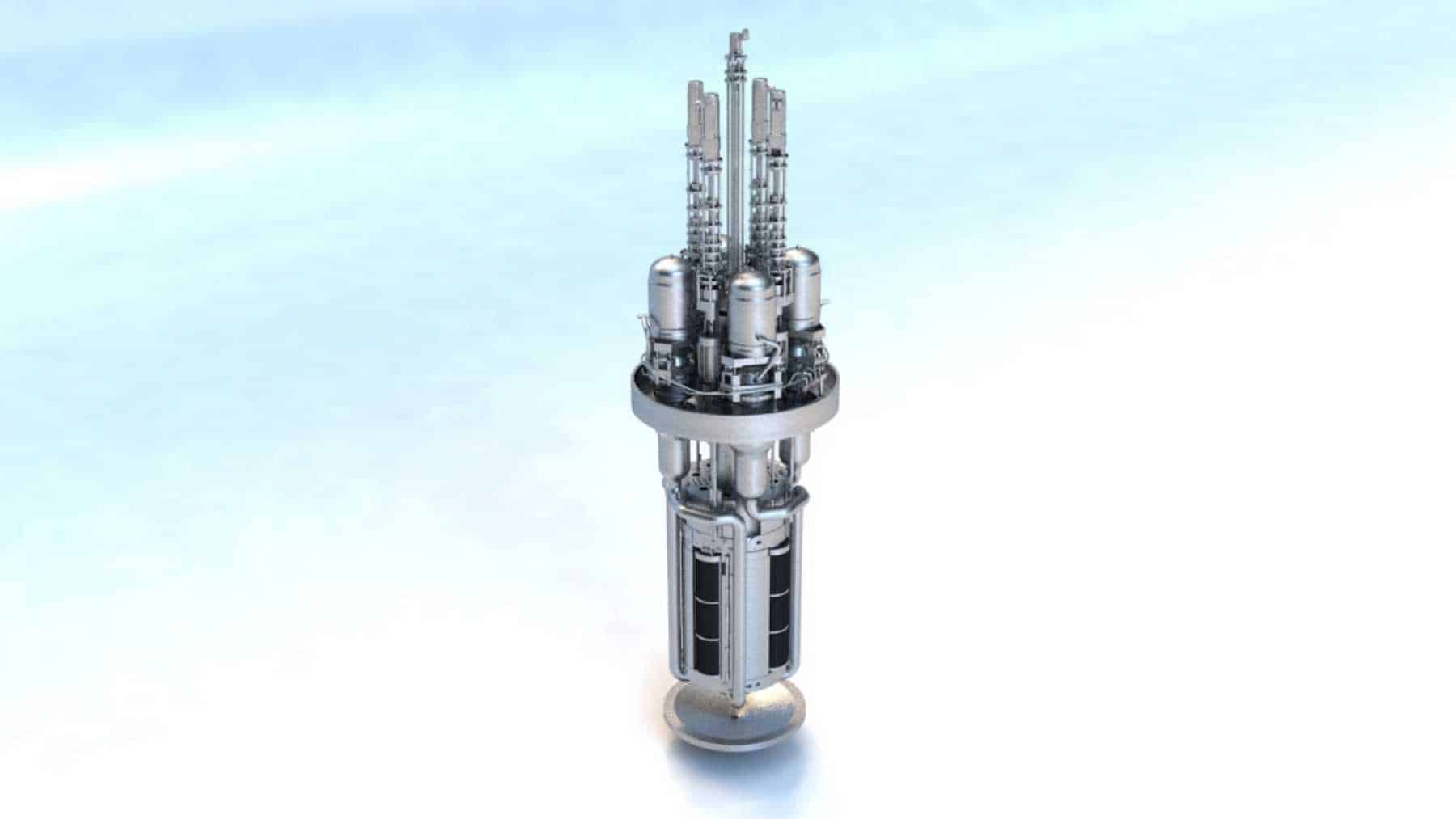
The reactor is called MARVEL, and it’s a 15-foot, 4-foot-wide test machine cooled by a liquid mix of sodium and potassium. Its primary coolant system, basically the vessel and plumbing that will carry heat away from the core, arrived at INL’s Transient Reactor Test Facility in mid-September. Just before it showed up, the Energy Department’s Idaho office signed off on the reactor’s final documented safety analysis, the paperwork that spells out what the machine is allowed to do and under what conditions. INL announced both on October 6, and it now expects MARVEL to go critical in December. The lab hasn’t given the exact day the approval came through, only that it landed ahead of the vessel.
So what does “critical” mean here, and why dry?
Critical, in reactor terms, means the chain reaction sustains itself: each fission sets off enough new fissions to keep going without anyone poking it. It doesn’t mean the thing is making power. MARVEL’s first criticality will be what the lab calls a dry one, at near-zero power and with no coolant loaded at all.
That sounds strange for a machine whose whole personality is its coolant, so let me explain. At almost no power, the core doesn’t make enough heat to need carrying away, so you can leave the liquid metal out and still measure the physics: how the neutrons behave, how the controls respond, where the real reaction sits compared with the computer models. INL says that data is meant to serve as a national benchmark for reactor physics. The sodium-potassium goes in afterward, and only then does the reactor start making heat for real.
The sequencing also tells you something about the liquid metal itself. The alloy stays liquid at room temperature, which is the reason INL picked it: the system runs unpressurized, and unlike pure sodium or lead, the coolant doesn’t need a heater to stay liquid. The catch is the same one you’d expect from anything with sodium in it. The handling guides nuclear agencies write for it describe a liquid that reacts hard with oxygen and explosively with water, so from the looks of things, the fewer weeks it spends sitting in the building before it has to, the better.
The vessel came from a shop in South Carolina
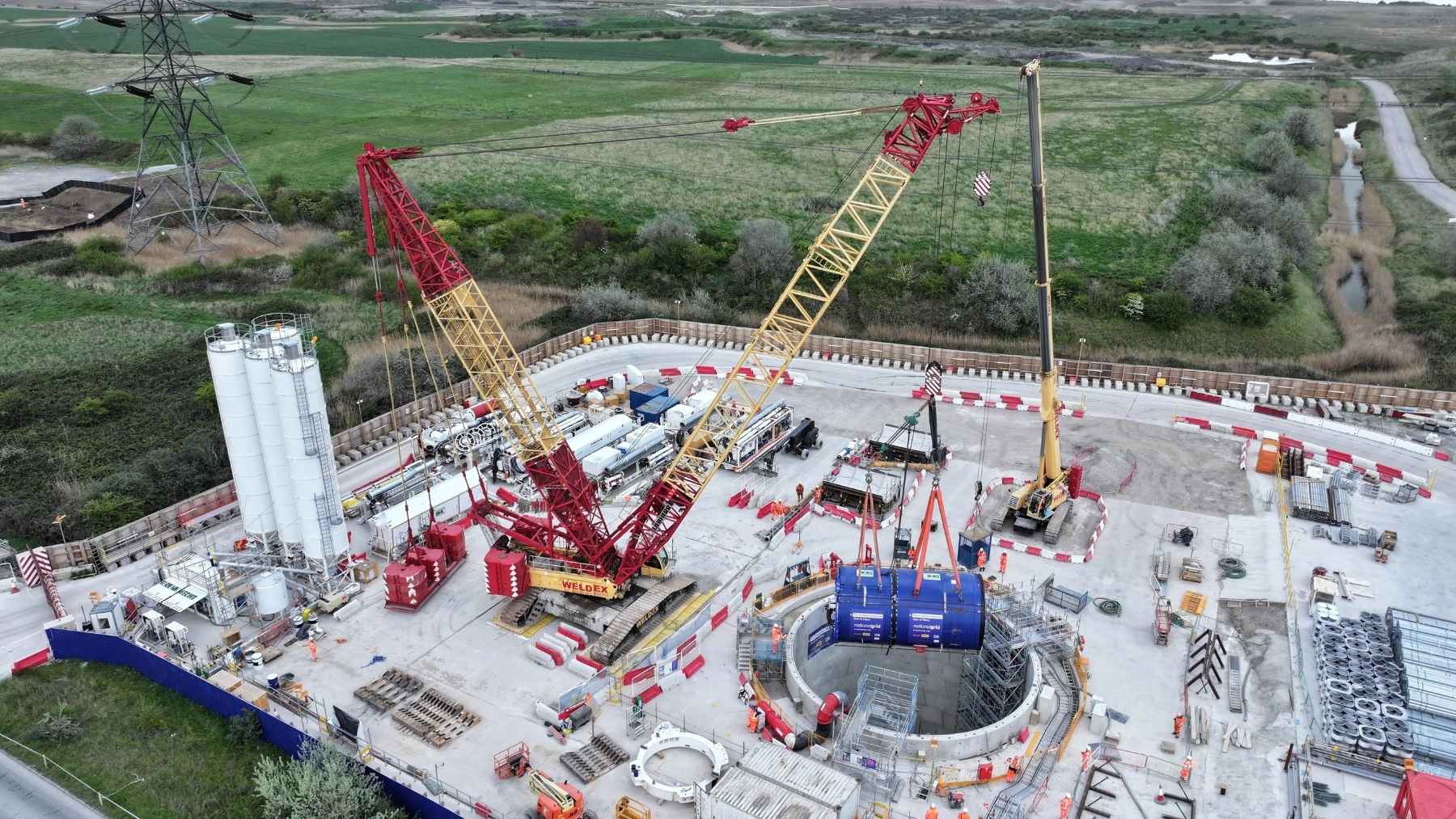
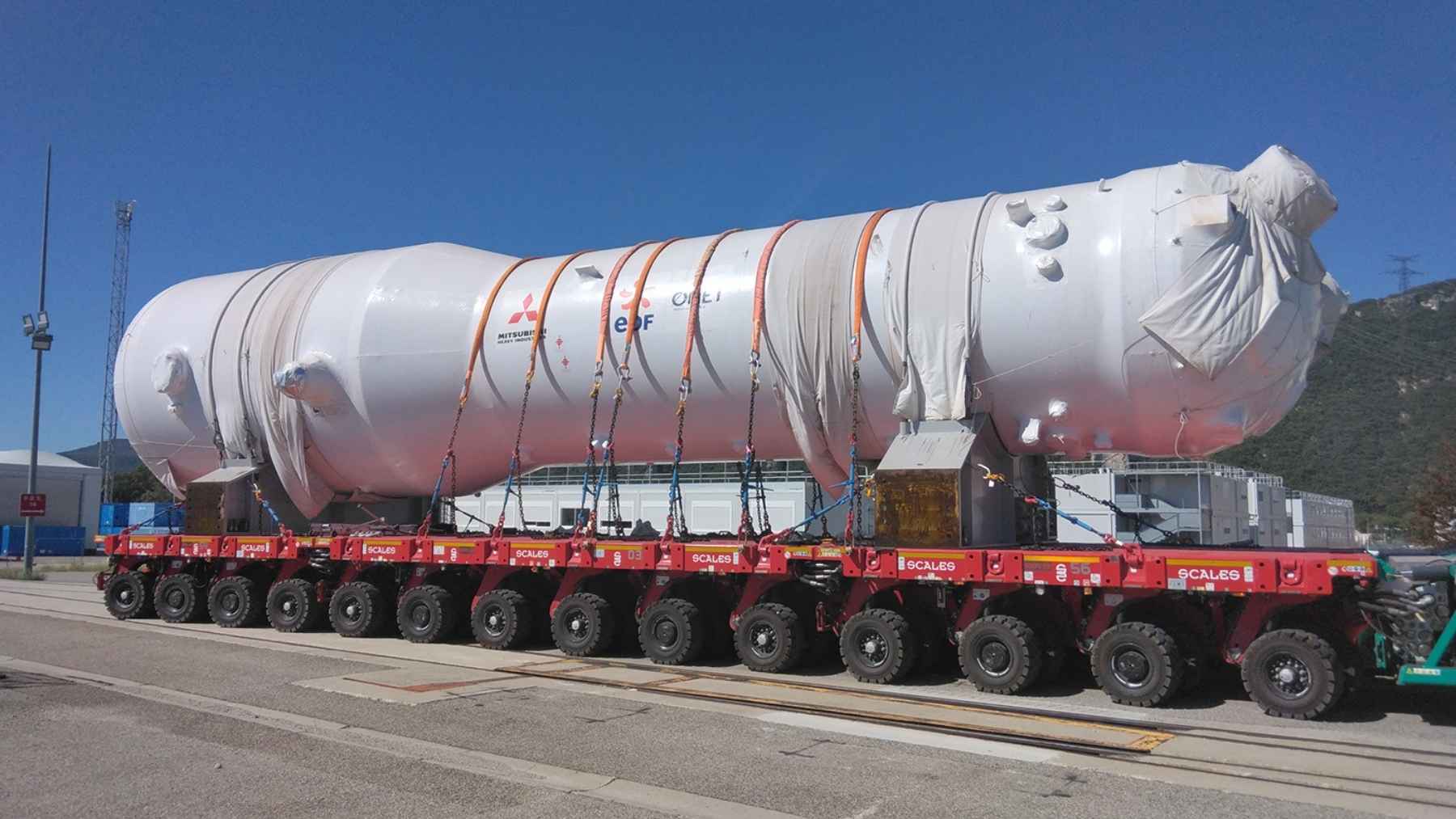
The primary coolant system was built by Carolina Fabricators Inc., a South Carolina outfit that had already made MARVEL’s guard vessel, the outer shell that wraps around the core in case the inner one ever leaks. INL awarded the contract about a year and a half before the delivery and called the coolant system the most complex fabrication job in the whole project, which I’m inclined to believe from the renderings. I can’t tell you what it weighs or how it traveled from South Carolina to the Idaho desert, because INL hasn’t published either, and that’s a slightly odd thing to leave out for a lab that’s otherwise pretty open about this machine. The photo it did put out shows the vessel arriving at TREAT.
Abdalla Abou-Jaoude, who leads the MARVEL project, said the team was thrilled to have the coolant system built and the approval in hand, and that the lab is open to sharing the approved safety document with outside companies as a template. Doug Gerstner, a nuclear safety engineer at INL, called the document the product of years of engineering work and said the approval “validates the risk-informed methodology we developed.”
It’s moving into a building that breaks fuel for a living
TREAT isn’t a power plant. It’s an air-cooled graphite reactor that fires short, enormous pulses into test fuel to see how it fails, the kind of experiment we covered last week when it was putting used fuel rods through 80-millisecond bursts. MARVEL gets installed inside that same facility and, per INL, will mostly run on the days the big reactor isn’t, typically Friday through Sunday.
So a building that exists to wreck fuel on purpose is about to host a reactor that’s supposed to run nice and steady, as a test bed for companies that want to plug things into a microreactor without building one themselves. INL has already picked experiments from Amazon Web Services, GE Vernova and a data-center team working with Arizona State University, among others. Whether a 20-kilowatt machine tells Amazon much about powering a data center is arguably the open question here, but the lab’s pitch has always been that the lessons are in the operating, not the output.
A sedan-sized reactor that makes a few houses’ worth of power
INL’s own MARVEL page describes the reactor as roughly the size of a sedan, which I take to mean a sedan standing on its trunk, since the thing is 15 feet tall and about 4 feet across. It’s designed to put out 85 to 100 kilowatts of heat, and the newer INL material says about 20 kilowatts of electricity, though the lab’s FAQ page still says 10. I’m going with 20, since that’s the number in this year’s releases, but either way we’re talking about enough to run a handful of houses with the air conditioning on, not a town. The core is designed to run at 932 to 1,022 degrees Fahrenheit.
There are two design choices I’d flag. The coolant moves by natural circulation, meaning hot liquid rises, cool liquid sinks and there’s no pump in the loop. And the reaction is controlled with drums instead of rods: picture a cylinder standing beside the core with a neutron-absorbing strip down one side, rotated so the strip faces the fuel to slow things down and faces away to speed them up. INL unveiled that system earlier this year and called it the first new microreactor control system built in decades. The fuel is uranium zirconium hydride, the same TRIGA-type fuel university research reactors have run on for ages, and it was made in France, which we got into back in June when this reactor was last in the news.
So when does it make power?
Not for a while.
The sequence goes: dry criticality in December, then load the sodium-potassium, then work the reactor up to power, with MARVEL fully operational and hooked to a microgrid at the site by late 2027, according to Nuclear Engineering International. INL itself hasn’t put a month on the full-power date in this round of announcements, only on the December one.
Admittedly, this is a project that has moved its dates before. The lab’s FAQ page, which plainly hasn’t been updated, still lists dry criticality for next year and full power the year after, so either the page is stale or the team is running ahead of its own schedule, and I’d bet on stale. December is a target the lab is confident enough to say out loud, and that’s a different thing from a date you can circle on a calendar.
The bit I’d argue matters more to the private companies than the reactor itself is the paperwork offer. The bottleneck in this industry is arguably safety documents nobody has written before, and a federal lab handing out a working example of one is frankly a bigger deal than 20 kilowatts.
INL says the coolant system is now being integrated with the rest of the reactor inside TREAT, and it expects MARVEL to go critical in December.