
Salt power has always had the best sales pitch in clean energy. Rivers pour into the sea on every coastline on Earth, the salinity gap between fresh water and salt water holds real energy, and unlike a solar panel it does not clock off at sunset. Free fuel, no emissions, runs all night. So it is a little awkward that you have almost certainly never seen one of these plants, and the reason is simple. The ones people actually built barely made any electricity.
A Danish company called SaltPower decided that the trickle of power was never the concept’s fault. It was the water. Feed an osmotic membrane the weak gradient between a river and the sea and you get a dribble. Feed it industrial brine many times saltier than the ocean and the same machine produces something worth metering.
That single swap is why SaltPower has been quietly running what its membrane supplier bills as the world’s first commercial osmotic power plant, at a Danish salt mine, since 2023, while almost everyone who tried the river version walked away.
Norway built the first one and then gave up
The cautionary tale here belongs to Statkraft, Norway’s big state-owned power company. In November 2009 it opened the world’s first osmotic power plant at Tofte, on the Oslo Fjord, with a Crown Princess on hand to cut the ribbon. The hardware worked exactly as the textbooks promised. Salt water on one side of a membrane, fresh water on the other, the fresh water pushes across to even out the salt, and the pressure that builds up spins a turbine. The process is called pressure-retarded osmosis, or PRO, and it is basically a desalination plant run backward to make power instead of burning it.
The plant proved the physics. It also proved the bill. Tofte was rated for about 10 kilowatts and in practice produced something closer to 2 to 4, which is roughly enough to run a few household appliances and nothing you would build a power company around. The membranes were too expensive and not efficient enough, and in January 2014 Statkraft shut the project down.
Department manager Stein Erik Skilhagen said the core challenge had been making the technology “efficient enough to achieve energy production costs on par with competing technologies.” Out of utility-speak: it cost too much for what it made. Statkraft handed the whole idea to whoever wanted it next.
The problem was never the physics. It was the water.
The river plants all kept hitting the same wall. The amount of energy you can pull from osmosis depends entirely on how big the salinity gap is, and a river meeting the sea is a small gap. The ocean is only about 3.5 percent salt. There is just not much pressure hiding in that difference.
Now turn up the salt. SaltPower’s own engineers like to explain it through a hydropower dam, since everyone understands a dam. Run an osmotic plant on brine that is nearly saturated with salt and the osmotic pressure works out to around 400 bar. To get that same pressure from falling water, you would need a dam roughly 4 kilometers tall. Nobody is building a dam 4 kilometers tall. But brine that concentrated is already sitting around in heavy industry, pumped through pipes for reasons that have nothing to do with electricity.
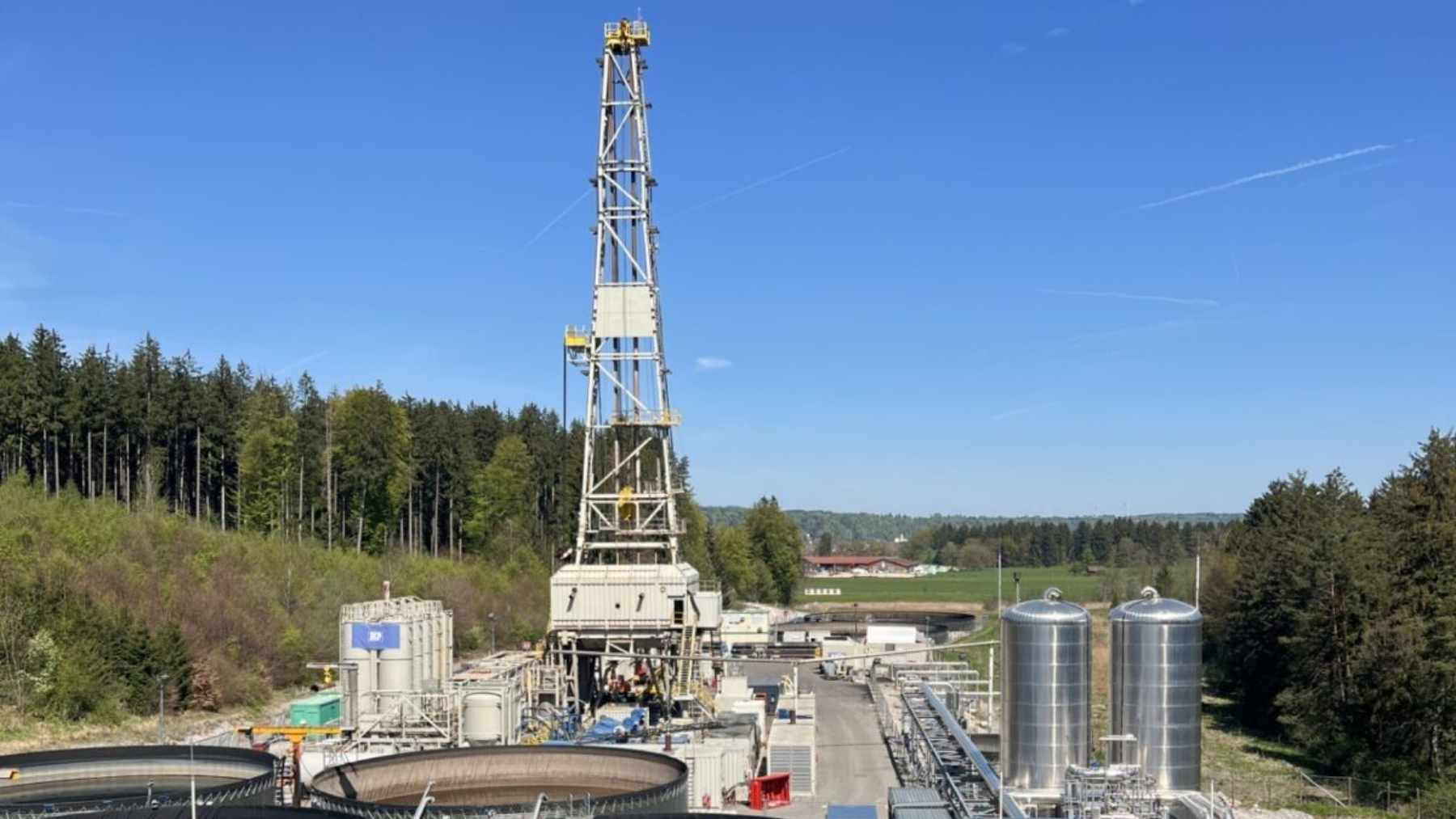
The idea traces back to the company’s founder, Danfoss veteran Jørgen Mads Clausen, who started SaltPower in 2015 after tasting the water coming out of a geothermal plant in Sønderborg and noticing how salty it was, around 16 percent. Geothermal brine was the original spark. The commercial plant ended up running on something saltier still.
Inside the plant at the salt mine
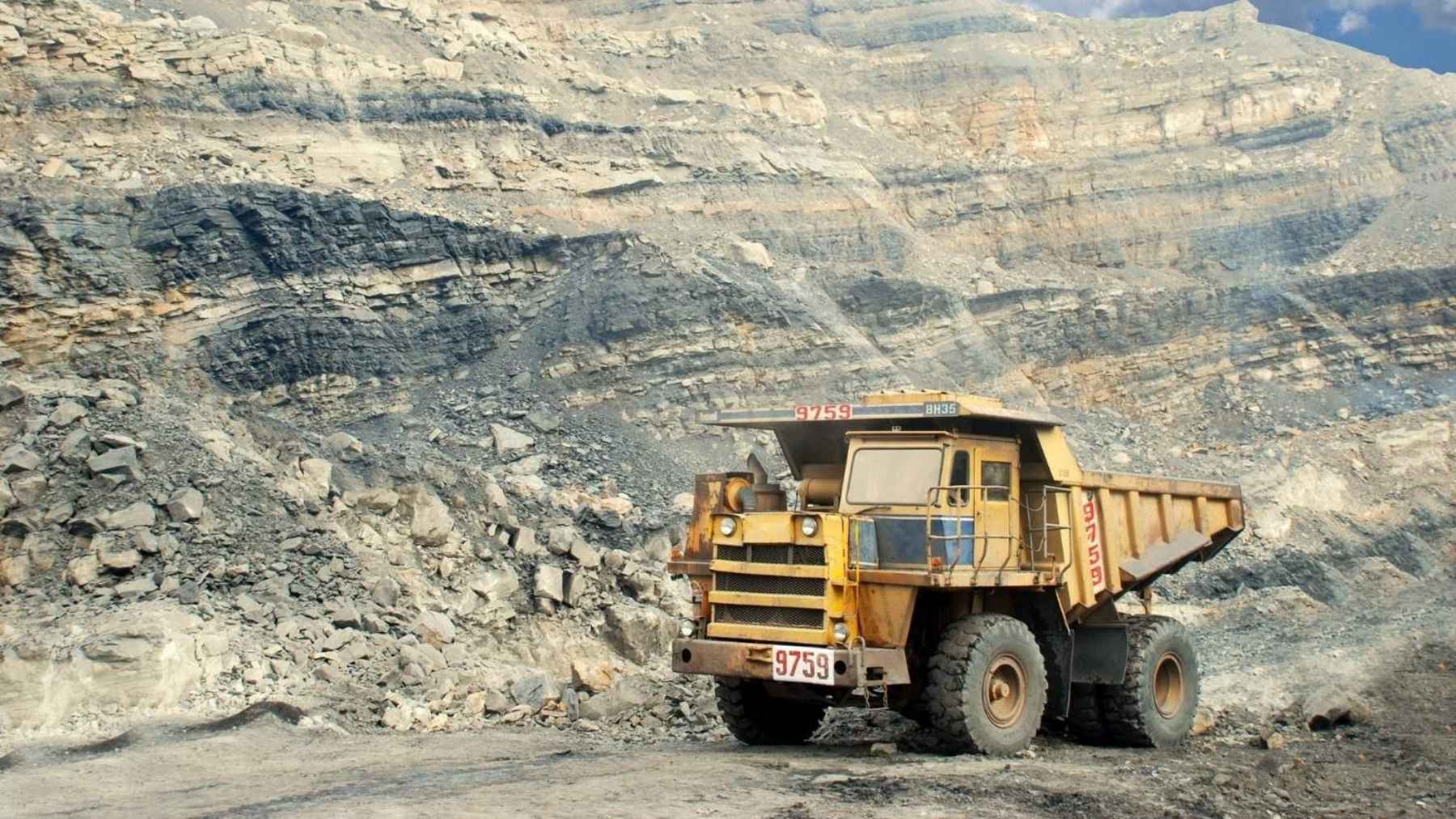
The unit that actually runs sits at a salt works operated by Nobian, formerly Dansk Salt, in Mariager in northern Denmark. It does not draw from the sea or a geothermal well. It runs on brine from solution mining, which is the standard way you pull salt out of an underground deposit. You pump fresh water down into a salt formation, the water dissolves the salt into a near-saturated brine, and you pump that brine back to the surface to boil off and sell. That brine is already moving through the plant whether anyone harvests energy from it or not.
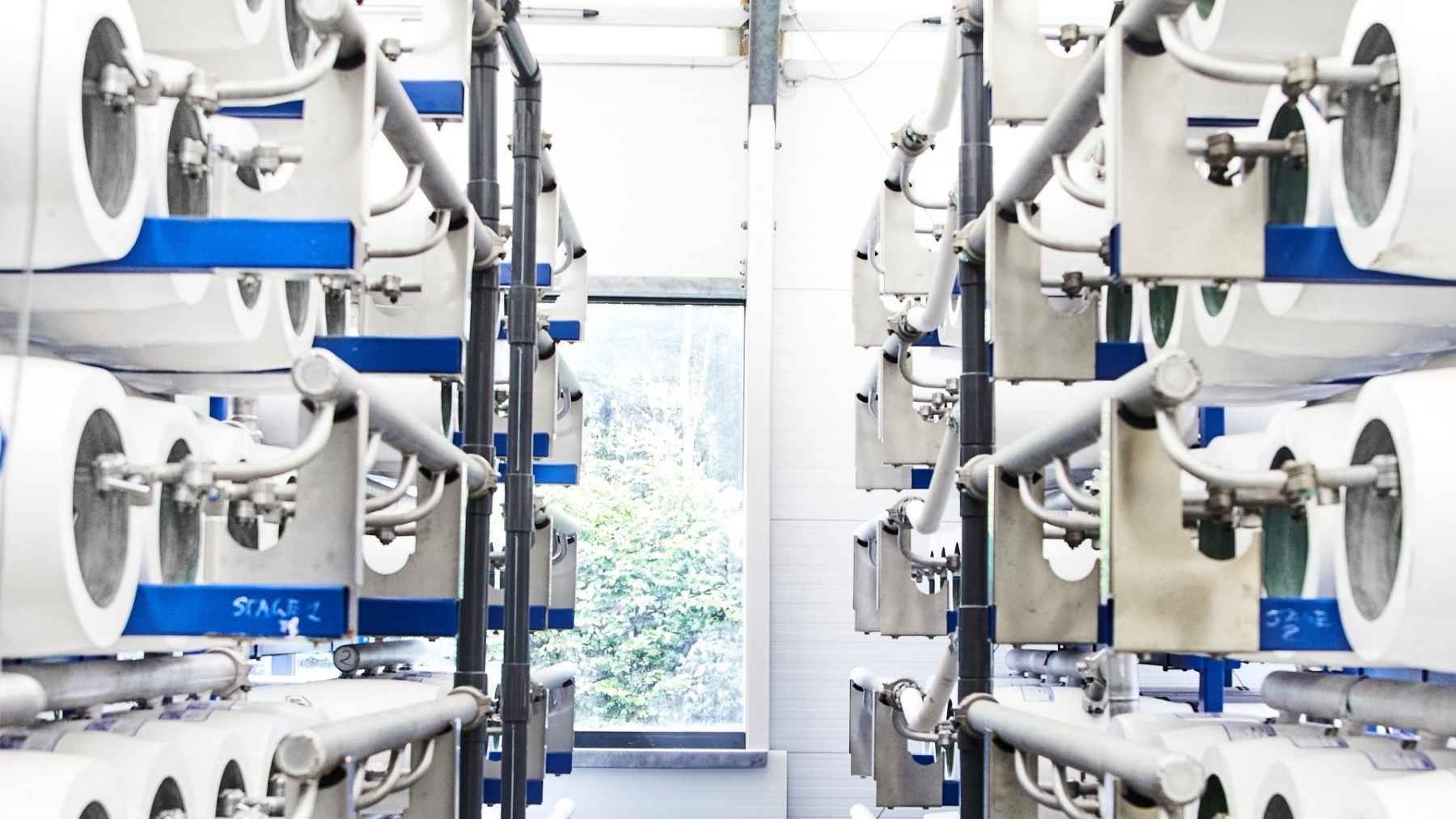
SaltPower drops its osmotic stack into that loop. Fresh water and the saturated brine meet across hollow-fiber membranes from Japanese firm Toyobo, a company that has been spinning fibers since the 1880s and adapted the technology from its textile business. The brine gets pressurized to about 70 bar, and that pressurized flow runs a turbine before the now-diluted brine is reinjected into the cavern to soak up more salt.
To keep the energy math positive, SaltPower uses a pressure-exchange recovery device and high-pressure pumps from Danfoss, the same company the founder came from. The commercial plant makes about 100 kilowatts. That is small, no argument, but it is enough to run the saltworks’ own brine operation on power the plant generates itself, and it runs continuously, which a solar panel cannot claim at 2 a.m.
None of this appeared overnight. SaltPower ran a 20-kilowatt demonstration plant at a Nouryon salt site through 2018 and 2019, put a prototype into the Mariager factory in 2021, and built the full unit across 2022 before switching it on in 2023.
The cheap-electricity claim comes with a catch
SaltPower’s pitch is not subtle. In filings for its EU-funded scale-up project, the company says its containerized osmotic units can produce electricity at about 0.021 euros per kilowatt-hour, roughly a fifth of the average EU power price at the time, and it has floated getting that down toward a single cent per kilowatt-hour as membranes improve and volumes grow. It also says it is now scaling the design toward 1-megawatt modules.
Those are the company’s own numbers, pulled from a grant application, so take them with the grain of salt that comes with any startup describing its own future. The plant on the ground today is a 100-kilowatt box, which next to a gas turbine is a rounding error.
The bigger catch is structural. The whole model only works if you already have a saturated brine stream and a supply of fresh water in the same place. That describes a salt producer or a chlor-alkali chemical plant. It does not describe a coastline. SaltPower is not really selling power to the grid so much as selling salt and chemical companies a way to get paid in electricity for brine they were already pumping in circles.
The honest version of the pitch is that it makes sense exactly where the brine already exists, and basically nowhere else. The same trick has an obvious second act, though: the salt caverns being hollowed out across Europe to store hydrogen are made by pumping out brine, and SaltPower wants to harvest power from that excavation too.
Why you won’t see one off your local coast
That structural limit is also why osmotic power keeps surfacing in very specific places rather than everywhere at once. The only other commercial osmotic plant on the planet switched on in August 2025 in Fukuoka, Japan, and it pulls the same idea from a different angle, mixing concentrated leftover brine from a seawater desalination plant with treated wastewater to make around 110 kilowatts.
France is chasing the opposite end of the problem, where Sweetch Energy is testing membranes on the Rhône estuary, aiming eventually for hundreds of megawatts from plain river-and-sea water, the weak gradient everyone else gave up on. The World Economic Forum named osmotic power one of its ten emerging technologies to watch for 2025, which tells you the interest is real even if the megawatts are not there yet.
SaltPower’s bet is the narrowest of the three and arguably the most honest. It is not promising to power a city or to harvest the open ocean. It found the one setting where the salinity math already works, an industry that makes super-salty brine on purpose, and parked a generator in the pipe.
Osmotic power has spent half a century as the renewable that is always almost working, the one that shows up in concept art and conference panels and then never quite gets wet, in the same family as the wave-energy buoys bobbing off the Spanish coast that keep proving they can survive a storm but not yet pay for themselves. SaltPower’s answer was not a breakthrough membrane or a government moonshot. It was a better choice of water. The catch is that you need a salt mine to run it, so this is not the technology that finally electrifies the coastline. It is something smaller and more useful: a generator that, for once, actually makes sense sitting exactly where it is.