
Big defense programs have a habit of costing more than promised and delivering less than advertised. Australia’s plan to buy nuclear-powered submarines from the United States under AUKUS is now doing both at once, and the deal the three partner governments rewrote in Singapore this month makes the gap impossible to miss. The boats just got downgraded from partly new to entirely secondhand. The price keeps climbing. And there is a real question, backed by the US Navy’s own numbers, about whether America can build fast enough to hand any of them over on schedule.
What gets delivered first, on time and cheap, is the part almost nobody put on the poster: a shared program to build the payloads for a fleet of robot submarines, aimed squarely at the cables and pipelines on the ocean floor. Australian Deputy Prime Minister and Defense Minister Richard Marles, UK Defense Secretary John Healey, and US War Secretary Pete Hegseth signed off on all of it at the American embassy on May 30. The submarine downgrade is the headline. The drones are the story.
The boats got cheaper to promise and harder to actually build
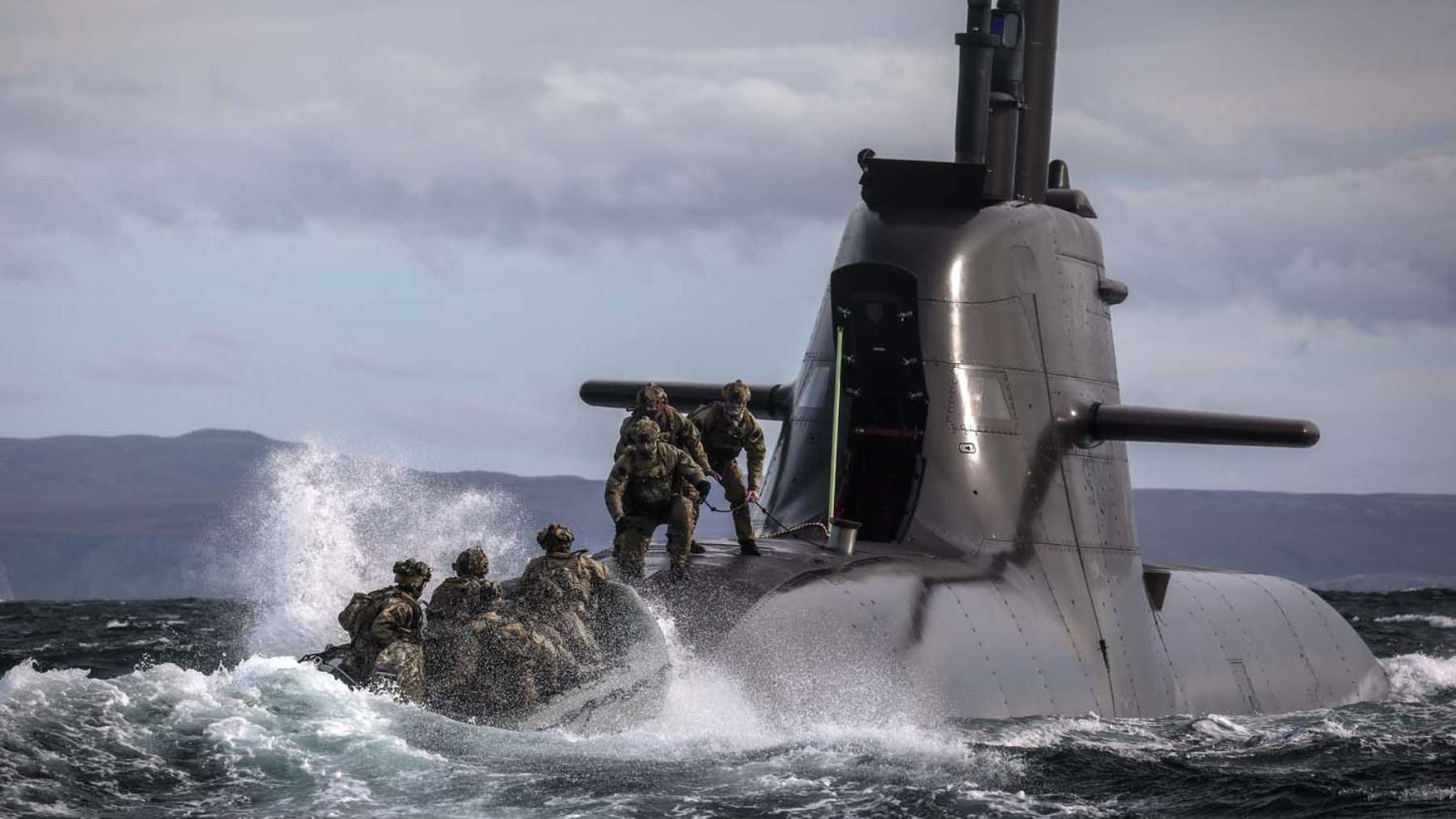
Under the original 2023 arrangement, Australia was going to ease into the nuclear business with a mix of hardware: two in-service Virginia-class boats handed over from the US Navy, then a third hull built fresh, reported to be a standard-length Block VII. The rewritten deal cuts the new boat. Australia now takes three used Virginias instead, and the official explanation, per the partners’ joint statement, is that buying three of the same thing simplifies supply chains, maintenance and training while holding down cost. Naval News read it the same way: the new build is gone, replaced by another secondhand boat.
Here is the part the announcement skips. The US is not building submarines fast enough to comfortably spare the ones it already promised. According to the Congressional Research Service, the Virginia-class production rate has never actually reached the two boats a year the Navy procures, and since 2022 it has run at roughly 1.1 to 1.2 boats a year. To sustain its own fleet and build replacements for the boats going to Australia, the Navy says it needs to climb to 2.0 a year, then 2.33. It is nowhere near either.
The timeline has been sliding in the wrong direction. In May, Chief of Naval Operations Admiral Daryl Caudle told appropriators the yards will not hit two deliveries a year until around 2032, per USNI News, a slip from the 2028 target a previous Navy secretary had set. Current deliveries run about 1.3 boats a year. Australia is meant to receive its first transferred Virginia in the early 2030s, the exact window the US Navy is now saying it will only just be clawing its way back to building two boats a year for itself. The math doesn’t close cleanly, and Australia is paying into it anyway.
The bill keeps growing while the hardware shrinks
None of this is getting cheaper for Canberra. The country’s planned investment in the submarines alone has climbed from a A$53 to 63 billion range in its 2024 plan to A$71 to 96 billion in the latest one, according to Naval News. The wider defense budget is set to grow from about A$63.4 billion to A$112.1 billion within a decade, a jump the government frames as reaching roughly 3 percent of GDP, though analysts have questioned how that higher number is calculated. Each new Virginia, for reference, now carries a procurement cost of around $5 billion, per the Congressional Research Service. The brand-new boats meant to follow, the SSN-AUKUS class Britain and Australia are designing together, are not due at the Australian navy until the early 2040s, which loads even more weight onto the used American boats showing up in the 2030s.
Some of that money flows straight into American shipyards. Australia has been making payments to help expand the US submarine industrial base, the same base that is running behind. The program has not exactly inspired universal confidence along the way. A UK parliamentary report flagged it for “shortcomings and failings,” as Breaking Defense noted, and former Australian prime minister Malcolm Turnbull has publicly doubted whether his country will ever take delivery of a nuclear boat, on the grounds that the US cannot build enough to spare any. Marles, for his part, says he is confident the three boats will arrive.
The robots are the part that actually shows up
Set against all that, the drone program looks almost suspiciously tidy. It is the first effort the partners have formally designated a “signature project” under the pact’s second pillar, the one meant for advanced tech rather than submarines, and one that has spent years as the slower, vaguer half of the arrangement. First payloads are due in 2027, years before any submarine changes hands.
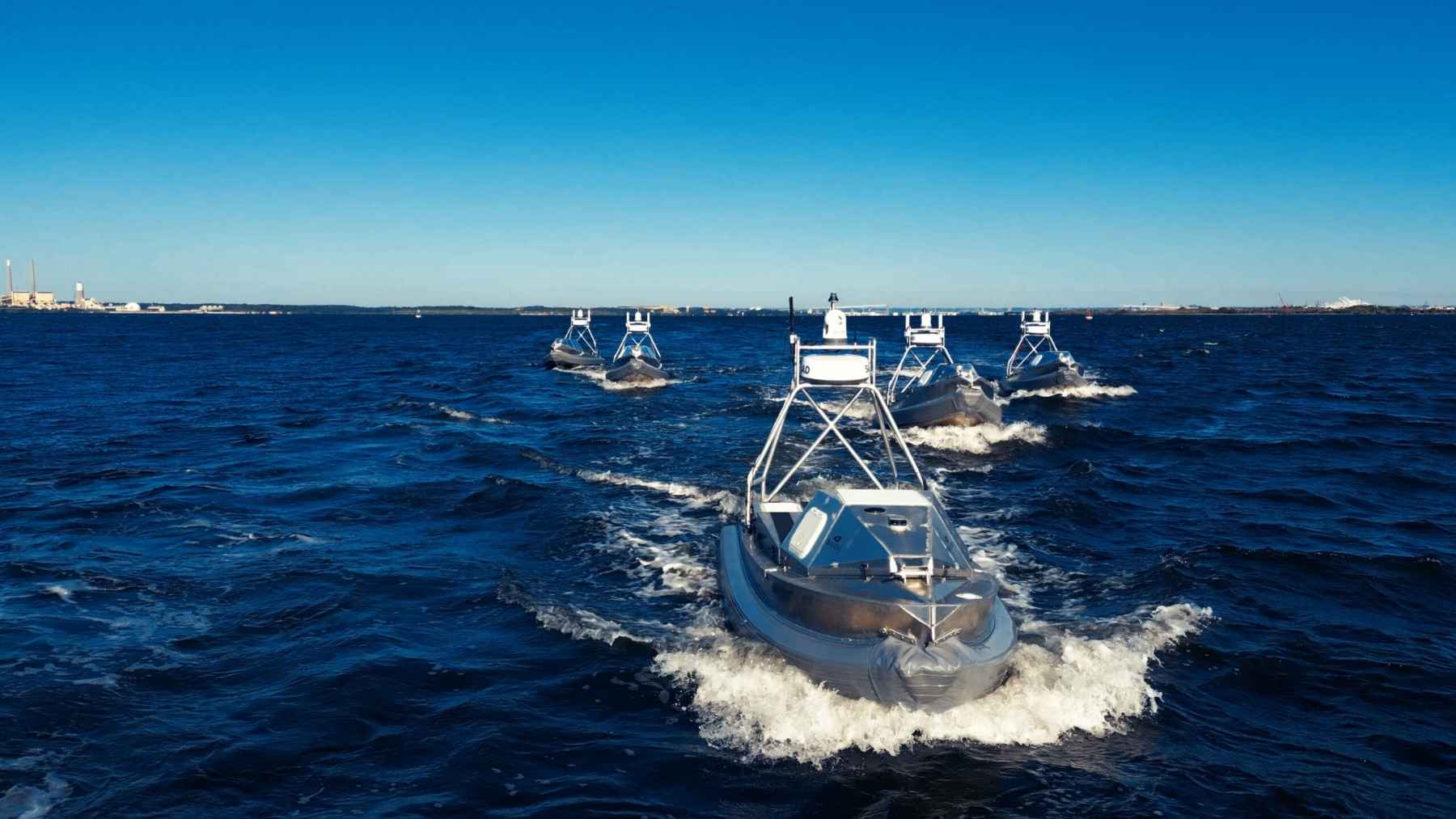
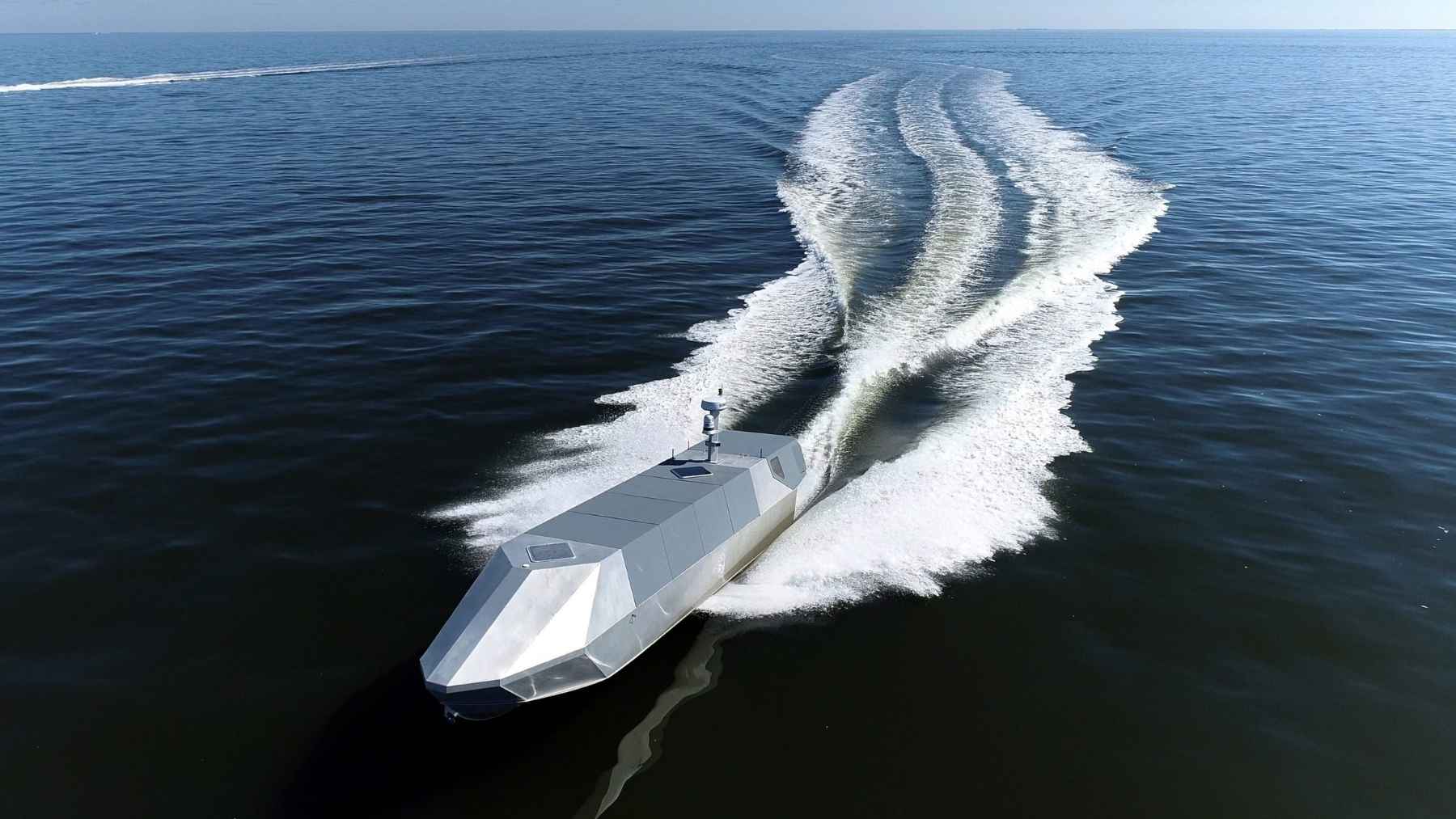
The project is not a single new drone. It is the equipment that goes inside the drones all three navies are already buying. Per a UK Ministry of Defence fact sheet, the partners will build interchangeable payloads and enabling systems: sensors, navigation tools, strike capability, and the common control software that lets one country’s gear run inside another’s vehicle. Each nation takes a different piece first, then they pool the results. DefenseScoop reported the payloads are designed to be swapped between platforms and to let uncrewed and crewed systems work together.
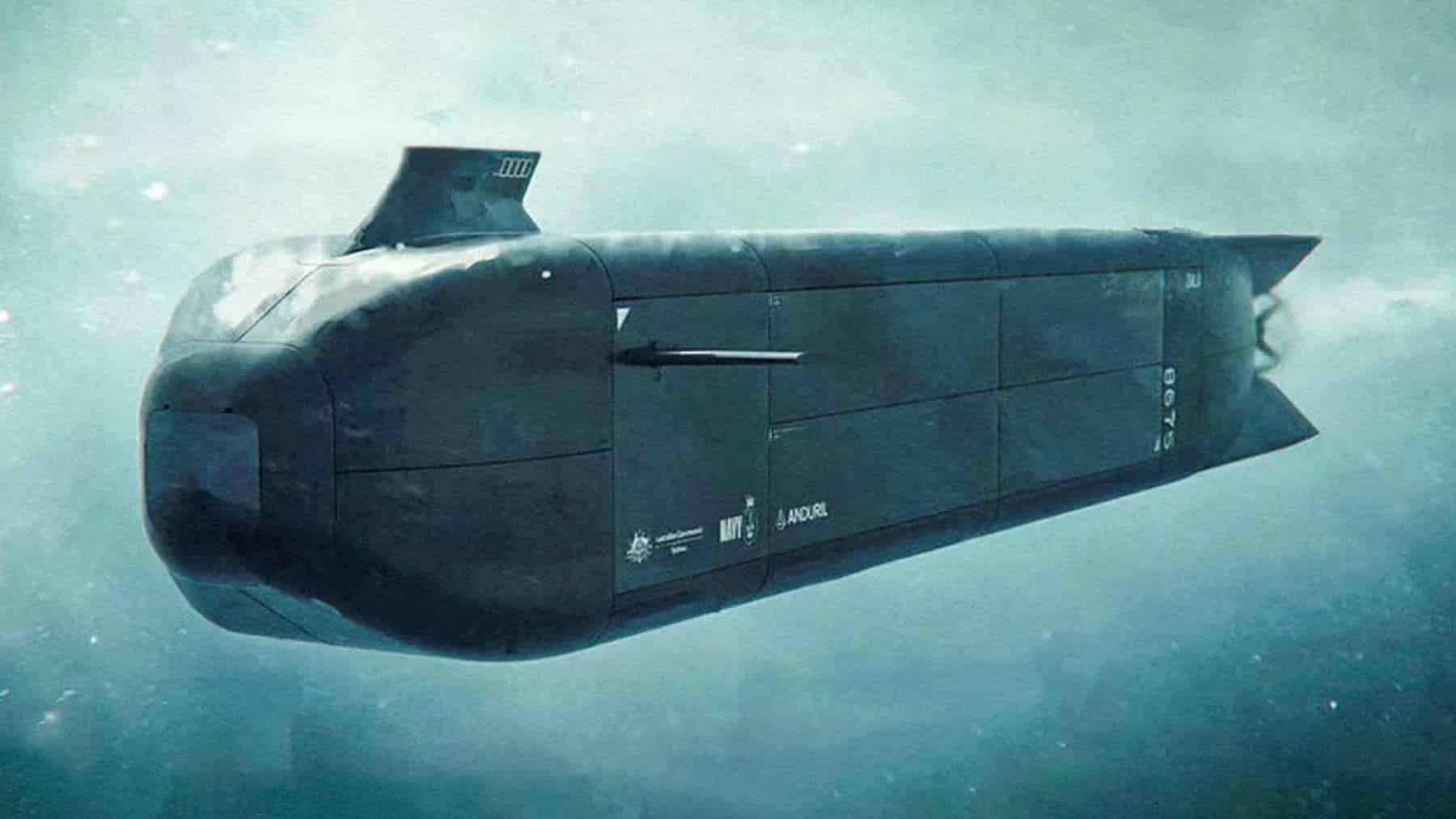
There is no shortage of hulls waiting on them. Australia is well into building Anduril’s Ghost Shark, an extra-large autonomous underwater vehicle assembled at the company’s Sydney facility. The US Navy leans on the same lineage through Anduril’s Dive XL, which grew out of the Ghost Shark program to begin with. Britain runs its own version, the Excalibur, under a program called Cetus. The new effort is the wiring between them, so a sensor built for one boat slots into another. It also fits a broader Pentagon push: Caudle’s “hedge strategy,” laid out in January, leans hard on networks of cheap robotic systems to stretch a fleet the yards cannot grow fast enough on their own.
That last point is the quiet irony of the whole package. The same alliance betting more than a hundred billion on crewed nuclear boats is also funding, for a rounding error by comparison, the autonomous machines a growing number of analysts argue will eventually take over a chunk of the same work. The drones are not replacing the submarines. They are just the part that arrives on time.
It comes down to the cables on the ocean floor
For all the talk of warships, the stated job for these machines is narrow and enormous at once: protect the infrastructure lying on the ocean floor. The joint statement lists the mission as guarding “critical national seabed infrastructure,” alongside surveillance, reconnaissance, strike, logistics, anti-submarine and anti-surface warfare, mine countermeasures and electronic warfare. Cut the jargon and most of it points one place. The cables.
Industry estimates put the count of submarine cables at well over 500, carrying the overwhelming majority of the world’s intercontinental internet and data. They are also more exposed than they used to be. Healey, who has been openly impatient with how slowly the partnership has moved, used his Singapore remarks to name threats to undersea cables and pipelines directly, while conceding the alliance had so far “delivered too little.” His government has tracked Russian submarines surveying cables in the North Atlantic and has said, on the record, that it is watching.
The Pacific worry wears a different name that nobody at the podium said aloud. Marles raised the vulnerability of undersea infrastructure without once mentioning Australia’s largest trading partner. Western governments have grown uneasy about Chinese activity near cables, and Chinese-linked vessels have been suspected in cable-damage incidents around Taiwan and in European waters, though no party has been found responsible in any court. We have dug into the sharp end of this elsewhere: the Chinese sensor an Indonesian fisherman dragged out of the Lombok Strait in April, and the subsea drones Western navies are buying specifically to guard cables and pipelines.
Strip the announcement down and the contradiction is hard to unsee. A country that wanted new nuclear submarines is taking used ones, paying more than it ever has, helping fund the very yards that cannot keep pace, and waiting until the 2030s and 2040s for boats the builder’s own figures say may not arrive on time. The cheapest line in the whole deal is the robot subs, and they show up first. Britain is already sending an uncrewed boat into the mined Strait of Hormuz rather than risk a crew on the job. The seabed version of that bet is what the three governments just signed, and it tells you where they think the next fight runs. Not across the open ocean. A few thousand feet down, along the cables that carry almost everything.