
Hydrogen cars were supposed to fix the things people still grumble about with EVs. Five-minute fill-ups, a few hundred miles of range, nothing out the tailpipe but water vapor. The part that never worked was the fuel itself. Clean hydrogen comes from either splitting water with a wall of electricity or stripping it out of natural gas and venting the carbon you were trying to avoid, and both are expensive enough that the Toyota Mirai spent a decade as a curiosity instead of a Camry. So the interesting thing about a new Canadian study isn’t really the chemistry. It’s that the planet appears to be making the fuel on its own, underground, and for the first time someone put a meter on it.
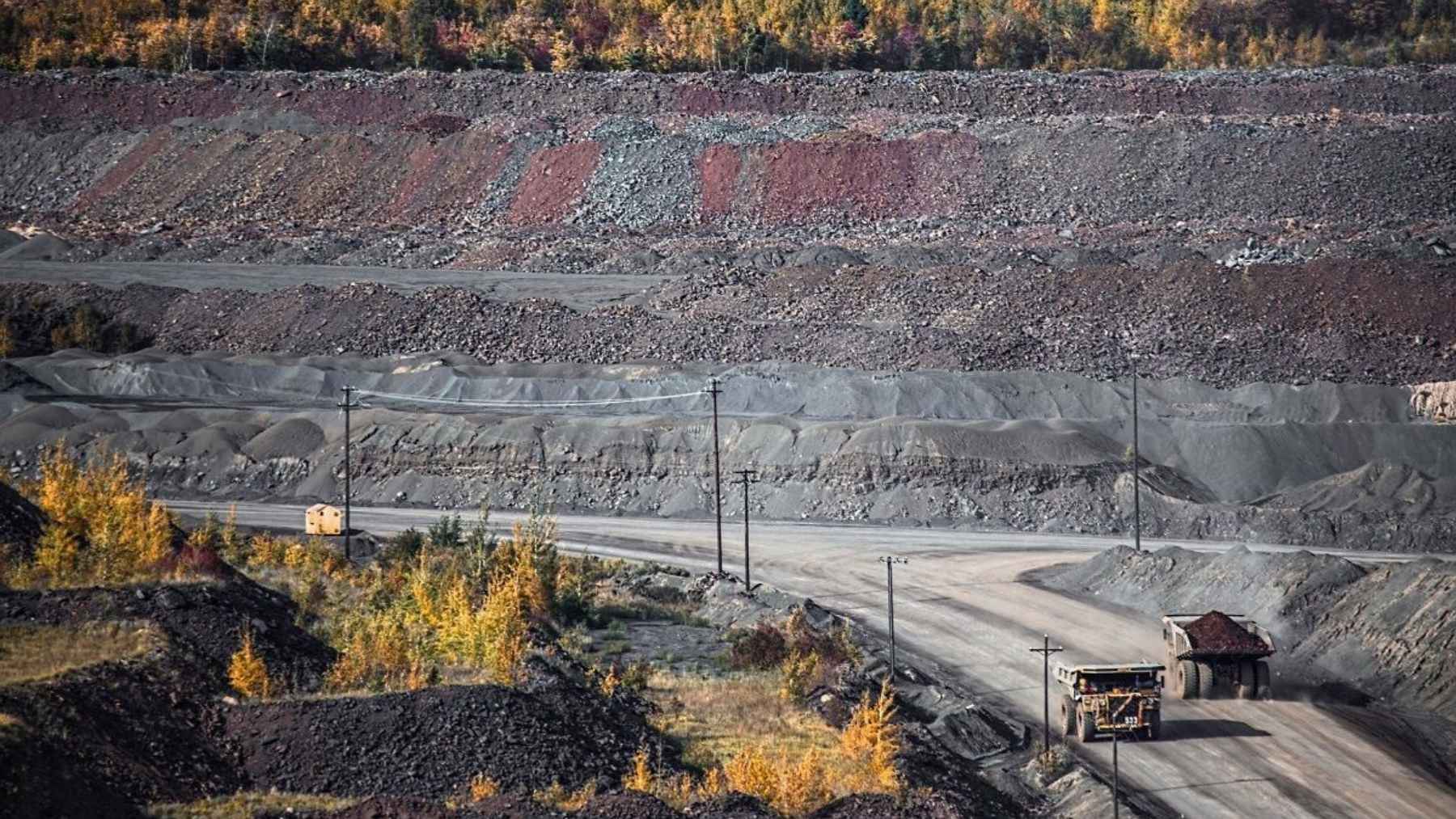
The paper landed in the Proceedings of the National Academy of Sciences on May 18, with the University of Toronto announcing the findings. Geochemists from U of T and the University of Ottawa measured natural hydrogen, what the industry has started calling “white” hydrogen, building up and discharging inside the Canadian Shield, the band of billion-year-old crust wrapped around Hudson Bay. They didn’t estimate it from a model. They went down into an operating mine near Timmins, Ontario, sampled the gas coming out of boreholes drilled into some of the oldest rock on Earth, and tracked it for as long as 11 years in places.
Eight kilograms a borehole, and a lot of boreholes
Each borehole gives off about 8 kilograms of hydrogen a year, which the researchers point out is roughly the weight of a car battery, and it keeps doing that for a decade or more. On its own that’s a rounding error. The site near Timmins has close to 15,000 of them. Run the math across all of them and you get more than 140 metric tons of hydrogen a year out of a single location — enough, the team estimates, to generate around 4.7 million kilowatt-hours and cover the yearly energy needs of more than 400 households.
The boreholes the team sampled sit deep, between roughly 6,800 and 7,850 feet down, and the hydrogen turning up in the gas ran from under 1% to nearly 13%. None of that is theoretical. The whole point of the study, which lead author Barbara Sherwood Lollar (a University Professor in U of T’s Department of Earth Sciences) and Ottawa’s Oliver Warr keep circling back to, is that this is measured output sustained over years, not a figure pulled off a whiteboard.
“There is a global race to increase hydrogen availability in order to decarbonize,” Sherwood Lollar said in the university’s release.
Why the fuel was always the problem
This is where it gets relevant to anything with wheels. Hydrogen as a vehicle fuel has never really had a technology problem so much as a supply problem. The Mirai works. Hyundai’s Nexo works. Fuel-cell trucks work, and hydrogen-powered trains are already running in parts of Europe. What none of them could get around is that the hydrogen feeding them is mostly made by steam-reforming natural gas, which leaves you with a “zero-emission” vehicle running on a tank of carbon-intensive gas. Green hydrogen made from renewables fixes the emissions and hands you a price tag instead.
White hydrogen scrambles that because there’s no plant in the middle. If iron-rich rock and groundwater are quietly cranking out hydrogen on their own, the fuel for a fuel-cell truck could in principle come up out of a well, the way crude does, instead of off an industrial line. People in the field have started calling it the “white oil” version of the energy hunt, and you can see why the comparison sticks. We dug into where that same Shield rock crosses the border into Minnesota, Michigan and New York in an earlier piece; the question here is what you’d actually do with the gas once it’s up.
Canada is showing up to a crowded race
Canada is not first to this. France has spent two years chasing what may be the headline deposit so far. Researchers at the GeoRessources lab in Nancy estimated the Lorraine mining basin could hold somewhere between 46 and 92 million tonnes of natural hydrogen, a number the CNRS framed as more than half the world’s current annual hydrogen production. In the US, a Denver startup called Koloma has raised on the order of $400 million from backers including Bill Gates’ Breakthrough Energy and Amazon, according to Canary Media, and started drilling its first test well in Idaho late last year.
The Canadian contribution is different in kind. France and Koloma are still mostly working from prospecting data and pilot wells. The Timmins paper is a long-run measurement from a site that’s been operating for decades, which is the part the energy world has been missing: proof that the discharge holds up over years instead of tapering off the moment you tap it. The existing global hydrogen market is already a $135-billion industry, most of it feeding fertilizer, steel and methanol rather than anything automotive, so even a modest natural supply has somewhere to go on day one.
What it would take to put white hydrogen in a tank
Here’s the honest part. Nothing about this puts white hydrogen in a Mirai this decade. The Timmins gas is coming up at single-digit to low-double-digit concentrations mixed in with other gases, which means separating and purifying it before it’s any use, and the economics of doing that at a remote northern mine aren’t settled. The U of T team is careful to frame the near-term uses as industrial and local: powering the mine itself, cutting the carbon footprint of operations sitting on top of the resource, and lowering the cost of trucking fuel up to northern communities. That’s a long way from a retail pump.
Storage is its own puzzle, and plenty of labs are working on it from the other direction. We covered a Chinese team that built a prototype battery storing electricity and hydrogen in the same solid-state device. It’s early-stage, with a short cycle life, but it’s aimed at the same problem of what you do with hydrogen once you have it. A buried source only matters if you can move it and hold it.
Still, the thing that changes here is the baseline. For years the case for natural hydrogen as a real fuel rested on models and a famous accident in a Mali village, where a water-well crew set off a hydrogen blast on a smoke break in the 1980s. A mine in Ontario has now produced the first multi-year record of the stuff coming out of the ground on its own, in measurable amounts, for more than a decade straight. Whether it ever reaches the fuel-cell truck in front of you is a question of cost and chemistry, not of whether the rock is making it. The rock, it turns out, has been making it the whole time.
 @meandmyself ROOKIE5 months ago