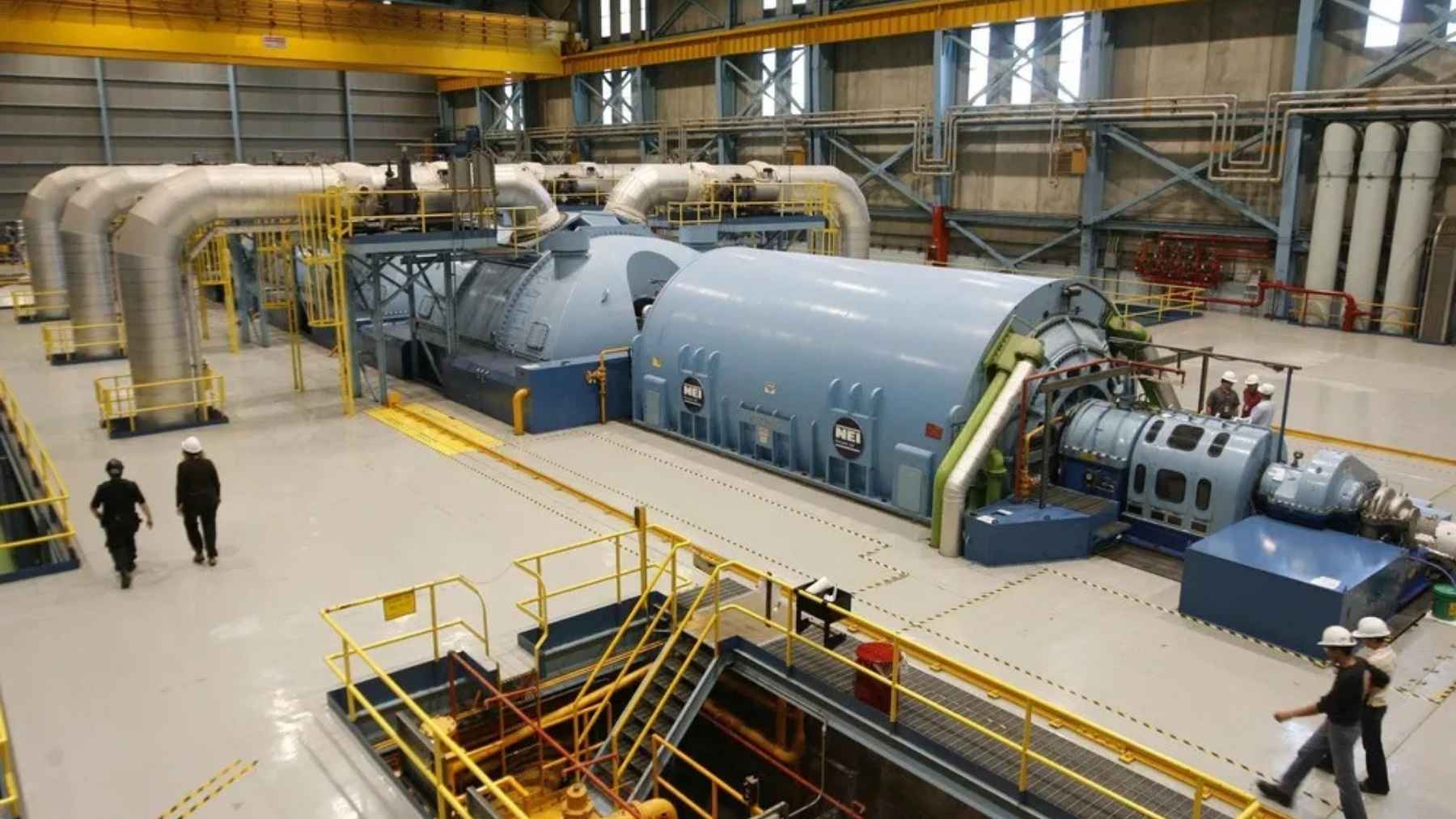

The standard plan for spent nuclear fuel is to wait it out. You pull the used bundles from a reactor, sit them in a pool of water for seven to ten years while the heat and radiation come down, seal them in concrete casks, and look for somewhere deep and geologically dull to leave them for the next hundred thousand years. Canada has been hunting for that burial site since the 1980s and still doesn’t have one in the ground.
A company in Saint John, New Brunswick thinks most of what makes that waste dangerous never needed to go in the ground at all.
Moltex Energy Canada says a chemical process it calls WATSS can strip 90 percent of the long-lived material out of used CANDU fuel in 24 hours, and that the concentrated leftovers become fuel for a reactor it wants to build on the same site. The recovery step isn’t a slide in a pitch deck anymore. In 2025, World Nuclear News reported that Canadian Nuclear Laboratories ran the process on real used fuel from a commercial Canadian reactor and confirmed the 90 percent figure.
None of it is generating power yet. What exists is a validated chemical step and a reactor design waiting in line at a regulator. The rest is a 2030s problem.
The chemistry does the hard part first
Spent fuel stays dangerous for a long time because of transuranics: elements heavier than uranium, like plutonium and americium, that form when a uranium atom captures a neutron instead of splitting. They stay radioactive for thousands of years, and they’re the main reason a burial site has to be designed to hold for geological timescales.
WATSS, short for Waste To Stable Salt, goes after those specifically. It’s a chemical process that pulls the transuranics out of used oxide fuel and concentrates them into a molten salt, leaving the bulk of the material behind. Moltex says it recovered 90 percent of that transuranic content in 24 hours in the lab tests, with more coming out over longer runs.
The validation was done by Canadian Nuclear Laboratories, which runs the only facilities in Canada equipped to handle used fuel, inside shielded “hot cells.” That matters, because a chemistry claim about real spent fuel is only as good as the place allowed to test it.
What’s left over changes category. A fuel bundle starts as 100 percent high-level waste; after WATSS, Moltex told CBC, roughly 98 percent of it comes out as lower-hazard intermediate-level waste, with the high-level fraction dropping to about one percent of the total. The dangerous part shrinks. It doesn’t vanish.
A reactor built to run on the leftovers
The recovered salt is meant to feed the other half of the plan, a reactor Moltex calls the Stable Salt Reactor-Wasteburner, or SSR-W. The name is not subtle. It’s a 300-megawatt molten-salt reactor designed to fission the transuranics WATSS pulls out, rather than store them.
In a molten-salt reactor, the fuel is dissolved into a liquid salt instead of sitting in solid rods. Moltex’s version runs a fast neutron spectrum, which is the part that lets it consume the heavy isotopes a conventional reactor mostly leaves alone.
Put the two together and you get a loop. Waste goes into the chemistry, usable fuel comes out, the reactor burns the worst of it, and the pile that has to be buried gets smaller. Moltex projects that a single 300 MW SSR-W could run for its full 60-year life on recycled fuel from about 260,000 used CANDU bundles, and that the approach could cut the footprint of a long-term repository by as much as 80 percent. Those are the company’s numbers, tied to a facility that doesn’t exist yet.
Switzerland and Denmark are chasing the same goal a different way
Moltex isn’t alone in trying to burn nuclear waste instead of bury it. As of 2026 there’s a small cluster of companies working the same problem, and they’ve mostly picked different tools.
Switzerland’s Transmutex drives a subcritical reactor with a particle accelerator, feeding it spent fuel alongside thorium; we covered its plan to break long-lived waste down to material that needs storing for under a thousand years earlier this month. Denmark’s Copenhagen Atomics is building a thorium molten-salt reactor that fits inside a shipping container and runs on the leftovers from conventional plants.
Both of those lean on thorium, and both need a fissile kickstarter to get going. Moltex skips thorium and skips the accelerator entirely. It does the separation as straight chemistry, then burns the product in a fast-spectrum salt reactor. Same destination, different road.
What’s actually piling up at Point Lepreau
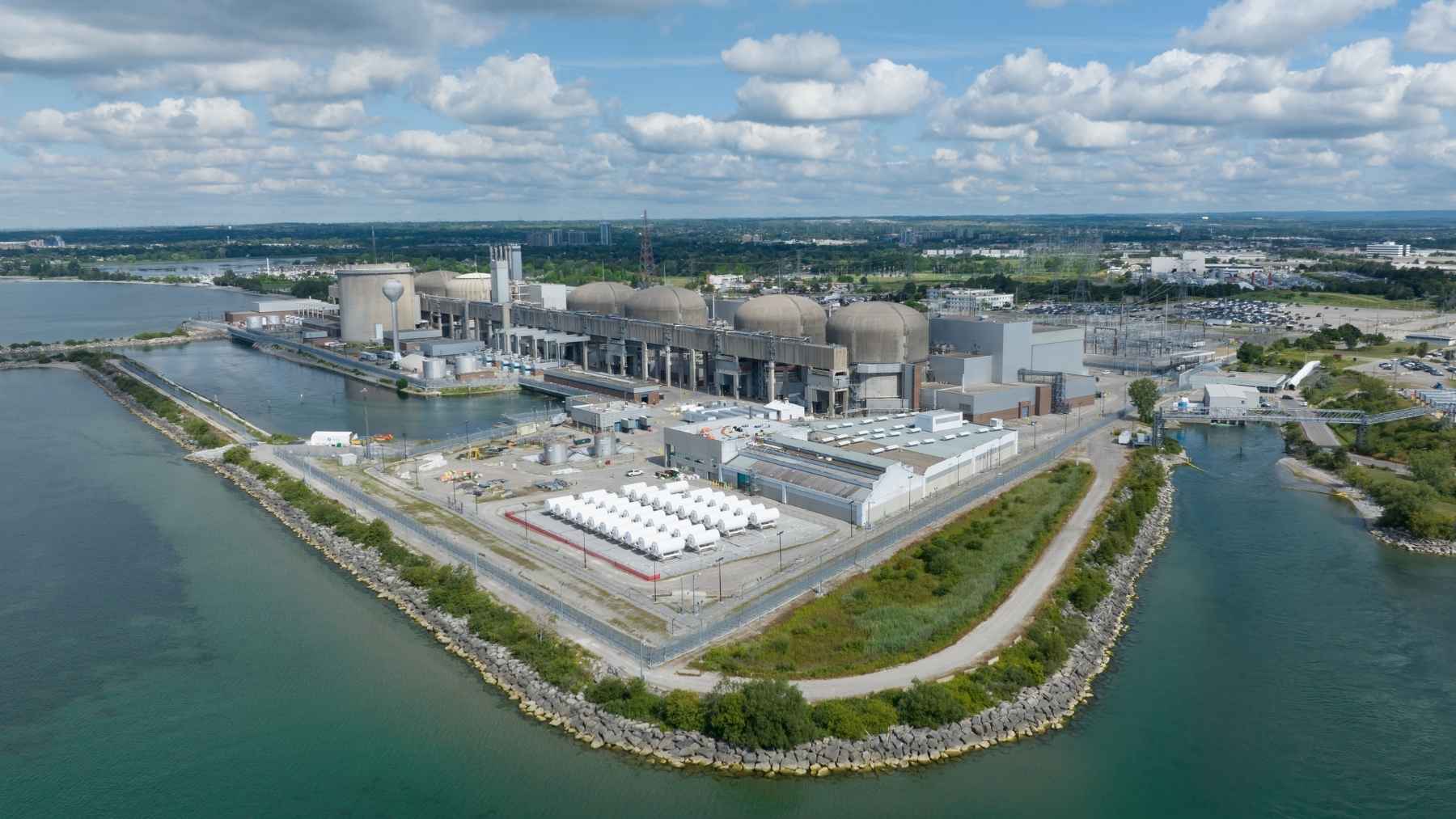
The target for all this is the waste already sitting at NB Power’s Point Lepreau station, on the Bay of Fundy. The CANDU-6 reactor there has been running since 1983, and every bundle it has burned is still on site.
The bundles are about the size of a fire log. After they come out, they spend seven to ten years in a pool roughly the size of an Olympic swimming pool before moving into concrete dry-storage casks. NB Power likes to point out that every fuel bundle used at the plant since 1983, stacked like cordwood, would fit inside about one third of an NHL hockey rink, from the ice to the top of the boards.
That’s one site. Across Canada, the spent-fuel inventory runs to more than 3.3 million CANDU bundles, according to the Globe and Mail, and it grows every year the reactors keep running. It’s about to grow faster, too. AtkinsRéalis, the owner of CANDU technology, just filed to license new 700-megawatt CANDU reactors in the US. More reactors of that type down the line means more of exactly the fuel Moltex wants to recycle.
The part that isn’t built yet
The chemistry has a lab result behind it. The reactor does not exist. The SSR-W cleared Phase 1 of the Canadian Nuclear Safety Commission’s vendor design review back in 2021, and Moltex signed a pre-licensing agreement with the regulator for the WATSS process in 2025, which Nuclear Engineering International reported is about getting early feedback, not a permit to build.
Moltex is aiming to have its first WATSS and SSR-W units running at Point Lepreau by the early-to-mid 2030s. The existing CANDU reactor there is expected to retire around 2040.
Not everyone buys the pitch. Critics have argued the reprocessing creates its own stream of byproducts, that the economics are unproven, and that a single site’s stockpile is finite; one New Brunswick group estimates Point Lepreau’s stored fuel would feed one SSR-W for only about 20 years. Allison Macfarlane, a former chair of the US Nuclear Regulatory Commission, has argued that advanced-reactor developers tend to underplay the back end of the fuel cycle. Moltex’s counter is that recycling shrinks the waste problem rather than just relocating it.
The waste is real, it’s sitting in concrete casks a kilometer from the Bay of Fundy, and it isn’t going anywhere on its own. The chemistry that could shrink it already has a result behind it. Turning that into a working 300 MW reactor is a different problem, and it belongs to regulators, financiers, and the back half of the 2030s, not to the chemists who ran the hot-cell test. What they proved is narrow but real: the hard step worked once, on actual used fuel, and so far no one has shown otherwise.
















When a very simple and in expensive solution is staring them right in the face
Thee answer is as simple as putting them on a rocket and sending them into the sun
Now its your turn to force the greedy and selfish to relinquish and ship them into the sun