
Army bases buy their electricity the same way you do, off the local utility, and they lose it the same way you do when a storm or a substation fault takes the neighborhood down. The Pentagon has spent years filing that under unacceptable risk. On Wednesday the Army attached hardware, addresses and $2.2 billion to the problem.
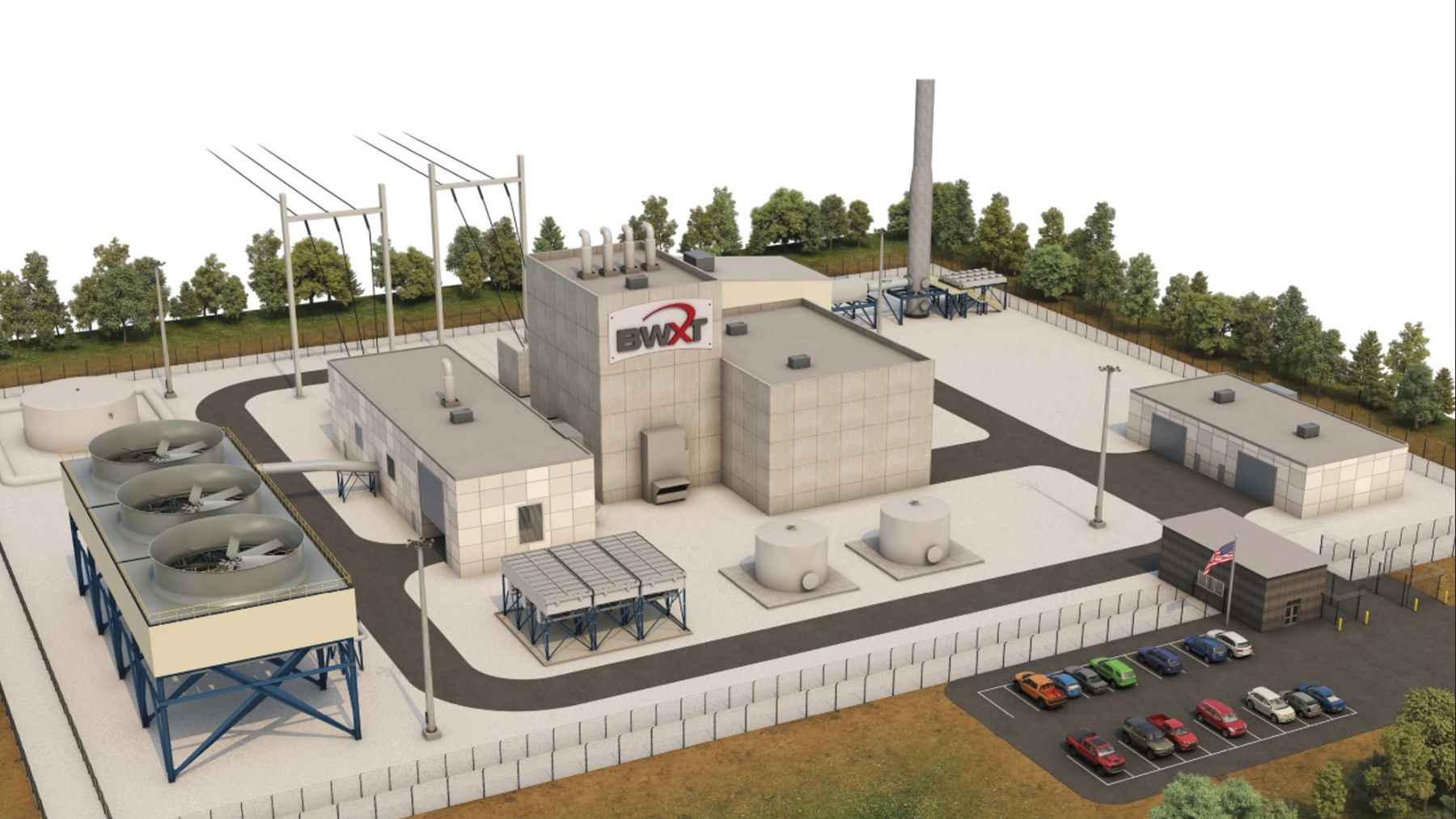
The Department of the Army announced agreements with five companies, worth up to a combined $2.2 billion, to build, own and operate nuclear microreactors inside its own fence lines, and public money plus private capital is expected to put more than 20 of them on military installations. Fort Campbell, the post with a Kentucky mailing address, most of its ground in Tennessee and the 101st Airborne Division in residence, is getting a 20-megawatt machine from BWX Technologies called BANR. The company published enough detail about it to fill in what the other four announcements left out.
The Army will not own a single one of these reactors.
Each unit will be contractor-owned and contractor-operated, in the Army’s own words. BWXT builds the Fort Campbell machine, keeps the title, runs it and sells the output, while the post plays anchor customer. The Army has owned reactors on its own dirt before, starting with a small one at Fort Belvoir, Virginia, in 1957, and it shut that program down in the 1970s. The 2026 version hands the ownership headache to the private sector on purpose.
Five companies, five forts and $2.2 billion
The pairings came out in one batch. Antares Nuclear takes Fort Bragg in North Carolina, and BWXT Advanced Technologies takes Fort Campbell in Kentucky. General Atomics Electromagnetic Systems gets Fort Hood in Texas, Radiant Industries gets Fort Benning in Georgia, and Westinghouse Government Services gets Fort Drum in New York.
The money runs through a milestone model. The agreements sit on Other Transactions Authority contracts covering fiscal years 2027 through 2031, and a vendor sees government cash only after it lands a specific technical target. Every company also has to bring what the Army calls significant capital investment of its own.
The Army spent about a year grading installations on energy needs, seismic conditions, hydrology and safety before making the matches. A shortlist of nine candidate posts came out in November 2025, and five of those nine made Wednesday’s cut, which leaves Fort Wainwright, Joint Base Lewis-McChord, Redstone Arsenal and the Holston ammunition plant off the opening list. Army Secretary Dan Driscoll framed the goal as projecting combat power without depending on outside grids the service cannot control. The Defense Innovation Unit ran the industry review, with graders pulled from the Department of Energy and the national labs, and the Army’s release now spells DIU out as the Department of War Innovation Unit.
BWXT keeps the reactor and the Army buys the power
A private company owning and operating a nuclear reactor inside an active Army post is the genuinely new arrangement here. Utility companies have parked power plants near bases for a century, and the grid served everybody the same. Under Janus the machine sits behind the meter, wired into the installation, able to keep critical loads running while the surrounding county goes dark, and the unit can also connect to the wider grid when that makes sense.
Corporate America has been signing deals shaped like this for a couple of years, buying a plant’s output instead of the plant. Google signed up for 25 years of output from Iowa’s only nuclear station to get it repaired and restarted. The Army is running the same playbook, except its machines do not exist yet and its parking spots have armed gates. The service is also holding a separate door open for regular utilities, inviting them to build bigger, grid-facing plants on Army land.
Dr. Jeff Waksman, the Army’s principal deputy assistant secretary for installations, energy and environment, wrote the win condition into the announcement: the program succeeds when multiple companies can build reliable, affordable microreactors “which they can sell to other buyers beyond just the military.” The Army wants to be a customer, and it wants a product line to exist after it pays.
A gas-cooled core that refuels once every four years
BANR is a high-temperature gas-cooled reactor rated at 20 megawatts electric and 75 megawatts thermal. One unit fits on less than five acres, smaller than four football fields, and several units can share a site if the post needs more output. The refueling cycle runs four years.
The fuel is the interesting part. TRISO stands for tri-structural isotropic, a name only an engineer could love. The uranium sits inside particles about the size of poppy seeds. Each particle wears its own shells of carbon and ceramic. Those shells are built to hold the radioactive material in at temperatures far beyond anything the core should ever see, which is the whole argument for parking one of these near a barracks. BWXT already manufactures TRISO, and phase one at Fort Campbell includes spinning up fuel fabrication at the company’s existing plants.
The company told POWER magazine the core runs nitrogen as its primary coolant, with outlet temperatures near 1,100 degrees Fahrenheit, about 600 Celsius. Heat at that grade sells on its own, because factories buy steam the way households buy electricity, and BANR is pitched to deliver process heat alongside power, the same market a French startup is chasing with a reactor that has no turbine at all. Tata Chemicals Soda Ash has signed a letter of intent to study up to eight BANR units in Wyoming, which puts a chemical company in line for the same machine the Army picked.
Rex Geveden, BWXT’s president and CEO, called BANR “the nation’s most credible and reliable path to deployable nuclear power” in the company’s announcement. CEOs say things like that about their own products. The difference this week is the Army putting an address behind it.
Concrete in late 2028, and the Army is its own regulator
Nobody has poured anything yet. The opening phase reads like the unglamorous half of every megaproject: pick the exact plot inside Fort Campbell, start the regulatory review, stand up an operating company, characterize the site, order long-lead parts and begin making fuel. Construction is targeted for late 2028 and operations for the early 2030s.
The Janus reactors run through the Army’s own authorization process rather than the Nuclear Regulatory Commission, a lane opened by Executive Order 14299 in May 2025. The order set a deadline of September 30, 2028 for a first Army-regulated reactor running on a military installation. Fort Campbell’s unit will still be a construction site when that date arrives, so if the Army hits its own deadline, the machine that does it will be somebody else’s.
The Army is not walking into this cold, and neither is its Kentucky vendor. BWXT makes reactor components for the Navy’s nuclear fleet, and it is the contractor assembling Project Pele, the Pentagon’s truck-portable microreactor, in Virginia while the finished fuel waits in Idaho. Waksman described Janus as taking the baton from Pele and the Energy Department’s reactor pilot program, and he wants machines that run for years at high capacity factors rather than demo units that light up once for the cameras.
The Fort Campbell team also includes a utility partner the company is not naming yet, according to POWER, and no one has put a dollar figure on BWXT’s slice of the $2.2 billion. The company gets to fill in both blanks as the milestones land.
Fort Campbell has drawn its power off the commercial grid since 1942. The Army named its five reactor vendors on August 26, 2026, BWXT’s next move is choosing a plot of ground inside the post, and the first concrete is penciled in for late 2028.