
Shooting down a cheap drone with an expensive missile has quietly become one of the worst trades in modern warfare. Somebody bolts together a quadcopter from hobby-shop parts, and the answer streaking up to meet it is an interceptor that can cost more than a house. Do that math a few hundred times in a place like the Red Sea and even a wealthy navy starts to sweat.
Britain’s fix is a laser that burns drones out of the sky for roughly the price of a sandwich. The newest piece of the story, reported by Breaking Defense in late June, is that three British companies are now busy shrinking that laser to fit on a warship.
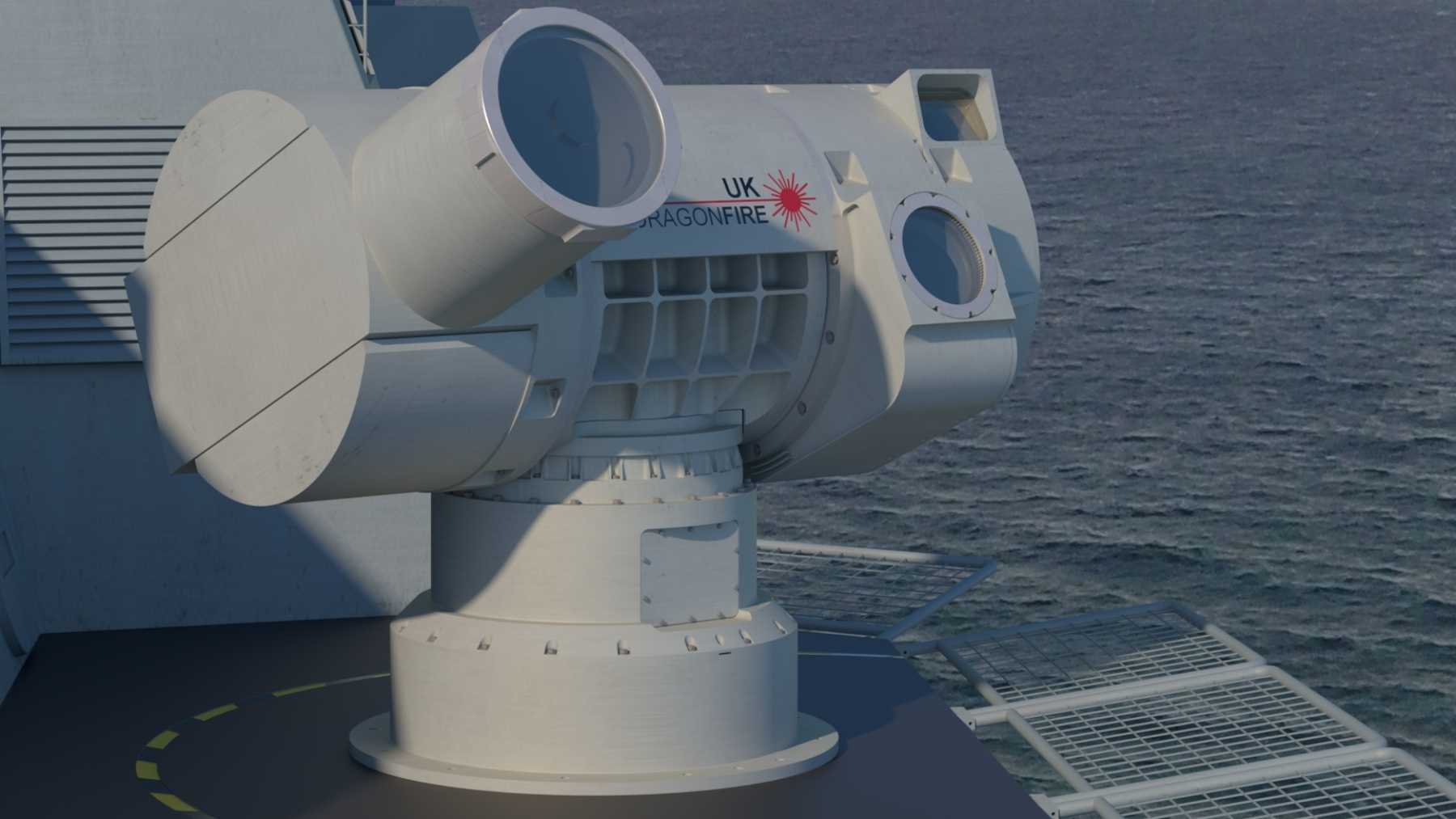
The weapon is called DragonFire, the warship is a Royal Navy Type 45 destroyer, and the plan is to have the first one armed before the end of 2027. That’s about five years sooner than anyone originally penciled in.
A laser’s biggest weapon is its price tag
The entire pitch for DragonFire comes down to the receipt. Each shot runs about $13 (£10) in electricity, the figure the UK Ministry of Defence keeps citing.
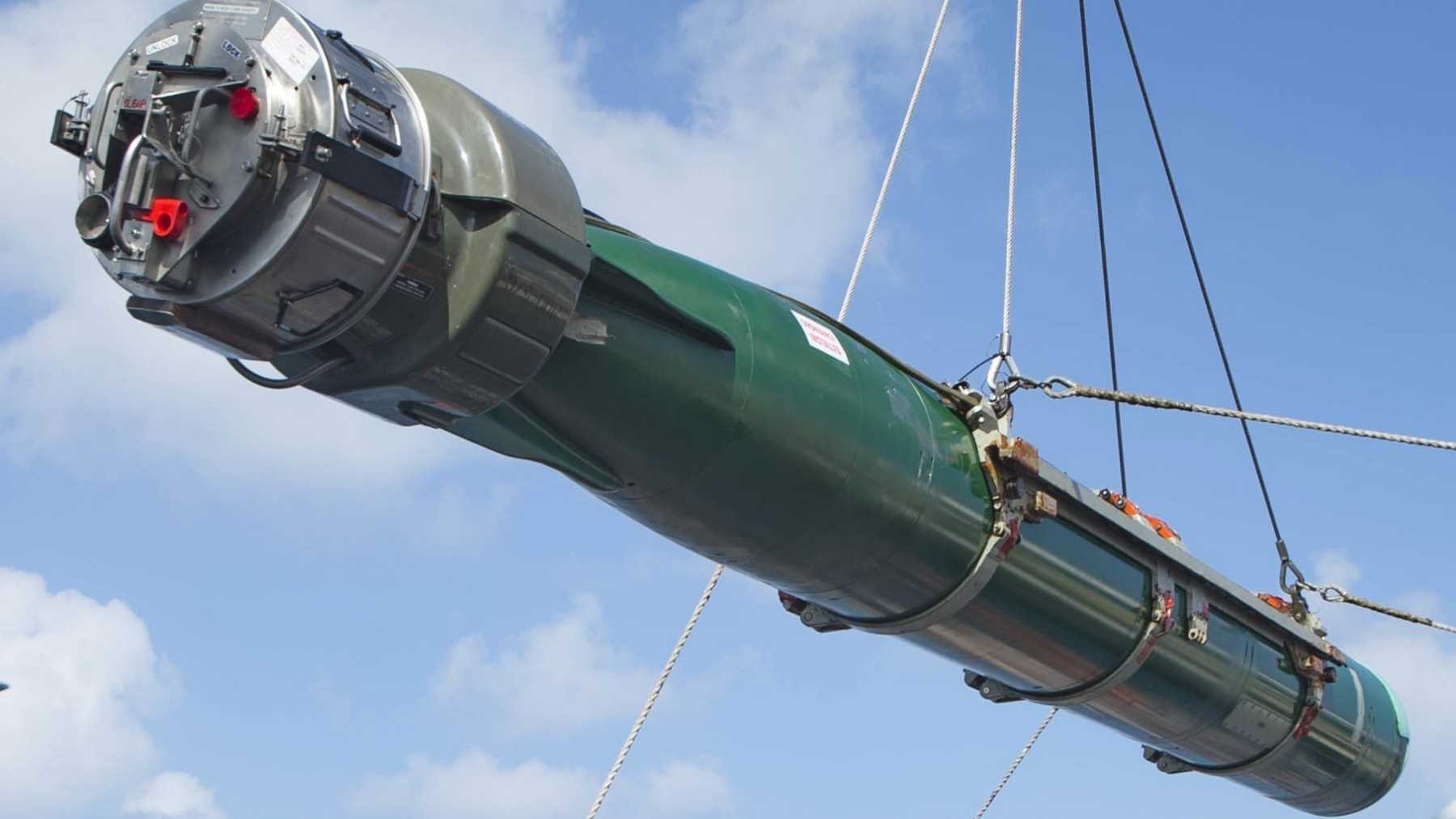
Compare that to the missiles a Type 45 currently uses against the same threats. The MoD describes those as costing hundreds of thousands of pounds apiece, orders of magnitude more than the drone they’re aimed at.
The numbers behind that imbalance are brutal. Cheap attack drones can run a few hundred dollars, while the interceptors fired back at them can cost hundreds of thousands of dollars, sometimes well into seven figures. A Type 45 has already lived this firsthand, burning Sea Viper missiles to knock Houthi drones out of the sky over the Red Sea.
So the trade flips. Instead of spending a fortune to kill something cheap, you spend pocket change. That matters most against swarms, where the goal isn’t one clever shot but dozens of them, the same uncomfortable arithmetic pushing the U.S. Navy toward cheap, crewless attack boats it can stamp out by the dozen.
There’s a second perk that has nothing to do with money. A laser runs on the ship’s own power, so its “magazine” is basically however much electricity the destroyer can generate. No racks of missiles to run dry, no resupply ship to wait on.
Drones have stopped being a niche worry, too. By early 2025 they accounted for up to 80% of battlefield casualties in Ukraine by one tally, they harass shipping in the Red Sea, and a cousin of the problem is even playing out on the seabed, where sabotage drones stalk undersea cables. A 50 kW beam only answers the airborne version, but that’s the version that’s been bleeding navies dry.
DragonFire can hit a coin from a kilometer away
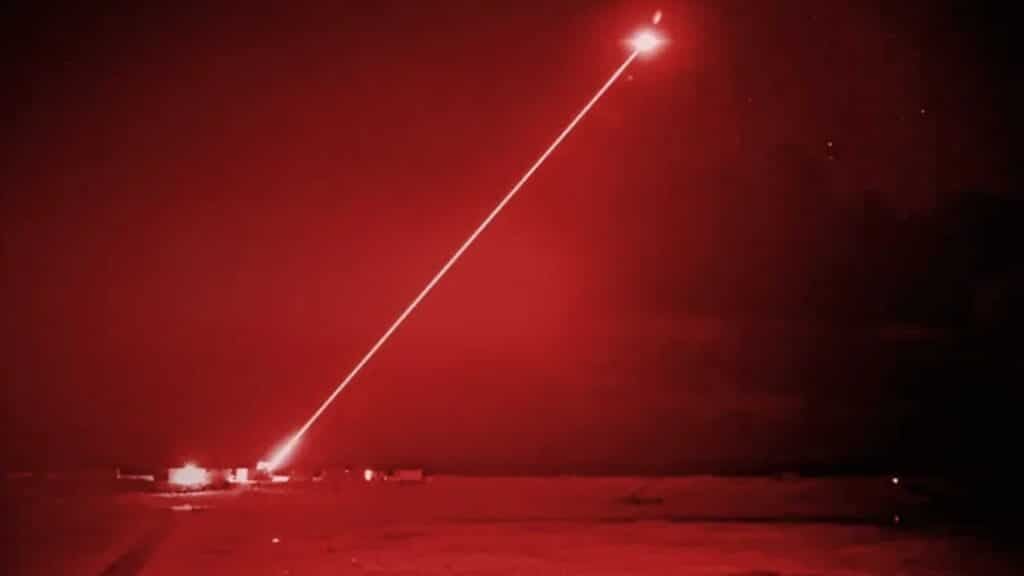
Underneath the price tag is a genuinely impressive piece of kit. DragonFire is a 50 kW-class laser that works by combining a stack of fiber-laser beams into a single, tightly focused one. Leonardo handles the beam director, QinetiQ the beam-combining know-how.
The headline spec is precision. The MoD says the system is accurate enough to “hit a £1 coin from a kilometre away,” which is roughly a US quarter at the length of ten football fields.
It also isn’t limited to slow targets. In two full firing campaigns at the MoD’s Hebrides range in Scotland through 2025, DragonFire knocked down drones flying at up to 650 km/h, just over 400 mph, or nearly double an F1 car’s top speed, according to Tom’s Hardware. The MoD called it a UK first for tracking and killing high-speed aerial targets above the horizon.
And this is a hard-kill weapon, not a jammer. It doesn’t scramble a drone’s signal and hope. It dumps enough heat onto one spot to physically break the thing.
Shrinking it to fit a destroyer is the hard part
Building a laser that works is one thing. Packing it into a warship already crammed with radar, missiles and people is another, and that’s what the latest news is really about.
QinetiQ, along with the British arms of MBDA and Leonardo, is now focused on making the whole system smaller. The work covers how the laser beam itself is manufactured and how to shrink the overall footprint, plus the unglamorous question of keeping a thing like this running for years at sea.
James Anderson, Royal Navy account lead at QinetiQ, told Breaking Defense at a NATO industry day in Portsmouth that the end-of-2027 target for getting DragonFire onto a Type 45 is still on schedule. He framed lasers as “a real opportunity” to fix the lopsided economics of shooting cheap drones with pricey missiles.
The system has already cleared some awkward milestones. An earlier trial put high-power shots downrange in the rain, and the 2025 campaigns marked the UK’s first hits on fast aerial targets above the horizon rather than against a clean backdrop.
Some of what’s left sounds mundane and matters a lot, like finishing the “spiralling” software that lets the weapon keep improving after it’s installed instead of freezing at version one.
The Type 45 is the ship that can power it
There’s a reason the laser is going on a Type 45 and not something smaller. The six Daring-class destroyers are the biggest surface warships the Royal Navy operates, and they generate enough electricity to feed a power-hungry laser.
Each already carries a stack of air-defense gear: the Sea Viper missile system, a pair of Phalanx close-in guns, a main gun and 30mm cannons. DragonFire slots in as a new, non-explosive layer on top, handling the cheap stuff so the expensive missiles stay in their tubes for bigger threats.
The money landed in November 2025, when the MoD handed MBDA UK a $414 million (£316 million) contract for the first two systems. Luke Pollard, the Minister for Defence Readiness and Industry, announced the first ship fit, and Lord Coaker, the Minister of State for Defence, later confirmed the accelerated timeline, as Forces News reported. The Navy eventually wants four of its six destroyers carrying the weapon.
Britain isn’t doing this in a vacuum. France and Germany are chasing their own naval lasers, with Germany’s version for its Sachsen-class frigates not expected until 2029. The wider rearmament wave has even pulled in carmakers, including Mercedes-Benz, which is now bolting drone interceptors onto its G-Class as European defense budgets balloon.
The catch is weather and one drone at a time
None of this makes DragonFire a magic wand, and the people building it are fairly upfront about that. It needs a clear line of sight, and because it’s a beam of light, fog, rain, sand and a heavy sea can all scatter or weaken it. “Fair weather” weapon is exactly the knock it draws.
It’s also a one-at-a-time killer. The laser has to dwell on a single target long enough to burn through it, reportedly on the order of seconds, before swinging to the next. Against a lone drone, fine. Against a coordinated swarm coming from several directions at once, a single beam can only do so much.
And the threats keep getting harder. Russia’s jet-powered Geran-3, a faster evolution of the Shahed-style attack drone, is built to slip past electronic defenses, which is exactly the kind of quick, line-of-sight target a beam has to catch in the open.
That’s why nobody’s calling it a replacement for missiles. It’s an extra layer, a cheap way to thin out the easy targets so the costly interceptors are saved for the ones that actually warrant them.
What happens in 2027
The real exam comes when that first laser goes to sea on a Type 45 and has to work in salt, motion and weather instead of on a fixed range in the Hebrides. Plenty can go sideways between a clean trial and a deployed weapon.
But the math is hard to argue with. When the thing you’re shooting down costs a few hundred dollars and the missile you’d normally throw at it costs a few hundred thousand, a $13 beam of light starts to look less like a science experiment and more like the only sustainable way to keep firing back.