
Most nuclear news that goes viral involves something enormous being lowered into a hole. A thousand-ton slab of concrete, a reactor vessel the size of a grain silo, a crawler crane you could spot from orbit. The Tennessee Valley Authority just made nuclear news with a stack of paperwork instead.
That filing might end up mattering more than any single crane lift. With it, TVA became the first US utility to formally ask permission to build a small modular reactor it actually intends to operate, a 300-megawatt machine called the BWRX-300, on a federal site next to the old weapons labs at Oak Ridge, Tennessee.
The reason any of this lands on an energy reader’s radar is simpler than the reactor physics. US electricity demand is climbing for the first time in a generation, data centers are a big part of why, and utilities are hunting for anything that puts firm, around-the-clock power on the grid without a fifteen-year construction saga. TVA’s answer is to be first in line for a small reactor and let everyone else watch how it goes.
TVA filed paperwork, not concrete, and it’s further along than that sounds
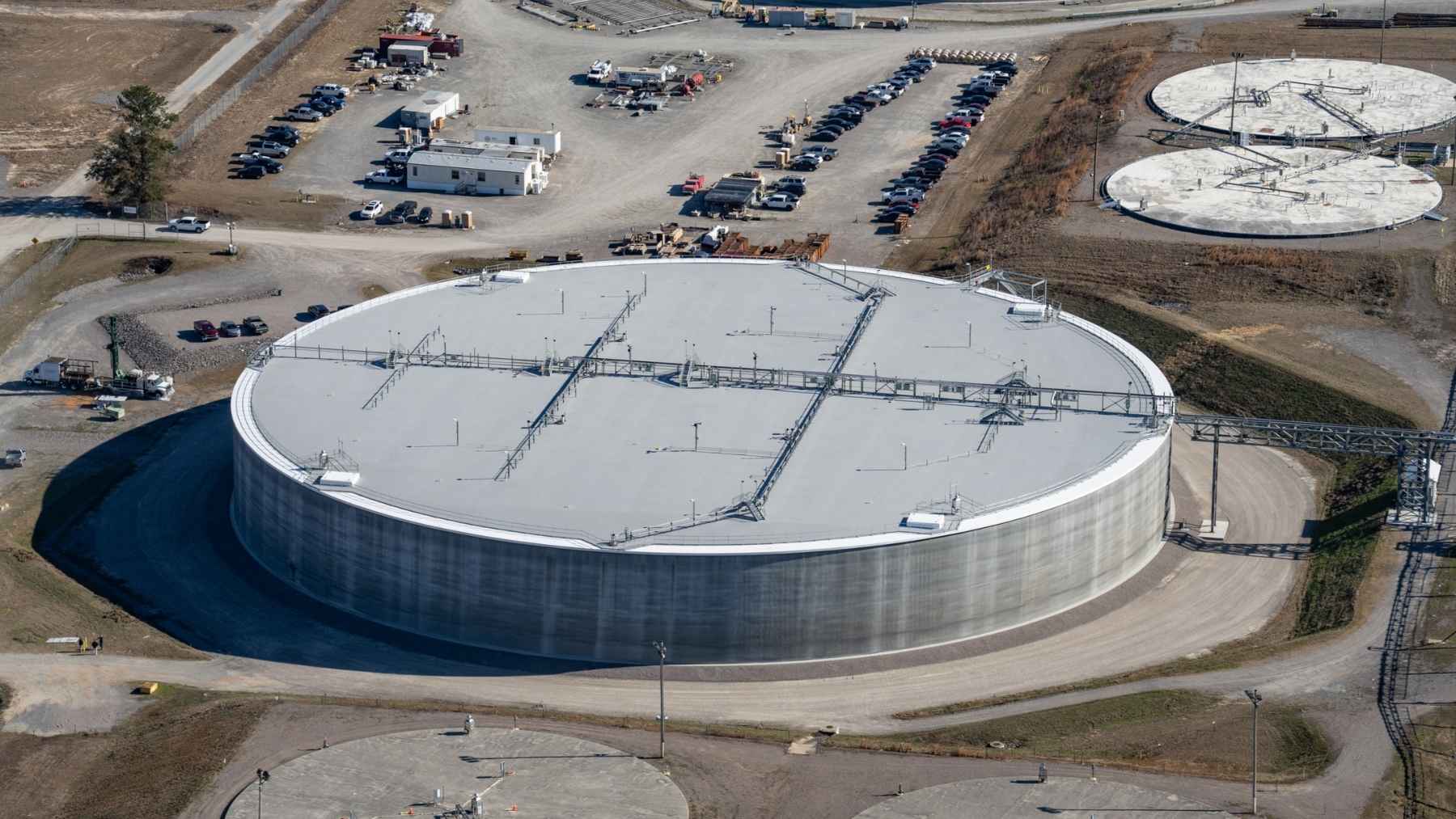
The application TVA put in front of the Nuclear Regulatory Commission is a construction permit request, not a shovel in the ground. It covers a single unit, Clinch River Nuclear Unit 1, on a 935-acre federal site the utility has been lining up for years.
The groundwork is older than the headline. Back in 2019 the NRC handed TVA an early site permit certifying the Clinch River location as suitable for two or more small reactors, the only permit of its kind in the country. TVA had already locked in the BWRX-300 as its design of choice and spent roughly $350 million of its own money getting the paperwork this far.
TVA submitted the construction application in spring 2025, and the NRC formally docketed it that July, meaning the regulator agreed it was complete enough to review in detail. The agency set itself a target of finishing that review by December 2026.
And it’s moving. The environmental review is done: the NRC and the Army Corps of Engineers wrapped up the environmental impact statement in April 2026, and the agency’s running notes now describe the safety evaluation as advanced, with no open items left hanging. None of that is a yes yet. But a permit decision is genuinely on the calendar rather than somewhere over the horizon.
There’s federal money behind it, too. In December 2025 the Department of Energy awarded TVA a $400 million grant under its Generation III+ SMR program to help cover the cost of going first, the first-of-a-kind premium the utility has been open about not wanting to dump on its ratepayers.
Here’s the state of play, by the numbers.
The reactor itself is boring on purpose
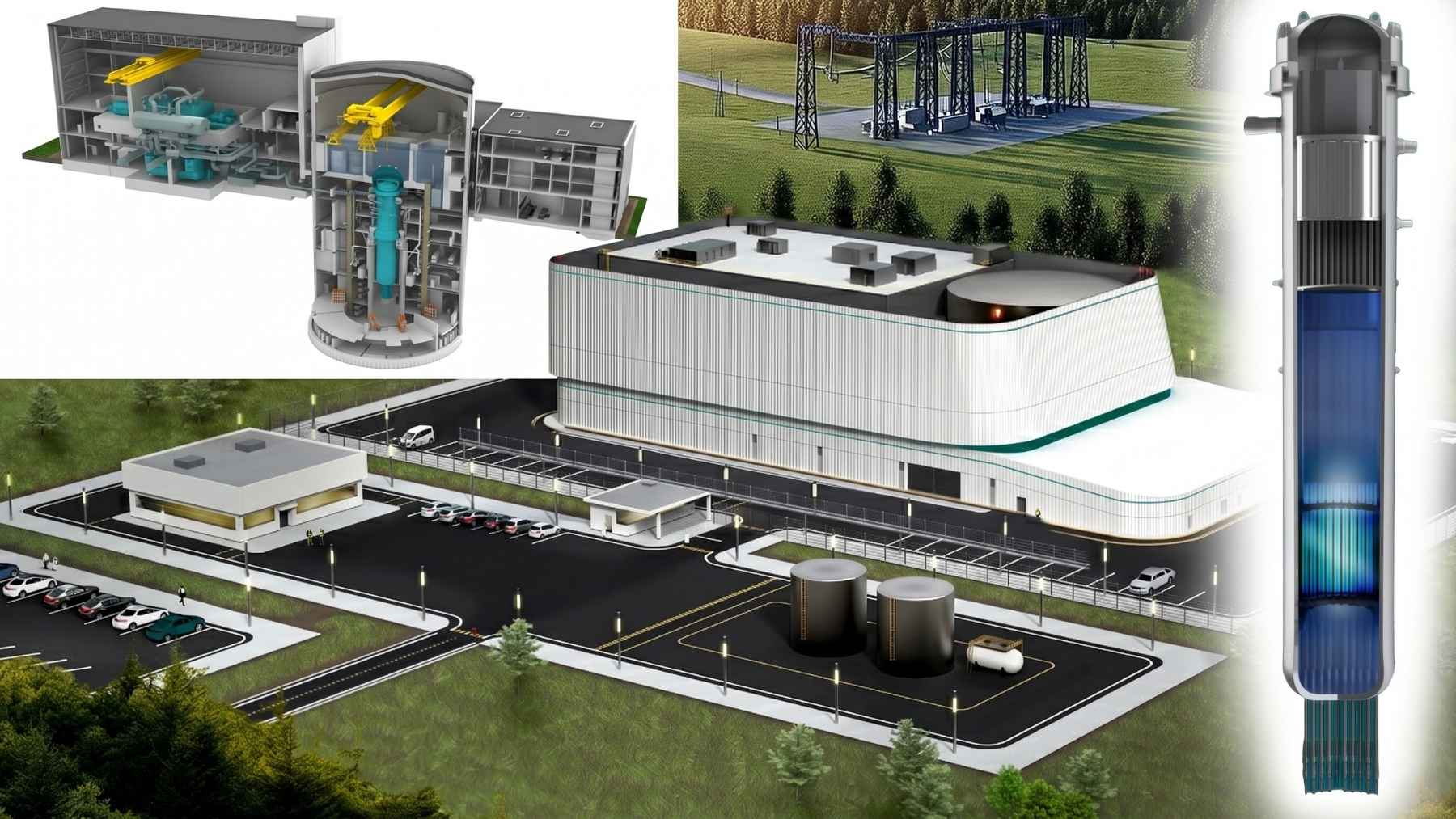
The BWRX-300 is not a science-fair machine. It’s a 300-megawatt boiling water reactor, the same basic family that’s been running on the US grid since the 1970s, shrunk down and stripped of as much complexity as GE Vernova Hitachi could pull out of it.
The headline trick is that it cools itself with gravity. Water moves through the core by natural circulation instead of big electric pumps, and the passive safety systems are built to keep the core covered even if the power and the operators both walk away. GE Vernova says one unit makes about 300 megawatts, enough to power roughly 300,000 homes, on a power block that fits inside two soccer fields.
Boring is the selling point. The design leans on an already-certified reactor lineage, the ESBWR, so there’s less brand-new engineering for regulators to chew through. The company’s pitch is that once it’s cranking out repeat units, it can go from first concrete to fuel-ready in something like 24 to 36 months, because the whole economic case rests on building the identical machine over and over until the price stops being terrifying.
That’s also why this isn’t a slide deck. The same reactor is already under construction in Ontario, where Ontario Power Generation poured the foundation this spring on the first of four units, the first grid-scale small reactor in the Western world. TVA’s filing is for the American copy.
So is this really America’s first small reactor?
Depends on how you count, and this is where the press releases get slippery. TVA is the first US utility to file to build the BWRX-300, and likely the first utility-led small reactor to reach the grid if it gets built. It is not the first new reactor America has cleared lately.
In March 2026 the NRC handed TerraPower, the company Bill Gates co-founded, a construction permit for a sodium-cooled reactor in Wyoming, the first US permit ever for a commercial non-light-water design. Down in Tennessee, Kairos Power is already cleared to build a molten-salt reactor whose output is contracted to the TVA grid for Google’s data centers.
The distinction TVA can fairly claim is the unglamorous one. TerraPower is a Gates-backed startup proving a brand-new design, and Kairos is building a demonstration plant. TVA is a federally owned public utility trying to license a proven reactor it plans to stamp out as a fleet, the way a utility builds anything it expects to keep doing. Its president and CEO, Don Moul, called the filing, per the Department of Energy, “an exciting step to bringing the nation’s first utility-led SMR online.”
The whole point is that TVA goes first so the next utility doesn’t have to
A year ago TVA was basically alone among American utilities in putting real licensing money behind a small reactor. It isn’t anymore.
The same DOE program that funded Clinch River also backed Indiana Michigan Power and a developer called Elementl, both eyeing the same BWRX-300. American Electric Power has floated the design for its Rockport coal site, Duke Energy signed on to help advance it, and the DOE put another $400 million behind Holtec’s competing small reactor at Palisades in Michigan.
That clustering is the actual strategy. A single reactor is a science project. A dozen identical ones with a shared supply chain and a worn-in licensing path are an industry. TVA’s senior people have been blunt that the goal was never one plant at Clinch River, it was a delivery model other utilities could copy without re-learning every lesson from scratch.
The demand pressure underneath all of it is real. American electricity use is rising again after nearly two flat decades, data centers and AI are a chunk of the reason, and a 300-megawatt block of always-on power that drops onto a former brownfield is exactly the shape of supply utilities keep saying they need.
None of this is locked in. The NRC could find problems, the schedule could slip the way nuclear schedules tend to, and a permit to build is still a long way from a reactor making power in the early 2030s, which is the window TVA is now aiming at.
But the interesting part of Clinch River was never the first reactor. It’s the second one, and the third, and whether the price falls far enough that the next utility files its own stack of paperwork without flinching. TVA volunteered to be the one that finds out the hard way.