
When people talk about the EV battery supply chain, the conversation almost always lands on lithium. Lithium mines, lithium prices, lithium refineries, the occasional brawl over a salt flat in Nevada or Chile. But the single battery material the United States is most exposed on isn’t lithium, and it isn’t cobalt or nickel either. It’s graphite, the stuff that makes up the anode in basically every lithium-ion cell on the road today, and America produces exactly none of it. A company called Graphite One wants to fix that, and on May 19 it locked in a site on the shores of Lake Erie to start trying.
The announcement is modest on paper: a real-estate agreement and a plan to build a processing plant. What it’s actually pointed at is the most lopsided dependency in the entire American battery story, and a Chinese export-control clock that starts ticking again this November.
America hasn’t mined its own graphite since the 1950s
This isn’t a rounding error or a “mostly imported” situation. According to the U.S. Geological Survey, the country is 100% net import reliant on natural graphite and hasn’t produced any domestically since the 1950s. Graphite One puts it the same way in its own filing. The imports come from China, Mexico, Canada and a handful of others, and graphite is one of eleven mineral commodities the USGS lists as fully import-dependent.
Here’s the part the raw import figures hide, though. Even when the US buys graphite from somewhere other than China, China still controls the step that matters most: turning raw flake into the spherical, purified, coated, battery-grade anode material a cell actually needs. So for battery-grade graphite specifically, the dependence runs through China regardless of the flag on the shipping container. You can diversify where you dig it up and still have every gram pass through one country’s processing plants.
China showed its hand on graphite, then put it away
This is where the timing gets interesting. In October 2025, China’s Ministry of Commerce added lithium-ion batteries, cathode materials and synthetic graphite anode materials to its dual-use export-control list, the kind of move that would have forced exporters to get a license before shipping to the US. A month later, as part of a broader trade truce, Beijing turned around and suspended the entire October package.
So right now, in June 2026, graphite and anode material are flowing without those extra controls. The catch is that the pause has an expiration date. The battery-and-anode measures are suspended only until November 10, 2026, and a separate measure covering graphite exports to the US specifically runs until November 27, 2026. The threat isn’t theoretical, and it isn’t currently in effect either. It’s on a timer, less than six months out. That timer is a big reason anyone is in a hurry to make this material in Ohio rather than wait and hope the truce holds.
The Ohio plant is a processing play, not a mine
The site itself is in Conneaut, in Ashtabula County, about 65 miles northeast of Cleveland. Graphite One secured it through a license-of-occupation agreement with the Bessemer and Lake Erie Railroad Company, a subsidiary of Canadian National Railway. Worth being precise here: that agreement lets the company run due diligence and then formalize a lease, so it’s a foothold rather than a signed, sealed plant. It replaces an earlier site near Warren, Ohio, which the company walked away from because it couldn’t get the power infrastructure built fast enough.
Conneaut solves that. The site comes with direct access to Lake Erie and the Great Lakes shipping corridor, multi-line CN rail, an existing on-site substation, and room to expand. Graphite One’s COO, Mike Schaffner, said the location offers “the infrastructure, logistics access, and scalability required to support long-term growth.” The important technical distinction is that this is a finishing and blending facility, one of three processing facilities that together make up the full anode-materials operation. It turns graphite into anode material. It does not dig graphite out of the ground. The mine is a separate project entirely, and it’s in Alaska.
10,000 metric tons a year, but not before late 2027
Phase One targets 10,000 metric tons per year of active anode material, broken into 4,000 tons of energy-storage material, 3,000 tons of fast-charging material and 3,000 tons of high-energy-density material. One quick correction to some of the early coverage: that’s 10,000 metric tons of anode material, not finished batteries. A second phase under evaluation would add 25,000 metric tons per year of graphitization capacity, targeted for the third quarter of 2028. The output is aimed at lithium-ion cells for EVs, grid-scale storage, and increasingly the battery backups that data centers are buying in bulk.
The number that matters for anyone expecting fast relief is the calendar. Construction completion on the Ohio finishing facility is targeted for the fourth quarter of 2027, which means no actual production until after that. This is a 2028-and-beyond fix for a 2026 problem, which is roughly how every reshoring story in this sector goes.
Six companies are testing the samples, but nobody’s signed
Graphite One says it has shipped commercial-grade anode samples, in quantities of up to 20 kilograms (about 44 pounds), to three major EV manufacturers and three battery companies. All six are currently running specification testing, and the company has entered discussions about potential binding offtake agreements with some of them. Read that carefully, because the wording is doing real work. Discussions. Potential. Binding agreements that don’t yet exist.
That distinction is the whole ballgame for a project like this. Samples in a customer’s lab are encouraging, but they aren’t purchase orders, and a finishing plant generally doesn’t get financed and built on the strength of a maybe. Until one of those six turns a spec test into a signed contract, the demand side of this story is a promising conversation rather than a committed buyer.
Graphite One isn’t the first to make anode material in America
It’s worth setting the record straight on the “domestic first” framing, because there isn’t one to claim. Syrah Resources started producing battery-grade natural-graphite anode material at its plant in Vidalia, Louisiana, back in 2024. The U.S. Department of Energy describes that facility as the first of its kind in the country and the only large-scale, vertically integrated natural-graphite anode operation outside China. Syrah even has an offtake deal to supply Tesla. Novonix in Tennessee, Anovion in Georgia and a few others are building too, so Graphite One is stepping into a small but real field, not an empty one.
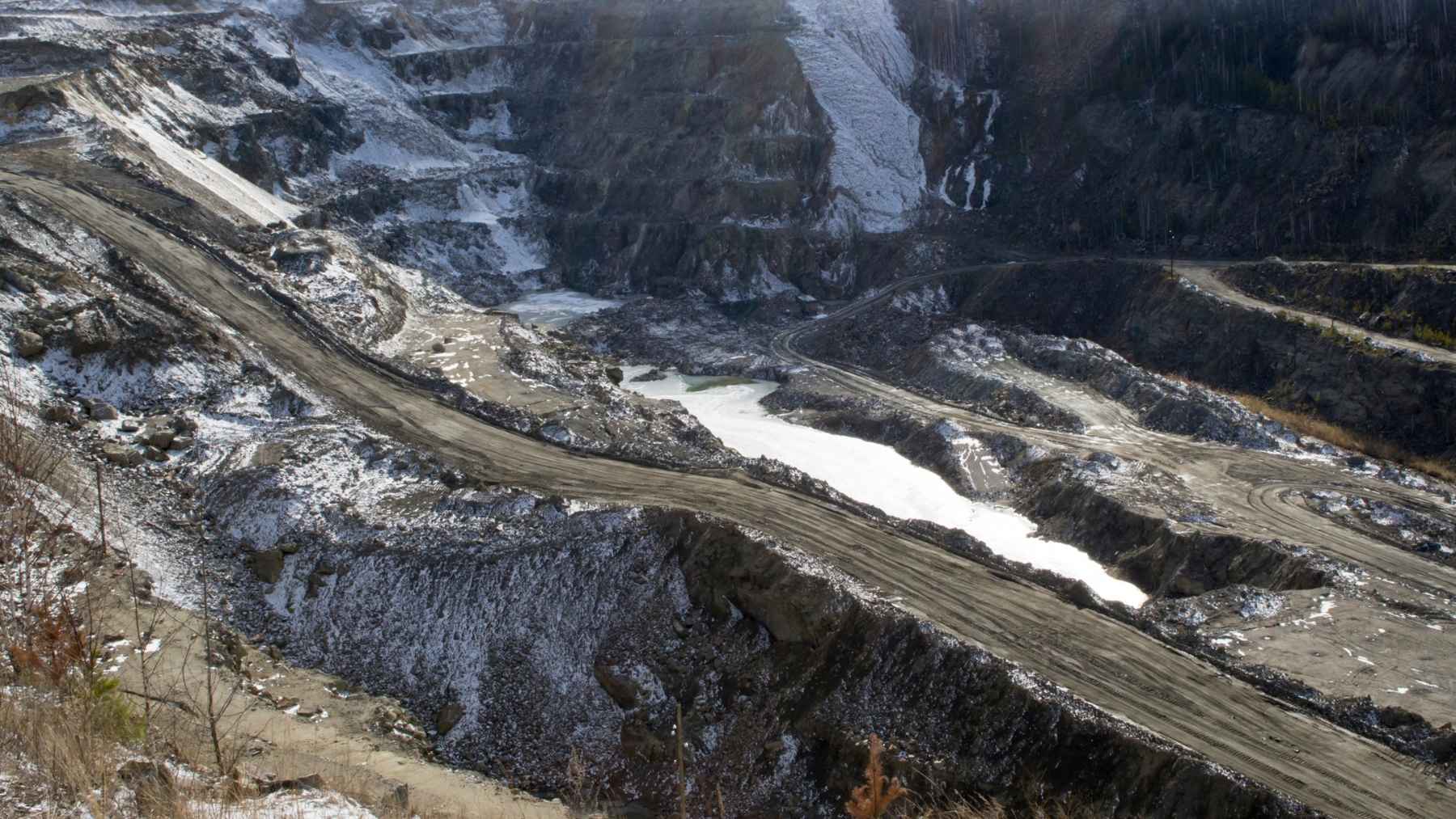
What’s genuinely different is where the graphite comes from. Syrah’s Louisiana plant runs on graphite mined in Mozambique. Graphite One’s whole pitch is an all-American chain: mine the graphite in Alaska at Graphite Creek, which the USGS calls the largest graphite deposit in the United States, ship it through the Port of Nome, and process it in Ohio. The hitch is the same one that trips up every mine in this country. Graphite Creek is still working through federal FAST-41 permitting, with a decision targeted for September 2026, and first production isn’t slated until 2030. Until that mine opens, an Ohio plant would still need its graphite from somewhere, which for now means imports. The U.S. Export-Import Bank has signaled it’s willing to put up to $1.4 billion behind the Ohio plant and more than $2 billion behind the full Alaska-to-Ohio chain, so the federal appetite for this is not in doubt.
So where does that leave things. A license-of-occupation agreement, a stack of sample bags and a mine that opens in 2030 don’t add up to a graphite supply chain yet, and the offtakes that would actually pay for construction are still in the “discussions” column. But for a country that hasn’t pulled its own graphite out of the ground since the Truman administration, and that’s watching a Chinese export-control timer count down to November, a working substation and a dock on Lake Erie is further down the all-American road than anyone else has gotten. The sample bags are the tell. If three automakers and three cell makers turn their spec tests into signed contracts, Ohio gets a graphite plant. If they don’t, it stays a very well-located piece of lakefront.