
The usual version of this story only runs one way. A coal plant gets a retirement date, the mine beside it stops digging, and a solar farm goes up on the ground the shovels already tore open. Minnesota just did exactly that. Illinois and Kentucky did it last year.
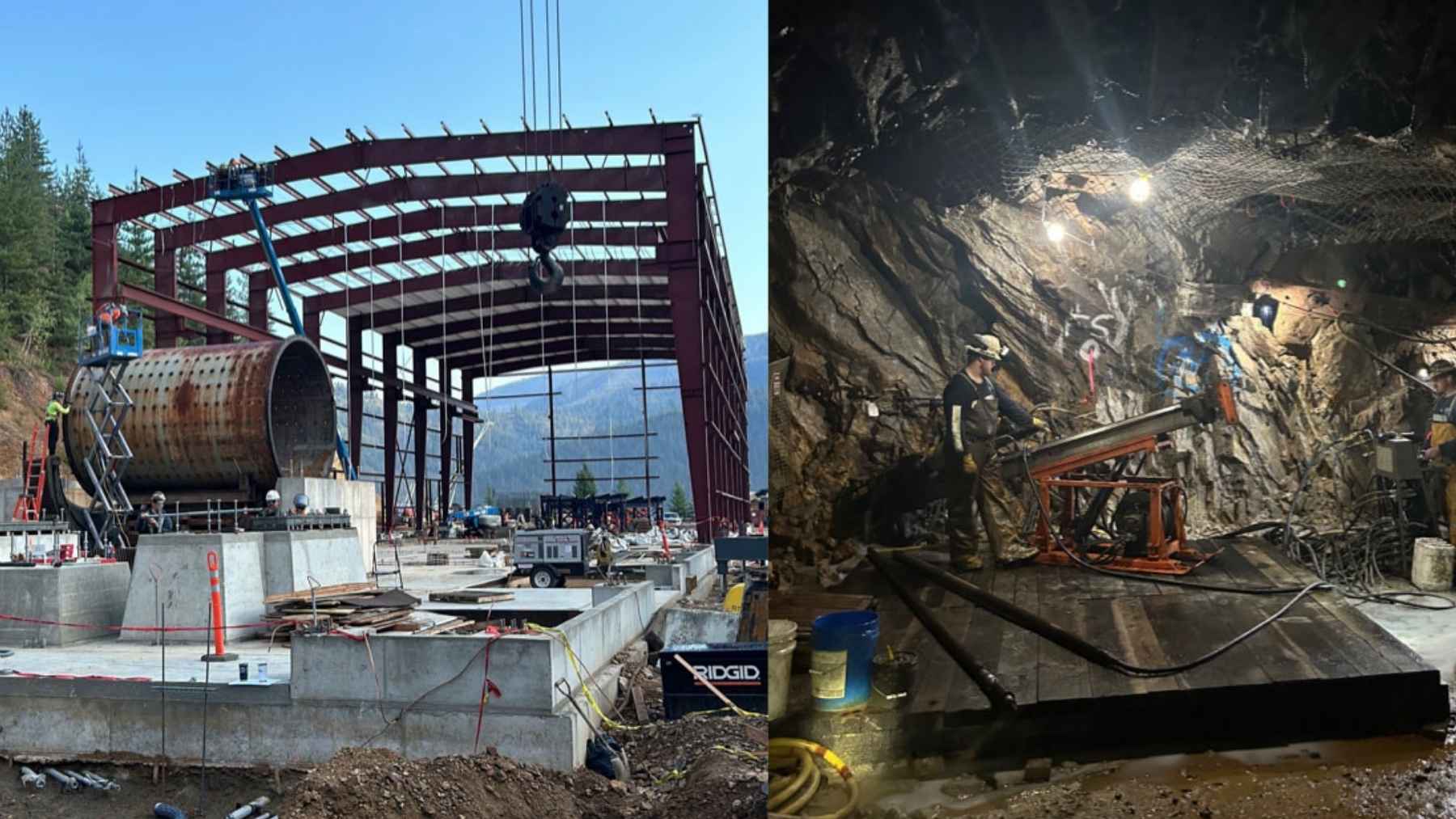
Robertson County, Texas is doing something else. On July 23, Panamint Capital broke ground on Big Rooter Power, a $1.7 billion solar project at its Twin Oaks power station near Bremond, roughly halfway between Dallas and Houston. Around 2 million First Solar panels, more than 34,000 tons of domestically made steel, over 20 miles of new 345-kilovolt transmission.
Panamint calls it the largest solar project ever built at an existing coal mining site in North America. The word existing is carrying that whole sentence. A fair amount of the coverage that followed swapped it out for former, which is a claim about a completely different kind of place.
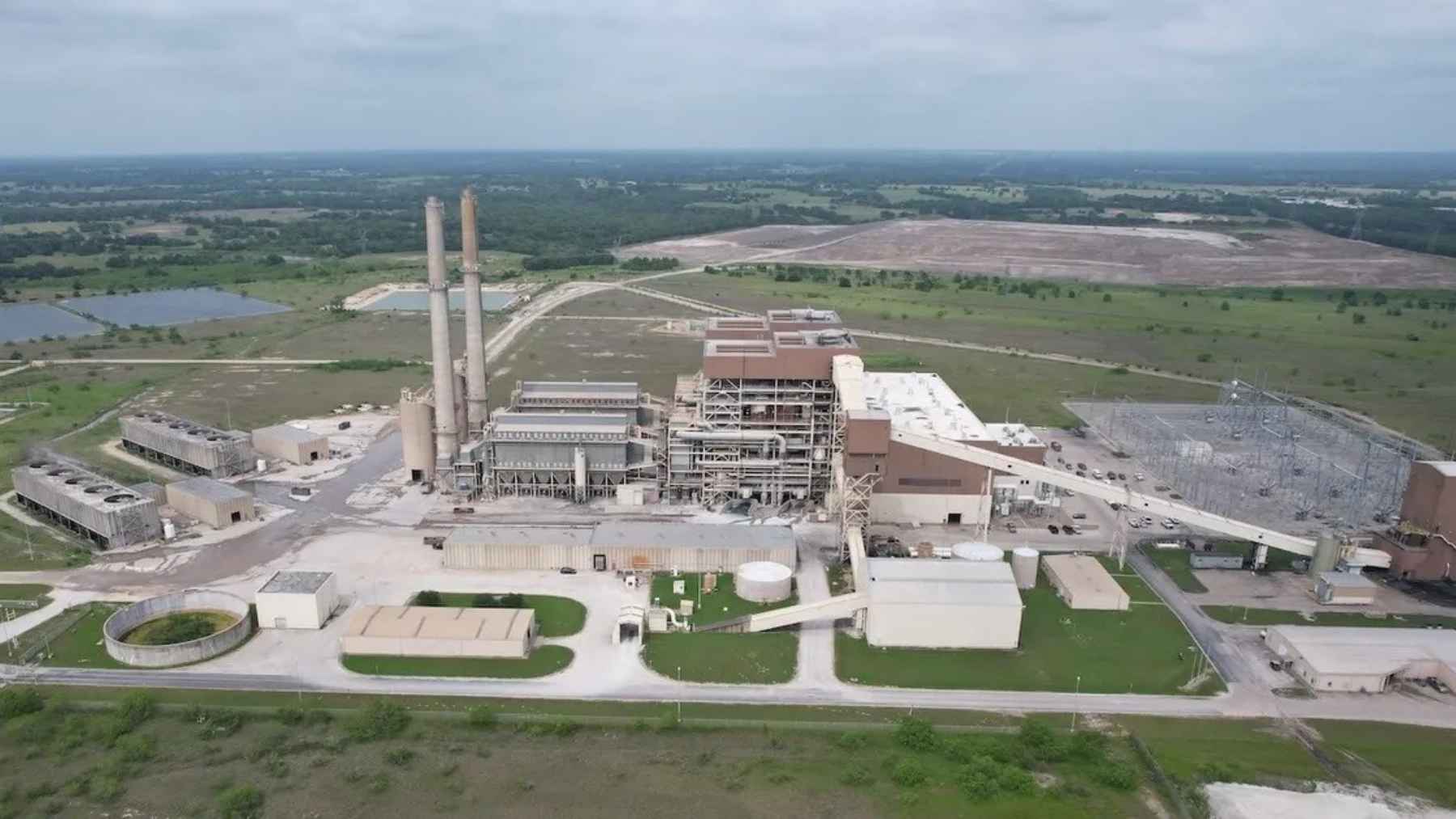
The 310-megawatt lignite plant at Twin Oaks has no announced retirement date. The Calvert mine that feeds it is still producing. And the company says it is looking at expanding the mine and building a rail terminal to bring in more coal on top of that.
The coal plant is staying, and Panamint said so on the record
Two outlets checked the plant’s status directly rather than reprinting the announcement, and both came back with the same answer. Electrek reported on July 24 that no retirement had been announced. Six days later, Maria Gallucci at Canary Media got Panamint CEO Apolka Totth to say it herself.
Totth wrote by email that the company sees “no reason for an early retirement” at Twin Oaks, describing it as an economically competitive unit that keeps costs down for Texas ratepayers. She also confirmed Panamint is investigating a larger footprint for the Calvert mine and a terminal to rail coal in.
That makes this the only project of its kind in the country. Everything else in the small coal-to-solar niche sits on mines that already stopped and plants that already closed. Big Rooter is going up inside a live operation.
The 1.2 gigawatts is a direct current number, and the grid never sees it
Add the two phases from the announcement and you get 1,149 megawatts of direct current. Big Rooter West is 491 MWdc and under construction now. Big Rooter East is 658 MWdc and breaks ground in December.
ERCOT’s interconnection queue carries the other number, the one measured after the inverters. Big Rooter West Solar, queue ID 26INR0431, is listed at 403.2 MW. Big Rooter East Solar, 29INR0017, is listed at 554.7 MW. Total: 957.9 megawatts of alternating current, about 17 percent under the headline figure.
This is normal, and it is deliberate. Developers oversize the panel field relative to the inverters because it fattens the shoulders of the day, pushing the array to full output earlier in the morning and holding it later into the evening. A DC-to-AC ratio around 1.2 is unremarkable in Texas.
It just means the round number everybody printed is not the number ERCOT dispatches. The dates do not line up either. Panamint says August 2028 and August 2029. Both queue entries say May 31.
The panel count deserves the same arithmetic. Divide 1,149 megawatts by 2 million modules and you land on 574.5 watts apiece, which sits above every power bin First Solar publishes for the Series 7. Take the top of that range and the real figure is closer to 2.1 million panels. The release says approximately, and approximately is doing quiet work in there.
The switchyard is the actual asset
Twin Oaks opened in 1990 as TNP One, built for Texas-New Mexico Power. It burns Texas lignite in a fluidized bed with crushed limestone injected to knock down sulfur dioxide, which was a fairly advanced way to run a coal boiler in 1990. Sempra bought it in 2002 and gave it the current name. Panamint acquired the plant and the neighboring mine in 2023.
That mine is Calvert, operated by Walnut Creek Mining Company out of Bremond. Railroad Commission of Texas records list it under permit 27I, with 7,776 permitted acres in Robertson County. The full complex runs to about 10,000 acres, though nobody has published how much of that the solar field itself will cover.
Here is why a developer pays for a site like this one. In ERCOT, the bottleneck is not sunshine or panels or money. It is the interconnection queue, and a 345-kilovolt switchyard that has been energized and moving real power for 36 years is the rarest item on the shopping list.
Both Big Rooter requests entered the queue on the same day, March 22, 2024, aimed at the same node. Panamint is not building a solar farm near a coal plant. It is building one on top of the coal plant’s grid connection, which is the part you cannot order new.
The battery, the data center and the gas turbines are still sentences
The 10,000-acre pitch also includes 1.6 gigawatt-hours of battery storage, 790 megawatts of what Panamint calls Batch Zero data center capacity, and enough gas access to support at least 800 megawatts of thermal generation, either for the grid or for a tenant.
Some of that has hardware behind it. A third ERCOT filing, Big Rooter West Storage, sits in the queue at 201.08 megawatts with a proposed completion of December 1, 2028. The rest is described by the company itself as under development.
Local station KBTX in Bryan reported on July 30 that it had asked both Panamint and Robertson County officials whether those 790 megawatts mean an actual building on the site or somewhere nearby, and was still waiting on an answer.
The power buyer is a blank too. The announcement mentions a long-term purchase agreement with “one of country’s largest companies” and stops there. Panamint says it also expects a federal investment tax credit worth half the project cost, on the grounds that the site qualifies as an energy community and the equipment is American-made, and that it ordered transformers and breakers early enough to get ahead of last year’s rollback of clean energy credits.
The confirmed hardware is worth a look. First Solar is making the cadmium telluride modules in Ohio, Louisiana and Alabama. Nextpower supplies the NX Horizon trackers, including the Hail Pro-75 stow package, which in this part of Texas is closer to an insurance requirement than a feature, given what hail does to a panel field. SOLV Energy is handling the array, the substation and the transmission as EPC contractor.
Coal-mine solar is a small club, and two of its members answer to carmakers
For scale, the biggest operating project in this category is the 186-megawatt Tilden Solar Project in southern Illinois, followed by the 111-megawatt Martin County Solar Project in eastern Kentucky. Both switched on last year over abandoned mines. Martin County sends its output to Toyota’s Kentucky manufacturing operations.
Louisiana has the 240-megawatt Dolet Hills project going up on a former mine property. In Kentucky, BrightNight’s Starfire installation on remediated mine land signed Rivian as anchor customer back in 2023, with a 100-megawatt purchase agreement. Starfire was originally floated at roughly 800 megawatts and now tracks toward 410, with construction slated for late 2027.
So Big Rooter at 957.9 MWac would be about five times the largest thing currently running in the niche, and it will share a fence line with the coal that every other project on that list replaced.
The federal support that made mine-land solar attractive has thinned out as well. Credits for solar and wind were phased down last year, which effectively removed the brownfield bonus that helped these sites pencil out. The Nature Conservancy is still pushing ahead with 25 projects across former mine land in the Cumberland Forest, starting with a 10-megawatt array in Virginia that breaks ground this fall.
What is standing in Robertson County right now
A construction crew, two interconnection requests holding position at an energized 345-kilovolt node, and a 1990 lignite plant that will keep burning Calvert coal while the trackers go in around it.
The battery has a queue number. The gas turbines, the data center, the named power buyer and the bigger mine do not. Each of those is a plan, and plans at this scale get resized, as Rivian’s Kentucky project showed when it lost half its megawatts between announcement and construction.
Totth’s framing is that the solar will generate enough carbon-free power to cancel out the coal plant’s annual emissions profile. That is a real claim and it may well pencil out. It is a different claim from the one most of the headlines made, which is that a Texas coal mine is turning into a solar farm. What it is turning into is a solar farm and a coal mine, at the same time, on the same 10,000 acres, wired into the same switchyard.