
Most tunnel boring machines are built for one hole and never see a second one. They get cut to a specific diameter for a specific rock, they are expensive to drag back out, and more than a few end up abandoned underground because recovery costs more than the steel is worth.
Which makes the machine now pointed at Casa Grande, Arizona a strange one. It worked 1,000 hours under a coal mine in Queensland, came back up in one piece, and then did nothing at all for eleven years.
Ivanhoe Electric signed for it on May 28. The price is $64.7 million, and $13.8 million of that is already gone.
The company laid out the plan in a May 11 release and closed the contract three weeks later. On Monday it added the other half of the story: the Export-Import Bank of the United States handed Ivanhoe a preliminary letter for up to $1.1 billion of debt to build the mine the machine is supposed to open.
The machine only worked 1,000 hours before somebody parked it
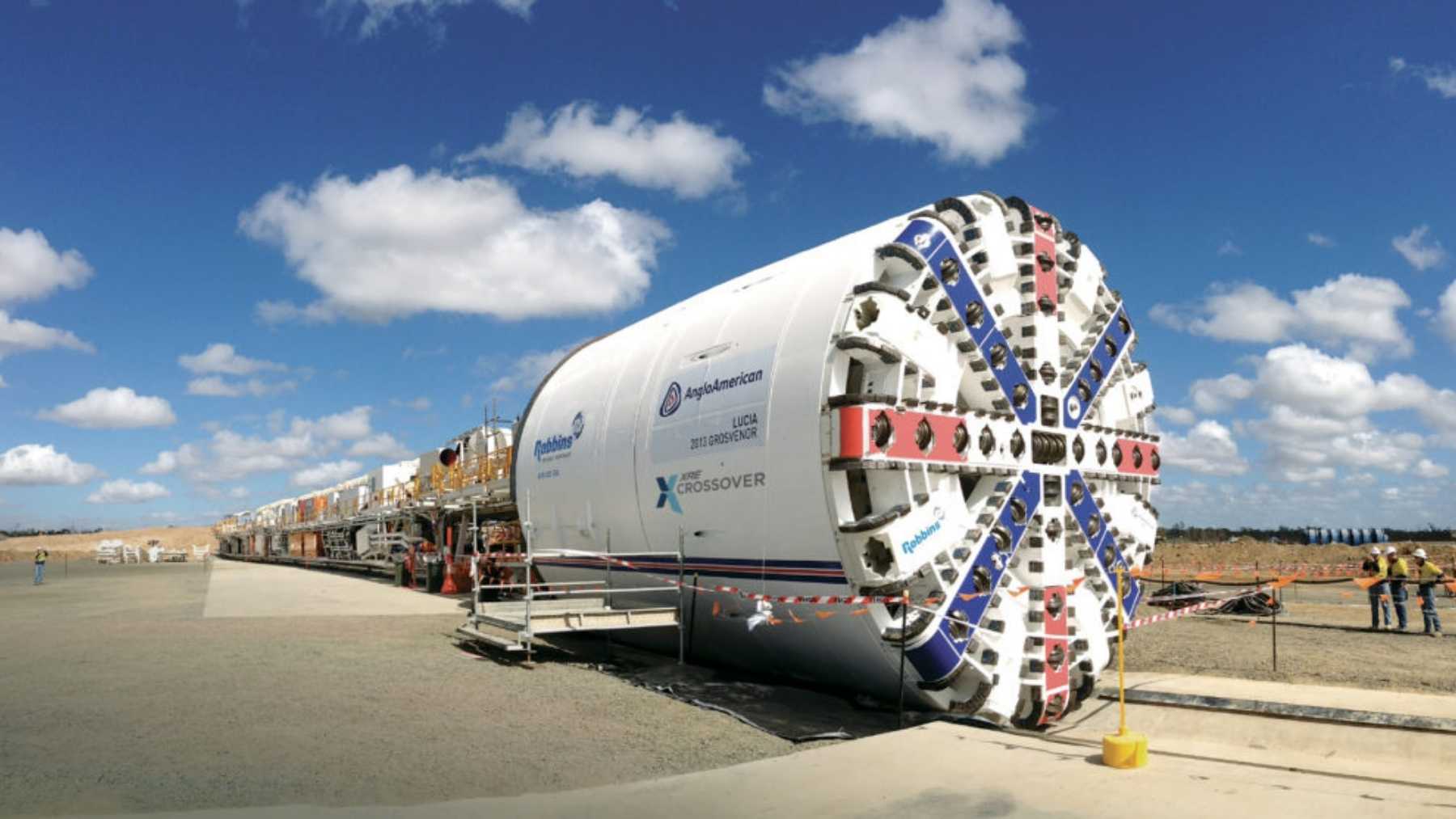
Anglo American bought the Robbins Crossover XRE for its Grosvenor coal mine near Moranbah, in Queensland’s Bowen Basin. According to Robbins’ own project record, it was the first time a TBM had been used in a Queensland coal mine.
It bored two decline tunnels, one for conveyors and one for people and equipment, at grades of 1:6 and 1:8. The first drive ran from the end of December 2013 to the start of May 2014. The second was recommissioned that November with a fresh set of shields and finished in 88 days.
The pace was the whole argument. Robbins puts that second drive at about 36 feet a day on average, with a best day of nearly 83 feet, and across the project it logged roughly 230 feet a week against the 16 feet a week a roadheader was managing.
The last of the two drives finished on February 9, 2015. Robbins said at the time the machine would be pulled to the surface and stored onsite for future Anglo projects.
Nobody ever came for it. Ivanhoe says it found the TBM on care and maintenance at Grosvenor in late 2025, took a legally binding option in March, sent people to inspect it twice, and told Robbins on May 8 it was exercising.
Add the two drives together and you get 1.1 miles of finished tunnel. A thousand hours is about six weeks of round-the-clock work. The machine has been idle roughly a hundred times longer than it has ever been running, which puts it in the same club as the German borer that finished its tank under Hartford and then waited four and a half years for the pumps.
The cutterhead going to Arizona is bigger than the one that went to Queensland
Line the two spec sheets up and something jumps out. Robbins lists the Grosvenor machine at 26 feet (8 meters) across. Ivanhoe’s Arizona decline is specified at 30.5 feet (9.3 meters), and the May release says the overhaul includes a fully refurbished 9.3-meter cutterhead manufactured in Ohio.
So the business end coming out of the shop is about four feet wider than the one that went into the Australian ground. Neither company has broken out what else has to change to make that work.
The rest of the machine is why Ivanhoe wanted this one specifically. A Crossover XRE is a hybrid: earth pressure balance capability to hold a wet face and keep groundwater out, plus a bi-directional cutterhead that will chew soft soil, mixed face and hard rock on the same drive without a machine swap halfway down.
Behind the head it lays a sealed segmental concrete lining as it advances and leaves a flat-bottomed tunnel, and it installs the permanent conveyor at the same time. That conveyor stays for the life of the mine and hauls ore once the place is producing.
One footnote on the “Made-in-the-USA” bullet in Ivanhoe’s release. Robbins is headquartered in Solon, Ohio, but the ownership has moved around: China’s state-owned Northern Heavy Industries took a majority stake in 2016, and in February 2021 Global TBM Company, set up by longtime Robbins president Lok Home, bought substantially all of the assets. The counterparty named in Ivanhoe’s filings is “Global TBM Company dba The Robbins Company.”
The purchase agreement has a tariff clause in it
Ivanhoe’s second-quarter 10-Q is where this stops being a press release and starts being a contract. Worth reading, because the $64.7 million headline is not the whole bill.
The agreement was signed on May 28, 2026 by Mesa Cobre Holding Corporation, Ivanhoe’s wholly owned subsidiary, and covers purchase, supply, transport, assembly, testing and commissioning. The $64.7 million includes a $1.1 million deposit paid earlier. Ivanhoe paid another $12.7 million on signing in June, which is where the $13.8 million on the balance sheet comes from.
The rest arrives in milestone payments tied to shipping, delivery to site, assembly, commissioning and use. Assembly is a separate $5.8 million on top. Transport to the project gets reimbursed at cost plus 10 percent.
And tariffs get reimbursed at cost, no markup. Somebody drafting a used-equipment contract in 2026 wrote a customs line into it, which tells you roughly what the room was worried about.
Title only passes to Ivanhoe when the machine shows up at the project. Commissioning is defined tightly too: assembled, tested, operational, and with the reaction frame installed at the bottom of the box cut. The date on that is July 30, 2027.
One decline replaces two, and kills a federal permit along the way
Santa Cruz sits on nearly 6,000 acres of private land about 40 miles southeast of Phoenix. The 2025 preliminary feasibility study had crews driving twin declines with roadheaders, roughly five miles of tunnel between them, with silica gel injection to handle groundwater and a Railveyor system to move rock.
The TBM plan throws all three out. One decline, 2.5 miles, cut in about twelve months, with the conveyor going in behind the machine as it advances.
Dropping the silica gel also drops a Class V Underground Injection Control permit Ivanhoe would otherwise have needed on the federal side. For a project that has spent years working through Casa Grande, Pinal County and the state, taking a federal permit off the list is worth more than it sounds.
The company puts the net effect on initial project capital at under $20 million. Against a build the 2025 study priced at $1.24 billion, the machine is a rounding error that happens to control the schedule.
Santa Cruz is designed for a 23-year life producing 99.99 percent pure copper cathode on site, with no smelter, running about 159 million pounds a year (72,000 metric tons) through the first fifteen years. If you have seen what it takes to turn a 4,700-ton German borer around at the bottom of a 65-foot pit, the appeal of buying a machine that already exists is not hard to follow.
The financing letter landed on Monday
US EXIM’s preliminary project letter on August 24 raised the potential debt to $1.1 billion, up from the $825 million letter of interest the bank issued in April 2025. Ivanhoe applied under EXIM’s Make More in America Initiative.
The company is careful about what that is. The letter marks the completion of preliminary due diligence, it does not constitute a financing commitment, and Ivanhoe says it anticipates final EXIM board consideration in the spring of 2027. Its release also notes President Donald Trump spoke in support of financing the project at a mining roundtable in Washington on August 7.
On the ground it is early. Chief executive Taylor Melvin told The Northern Miner this month that crews are clearing roads, putting up fences and preparing the portal excavation, with box cut construction due to start soon.
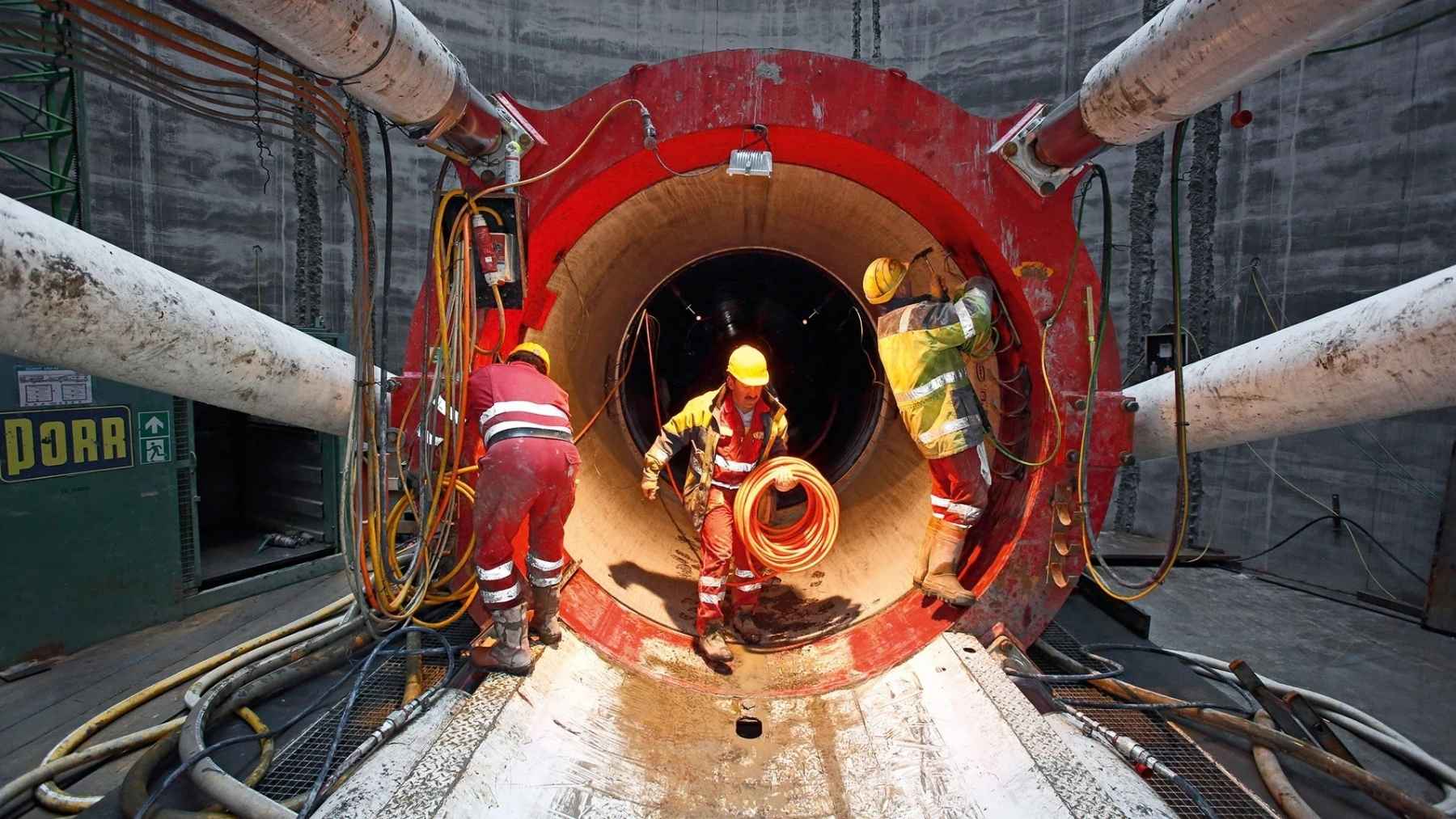
That box cut matters more than it looks. It is the launch pit, and the reaction frame at the bottom of it is what the machine shoves against on its first few feet. Crews in Poland spent 20 days pouring a concrete cradle for exactly that reason.
An updated feasibility study rebuilt around the TBM is due in September.
The nearest hard date belongs to Robbins, not to Ivanhoe
Settled: the contract is signed, $13.8 million has changed hands, the cutterhead is being built in Ohio, and the box cut has a schedule.
Not settled: the machine has not moved yet. Neither company has published its weight, and neither has said where it is sitting right now. The EXIM money is a letter, not a loan. The permits Ivanhoe holds cover initial work, while the ones for surface construction and production are still applications.
Which leaves July 30, 2027. That is the day the machine is contracted to be assembled, tested and braced against its reaction frame at the bottom of an Arizona pit. A borer that has spent eleven years not moving now has a deadline, which is more than most of them ever get.