
If you’ve ever tried to get a cell signal three floors down in a parking garage, you already understand the basic problem with talking to anything underwater. Radio waves struggle to get through concrete, and seawater is even worse. Your phone’s signal is pretty much useless a short way below the surface.
So submarines, underwater drones and seabed sensors mostly talk using sound. Sound moves through water just fine, but it’s slow and it can’t carry much data, so you’re looking at short messages rather than anything close to a video call. Back in September, Japanese engineers used it to send seabed pictures from a drone to a pilotless seaplane, and even that was slow going.
Then you’ve got the other headache. Every navy builds or buys its own gear, and getting a Japanese drone to talk to an Australian relay that talks to American equipment is a bit like getting your printer to cooperate with somebody else’s laptop.
Which is why it’s genuinely interesting that Australia, Japan and the US apparently held a two-way underwater conversation across all three countries’ hardware last month.
So what actually happened down there?
The test took place during Keen Sword 27, a huge Japan-US exercise that Japan’s Joint Staff says ran from October 19 to 29. About 45,000 Japanese personnel took part, and Australia was one of the foreign forces that joined in. Australia’s Department of Defence announced the underwater results on November 3, and I’m going off how Australian Defence Magazine and other outlets reported that announcement.
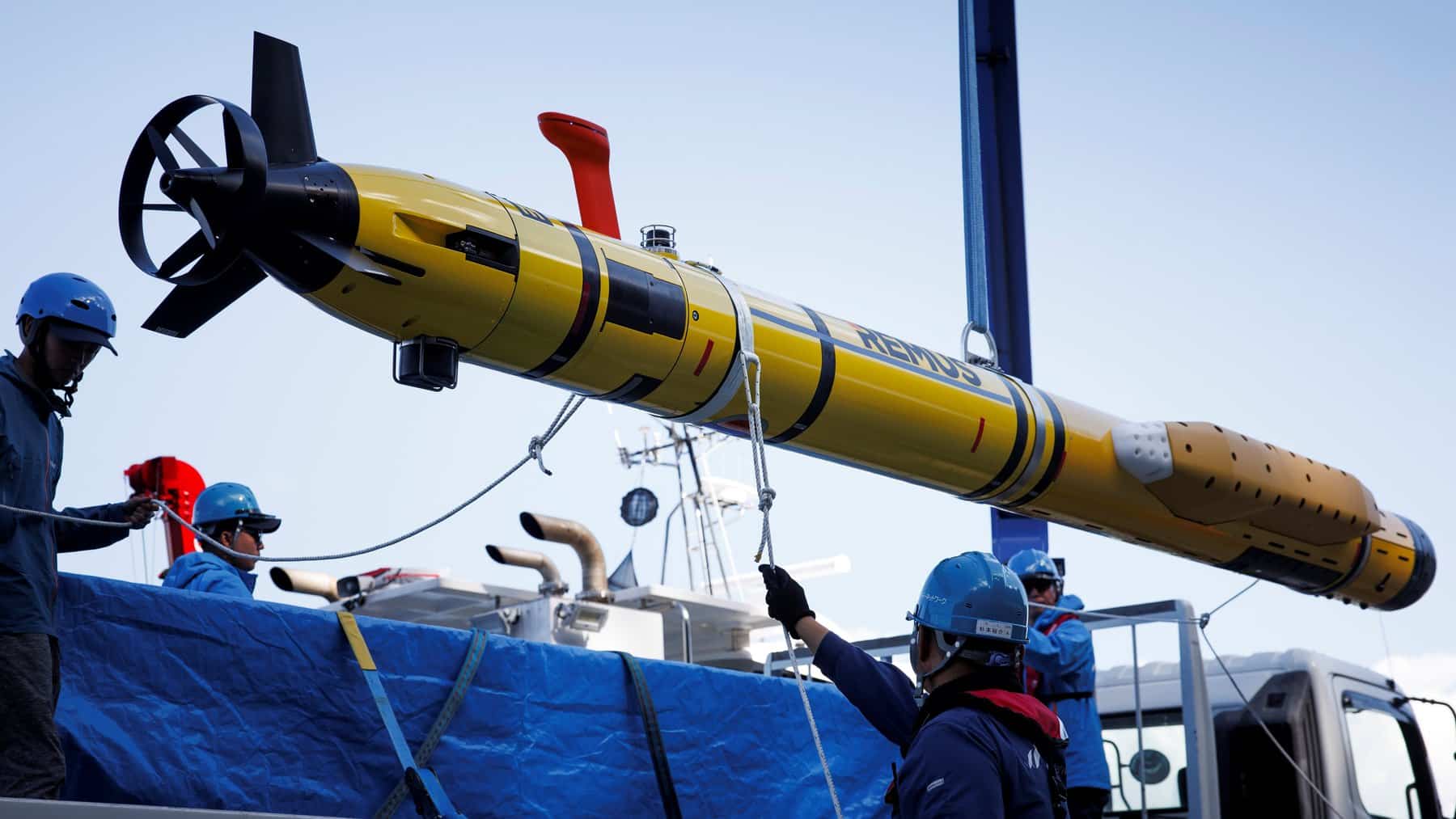
Here’s the chain. A Japanese REMUS 620 unmanned underwater vehicle sent its position to Rock Lobster, an Australian acoustic relay node. Rock Lobster passed that data to a US gateway, and the gateway handed it off to a US ground station.
Then the ground station fired a command signal back down that chain to the drone. According to Defence, that made it a full two-way link running through Japanese, Australian and American hardware.
So why does talking back matter so much?
Say a REMUS is halfway through a seabed survey and someone at a base on land wants it to turn around and take a second look at something. In a lot of cases, they’d have to wait for the drone to come up and use its antenna, which HII’s spec sheets list for Iridium satellite messages, GPS and Wi-Fi. With a relay chain like this one, the order can apparently reach the drone while it’s still underwater doing its job.
The reports on Defence’s announcement don’t say what the command actually told the REMUS to do, so I’m not going to guess at it.
Captain Nakashima Junta, Chief of the System Integration and Interoperability Section at Japan’s Joint Staff, called it the “first trilateral warfighting experiment of its kind conducted in Japan.” That’s a carefully scoped “first.” It covers this kind of three-nation experiment held in Japan, and I’d frankly keep it there.
Australian Defence scientists helped design and run the test. Brice Mitchell from Australia’s Defence Science and Technology Group (DSTG) said the test pushed three-country interoperability further than before, in conditions that look a lot like real operations. Colonel Jeffrey Newcamp of US Indo-Pacific Command said running these three-country experiments inside exercises helps move new science and tech out of the lab and toward the people who’d actually use it in the field, and do it faster.
What’s a REMUS 620?
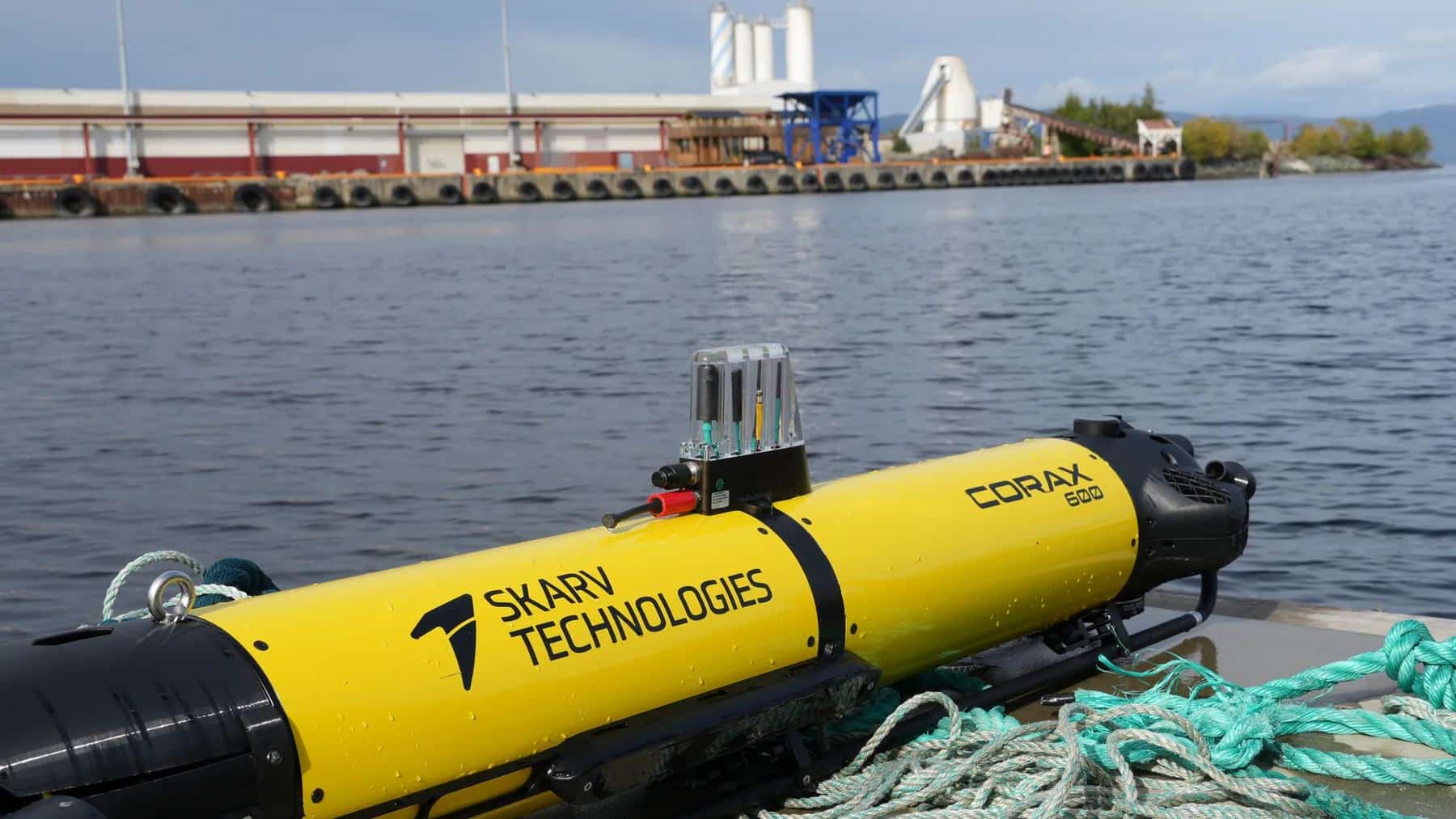
The REMUS 620 is a torpedo-shaped underwater drone made by HII, the Virginia company best known for building the US Navy’s aircraft carriers and submarines. We’ve written about it before, when one docked itself inside a submarine’s torpedo tube.
It’s 12.75 inches wide, and its length depends on how many battery sections you bolt in. Basically, the batteries go in like extra cars on a train. According to HII’s current REMUS 620 spec sheet, a one-battery version is 105 inches long and weighs 414 pounds, while a three-battery version stretches to 169 inches and 719 pounds. Add the example sonar payload HII lists and it can reach 206 inches and 797 pounds. HII rates it for depths down to 1,969 feet and speeds up to 8 knots, or a little over 9 mph, which is roughly the pace of a relaxed bike ride.
I’d argue endurance is the more useful number for a drone like this. HII says the three-battery version can run for up to 110 hours with no payload, which is more than four and a half days of mapping the seabed without anyone babysitting it.
Nobody’s said which configuration Japan brought to Keen Sword, so I can’t tell you exactly how long or heavy this particular drone was.
HII’s spec sheet also says the REMUS 620 carries a low-frequency acoustic modem with a 10 kHz center frequency. Human hearing tops out at around 20 kHz, so that’s a pitch you could actually hear if you were floating next to it. The Keen Sword reports don’t mention whether that’s the modem it used to talk to Rock Lobster, though.
Rock Lobster has been around the block
Rock Lobster is the Australian piece of the puzzle, and it’s got the best name of the bunch by a wide margin. L3Harris says its maritime team in Australia developed the system with the Royal Australian Navy and DSTG, and it’s basically an acoustic relay you can put in the water wherever you need one.
A relay is just a middleman. It listens for sound-based messages and passes them along, which helps because acoustic links only stretch so far before the signal gets too weak to use. An earlier Defence story called Rock Lobster “deployable and disposable,” so the Navy apparently isn’t counting on getting every one back.
It’s also been through a few exercises already. L3Harris says the system was refined through Autonomous Warrior, the Maritime Innovation Challenge and the Maritime Big Play series. It also worked alongside US Navy gear at RIMPAC off Hawaii in July, as part of an AUKUS Pillar II undersea warfare activity.
If you’re wondering, Pillar II is the side of the AUKUS deal between Australia, the UK and the US that covers sharing advanced tech, as opposed to the nuclear submarines that grab most of the headlines. Keen Sword was a different setup, with Japan in the mix and the UK nowhere in this particular test.
So what don’t we know yet?
Quite a bit, actually. None of the coverage of Defence’s announcement that I could read says how far apart the drone and the node were, how deep it all happened, or how long a message took to make the round trip. Which is a little frustrating if, like me, you wanted to know how quick this setup really is.
The US gateway is also a bit of a mystery. It could be a buoy, a boat or something else entirely, and the accounts I could read don’t say which. Same goes for where that US ground station actually sits.
My guess is that position data made a sensible first message because it’s small and easy to check. A drone saying “I’m here” is about the most basic thing you’d want from it, and a command coming back shows the link works in both directions.
Militaries apparently can’t get enough of this stuff right now. Just yesterday, we covered a diver-launched drone off California that relayed target information to a submerged drone, which is the same basic idea coming at it from the air.
Keen Sword 27 wrapped up on October 29, and Australia’s Department of Defence shared the results of the Rock Lobster link on November 3.