
The 20-foot shipping container is the most standardized object in world trade. Sneakers, engine blocks, flat-pack furniture: anything that fits the box moves by truck, rail or ship without anyone redesigning a thing. A Houston company called Deployable Energy built a nuclear reactor to those exact dimensions, ran a self-sustaining chain reaction inside it on June 30, and on October 7 got the slot it needs for the next step: a full-power run inside the containment dome of a dead breeder reactor in Idaho.
The product’s called the Unity Nuclear Battery, and the name undersells the physics. Each unit is a 1-megawatt-electric fission reactor, water-moderated and helium-cooled, packaged into a standard 20-foot box, 8 feet wide and 8.5 feet tall, that travels on ordinary trucks, trains and ships. Deployable hasn’t published what a fueled unit weighs.
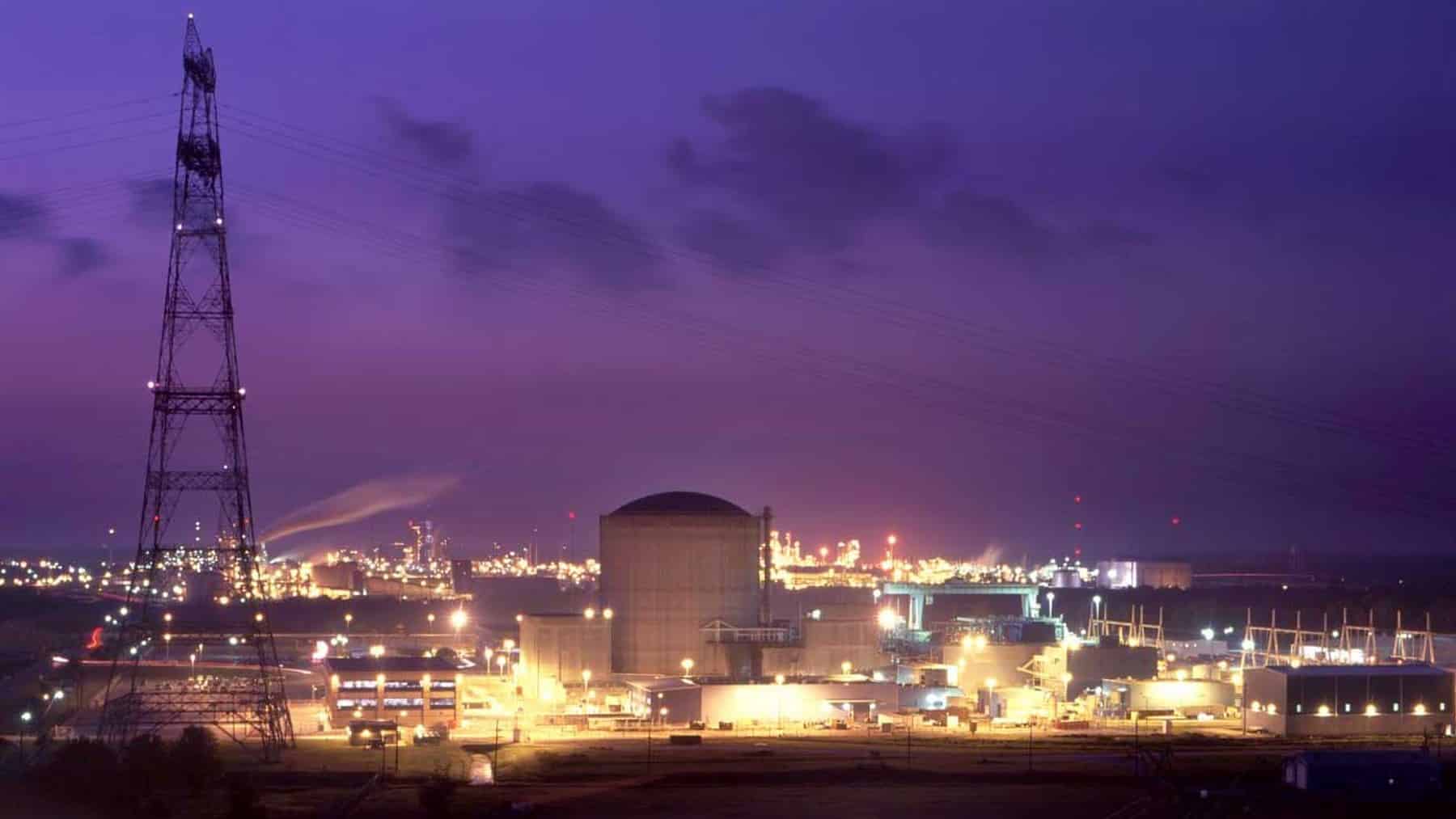
The facility it’s headed for is called DOME, the Demonstration of Microreactor Experiments, run by the National Reactor Innovation Center at Idaho National Laboratory. DOME sits inside the containment building of the Experimental Breeder Reactor-II, which ran for 30 years before it was shut down, and it can host fueled test reactors of up to 20 megawatts thermal. Deployable’s announcement schedules the campaign for 2027.
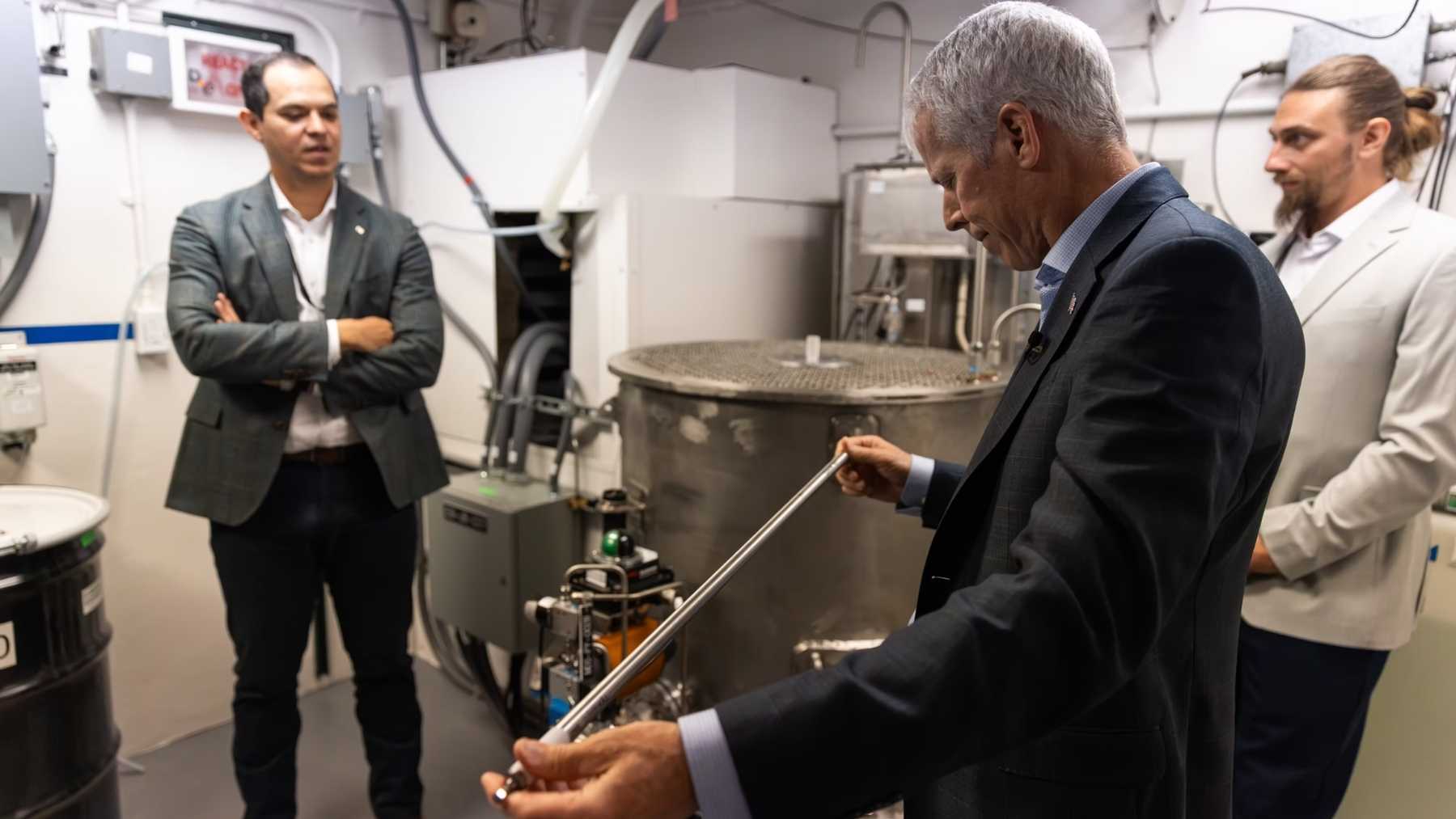
The 2027 run’s designed as a dress rehearsal for the business model rather than a physics experiment. Deployable plans to load fuel into the reactor at a factory, haul the fueled unit to Idaho, slide it into DOME, run it at full power, then move it again within the lab and dispose of the fuel. Every one of those steps is something the company wants to do hundreds of times a year by the end of the decade, and none of them has been done with a Unity yet.
The “battery” is a real fission reactor
Plenty of devices get called nuclear batteries, and most of them are radioisotope generators: lumps of decaying plutonium or strontium that trickle out watts for decades, the kind NASA bolts to space probes.
Unity isn’t that. Unity runs a controlled chain reaction in uranium fuel, the same physics working inside every commercial power plant in the country.
The battery framing describes how Deployable wants customers to use the thing. The company builds the reactor in a factory, ships it sealed, plugs it in where power is needed, and swaps cores every five years, with used fuel going to a central site. A single box makes 1 megawatt. Deployable says identical modules stack into arrays of several hundred units, and the heat coming off one can go to liquid, go to air, or get taken straight off as process heat.
For scale, Aalo Atomics is packaging 10-megawatt reactors into 50-megawatt pods aimed at AI data centers. Deployable went the other way, down to 1.
Four reactors made a three-reactor deadline
Executive Order 14301, signed in the spring of last year, handed the Department of Energy a strange and very specific homework assignment: get at least three brand-new test reactors to criticality by July 4, 2026, the country’s 250th birthday.
Two DOE fast tracks ran under it. The Reactor Pilot Program let companies build and test first-of-a-kind reactors on DOE authorization instead of a Nuclear Regulatory Commission license. The Nuclear Energy Launch Pad arrived in March through the National Reactor Innovation Center, extending that same route to developers the first program had no room for.
The deadline held. Antares Nuclear’s Mark-0 went critical at Idaho on June 4. Valar Atomics’ Ward 250 followed at the Utah San Rafael Energy Lab on June 18. Unity sustained its chain reaction on June 30, the first criticality logged under the Launch Pad, roughly 150 days after the project kicked off. Aalo’s Aalo-X crossed at 12:20 a.m. MT on the Fourth itself.
“We met the July 4th goal by moving fast without compromising safety or quality,” Deployable co-founder and CEO Bobby Gallagher said in the October 7 announcement.
Criticality’s the point where the neutron bookkeeping balances: each generation of fissions kicks off exactly enough neutrons to start the next, no outside source required. Unity’s June run was a zero-power demonstration on a full-scale core load, which means the chain reaction held without producing meaningful heat or a watt of electricity. That’s the gap DOME is there to close. Full power’s where the helium loop, the heat exchangers and the control system have to work together for real, and where the NRC, which observed the June test and says it’ll keep observing, gets the data it would want for a license.
The fuel is the clever part
Most microreactor startups designed themselves into a fuel problem. Their cores call for high-assay low-enriched uranium, HALEU, material enriched between 5% and 20% that remains scarce in the United States: Antares got its TRISO fuel fabricated on a conditional commitment of the government’s own HALEU stock.
Deployable skipped the line. Unity runs on uranium dioxide enriched to 4.95%, per the company’s technical specifications, just under the 5% ceiling that commercial reactor fuel has sat below for decades. Every fabricator already serving America’s power plants handles that material today, and Gallagher’s credited that supply chain as one of the things that made the 150-day sprint possible.
The coolant’s helium, the moderator’s ordinary water, and the listed materials are deliberately unexciting industrial stock rather than exotic alloys. A reactor made of parts factories already produce is a reactor that fits on an assembly line, which is the entire business model.
Unity also parts ways here with the Pentagon’s Pele microreactor, the transportable unit whose 40,000 fuel compacts have been sitting in Idaho waiting for final assembly in Virginia. Pele’s a one-off Pentagon prototype built for a single demonstration. Unity’s pitched as a catalog product on standard oxide fuel.
Utah, a boat and a stack of paperwork
Between the June criticality and the October selection, Deployable spent the summer signing things. Utah signed a memorandum of understanding on August 18 to work out whether and where Unity units could be sited across a state that still carries zero commercial nuclear generation on its grid, under Governor Spencer Cox’s push to double in-state power production inside ten years. The document approves no construction, licenses no reactor and obligates nobody to buy anything.
Hornbeck Offshore, which runs high-spec service vessels across the Gulf and Latin America, signed its own MOU a day earlier and put in money as a strategic investor. Solaris Energy Infrastructure, the NYSE-listed outfit renting mobile turbine fleets to data centers, disclosed an equity stake of its own. Lloyd’s Register had already issued an Approval in Principle in February for a hybrid nuclear-diesel arrangement on an amphibious stern landing vessel.
On August 28 the National Reactor Innovation Center picked Deployable for two more Launch Pad demonstrations, the full-power run and a maritime one. The October 7 release firms up the first and says Deployable is the only company selected for a commercial nuclear maritime demonstration under DOE authorization in the United States. No date’s been published for the boat.
Deployable’s also opened a file at the NRC. The regulator’s pre-application page for Unity lists a letter of intent, a regulatory engagement plan, white papers on fuel qualification and design criteria, and a request for a readiness assessment of a construction permit application for a first-of-a-kind facility. A construction permit’s the ordinary commercial route, the one DOE authorization lets test reactors skip.
Zero Unity units have been sold, sited or licensed for commercial operation anywhere. Nuclear Engineering International has reported that Deployable’s spec sheet quotes six-month delivery lead times starting in 2030, and the company’s own sequence for getting there now runs through one building in Idaho: fuel the box at a factory, truck it to DOME, run it at full power in 2027, and move it again afterward. The first Unity went critical on June 30, 2026. The selection for the full-power run is dated October 7.
 @brucejaworski ROOKIE2 months ago